


 In echtem Maßstab anzeigen
 Versenden als Grußkarte
 Teilen
 Details anzeigen
 Leitfaden öffnen

 Herunterladen
 Ähnliche Objekte
 Röntgenaufnahme
 Diashow
 Besucherstatistiken
The Microscope


 Mehr anzeigen
Giclée / Kunstdruck
Giclée- oder Leinwanddruck in Museumsqualität mit schneller Produktion und flexiblen Veredelungsoptionen. ( Handgemalte Reproduktion kaufen Zum digitalen Bild wechseln)




P118B €10

P118H €10

P118W €10

P438Z €10

P508JH €12

P508YH €12

P805H €10

P805Z €10

P919BZ €10

P919G €10

P919XJ €10

P959ZH €10

P968JZ €12

W106C €8

W218G €10

W218JH €8

W218Y €10

W307PJ €10

W316G €10

W316PJ €8

W316Y €10

W398PJ €8

W4111J €10

W500HY €15

W500JH €15

W692G €12

W849H €8

W940BG €15

W953PJ €8




Wählen Sie aus unseren vordefinierten Formaten, die den ursprünglichen Proportionen des Kunstwerks entsprechen.

Geben Sie die Breite und die Höhe an, die Sie benötigen, damit der Druck perfekt in Ihren Rahmen oder an Ihre Wand passt. Ein Druck kann nur beschnitten werden und niemals größer als das Originalbild gemacht werden; daher verliert ein Format mit einer anderen Proportion einen Teil des Bildes. Wir senden Ihnen ein digitales Mockup zur Freigabe, bevor wir den Druck ausführen. Das auf dieser Seite gezeigte Bild zeigt nicht den tatsächlichen Beschnitt – dies ist nur im Mockup ersichtlich.
Weltweiter Versand () innerhalb von 2 Wochen statt der üblichen 4/5 Wochen. (22 Oktober)

Kostenloser weltweiter Expressversand

Hochwertige Leinenleinwand

Vollständiger Versicherungsschutz beim Versand

Zollgebühren-Rückerstattungsgarantie

Garantie für exakte Farbtreue

100-tägiges Rückgaberecht (nur bei Mängeln)

100% Geld-zurück-Garantie

Angebot für Mengenrabatt
 Die Glasoption ist nur für Größen unter 110 cm verfügbar.

The Microscope
Giclée / Kunstdruck
Format der Reproduktion
-


Gesamtpreis
€ 54
A Window into Enlightenment: Examining Robert Walter Weir’s “The Microscope”
Robert Walter Weir's "The Microscope," completed in 1849, stands as a remarkable testament to the confluence of scientific curiosity and humanist ideals that characterized mid-nineteenth century America. More than just a portrait depicting Jacob Whitman Bailey, a prominent advocate for American microscopy and instructor at West Point, this painting embodies the Romantic spirit’s fascination with both reason and imagination—a duality Weir skillfully captures through meticulous observation and expressive brushwork. The artwork resides within Yale University Art Gallery's collection, offering visitors an opportunity to contemplate its enduring significance.- Subject Matter: At its core, “The Microscope” presents a tableau of intellectual engagement. Bailey, dressed in attire reminiscent of Galileo Galilei—a deliberate allusion to the Renaissance astronomer’s groundbreaking discoveries—demonstrates his knowledge to his sons and daughter, Maria. This familial scene underscores the importance of educating children not only in traditional arts but also in scientific pursuits, reflecting the burgeoning belief that fostering intellectual development was crucial for societal progress.
- Style & Technique: Weir’s style aligns firmly with the Hudson River School tradition, prioritizing atmospheric perspective and tonal gradation to convey a sense of grandeur and tranquility. Employing oil paints on canvas, he achieved remarkable realism through careful layering and blending—a hallmark of the era's artistic approach. The subdued palette—dominated by browns, greens, and blues—creates an environment that feels both scholarly and contemplative.
Historical Context: Science and Domestic Education in Victorian America
The painting emerged during a period marked by significant advancements in scientific understanding, particularly in microscopy. Scientists like Bailey were actively exploring the microscopic world, uncovering previously unseen organisms and challenging prevailing theories about disease and heredity. Simultaneously, Victorian society placed considerable emphasis on educating girls—primarily focusing on music, dance, and needlework—though figures like Bailey recognized the necessity of introducing science into female education. Weir’s depiction reflects this societal preoccupation with cultivating intellectual prowess in young women.- Symbolism: The inclusion of Galileo's garb serves as a powerful symbol—representing the triumph of observation and experimentation over dogma. Bailey’s stance, gazing intently at the microscope, embodies the Romantic conviction that scientific inquiry could illuminate the mysteries of creation. Furthermore, Maria’s presence symbolizes the future generation inheriting this enlightened worldview.
- Emotional Impact: “The Microscope” transcends mere representation; it evokes a feeling of serene intellectual pursuit and familial devotion. Weir's masterful use of light and shadow contributes to an atmosphere of quiet contemplation—encouraging viewers to appreciate the beauty inherent in knowledge and the importance of nurturing young minds.
Yale Center for British Art’s Perspective
The Yale Center for British Art considers “The Microscope” as a pivotal piece illustrating the Romantic movement's commitment to both reason and imagination. Its inclusion within the American Art before 1900 galleries underscores its significance in shaping artistic sensibilities during this formative period. The painting continues to inspire interior designers seeking to infuse their spaces with elements of intellectual curiosity and humanist values—a legacy that extends far beyond its original creation.Fragen & Antworten
Welche Emotion vermittelt das Werk der Romanticism „The Microscope“?
Die Reflective Emotion von „The Microscope“ begleitet seinen Romanticism-Stil.
Gibt es Werke, die "The Microscope" ähneln?
Die Seite Ähnliche Werke von "The Microscope" von Robert Walter Weir zeigt verwandte Kunstwerke.
Gibt es eine Diashow für "The Microscope" von Robert Walter Weir?
Das Diaporama zu „The Microscope“ kann auf der Diashow-Seite des Kunstwerks angesehen werden.
Ähnliche Kunstwerke


Biografie des Künstlers
Frühes Leben und Ausbildung
- Geburt und Familie: Robert Walter Weir wurde am 18. Juni 1803 in New York City als Sohn von Robert und Mary Katherine (Brinkley) Weir geboren. Die Familie zog 1811 nach New Rochelle, New York, kehrte aber bis 1817 nach New York City zurück.
- Frühe Karriere: Er arbeitete zunächst als Handlungsgehilfe, gab diesen Beruf jedoch im Alter von 18 Jahren im Jahr 1821 auf, um sich der Malerei zu widmen.
- Künstlerische Ausbildung: Weir war weitgehend Autodidakt und begann seine künstlerische Ausbildung 1822 bis 1824 in New York City. Er studierte unabhängig Zeichnen und Malen, bevor er nach Italien reiste.
- Italienische Studien: Von 1824 bis 1827 lebte Weir in Florenz (1824-1825) und Rom (1825-1827) und tauchte in die Werke von Renaissance-Meistern wie Michelangelo und Raffael ein.
Karriere als Künstler und Pädagoge
- Rückkehr nach New York: Weir kehrte 1827 nach New York zurück und engagierte sich in der künstlerischen Gemeinschaft der Stadt. Er stellte seine Werke in der National Academy of Design aus, wurde 1829 assoziiertes Mitglied und 1831 vollwertiges Akademiemitglied.
- Ernennung an West Point: Im Jahr 1834 wurde Weir zum Zeichenlehrer an der United States Military Academy in West Point, New York, ernannt. Später wurde er 1846 Professor für Zeichnen und blieb es bis 1876 vierundvierzig Jahre lang.
- Einfluss in West Point: Während seiner Amtszeit in West Point unterrichtete Weir zahlreiche zukünftige Kommandeure des Bürgerkriegs, darunter James Abbott McNeill Whistler, Seth Eastman, Ulysses S. Grant, Robert E. Lee und Jefferson Davis. Er prägte maßgeblich das Kunstbildungsprogramm der Akademie.
- Bemerkenswerte Werke: Sein berühmtestes Werk ist Die Einschiffung der Pilgerväter, das 1837 vom Kongress der Vereinigten Staaten in Auftrag gegeben und 1843 im Rotunde des US-Kapitols installiert wurde.
Künstlerischer Stil und Einflüsse
- Hudson River School: Weir gilt als Mitglied der Hudson River School, einer amerikanischen Kunstbewegung, die durch romantische Darstellungen der amerikanischen Landschaft gekennzeichnet ist. Seine Leinwände zeigten oft historische Themen.
- Renaissance-Einfluss: Seine Zeit in Italien beeinflusste seinen künstlerischen Stil tiefgreifend, was sich in seiner Liebe zum Detail und seiner klassischen Komposition zeigt. Er ließ sich von den Werken von Renaissance-Meistern wie Michelangelo und Raffael inspirieren.
- Historienmalerei: Weir spezialisierte sich auf Historienmalerei und versuchte, bedeutende Ereignisse und Persönlichkeiten mit Genauigkeit und dramatischer Wirkung festzuhalten.
- Weitere Werke: Zu den weiteren bemerkenswerten Gemälden gehören *Bourbons letzter Marsch*, *Landung von Hendrik Hudson*, *Unser Herr am Ölberg* und *Kolumbus vor dem Rat von Salamanca*.
Familie und Vermächtnis
- Familienleben: Robert Walter Weir war zweimal verheiratet und hatte sechzehn Kinder.
- Künstlerische Söhne: Zwei seiner Söhne, John Ferguson Weir und Julian Alden Weir, wurden ebenfalls zu angesehenen Künstlern. John Ferguson Weir war Maler und Bildhauer, während Julian Alden Weir ein renommierter Porträt-, Figuren- und Landschaftsmaler wurde.
- Historische Bedeutung: Robert Walter Weirs Vermächtnis geht über seine Kunstwerke hinaus. Seine Rolle als Pädagoge in West Point prägte das künstlerische Empfinden vieler zukünftiger Militärführer. Er trug maßgeblich zur Entwicklung der Kunstausbildung in Amerika bei.
- Fortgesetzte Anerkennung: Seine Werke werden weiterhin in renommierten Museen und Sammlungen ausgestellt, was seinen Platz in der amerikanischen Kunstgeschichte sichert.

Robert Walter Weir
1803 - 1889 , Vereinigte Staaten von Amerika
Eckdaten zum Künstler
- Beeinflusste Künstler/Bewegungen:
- John Ferguson Weir
- Julian Alden Weir
- Bemerkenswerte Werke: ['Embarkation of Pilgrims']
- Geburtsdatum: 18. Juni 1803
- Geburtsort (Stadt, Land): New York, USA
- Künstler, Die Ihn Beeinflussten:
- Michelangelo
- Raphael
- Künstlerische Bewegung/Stil: Hudson River School
- Nationalität: Amerikanisch
- Sterbedatum: 1. Mai 1889
- Vollständiger Name: Robert Walter Weir
Verwandte Artikel

Robert Spencer: Luminism, Narrative & the American Landscape Tradition
Explore the captivating world of Luminism & the Hudson River School with our expert analysis. Discover the history, artists, and enduring beauty of 19th-century American landscape painting. Find museum-quality reproductions at ArtsDot.
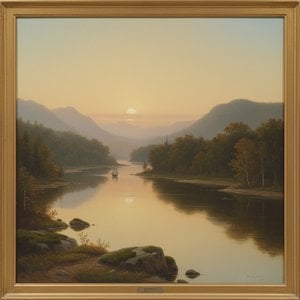
David Johnson: A Luminist Master of the Hudson River School & Beyond
Explore the captivating landscapes of David Johnson, a key figure in the Hudson River School & Luminism movement. Discover his artistic evolution, legacy, and how to collect his works with ArtsDot.

The Sublime Landscape: Exploring the Hudson River School Movement
Explore the captivating world of the Hudson River School! Discover the history, artists, and defining characteristics of this iconic American art movement. Learn about Romanticism's influence & find inspiration for your collection.

Die 10 Meisterwerke der Hudson River School: Kunst für Ihr Zuhause | ArtsDot
Entdecken Sie die 10 prägendsten Meisterwerke der Hudson River School! Erfahren Sie mehr über Thomas Cole, Frederic Church & Co. und ihre atemberaubenden Landschaftsbilder. Hochwertige Kunstdrucke für Ihr Zuhause – jetzt auf ArtsDot.com!
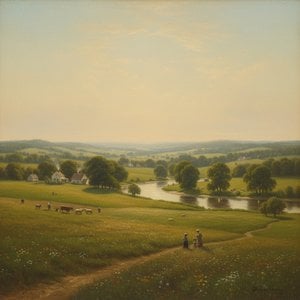
Thomas Worthington Whittredge und die Erfassung des amerikanischen Pastoralideals im Luminismus
Entdecken Sie das Werk von Thomas Worthington Whittredge und die Faszination des Luminismus! Analysieren Sie mit uns seine Gemälde, den Einfluss der Hudson River School und das amerikanische Pastoralideal. Expertenwissen & Hintergrundinformationen.