

 Vorschau anzeigen
 Versenden
 Teilen
 Details anzeigen
 Leitfaden

 Herunterladen
 Ähnliche Objekte
 Röntgenaufnahme
 Diashow
 Fragen & Antworten
 Statistiken
Desmond


 Weiterlesen
Die auf dieser Seite dargestellten Kunstwerke sind urheberrechtlich geschützt, was bedeutet, dass wir keine identische Reproduktion rechtmäßig erstellen oder verkaufen dürfen. Dieser Schutz wird durch internationale Abkommen wie die Berner Übereinkunft und durch nationale Gesetze, einschließlich derer, die von den US-Urheberrecht – Titel 17.
Diese Methode entspricht vollumfänglich den Urheberrechtsbestimmungen, da sie keine Kopie oder Vervielfältigung des geschützten Kunstwerks darstellt. Stattdessen handelt es sich um eine kreative Neuinterpretation – ein neues Gemälde, das vom Original inspiriert, aber nicht identisch mit ihm ist.
Giclée / Kunstdruck
Giclée- oder Leinwanddruck in Museumsqualität mit schneller Produktion und flexiblen Veredelungsoptionen. ( Handgemalte Reproduktion bestellen Zum digitalen Bild wechseln)




P118B €10

P118H €10

P118W €10

P438Z €10

P508JH €12

P508YH €12

P805H €10

P805Z €10

P919BZ €10

P919G €10

P919XJ €10

P959ZH €10

P968JZ €12

W106C €8

W218G €10

W218JH €8

W218Y €10

W307PJ €10

W316G €10

W316PJ €8

W316Y €10

W398PJ €8

W4111J €10

W500HY €15

W500JH €15

W692G €12

W849H €8

W940BG €15

W953PJ €8




Wählen Sie aus unseren vordefinierten Formaten, die den ursprünglichen Proportionen des Kunstwerks entsprechen.

Geben Sie die benötigte Breite und Höhe an, damit der Druck perfekt in Ihren Rahmen oder an Ihre Wand passt. Ein Druck kann nur beschnitten, aber niemals größer als das Originalbild angefertigt werden; daher verliert ein Format mit anderen Proportionen einen Teil des Bildes. Wir senden Ihnen ein digitales Mockup zur Freigabe, bevor wir den Druck ausführen. Das auf dieser Seite gezeigte Bild zeigt nicht den tatsächlichen Beschnitt – dies ist nur im Mockup ersichtlich.
Weltweiter Versand () innerhalb von 2 Wochen statt der üblichen 4/5 Wochen. (10 November)

Kostenloser weltweiter Expressversand

Hochwertige Leinenleinwand

Umfassender Versicherungsschutz beim Versand

Zollgebühren-Rückerstattungsgarantie

Garantie für exakte Farbtreue

100 Tage Rückgaberecht (nur bei Mängeln)

100% Geld-zurück-Garantie

Mengenrabatt verfügbar
 Die Glasoption ist nur für Größen unter 110 cm verfügbar.

Desmond
Giclée / Kunstdruck
Format der Reproduktion
-


Endpreis
€ 56
Eine viszerale Begegnung mit der menschlichen Form
In dem evokativen Porträt mit dem Titel Desmond, das im Jahr 1984 entstand, wird der Betrachter unmittelbar mit einem intensiven, fast beunruhigenden Blick konfrontiert, der die Grenzen der Leinwand überschreitet. Rainer Fetting, ein Meister darin, rohe menschliche Emotionen einzufangen, präsentiert uns einen Mann, dessen kahler Kopf und markanter Gesichtsausdruck absolute Aufmerksamkeit fordern. Das Subjekt scheint in einem Moment tiefer Introspektion oder vielleicht einer plötzlichen, erschütternden Erkenntnis gefangen zu sein, während er intensiv auf etwas starrt, das sich knapp außerhalb unseres Sichtfeldes befindet. Dieses Gefühl, ein Eindringling in einen privaten Moment zu sein, verleiht dem Werk seine eindringliche, cineastische Qualität. Das Gemälde stellt nicht bloß ein Gesicht dar; es fängt einen psychologischen Zustand ein und lädt Sammler sowie Kunstliebhaber gleichermaßen dazu ein, über die Verletzlichkeit und die Stärke nachzusinnen, die der menschlichen Existenz innewohnen.
Die technische Ausführung von Desmond ist eine Meisterklasse in der Verwendung von Farbe und Textur. Unter Nutzung des satten, haptischen Mediums Öl auf Leinwand verwendet Fetting eine kühne, komplementäre Palette aus lebendigen Orangetönen und tiefen, atmosphärischen Blautönen. Diese chromatische Spannung dient dazu, die Gesichtszüge des Subjekts zu modellieren, und verleiht der Figur eine dreidimensionale Tiefe, die sie im Raum palpabel präsent erscheinen lässt. Der Hintergrund, eine kühle blaue Wand, die durch zarte weiße Akzente unterbrochen wird, bildet einen scharfen, minimalistischen Kontrast zur Wärme der Hauttöne des Mannes. Dieser bewusste Einsatz der Farbenlehre verstärkt nicht nur die visuelle Wirkung, sondern lenkt den Blick auch auf die subtilen Nuancen des Ausdrucks des Subjekts, sodass jeder Pinselstrich zur allgemeinen narrativen Spannung beiträgt.
Das Erbe der Junge Wilde
Um die Seele dieses Werkes zu verstehen, muss man die historischen Strömungen West-Berlins im späten 20. Jahrhundert betrachten. Als Schlüsselfigur der Junge Wilde-Bewegung brachte Fetting ein Gefühl der Rebellion und der ungehemmten Energie auf die Leinwand. Indem er sich von den starren akademischen Traditionen seiner Ära abwandte, entschied er sich für einen gestischeren, expressiveren Ansatz, der dem Instinkt Vorrang vor dem akribischen Realismus einräumte. Desmond steht als Zeugnis für diese Periode des künstlerischen Aufbruchs, in der der Akt des Malens zu einer emotionalen Entladung wurde. Das Werk trägt das Gewicht seiner Epoche in sich – eine Zeit des kulturellen Umbruchs und der kreativen Freiheit – und macht es zu einer bedeutenden Errungenschaft für all jene, die Kunst schätzen, die den Geist der Transformation und die rohe Schönheit des ungefilterten Ausdrucks anspricht.
Für den anspruchsvollen Innenarchitekten oder Kunstsammler bietet diese Reproduktion mehr als nur ästhetische Anziehungskraft; sie bietet einen Fokuspunkt von tiefgründigem Charakter. Die Fähigkeit des Gemäldes, eine unheimliche und doch fesselnde Atmosphäre zu evozieren, macht es zu einem idealen Herzstück für anspruchsvolle Räume, die ein Gesprächsthema verlangen. Ob in einem zeitgenössischen Galerie-Ambiente oder in einem kuratierten privaten Arbeitszimmer platziert, Desmond bringt ein Gefühl von Geschichte und eine tiefe, resonante Emotionalität mit sich. Es ist ein Werk, das nicht bloß eine Wand dekoriert, sondern einem Raum Leben einhaucht und ein Fenster in die komplexen, schönen und manchmal beunruhigenden Tiefen der menschlichen Erfahrung öffnet.
Fragen & Antworten
Ist "Desmond" von Rainer Fetting im Hoch-, Quer- oder Quadratformat angeordnet?
Das Format von „Desmond“ ist Hochformat. Dies ist hilfreich bei der Planung, wo eine Reproduktion platziert werden soll.
Für welche Verwendung und welchen Raum wird "Desmond" von Rainer Fetting empfohlen?
"Desmond" von Rainer Fetting wird für Gesprächsanregend empfohlen, idealerweise in einem Restaurants. Die Verwendung und die Raumgestaltung geben gemeinsam Aufschluss darüber, wo eine Reproduktion am besten zur Geltung kommt.
Wie lässt sich die Stimmung von "Desmond" von Rainer Fetting beschreiben?
Die allgemeine Stimmung von "Desmond" von Rainer Fetting ist Dramatisch. Diese Stimmung beschreibt die Atmosphäre des Werkes.
Ähnliche Kunstwerke


Künstlerbiografie
A Berlin Energy: The Life and Art of Rainer Fetting
Rainer Fetting, born December 31, 1949, in Wilhelmshaven, Germany, stands as a monumental figure within the Neo-Expressionist movement—a reaction against the prevailing minimalist trends of the late 20th century that championed raw emotion and bold visual language. His artistic journey began far from the polished studios of academic art; instead, he honed his craft initially as a carpenter and stage designer for the Landesbühne Niedersachsen Nord in Wilhelmshaven—experiences that instilled in him a foundational understanding of form, space, and narrative – elements which would later become central to his distinctive artistic vision. Moving to Berlin in the early 1970s, Fetting enrolled at the Hochschule für Bildende Künste (Academy of Fine Arts), studying under Hans Jaenisch—a pivotal encounter that shaped his intellectual trajectory and cemented his connection to a burgeoning countercultural milieu.Early Influences and Artistic Formation
Fetting’s formative years were marked by an immersion in Berlin's vibrant artistic landscape, where he absorbed the energy of Expressionist painters like Ernst Ludwig Kirchner and Franz Marc—artists who prioritized emotional intensity over formal precision. This influence is palpable in his early works—primarily depictions of Berlin cityscapes—which capture the gritty textures and fractured perspectives of a rapidly changing urban environment. These paintings weren’t merely representations; they were visceral responses to the anxieties and contradictions inherent in post-war Germany, reflecting the pervasive sense of division that characterized the Cold War era. Simultaneously, he pursued stage design, developing skills in spatial composition and theatrical storytelling—skills that would prove invaluable as he transitioned into painting and sculpture.The Galerie am Moritzplatz and The ‘Junge Wilde’ Movement
In 1977, Fetting established the Galerie am Moritzplatz alongside Helmut Middendorf, Bernd Zimmer, Salomé, Anne Jud, and Berthold Schepers—a daring initiative that would become a cornerstone of the ‘Junge Wilde’ (Young Wild Ones) movement. This gallery served as a crucible for a cohort of young artists who rejected the intellectual sterility of Conceptual Art and embraced expressive figuration—characterized by bold colors, dynamic brushstrokes, and an uncompromising commitment to emotional honesty. The Galerie am Moritzplatz fostered a spirit of experimentation and collaboration, nurturing a generation of artists determined to forge their own path away from established conventions. Fetting’s involvement in this movement solidified his reputation as a rebellious innovator—a figure who championed artistic freedom and challenged the prevailing aesthetic sensibilities of his time.Style Evolution: From Berlin to New York
Fetting's stylistic evolution mirrored the broader shifts occurring within German art during the 1980s. Initially, his paintings focused on capturing the atmosphere of Berlin—the stark contrasts between light and shadow, the towering buildings, and the palpable tension of political division. He employed a technique reminiscent of Vincent van Gogh—characterized by thick impasto brushstrokes and vibrant hues—to convey emotion and immediacy. However, Fetting’s artistic vision expanded beyond the confines of Berlin as he embarked on a transformative journey to New York in 1978—a residency funded by DAAD that exposed him to American art and culture and profoundly influenced his subsequent work. During this period, he experimented with assemblage techniques—incorporating driftwood and other natural materials into his canvases—adding textural complexity and reflecting an interest in confronting the materiality of existence.Sculptural Achievements and Legacy
Beyond painting, Fetting achieved considerable renown as a sculptor—primarily working in bronze—creating monumental works that explore themes of human form and psychological depth. His most celebrated sculpture is Willy Brandt House’s centerpiece—a towering figure embodying resilience and moral courage—representing a testament to his artistic ambition and intellectual engagement. Furthermore, he undertook commissions for prominent cultural institutions—including Henri Nannen Press Award and Helmut Schmidt—demonstrating his versatility as an artist and cementing his place within the canon of contemporary sculpture. Rainer Fetting’s enduring legacy resides in his unwavering commitment to expressive figuration—a stylistic choice that defied prevailing trends and championed artistic freedom—leaving an indelible mark on German art history and inspiring generations of artists to come. His paintings continue to resonate with viewers today, capturing the essence of a time marked by both upheaval and creativity—a testament to Fetting’s singular vision and enduring influence.
Rainer Fetting
1949 - , Deutschland
Kurzinfos
- Artistic Movement Or Style: Neo-Expressionismus
- Artists Who Influenced This Artist:
- Vincent van Gogh
- Ernst Ludwig Kirchner
- Date Of Birth: 31. Dezember 1949
- Full Name: Rainer Fetting
- Nationality: Deutsch
- Notable Artworks:
- Selbst mit Palette
- Ilko sitzend
- Martin in Fabrik
- Place Of Birth: Wilhelmshaven, Deutschland
Ähnliche Artikel

Öl auf Leinwand: Eine historische und technische Erkundung eines zeitlosen künstlerischen Mediums
Entdecken Sie die faszinierende Welt der Ölmalerei! Von historischen Techniken bis zur modernen Anwendung – wir bieten Expertenwissen, Restaurierungstipps und hochwertige Reproduktionen. Jetzt informieren!
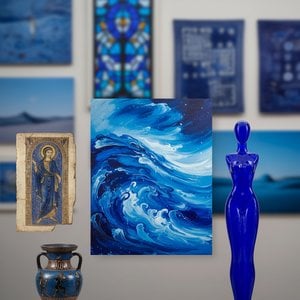
The Allure of Azure: Exploring the Symbolic & Aesthetic Depths of Blue in Art History
Explore the rich history of blue in art! Discover its symbolism, from ancient pigments to modern masterpieces by Kandinsky & Seurat. Uncover the psychological impact and cultural meanings behind this captivating hue.

Die Top 10 Gemälde in Schattierungen von 'Slate Blue': Kunst für Ihr Zuhause
Entdecken Sie die Top 10 Gemälde in faszinierenden 'Slate Blue' Tönen! Von Monet bis Manet – erleben Sie Kunstgeschichte und lassen Sie sich von Meisterwerken inspirieren. Hochwertige Kunstdrucke auf

The Enduring Power of Painting: A Historical & Contemporary Exploration of Form and Emotion
Explore the rich history & enduring techniques of oil painting with ArtsDot. Discover masterpieces, learn about art collecting, and find authentic handmade reproductions crafted by skilled artists.

The Enduring Legacy of Oil on Canvas: Technique, History & Aesthetic Impact
Explore the rich history & techniques of oil painting – from Renaissance masters to Impressionism. Discover pigments, layering methods, and why this timeless medium endures. Expert insights for artists & art enthusiasts.


