A Berlin Energy: The Life and Art of Rainer Fetting
Rainer Fetting, born December 31, 1949, in Wilhelmshaven, Germany, stands as a monumental figure within the Neo-Expressionist movement—a reaction against the prevailing minimalist trends of the late 20th century that championed raw emotion and bold visual language. His artistic journey began far from the polished studios of academic art; instead, he honed his craft initially as a carpenter and stage designer for the Landesbühne Niedersachsen Nord in Wilhelmshaven—experiences that instilled in him a foundational understanding of form, space, and narrative – elements which would later become central to his distinctive artistic vision. Moving to Berlin in the early 1970s, Fetting enrolled at the Hochschule für Bildende Künste (Academy of Fine Arts), studying under Hans Jaenisch—a pivotal encounter that shaped his intellectual trajectory and cemented his connection to a burgeoning countercultural milieu.Early Influences and Artistic Formation
Fetting’s formative years were marked by an immersion in Berlin's vibrant artistic landscape, where he absorbed the energy of Expressionist painters like Ernst Ludwig Kirchner and Franz Marc—artists who prioritized emotional intensity over formal precision. This influence is palpable in his early works—primarily depictions of Berlin cityscapes—which capture the gritty textures and fractured perspectives of a rapidly changing urban environment. These paintings weren’t merely representations; they were visceral responses to the anxieties and contradictions inherent in post-war Germany, reflecting the pervasive sense of division that characterized the Cold War era. Simultaneously, he pursued stage design, developing skills in spatial composition and theatrical storytelling—skills that would prove invaluable as he transitioned into painting and sculpture.The Galerie am Moritzplatz and The ‘Junge Wilde’ Movement
In 1977, Fetting established the Galerie am Moritzplatz alongside Helmut Middendorf, Bernd Zimmer, Salomé, Anne Jud, and Berthold Schepers—a daring initiative that would become a cornerstone of the ‘Junge Wilde’ (Young Wild Ones) movement. This gallery served as a crucible for a cohort of young artists who rejected the intellectual sterility of Conceptual Art and embraced expressive figuration—characterized by bold colors, dynamic brushstrokes, and an uncompromising commitment to emotional honesty. The Galerie am Moritzplatz fostered a spirit of experimentation and collaboration, nurturing a generation of artists determined to forge their own path away from established conventions. Fetting’s involvement in this movement solidified his reputation as a rebellious innovator—a figure who championed artistic freedom and challenged the prevailing aesthetic sensibilities of his time.Style Evolution: From Berlin to New York
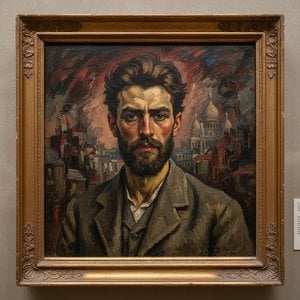
Fetting's stylistic evolution mirrored the broader shifts occurring within German art during the 1980s. Initially, his paintings focused on capturing the atmosphere of Berlin—the stark contrasts between light and shadow, the towering buildings, and the palpable tension of political division. He employed a technique reminiscent of Vincent van Gogh—characterized by thick impasto brushstrokes and vibrant hues—to convey emotion and immediacy. However, Fetting’s artistic vision expanded beyond the confines of Berlin as he embarked on a transformative journey to New York in 1978—a residency funded by DAAD that exposed him to American art and culture and profoundly influenced his subsequent work. During this period, he experimented with assemblage techniques—incorporating driftwood and other natural materials into his canvases—adding textural complexity and reflecting an interest in confronting the materiality of existence.Sculptural Achievements and Legacy
Beyond painting, Fetting achieved considerable renown as a sculptor—primarily working in bronze—creating monumental works that explore themes of human form and psychological depth. His most celebrated sculpture is Willy Brandt House’s centerpiece—a towering figure embodying resilience and moral courage—representing a testament to his artistic ambition and intellectual engagement. Furthermore, he undertook commissions for prominent cultural institutions—including Henri Nannen Press Award and Helmut Schmidt—demonstrating his versatility as an artist and cementing his place within the canon of contemporary sculpture. Rainer Fetting’s enduring legacy resides in his unwavering commitment to expressive figuration—a stylistic choice that defied prevailing trends and championed artistic freedom—leaving an indelible mark on German art history and inspiring generations of artists to come. His paintings continue to resonate with viewers today, capturing the essence of a time marked by both upheaval and creativity—a testament to Fetting’s singular vision and enduring influence.Fragen & Antworten
Wie viele Kunstwerke von Rainer Fetting können durchstöbert werden?
Sie können 27 Kunstwerke Werke von Rainer Fetting auf der Seite Alle Kunstwerke durchstöbern.
Wo finde ich Statistiken zu den Werken von Rainer Fetting?
Die Seite Statistiken von Rainer Fetting zeigt Statistiken, die auf Basis der auf diese Webseite gelisteten Kunstwerke des Künstlers berechnet wurden.
In welcher Stadt und in welchem Land wurde Rainer Fetting geboren?
Rainer Fetting wurde in Wilhelmshaven, Deutschland, geboren.