


 In echtem Maßstab anzeigen
 Versenden als Grußkarte
 Teilen
 Details anzeigen
 Leitfaden öffnen

 Herunterladen
 Ähnliche Objekte
 Röntgenaufnahme
 Diashow
 Besucherstatistiken
Conqueror


 Mehr anzeigen
Handgefertigte Ölreproduktion
Handgemaltes Ölgemälde auf Leinwand in Ihrer Wunschgröße und mit Rahmen, auf Bestellung von unseren Künstlern angefertigt. ( Zum Druck wechseln Zum digitalen Bild wechseln)




P118B €10

P118H €10

P118W €10

P438Z €10

P508JH €12

P508YH €12

P805H €10

P805Z €10

P919BZ €10

P919G €10

P919XJ €10

P959ZH €10

P968JZ €12

W106C €8

W218G €10

W218JH €8

W218Y €10

W307PJ €10

W316G €10

W316PJ €8

W316Y €10

W398PJ €8

W4111J €10

W500HY €15

W500JH €15

W692G €12

W849H €8

W940BG €15

W953PJ €8




Wählen Sie aus unseren vordefinierten Formaten, die den ursprünglichen Proportionen des Kunstwerks entsprechen.

Sie können Ihre eigenen Maße eingeben, um einen bestimmten Rahmen oder Platz auszufüllen. Wenn die gewählte Größe nicht den Proportionen des Originalbildes entspricht, werden wir das Kunstwerk entweder beschneiden oder das Gemälde durch zusätzliche, handgemalte Elemente erweitern. Ein digitales Mockup wird Ihnen zur Genehmigung zugesandt, bevor die Produktion beginnt.
Bitte beachten Sie, dass die Bildschirmvorschau nicht die tatsächliche Beschneidung oder Erweiterung widerspiegelt. Nur das Mockup zeigt die endgültige Komposition exakt an.
Obwohl Sondermaße verfügbar sind, empfehlen wir, eine Größe aus der vordefinierten Liste zu wählen, um die ursprünglichen Proportionen beizubehalten.
Nach der Bestellung wird das ArtsDot.com-Team dem Kunden Anweisungen per E-Mail zusenden und eine Mockup-Vorschau bereitstellen.
Weltweiter Versand () in nur 3 bis 4 Wochen statt der üblichen 5 Wochen. (10 Oktober). Keine Kompromisse bei der Qualität.

Kostenloser weltweiter Expressversand

Hochwertige Leinenleinwand

Vollständiger Versicherungsschutz beim Versand

Zollgebühren-Rückerstattungsgarantie

Garantie für exakte Farbtreue

100-tägiges Rückgaberecht (nur bei Mängeln)

100% Geld-zurück-Garantie

Angebot für Mengenrabatt
 Die Glasoption ist nur für Größen unter 110 cm verfügbar.

Conqueror
Reproduktionsmedium
Format der Reproduktion
-


Gesamtpreis
€ 226
A Symphony of Geometric Forms: The Soul of Paul Klee’s “Conqueror”
In the vast landscape of twentieth-century abstraction, few works possess the rhythmic tension and symbolic depth found in Paul Klee’s 1937 masterpiece, “Conqueror.” To encounter this painting is to step into a realm where the boundaries between music and vision dissolve, leaving behind a visual melody composed of sharp edges and vibrant hues. Klee, a master who viewed the canvas as a stage for cosmic movement, presents us with a narrative that feels both ancient and avant-garde. At its heart, the work depicts a solitary figure poised with a bow and arrow, standing in defiant confrontation against a monumental cube. This is not merely a depiction of a hunter; it is an exploration of the human spirit’s encounter with the overwhelming, structured forces of existence.
The composition is a masterclass in balanced tension. Klee utilizes a tripartite arrangement, placing the central figure before a colossal geometric monolith, flanked by two smaller cubes that anchor the scene. This deliberate structuring creates a sense of contained energy, as if the very air around the figure is vibrating with the potential for action. The figure’s posture, bolstered by a shield visible upon his back, speaks to a profound resilience—a visual metaphor for the courage required to face life's most daunting obstacles. For the collector or interior designer, this piece offers a sophisticated focal point that commands attention through its structural integrity and its ability to anchor a room with both weight and whimsy.
The Alchemy of Color and Expressionist Technique
Klee’s technique in “Conqueror” eschews the sterile precision often associated with geometric abstraction, opting instead for an expressionist vitality that breathes life into every shape. His brushstrokes are bold and textured, defining the contours of the human form and the massive cubes with a dynamism that suggests movement even within static forms. The artist’s palette is a carefully orchestrated clash of primary energies; vibrant yellows, deep reds, and piercing blues interact to create a visual richness that transcends mere decoration. These colors do not simply sit upon the surface; they evoke an emotional temperature, ranging from the warmth of sunlight to the urgent apprehension of a looming shadow.
This interplay of color and texture invites a tactile engagement with the work. The surface of the painting possesses a rhythmic quality, mirroring Klee’s lifelong fascination with musical arrangement. As one observes the way the light seems to catch the layered pigments, the painting reveals itself as a "visual music"—a term often used by scholars to describe Klee's ability to translate auditory harmony into graphic form. For those seeking to adorn a space with art that inspires deep contemplation, “Conqueror” provides an inexhaustible well of detail, rewarding the eye with new discoveries upon every viewing.
A Legacy of Abstraction for the Modern Collector
Understanding “Conqueror” requires acknowledging the historical weight Klee carried during its creation. Painted in 1937, a period of immense global upheaval, the painting’s themes of confrontation and protection resonate with a timeless psychological truth. Klee, a Swiss-born artist who navigated the complex movements of Cubism, Surrealism, and Expressionism, had reached a pinnacle of maturity where he could manipulate the most basic elements of art—line, dot, and plane—to communicate the most complex human emotions. The work stands as a testament to his ability to find the "hidden rhythms of the universe" within the simplest of shapes.
Integrating a high-quality reproduction of this masterpiece into a contemporary interior allows for a bridge between historical significance and modern aesthetic sensibilities. Whether placed in a minimalist gallery setting or a richly textured study, “Conqueror” brings with it an aura of intellectual depth and artistic prestige. It is more than a painting; it is an invitation to witness the triumph of form over chaos, making it an essential acquisition for anyone dedicated to the enduring power of fine art.
Fragen & Antworten
Kann ich eine Ölreproduktion von "Conqueror" bestellen?
Eine handgemalte Reproduktion von "Conqueror" von Paul Klee können Sie direkt auf diese Seite bestellen: eine handgemalte Ölreproduktion auf Leinenleinwand, auf Bestellung gefertigt.
Welche Platzierung passt zum Format von "Conqueror" von Paul Klee?
Format (Portrait) und der empfohlene Raum (Living Room) sind die zwei festgehaltenen Platzierungsdetails für "Conqueror" von Paul Klee.
Wer hat "Conqueror" erschaffen?
"Conqueror" wird Paul Klee zugeschrieben.
Wie kann ich einen Druck von "Conqueror" von Paul Klee erwerben?
Ein Druck von "Conqueror" von Paul Klee kann direkt auf diese Seite bestellt werden: ein Fine Art Print auf Baumwollkanvas oder Archiv-Leinwandpapier.
Wirken die Farben von "Conqueror" eher kräftig oder sanft?
"Conqueror" von Paul Klee weist eine Vivid Farbintensität auf.
Inwiefern lässt sich der Stil von "Conqueror" mit der Epoche seines Schöpfers in Verbindung bringen?
"Conqueror" gehört der Expressionist Abstraction-Strömung an, und sein Schöpfer war in der Ära der Moderne tätig.
Wie lässt sich "Conqueror" von Paul Klee in der Inneneinrichtung verwenden?
"Conqueror" von Paul Klee wird für Accent empfohlen, idealerweise in einem Living Room. Verwendung und Raumgestaltung geben gemeinsam Aufschluss darüber, wo eine Reproduktion am besten zur Geltung kommt.
Ähnliche Kunstwerke


Biografie des Künstlers
Paul Klee: Ein Leben in Farbe und Form
Frühes Leben und Ausbildung
- Paul Klee wurde am 18. Dezember 1879 in Münchenbuchsee, Schweiz, geboren.
- Sein Vater war Musiklehrer deutscher Herkunft, seine Mutter eine Schweizer Sängerin, was ihm schon früh eine Wertschätzung für die Künste vermittelte.
- Klee begann zunächst mit dem Zeichnen, gab diese jedoch schließlich auf zugunsten expressiverer Formen auf.
- Er studierte von 1898 bis 1901 an der Akademie der Bildenden Künste in München.
Künstlerische Entwicklung und Einflüsse
- In seinen frühen Werken waren Einflüsse des Jugendstils und Symbolismus zu sehen, aber er begann schnell, seinen einzigartigen Stil zu entwickeln.
- Eine entscheidende Reise nach Tunesien im Jahr 1914 hatte einen tiefgreifenden Einfluss auf seine Verwendung von Farbe und Abstraktion – das Licht und die Atmosphäre inspirierten eine Verschiebung hin zu kräftigeren Farbschemata.
- Er war stark von Bewegungen wie Expressionismus, Kubismus und Surrealismus beeinflusst, obwohl er sich nie vollständig mit einer einzelnen davon identifizierte.
- Sein Interesse an Musik informierte seinen künstlerischen Ansatz stark, indem er oft Malerei als Komponieren musikalischer Stücke verglich.
Die Bauhaus-Jahre und darüber hinaus
- Von 1931 bis 1933 lehrte Klee an der einflussreichen Bauhaus-Schule für Kunst, Design und Architektur neben Wassily Kandinsky.
- Diese Zeit war geprägt von einer Blüte seiner abstrakten Werke, in denen er sich mit Farbtheorie und formalen Beziehungen auseinandersetzte.
- Mit dem Aufstieg des Nationalsozialismus in Deutschland wurde Klee 1933 aufgrund seiner „degenerierten“ Kunst aus der Bauhaus entlassen.
- Er kehrte nach die Schweiz zurück und setzte seine Arbeit als Maler fort, sein Gesundheitszustand verschlechterte sich jedoch während dieser Zeit.
Wichtige Themen und künstlerischer Stil
- Klees Werk ist durch eine spielerische, aber tiefgründige Erforschung von Farbe, Linie und Form gekennzeichnet.
- Er verwendete oft kindliche Bilder und verspielte Kompositionen, die mit symbolischen Bedeutungen aufgeladen waren.
- Wiederkehrende Themen sind Gärten, Landschaften, Porträts und abstrakte Anordnungen.
- Seine „Paul Klee Notizen“, veröffentlicht posthum, enthüllen seine umfangreichen theoretischen Untersuchungen zu Farbe und Design.
Vermächtnis und historische Bedeutung
- Paul Klee starb am 29. Juni 1940 in Muralto, Schweiz.
- Er gilt als einer der wichtigsten Künstler des 20. Jahrhunderts, der die Lücke zwischen figurativer und abstrakter Kunst schloss.
- Seine innovative Verwendung von Farbe und seine theoretischen Schriften inspirieren bis heute Künstler und Designer.
- Klees Werk wird weltweit von Sammlern und Museen begehrt, wodurch er einen festen Platz in der modernen Kunstgeschichte einnimmt.

Paul Klee
1879 - 1940 , Schweiz
Eckdaten zum Künstler
- Bemerkenswerte Werke:
- Hamamet (1914)
- Rotgrün und Violett-Gelbe Rhythmen
- Wolken über Bor (1940)
- Geschwister (1930)
- Geburtsdatum: 18. Dezember 1879
- Geburtsort: Münchenbuchsee, Schweiz
- Künstlerische Richtung: Expressionismus, Kubismus, Surrealismus
- Nationalität: Schweizer-Deutscher Künstler
- Todatum: 29. Juni 1940
- Vollständiger Name: Paul Klee
Verwandte Artikel

Paul Klee: Die 25 Meisterwerke des Abstrakten – Kunst für Ihr Zuhause | ArtsDot
Entdecken Sie die 25 Meisterwerke von Paul Klee! Tauchen Sie ein in seine abstrakte Welt, voller Expressionismus und Bauhaus-Einflüsse. Hochwertige Kunst für Ihr Zuhause – jetzt bei ArtsDot entdecken!

Paul Cézanne: Die 25 Meisterwerke des Impressionismus | ArtsDot
Entdecken Sie die 25 Meisterwerke von Paul Cézanne! Tauchen Sie ein in die Welt des Impressionismus und Postimpressionismus. Erfahren Sie mehr über seine Stillleben, Landschaften & berühmten Gemälde – jetzt hochwertige Kunstdrucke auf ArtsDot.com.

Geometrische Abstraktion: Die 10 Meisterwerke, die Kunstgeschichte prägten | ArtsDot.com
Entdecken Sie die 10 Meisterwerke der geometrischen Abstraktion! Von Kandinsky bis Mondrian – erleben Sie die Geschichte, Farben & Formen dieser revolutionären Kunstrichtung. Hochwertige Kunstreproduktionen auf ArtsDot.com

Beyond Form & Color: Geometric Abstraction's Evolution in 20th/21st Century Art
Explore the evolution of geometric abstraction from Cubism to contemporary art. Discover key artists like Malevich & Mondrian, investment insights, and expert collecting advice at ArtsDot.
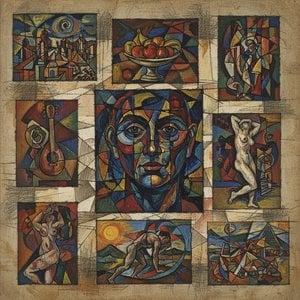
Kubistischer Expressionismus: Die 10 Meisterwerke, die eine Kunstrevolution prägten | ArtsDot
Entdecken Sie die 10 prägendsten Meisterwerke des Kubismus & Expressionismus! Erfahren Sie die Geschichten von Picasso, Braque und mehr. Kunstdrucke in Museumsqualiät für Ihr Zuhause – jetzt auf ArtsDot.com!


