

![Untitled [recto] 1 — Mark Rothko](/media/artworks/images-full/80/79/8079ee9d9b807a6bd9b6458a6e4f3ea1.jpg)
 Vorschau anzeigen
 Versenden
 Teilen
 Details anzeigen

 Herunterladen
 Ähnliche Objekte
 Röntgenaufnahme
 Diashow
Untitled [recto] 1

 Weiterlesen
Giclée / Kunstdruck
Giclée- oder Leinwanddruck in Museumsqualität mit schneller Produktion und flexiblen Veredelungsoptionen. ( Handgemalte Reproduktion bestellen Bild kaufen)




P118B $10

P118H $10

P118W $10

P438Z $10

P508JH $12

P508YH $12

P805H $10

P805Z $10

P919BZ $10

P919G $10

P919XJ $10

P959ZH $10

P968JZ $12

W106C $8

W218G $10

W218JH $8

W218Y $10

W307PJ $10

W316G $10

W316PJ $8

W316Y $10

W398PJ $8

W4111J $10

W500HY $15

W500JH $15

W692G $12

W849H $8

W940BG $15

W953PJ $8




Wählen Sie aus unseren vordefinierten Formaten, die den ursprünglichen Proportionen des Kunstwerks entsprechen.

Sie können Ihre eigenen Maße eingeben, um ein bestimmtes Format oder einen speziellen Platz einzupassen. Wenn das von Ihnen gewählte Format nicht den Proportionen des Originalbildes entspricht, werden wir das Kunstwerk entweder beschneiden oder das Bild mit einem gespiegelten oder einfarbigen Rand erweitern. Ein digitaler Entwurf wird Ihnen zur Genehmigung zugesandt, bevor die Produktion beginnt.
Bitte beachten Sie, dass die Vorschau auf dem Bildschirm nicht den tatsächlichen Zuschnitt oder die Erweiterung widerspiegelt. Nur der Entwurf zeigt die endgültige Komposition präzise an.
Obwohl Sondermaße verfügbar sind, empfehlen wir die Auswahl eines Maßes aus der vordefinierten Liste, um die ursprünglichen Proportionen zu bewahren.
Weltweiter Versand () innerhalb von 2 Wochen statt der üblichen 4/5 Wochen. (7 September)

Kostenloser weltweiter Expressversand

Hochwertige Leinenleinwand

Umfassender Versicherungsschutz beim Versand

Zollgebühren-Rückerstattungsgarantie

Garantie für exakte Farbtreue

100-Tage-Rückgaberecht (nur bei Mängeln)

100% Geld-zurück-Garantie

Mengenrabatt verfügbar
 Die Glasoption ist nur für Größen unter 110 cm verfügbar.

Untitled [recto] 1
Giclée / Kunstdruck
Format der Reproduktion
-


Gesamtpreis
$ 62
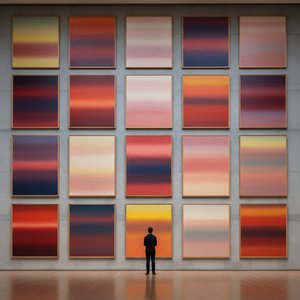
A Symphony in Color: Exploring Mark Rothko’s Untitled No. 1
The Rothko Chapel stands as an enduring testament to artistic vision and spiritual contemplation—a space deliberately designed to foster introspection amidst the grandeur of modern art. At its heart resides fourteen canvases by Mark Rothko, arguably his most iconic works, collectively known as “Black on Maroon” and “Black on Black.” These paintings are not merely decorative objects; they represent a profound engagement with existential questions concerning life, death, and the human condition.- Subject Matter: Rothko’s approach eschews traditional representation. Instead of depicting recognizable figures or landscapes, he presents amorphous blocks of color—primarily shades of black, maroon, and yellow—that seem to bleed into one another. This deliberate abstraction prioritizes emotional resonance over visual accuracy.
- Style: The paintings embody Rothko’s signature style – Color Field Painting. Developed in the mid-1940s and 50s, this technique involves applying large areas of pigment to canvas without discernible brushstrokes or contours. This method aims to bypass conscious perception and tap into primal feelings.
Technique: Layers of Color and Subtle Texture
Rothko’s meticulous process involved layering thin washes of color onto the canvas, building up tonal variations that create a mesmerizing interplay of light and shadow. He utilized mineral pigments—specifically hematite and manganese dioxide—to achieve the deep maroon hues characteristic of “Black on Maroon.” These pigments were carefully mixed to produce subtle textural nuances – almost imperceptible ridges—that contribute to the overall visual experience. The artist’s insistence on achieving maximum luminosity was paramount; he painstakingly adjusted the varnish to maximize reflectivity, ensuring that each painting radiated an ethereal glow.- Pigment Selection: Hematite and manganese dioxide were chosen for their ability to produce rich, saturated colors while maintaining a velvety surface texture.
- Varnish Application: Rothko applied multiple coats of varnish—specifically nitrocellulose—to enhance the luminosity and reflectivity of the pigment layers.
Historical Context: The Postwar Landscape of Emotion
Rothko’s work emerged from the aftermath of World War II, a period marked by disillusionment and uncertainty. Artists like Rothko sought to express profound psychological states—fear, grief, ecstasy—rather than documenting historical events. He drew inspiration from Eastern Orthodox spirituality, particularly the contemplative rituals of monastic life, which emphasized silence and inward focus. The Chapel itself was conceived as a space for spiritual pilgrimage, mirroring the artist’s desire to create art that transcends rational thought and connects directly with the viewer's subconscious.Symbolism: Blocks of Color as Vessels of Emotion
The seemingly simple blocks of color in Rothko’s paintings are laden with symbolic significance. Scholars have interpreted them as representations of the divine—the infinite expanse of God’s presence—and as metaphors for human consciousness—the fragmented yet interconnected nature of our inner lives. The horizontal format of the canvases reinforces this sense of stillness and contemplation, inviting viewers to surrender to the emotional power of the artwork.Emotional Impact: A Journey Into Inner Space
Ultimately, Rothko’s “Untitled No. 1” transcends mere visual perception; it compels us to confront fundamental questions about existence. The painting's hypnotic color palette and subtle textural variations induce a state of meditative calm—a willingness to accept the ambiguities of life without seeking definitive answers. Viewing this masterpiece is akin to embarking on an inner voyage, prompting reflection on themes of mortality, beauty, and the enduring quest for spiritual understanding.Ähnliche Kunstwerke


Über den Künstler
frühes Leben und Einflüsse
Mark Rothko (Marcus Rothkowitz), ein renommierter amerikanischer Künstler, wurde am 25. September 1903 in Dwinisk, Lettland, geboren. Seine Familie immigrierte als Kind, gerade zehn Jahre alt, in die Vereinigten Staaten. Diese kulturelle Veränderung beeinflusste später seinen künstlerischen Stil.künstlerische Entwicklung
Rothkos frühe Werke waren durch den **abstrakten Expressionismus** geprägt, einen Stil, der die Prozesshaftigkeit der Kunstschaffung betonte und nicht das Endprodukt. Seine Gemälde, wie No. 18 (1948) und Untitled (1948), zeigten seinen einzigartigen Ansatz für Farbe und Form.- **Farbfeld:** Rothkos Verwendung von kräftigen, rechteckigen Farbflächen, oft in scharfem Kontrast zueinander, erzeugte ein Gefühl von Tiefe und Emotion.
- **Organische Struktur:** Seine Gemälde wirkten lebendig, als wären die Farben lebendige Wesen.
Bemerkenswerte Werke und Ausstellungen
- No. 10 (1950), ein Gemälde, das einen bedeutenden Wandel in Rothkos Stil markierte, befindet sich heute im Besitz der Museum of Modern Arts.
- Die Seagram-Muralen, eine Reihe von Gemälden, die für das Restaurant Four Seasons angefertigt wurden, zeigten Rothkos Fähigkeit, seinen Stil an verschiedene Umgebungen anzupassen.
- No. 3 (1950), ein Gemälde, das Rothkos Verwendung von kräftigen, rechteckigen Farbflächen veranschaulicht.
Spätes Leben und Vermächtnis
Rothkos Leben war von Kämpfen mit psychischen Problemen und einer turbulenten Ehe geprägt. Er starb am 25. Februar 1970 im Alter von 66 Jahren. Trotz seiner Herausforderungen hinterließ Rothko einen unauslöschlichen Eindruck in der Kunstwelt. Ochre and Red on Red (Farbfeld), ein Gemälde, das Rothkos einzigartigen Ansatz für Farbe zeigt, befindet sich in der Sammlung von ArtsDot.com. Mark Rothkos Wikipedia-Seite bietet weitere Einblicke in sein Leben und seinen künstlerischen Stil.
Mark Rothko
1903 - 1970 , Lettland
Kurzinfos
- Beeinflusste Künstler: ['Minimalistische Kunst']
- Bemerkenswerte Werke:
- Nr. 18 (1948)
- Nr. 10 (1950)
- Seagram-Wandbilder
- Nr. 3 (1950)
- Einflüsse:
- Surrealismus
- Marxistische Philosophie
- Geburtsdatum: 25. September 1903
- Geburtsort: Daugavpils, Lettland
- Künstlerische Bewegung: Abstrakter Expressionismus
- Nationalität: Amerikanisch
- Todatum: 25. Februar 1970
- Vollständiger Name: Mark Rothko / Marcus Rothkowitz
Ähnliche Artikel
Mark Rothkos Meisterwerke: Die Top 25 für Kunstliebhaber | ArtsDot
Entdecken Sie die 25 Meisterwerke von Mark Rothko! Tauchen Sie ein in die Welt der abstrakten Kunst, des Expressionismus und der Farbfeldmalerei. Hochwertige Kunstdrucke & Reproduktionen auf ArtsDot.com – für Ihre Wohnräume.

Die Sublimität der Farbe: Mark Rothkos emotionale Landschaften des Abstrakten Expressionismus
Entdecken Sie die tiefgründige Welt von Mark Rothko und dem Abstrakten Expressionismus. Expertenanalyse der Farbfeldmalerei, ihre emotionale Tiefe & bleibenden Einfluss. Jetzt lesen!

Abstrakter Expressionismus: Die 10 Meisterwerke, die eine Kunstbewegung prägten |
Entdecken Sie die 10 Meisterwerke des Abstrakten Expressionismus! Von Jackson Pollock bis Mark Rothko – erfahren Sie die Geschichten hinter ikonischen Gemälde und finden Sie hochwertige Reproduktionen für Ihr Zuhause. Jetzt bei entdecken!

Kandinsky: Die 25 Meisterwerke des Abstrakten – Kunst für Ihr Zuhause | ArtsDot
Entdecken Sie die 25 bedeutendsten Gemälde von Wassily Kandinsky! Tauchen Sie ein in die Welt der abstrakten Kunst, des Expressionismus und der Farbkomposition. Hochwertige Kunstdrucke & Inspiration für Ihr Zuhause auf ArtsDot.com.

Die Top 10 berühmter Gemälde im Reich der dunklen Töne |
Entdecken Sie die Top 10 berühmter Gemälde, beherrscht von dunklen Tönen! Von Caravaggio bis Manet – erfahren Sie die Geschichten hinter Meisterwerken der Kunstgeschichte. Finden Sie Ihre perfekte Reproduktion auf .


