


 In echtem Maßstab anzeigen
 Versenden als Grußkarte
 Teilen
 Details anzeigen
 Leitfaden öffnen

 Herunterladen
 Ähnliche Objekte
 Röntgenaufnahme
 Diashow
 Besucherstatistiken
The thicket


 Mehr anzeigen
Die auf dieser Seite dargestellten Kunstwerke sind urheberrechtlich geschützt, was bedeutet, dass wir keine identische Reproduktion rechtmäßig erstellen oder verkaufen dürfen. Dieser Schutz wird durch internationale Abkommen wie die Berner Übereinkunft und durch nationale Gesetze, einschließlich derer, die von den ... festgelegt wurden US-Urheberrecht – Titel 17.
Diese Methode entspricht vollumfänglich den Urheberrechtsbestimmungen, da sie keine Kopie oder Vervielfältigung des geschützten Kunstwerks darstellt. Stattdessen handelt es sich um eine kreative Neuinterpretation – ein neues Gemälde, das vom Original inspiriert, aber nicht identisch mit ihm ist.
Giclée / Kunstdruck
Giclée- oder Leinwanddruck in Museumsqualität mit schneller Produktion und flexiblen Veredelungsoptionen. ( Handgemalte Reproduktion kaufen Zum digitalen Bild wechseln)




P118B €10

P118H €10

P118W €10

P438Z €10

P508JH €12

P508YH €12

P805H €10

P805Z €10

P919BZ €10

P919G €10

P919XJ €10

P959ZH €10

P968JZ €12

W106C €8

W218G €10

W218JH €8

W218Y €10

W307PJ €10

W316G €10

W316PJ €8

W316Y €10

W398PJ €8

W4111J €10

W500HY €15

W500JH €15

W692G €12

W849H €8

W940BG €15

W953PJ €8




Wählen Sie aus unseren vordefinierten Formaten, die den ursprünglichen Proportionen des Kunstwerks entsprechen.

Geben Sie die Breite und die Höhe an, die Sie benötigen, damit der Druck perfekt in Ihren Rahmen oder an Ihre Wand passt. Ein Druck kann nur beschnitten werden und niemals größer als das Originalbild gemacht werden; daher verliert ein Format mit einer anderen Proportion einen Teil des Bildes. Wir senden Ihnen ein digitales Mockup zur Freigabe, bevor wir den Druck ausführen. Das auf dieser Seite gezeigte Bild zeigt nicht den tatsächlichen Beschnitt – dies ist nur im Mockup ersichtlich.
Weltweiter Versand () innerhalb von 2 Wochen statt der üblichen 4/5 Wochen. (21 Oktober)

Kostenloser weltweiter Expressversand

Hochwertige Leinenleinwand

Vollständiger Versicherungsschutz beim Versand

Zollgebühren-Rückerstattungsgarantie

Garantie für exakte Farbtreue

100-tägiges Rückgaberecht (nur bei Mängeln)

100% Geld-zurück-Garantie

Angebot für Mengenrabatt
 Die Glasoption ist nur für Größen unter 110 cm verfügbar.

The thicket
Giclée / Kunstdruck
Format der Reproduktion
-


Gesamtpreis
€ 54
A Moment of Intimacy: Exploring Duchamp's "The Thicket"
Marcel Duchamp’s “The Thicket,” painted around 1918, is not merely a depiction of two women; it’s a carefully constructed meditation on the very essence of artistic representation and human connection. This evocative work, rendered in a predominantly blue palette, immediately draws the viewer into an intimate tableau – one of quiet contemplation and tender interaction. The scene unfolds with a remarkable simplicity: a kneeling woman, bathed in the cool tones of the background, receives a gentle touch from the standing figure behind her. The composition avoids overt narrative, instead focusing on capturing a fleeting moment, a shared experience that resonates with universal themes of vulnerability and affection.
Duchamp’s Revolutionary Approach
Created during a period of immense artistic upheaval – the rise of Cubism, Futurism, and the burgeoning Dada movement – “The Thicket” exemplifies Duchamp's radical departure from traditional representational art. Born Henri-Robert-Marcel Duchamp in 1887, he rejected the academic constraints of his early training, famously declaring that art should be ‘about the idea,’ not just a skillful rendering of reality. This philosophy is powerfully evident here; the painting’s power lies not in its technical execution – though it demonstrates a clear understanding of color and form – but in its ability to provoke thought about the nature of perception and artistic value. Duchamp's influence extends far beyond his immediate contemporaries, shaping the course of 20th-century art and paving the way for Conceptual Art.
Technique and Composition
The painting’s technique is characterized by a deliberate flatness of field and a restrained use of color. The blue tones dominate, creating a sense of melancholy and introspection. Duchamp's brushwork is precise yet subtly textured, avoiding any illusionistic depth. The composition itself is deceptively simple: the diagonal lines created by the figures and trees lead the eye through the scene, while the kneeling woman’s posture invites the viewer to step into the intimate space she occupies. The background trees, rendered with a degree of abstraction, serve not as mere decorative elements but as integral components of the overall composition, contributing to the painting's sense of depth and atmosphere.
Symbolism and Emotional Resonance
"The Thicket" resists easy interpretation, deliberately blurring the lines between representation and abstraction. The act of kneeling suggests submission or reverence, while the hand on the head represents comfort, protection, or perhaps even a subtle power dynamic. The blue palette contributes to an atmosphere of quiet contemplation and emotional vulnerability. Duchamp’s work invites viewers to engage with their own interpretations, recognizing that art's true value lies not in its literal depiction but in its ability to evoke emotion and stimulate thought. This piece is a testament to Duchamp's belief that the artist's role is to challenge conventions and provoke dialogue, making it a profoundly significant addition to the canon of modern art.
Fragen & Antworten
Welche Motive sind in "The thicket" von Marcel Duchamp zu sehen?
Die Motive von "The thicket" sind women figures, intimate moment, blue toned art, tree landscape, duchamp style, art provocateur, modern art.
Gibt es einen Leitfaden für "The thicket" von Marcel Duchamp?
Der Leitfaden zu „The thicket“ ist die Leitfaden-Seite des Kunstwerks – ein druckbares Infoblatt, das das Kunstwerk mit seiner Bildunterschrift, dem Urhebervermerk und einer Identifikationstabelle (Künstler, Daten, Medium, Originalgröße, Sammlung) zeigt.
Was stellt "The thicket" von Marcel Duchamp dar und welche Stimmung vermittelt es?
"The thicket" von Marcel Duchamp stellt women figures, intimate moment, blue toned art, tree landscape, duchamp style, art provocateur, modern art in einer Romantic Stimmung dar. Motiv und Atmosphäre beschreiben gemeinsam das Werk.
Ähnliche Kunstwerke


Biografie des Künstlers
frühes Leben und künstlerische Anfänge
Marcel Duchamp, ein französischer-amerikanischer Maler, Bildhauer, Schachspieler und Schriftsteller, wurde am 28. Juli 1887 in Blainville-Crevon, Normandie, Frankreich, geboren. Seine Familie, die für ihre kulturellen Neigungen bekannt war, förderte sein frühes Interesse an der Kunst. Duchamps künstlerischer Weg begann mit postimpressionistischen Stilen und experimentierte er mit klassischen Techniken und Themen.Künstlerische Entwicklung und bedeutende Werke
- Duchamps Werk ist mit Kubismus, Konzeptkunst und Dada verbunden, obwohl er vorsichtig mit dem Begriff „Dada“ umging.
- Eines seiner bekanntesten Werke, Fountain (1917), ein Urinal mit der Unterschrift „r. mutt“, ist ein Beispiel für seine Readymades und stellt die Vorstellung in Frage, was Kunst ausmacht.
- Portrait of Chess Players (1911), ein kubistisches Werk, zeigt sein Interesse am Spiel und seinen strategischen Aspekten.
- To Be Looked At (From the Other Side of the Glass) With One Eye, Close To, For Almost an Hour (1945) ist ein weiteres bemerkenswertes Werk, das seine dadaistischen Neigungen widerspiegelt.
Einfluss und Vermächtnis
Duchamps Einfluss auf die Kunst des 20. Jahrhunderts ist immens. Zusammen mit Pablo Picasso und Henri Matisse definierten er die bildenden Künste im frühen 20. Jahrhundert. Sein konzeptueller Ansatz zur Kunst hat Generationen von Künstlern beeinflusst.- Entdecken Sie mehr von Duchamps Werken auf ArtsDot: Marcel Duchamp | Werke
- Besuchen Sie das Ohara Museum of Art in Japan, das westliche Kunstsammlungen umfasst, darunter einige, die vom Stil von Duchamp beeinflusst sind: Ohara Museum of Art, Japan
- Erfahren Sie mehr über Lettrismus, eine Bewegung, die von Dada und Surrealismus beeinflusst wurde, der Duchamp angehörte: Lettrismus Kunstbewegung
Fazit
Marcel Duchamps rätselhafter Ansatz zur Kunst, der konzeptuelle und dadaistische Elemente verbindet, hat einen unauslöschlichen Eindruck in der Kunstwelt hinterlassen. Sein Vermächtnis inspiriert weiterhin Künstler und beeinflusst die Entwicklung moderner und zeitgenössischer Kunst. Franck Scurti, ein französischer Künstler, der für seine Konzeptkunst bekannt ist, geht in den Fußstapfen von Duchamp und trägt so zum Vermächtnis dieses Pioniers weiter.
Marcel Duchamp
1887 - 1968 , Frankreich
Eckdaten zum Künstler
- Bemerkenswerte Werke:
- Fountain
- Porträt der Schachspieler
- Das große Glas
- L.H.O.O.Q.
- Boîte-en-valise
- Geburtsdatum: 28. Juli 1887
- Geburtsort: Blainville-sur-Mer, Frankreich
- Künstler Oder Bewegungen, Von Denen Dieser Künstler Beeinflusst Wurde: ['Franck Scurti']
- Künstlerische Bewegung:
- Kubismus
- Dadaismus
- Konzeptkunst
- Nationalität: Französisch-Amerikanisch
- Todatum: 1968
- Vollständiger Name: Marcel Duchamp
Verwandte Artikel

Echoes of Time: Exploring the Enduring Appeal & Historical Context of Vintage Art Prints
Explore the captivating world of vintage art prints! Discover their history, collecting tips & enduring appeal. Expert insights on chromolithography and building a legacy collection with ArtsDot.
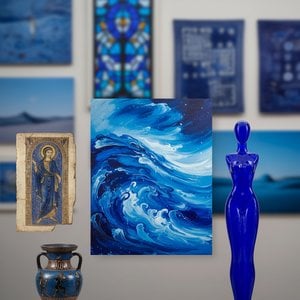
The Allure of Azure: Exploring the Symbolic & Aesthetic Depths of Blue in Art History
Explore the rich history of blue in art! Discover its symbolism, from ancient pigments to modern masterpieces by Kandinsky & Seurat. Uncover the psychological impact and cultural meanings behind this captivating hue.

Die Top 10 Gemälde in Schattierungen von 'Slate Blue': Kunst für Ihr Zuhause
Entdecken Sie die Top 10 Gemälde in faszinierenden 'Slate Blue' Tönen! Von Monet bis Manet – erleben Sie Kunstgeschichte und lassen Sie sich von Meisterwerken inspirieren. Hochwertige Kunstdrucke auf
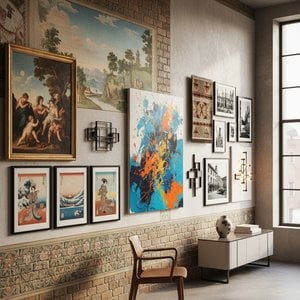
Transforming Spaces: A Comprehensive Exploration of Wall Decor Through Art History & Contemporary Practice
Explore the art of transforming spaces with our comprehensive guide to wall decor. From historical movements to contemporary trends, discover how to curate impactful interiors and commission bespoke artwork for a truly personalized aesthetic.

Giclée Prints: Archival Quality & Aesthetic Nuances for the Discerning Collector
Explore the world of giclée prints with ArtsDot. Learn about archival quality, aesthetic nuances & investment potential. Expert guidance for discerning art collectors seeking museum-quality reproductions and lasting value.


