


 In echtem Maßstab anzeigen
 Versenden als Grußkarte
 Teilen
 Details anzeigen
 Leitfaden öffnen

 Herunterladen
 Ähnliche Objekte
 Röntgenaufnahme
 Diashow
 Besucherstatistiken
Goetz von Berlichingen
 Oil On Canvas
- WallArt
- Impressionism/Post-Impressionism
 1917
1917- Modern
 85.0 x 100.0 cm
 Mehr anzeigen
Handgefertigte Ölreproduktion
Handgemaltes Ölgemälde auf Leinwand in Ihrer Wunschgröße und mit Rahmen, auf Bestellung von unseren Künstlern angefertigt. ( Zum Druck wechseln Zum digitalen Bild wechseln)




P118B $10

P118H $10

P118W $10

P438Z $10

P508JH $12

P508YH $12

P805H $10

P805Z $10

P919BZ $10

P919G $10

P919XJ $10

P959ZH $10

P968JZ $12

W106C $8

W218G $10

W218JH $8

W218Y $10

W307PJ $10

W316G $10

W316PJ $8

W316Y $10

W398PJ $8

W4111J $10

W500HY $15

W500JH $15

W692G $12

W849H $8

W940BG $15

W953PJ $8




Wählen Sie aus unseren vordefinierten Formaten, die den ursprünglichen Proportionen des Kunstwerks entsprechen.

Sie können Ihre eigenen Maße eingeben, um einen bestimmten Rahmen oder Platz auszufüllen. Wenn die gewählte Größe nicht den Proportionen des Originalbildes entspricht, werden wir das Kunstwerk entweder beschneiden oder das Gemälde durch zusätzliche, handgemalte Elemente erweitern. Ein digitales Mockup wird Ihnen zur Genehmigung zugesandt, bevor die Produktion beginnt.
Bitte beachten Sie, dass die Bildschirmvorschau nicht die tatsächliche Beschneidung oder Erweiterung widerspiegelt. Nur das Mockup zeigt die endgültige Komposition exakt an.
Obwohl Sondermaße verfügbar sind, empfehlen wir, eine Größe aus der vordefinierten Liste zu wählen, um die ursprünglichen Proportionen beizubehalten.
Nach der Bestellung wird das ArtsDot.com-Team dem Kunden Anweisungen per E-Mail zusenden und eine Mockup-Vorschau bereitstellen.
Weltweiter Versand () in nur 3 bis 4 Wochen statt der üblichen 5 Wochen. (25 September). Keine Kompromisse bei der Qualität.

Kostenloser weltweiter Expressversand

Hochwertige Leinenleinwand

Vollständiger Versicherungsschutz beim Versand

Zollgebühren-Rückerstattungsgarantie

Garantie für exakte Farbtreue

100-tägiges Rückgaberecht (nur bei Mängeln)

100% Geld-zurück-Garantie

Angebot für Mengenrabatt
 Die Glasoption ist nur für Größen unter 110 cm verfügbar.

Goetz von Berlichingen
Reproduktionsmedium
Format der Reproduktion
-


Gesamtpreis
$ 263
A Moment of Timeless Contemplation
In the quiet intensity of Lovis Corinth’s 1917 masterpiece, Goetz von Berlichingen, we are invited into a private sanctuary of intellect and devotion. The painting captures an elderly man, lost in the profound act of writing or drawing, his entire being focused on the tip of his instrument. This is not merely a portrait of a person, but a portrait of a process—the sacred moment where thought transforms into tangible form. Through a tightly cropped composition, Corinth eliminates the distractions of the outside world, forcing the viewer to confront the raw, concentrated energy of the subject. The atmosphere is heavy with the weight of experience, as if every stroke on the paper is informed by a lifetime of accumulated wisdom.
The visual language of the piece is defined by a masterful use of chiaroscroll, where dramatic contrasts between deep, swallowing shadows and piercing highlights create a sculptural depth. This interplay of light does more than just illuminate the subject; it carves his features out of the darkness, emphasizing the weathered textures of his skin and the ruggedness of his beard. The palette is somber and sophisticated, dominated by earthy browns, charcoal grays, and deep blacks, which are elegantly punctuated by soft creams and whites. This restrained color scheme ensures that the emotional gravity of the scene remains undisturbed, allowing the viewer to focus on the subtle tonal shifts that suggest a three-dimensional space emerging from the void.
The Vitality of the Brush
Technically, Goetz von Berlichingen stands as a testament to the power of the impasto technique. Corinth does not merely apply paint; he sculpts with it. The surface of the canvas is a landscape of visible, energetic brushstrokes that lend a rhythmic vitality to the work. You can almost feel the physical movement of the artist’s hand in the thick, tactile application of oil, particularly where the light catches the ridges of the paint on the man's clothing and face. This Post-Impressionistic approach moves away from the photographic precision of the past, favoring instead a sense of atmosphere and movement that captures the "feeling" of the moment rather than just its appearance.
For the discerning collector or interior designer, this painting offers a profound emotional resonance. It serves as a symbol of creation, dedication, and the enduring spirit of the human intellect. The organic shapes of the subject’s hands and face, rendered with a degree of abstraction, invite the eye to wander through the textures of the work. Whether placed in a quiet study, a sophisticated library, or a contemporary living space, this reproduction brings an air of historical depth and intellectual prestige. It is a piece that does not demand attention through loud colors, but commands it through its silent, powerful presence, making it an ideal centerpiece for those who appreciate art that speaks to the soul.
Ähnliche Kunstwerke


Biografie des Künstlers
Frühes Leben und Ausbildung
Lovis Corinth, geboren Franz Heinrich Louis am 21. Juli 1858 in Tapiau, Preußen, war ein deutscher Künstler und Schriftsteller, dessen reifes Werk als Maler und Grafiker eine Synthese aus Impressionismus und Expressionismus realisierte. Corinthians frühes Leben war geprägt von seinem Talent zum Zeichnen, das ihn dazu veranlasste, ab 1876 an der Akademie Königsbergs Malerei zu studieren.Künstlerische Entwicklung
Corinthians künstlerische Entwicklung wurde von mehreren Schlüsselfiguren und Bewegungen beeinflusst:- Lovis Corinth's frühe Arbeit war naturalistisch geprägt, was durch seinen Lehrer Otto Günther gefördert wurde.
- Er studierte unter Ludwig von Löfftz an der Akademie der Bildenden Künste München, die eine sorgfältige Beobachtung von Farben und Werten betonte.
- Corinth wurde auch von Courbet und der Barbizon-Schule sowie von den Werken Rubes während seiner Zeit in Antwerpen beeinflusst.
Wichtige Werke und Stil
Zu Corinthians bemerkenswertesten Werken gehören:- In der Schlachthof-Szene (78 x 89 cm, Staatsgalerie Stuttgart, Deutschland), das seine Verwendung von Öl auf Leinwand zeigt.
- Selbstbildnis (47 x 53 cm, Kunsthalle Bremen, Deutschland), das sein Können im Zeichnen demonstriert.
- weibliche Halbnackte mit Hut (283 x 383 cm, Kunstpalast Düsseldorf, Deutschland), das seine Verwendung von Bleistift hervorhebt.
Späteres Leben und Vermächtnis
Corinthians späteres Leben war geprägt von seiner Präsidentschaft der Berliner Sezession von 1915 bis 1925. Er veröffentlichte auch zahlreiche Essays über Kunstgeschichte, darunter "Das Erlernen der Malerei" im Jahr 1908. Corinth starb am 17. Juli 1925 nach einem Schlaganfall im Jahr 1911, der ihn teilweise gelähmt hatte. Wichtige Links:- Besuchen Sie die Künstlerseite von Lovis Corinth auf ArtsDot
- Lesen Sie mehr über Lovis Corinth auf Wikipedia
- Sehen Sie "In der Schlachthof-Szene" von Lovis Corinth auf ArtsDot
Bedeutung und Einfluss
Corinth gilt als einer der wichtigsten Künstler des deutschen Modernismus. Seine Werke verbinden impressionistische Elemente mit expressionistischen Tendenzen, was ihm eine einzigartige Position in der Kunstgeschichte einbrachte. Er beeinflusste nachfolgende Generationen von Künstlern und trug maßgeblich zur Entwicklung der modernen Kunst in Deutschland bei. Sein Einfluss ist bis heute spürbar.
Lovis Corinth
1858 - 1925 , Niederlande
Eckdaten zum Künstler
- Beeinflusste Künstler:
- Kirchner
- Beckmann
- Baselitz
- Bemerkenswerte Werke:
- In der Schlachthof-Szene
- Selbstbildnis
- Female Semi-Nude with Hat
- Einflüsse:
- Courbet
- Barbizon Schule
- Rubens
- Geburtsdatum: 21. Juli 1858
- Geburtsort: Tauwade, Niederlande
- Künstlerische Richtung: Impressionismus & Expressionismus
- Nationalität: Deutsch
- Sterbedatum: 17. Juli 1925
- Vollständiger Name: Lovis Corinth (Franz Heinrich Louis)
Verwandte Artikel

Impressionistic Realism's Finest: 10 Masterpieces for Your Home | ArtsDot
Journey through Impressionistic Realism with 10 iconic masterpieces by Monet, Renoir & Van Gogh. Explore art history, techniques & find museum-quality reproductions for your home at ArtsDot.com. Discover all masterpieces online!

Postimpressionismus: Die 10 Meisterwerke, die eine Ära prägten –
Entdecken Sie die 10 Meisterwerke des Postimpressionismus! Van Gogh, Cézanne & Co. – ihre Geschichten, Techniken und zeitlose Schönheit. Kunstdrucke in Museumsqualiät auf . Jetzt entdecken!

Lovis Corinth: Brückenbauer zwischen Impressionismus und Expressionismus – Eine künstlerische Entwicklung
Entdecken Sie Lovis Corinths faszinierende künstlerische Entwicklung! Von Realismus über Impressionismus bis Expressionismus – eine detaillierte Analyse seiner Werke, seines Einflusses und der Berliner Secession. Jetzt lesen!
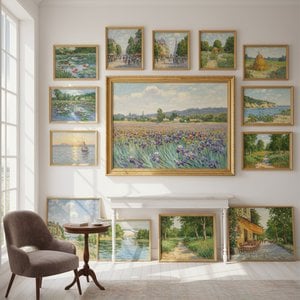
Impressionistische Landschaften: Die 10 Meisterwerke, die eine Kunstrichtung prägten | ArtsDot
Entdecken Sie die 10 Meisterwerke des Impressionismus! Von Monet bis Van Gogh – erleben Sie die Geschichten hinter berühmten Landschaftsbildern. Hochwertige Kunst Reproduktionen für Ihr Zuhause auf ArtsDot.com.

Jenseits des Impressionismus: Die emotionale Tiefe der postimpressionistischen Malerei
Entdecken Sie die emotionale Tiefe des Postimpressionismus! Analysieren Sie Cézanne, van Gogh, Gauguin & Seurat. Expertenwissen über Kunstgeschichte und Einfluss auf die Moderne.


