- Startseite

- Ölgemälde-Reproduktion
- Lovis Corinth
- Portrait of Julius Meier-Graefe

 Druck bestellen Bild kaufen
 Versenden
 Teilen
 Details
 Zu Favoriten hinzufügen

 Herunterladen
 Ähnliche Objekte
 X-Ray
X-Ray
 Diashow anzeigen
Portrait of Julius Meier-Graefe
 Acryl auf Leinwand
- Wandkunst
- Bridging Impressionism & Expressionism
 1917
1917- 19. Jahrhundert
 90.0 x 70.0 cm
 Musée d'Orsay
Handgefertigte Öl-Reproduktion
Handgemaltes Ölgemälde auf Leinwand in Ihrer Wunschgröße und mit Rahmen, auf Bestellung von unseren Künstlern angefertigt.




P118B $10

P118H $10

P118W $10

P438Z $10

P508JH $12

P508YH $12

P805H $10

P805Z $10

P919BZ $10

P919G $10

P919XJ $10

P959ZH $10

P968JZ $12

W106C $8

W218G $10

W218JH $8

W218Y $10

W307PJ $10

W316G $10

W316PJ $8

W316Y $10

W398PJ $8

W4111J $10

W500HY $15

W500JH $15

W692G $12

W849H $8

W940BG $15

W953PJ $8




 Weiterlesen
Wählen Sie aus unseren vordefinierten Größen, die den ursprünglichen Proportionen des Kunstwerks entsprechen.

Sie können Ihre eigenen Maße eingeben, um einen bestimmten Rahmen oder Platz auszufüllen. Wenn die gewählte Größe nicht den Proportionen des Originalbildes entspricht, werden wir das Kunstwerk entweder beschneiden oder das Gemälde durch zusätzliche, handgemalte Elemente erweitern. Ein digitales Mockup wird Ihnen zur Genehmigung zugesandt, bevor die Produktion beginnt.
Bitte beachten Sie, dass die Bildschirmvorschau nicht die tatsächliche Beschneidung oder Erweiterung widerspiegelt. Nur das Mockup zeigt die endgültige Komposition exakt an.
Obwohl Sondermaße verfügbar sind, empfehlen wir, eine Größe aus der vordefinierten Liste zu wählen, um die ursprünglichen Proportionen beizubehalten.
Nach der Bestellung wird das ArtsDot.com-Team dem Kunden Anweisungen per E-Mail zusenden und eine Mockup-Vorschau bereitstellen.
Weltweiter Versand () in nur 3 bis 4 Wochen statt der üblichen 5 Wochen. (1 Juli). Keine Kompromisse bei der Qualität.

Kostenloser weltweiter Expressversand

Hochwertige Leinenleinwand

Umfassender Versicherungsschutz beim Versand

Zollsteuer-Rückerstattungsgarantie

Garantie für echte Farbtreue

60-Tage-Rückgaberecht (nur bei Mängeln)

100% Geld-zurück-Garantie

Mengenrabatt verfügbar
 Die Glasoption ist nur in Größen unter 110 cm verfügbar.

Portrait of Julius Meier-Graefe
Art der Reproduktion
Größe der Reproduktion
-


Endpreis aller Optionen
-
Beschreibung des Kunstwerks
Lovis Corinth’s Portrait of Julius Meier-Graefe – A Study in Dignified Intensity
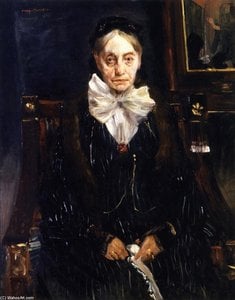
The painting “Portrait of Julius Meier-Graefe” by Lovis Corinth, completed in 1917, is far more than a simple likeness; it's a carefully constructed tableau of intellectual presence and restrained emotion. Corinth, a pivotal figure bridging the Impressionistic and Expressionist movements, masterfully captures the essence of his subject – a renowned art critic and historian – within a meticulously rendered yet subtly unsettling space. This work exemplifies Corinth’s signature style: a vibrant palette deployed with an almost sculptural quality, combined with a deep understanding of human psychology.
Meier-Graefe himself is presented in a pose of quiet contemplation. Dressed impeccably in a dark suit and tie, he sits upright in a chair, his hands clasped together – a gesture that speaks volumes about control and considered thought. His gaze, directed squarely at the viewer, isn’t confrontational but rather invites a shared moment of introspection. Corinth doesn't shy away from portraying the subject’s age; lines etched around Meier-Graefe’s eyes and mouth hint at a life lived fully, filled with intellectual pursuits and perhaps, quiet disappointments. The subtle asymmetry in his facial features – a slightly raised eyebrow, a barely perceptible downturn of the lips – adds to the portrait's complexity, preventing it from becoming merely idealized.
A Symphony of Color and Texture
Corinth’s technique is immediately striking. He employs a rich, layered application of paint—a hallmark of his mature style—creating a palpable sense of texture. The dark suit is rendered with meticulous detail, the fabric appearing almost to shimmer under the light. The background wall, adorned with handwritten text – likely excerpts from Meier-Graefe’s own writings – provides both context and visual interest. Corinth deliberately avoids a smooth, polished finish; instead, he allows brushstrokes to be visible, contributing to the painting's dynamic energy. The color palette is dominated by deep blues, browns, and greens, punctuated by flashes of crimson in the tie and subtle highlights on Meier-Graefe’s face. These colors aren’t merely decorative; they evoke a sense of gravitas and intellectual seriousness.
The artist's use of light is particularly noteworthy. It’s not harsh or dramatic but rather diffused, casting soft shadows that accentuate the subject’s features and create an atmosphere of quiet intimacy. Corinth masterfully uses chiaroscuro – the contrast between light and dark – to draw attention to Meier-Graefe’s face and hands, emphasizing his presence within the composition.
Historical Context and Symbolic Resonance
Created in 1917, during a period of immense social and political upheaval in Europe, the portrait reflects the anxieties and uncertainties of the time. Corinth was deeply engaged with contemporary art movements, particularly Expressionism, yet he maintained a critical distance from its more radical tendencies. Meier-Graefe, as an influential art critic, represented the established intellectual circles that were increasingly challenged by these new artistic voices. The inclusion of the handwritten text on the wall subtly suggests the weight of tradition and the ongoing dialogue between past and present.
Furthermore, Corinth’s choice to depict Meier-Graefe in a seated position – a posture associated with contemplation and authority – underscores the subject's role as a respected voice within the art world. The portrait can be interpreted as a meditation on the nature of knowledge, the burden of critical judgment, and the enduring power of ideas.
A Timeless Portrait of Intellectual Depth
“Portrait of Julius Meier-Graefe” is not simply a representation of a man; it’s an exploration of character and intellect. Corinth's masterful handling of color, texture, and composition creates a work that is both visually arresting and emotionally resonant. It stands as a testament to the artist’s ability to capture the essence of his subject – a quiet dignity, a thoughtful gaze, and a profound sense of intellectual depth. A reproduction of this painting offers a unique opportunity to bring this compelling portrait into your home or office, serving as a constant reminder of the power of art to illuminate the human spirit.
Ähnliche Kunstwerke


Biografie des Künstlers
Frühes Leben und Ausbildung
Lovis Corinth, geboren Franz Heinrich Louis am 21. Juli 1858 in Tapiau, Preußen, war ein deutscher Künstler und Schriftsteller, dessen reifes Werk als Maler und Grafiker eine Synthese aus Impressionismus und Expressionismus realisierte. Corinthians frühes Leben war geprägt von seinem Talent zum Zeichnen, das ihn dazu veranlasste, ab 1876 an der Akademie Königsbergs Malerei zu studieren.Künstlerische Entwicklung
Corinthians künstlerische Entwicklung wurde von mehreren Schlüsselfiguren und Bewegungen beeinflusst:- Lovis Corinth's frühe Arbeit war naturalistisch geprägt, was durch seinen Lehrer Otto Günther gefördert wurde.
- Er studierte unter Ludwig von Löfftz an der Akademie der Bildenden Künste München, die eine sorgfältige Beobachtung von Farben und Werten betonte.
- Corinth wurde auch von Courbet und der Barbizon-Schule sowie von den Werken Rubes während seiner Zeit in Antwerpen beeinflusst.
Wichtige Werke und Stil
Zu Corinthians bemerkenswertesten Werken gehören:- In der Schlachthof-Szene (78 x 89 cm, Staatsgalerie Stuttgart, Deutschland), das seine Verwendung von Öl auf Leinwand zeigt.
- Selbstbildnis (47 x 53 cm, Kunsthalle Bremen, Deutschland), das sein Können im Zeichnen demonstriert.
- weibliche Halbnackte mit Hut (283 x 383 cm, Kunstpalast Düsseldorf, Deutschland), das seine Verwendung von Bleistift hervorhebt.
Späteres Leben und Vermächtnis
Corinthians späteres Leben war geprägt von seiner Präsidentschaft der Berliner Sezession von 1915 bis 1925. Er veröffentlichte auch zahlreiche Essays über Kunstgeschichte, darunter "Das Erlernen der Malerei" im Jahr 1908. Corinth starb am 17. Juli 1925 nach einem Schlaganfall im Jahr 1911, der ihn teilweise gelähmt hatte. Wichtige Links:- Besuchen Sie die Künstlerseite von Lovis Corinth auf ArtsDot
- Lesen Sie mehr über Lovis Corinth auf Wikipedia
- Sehen Sie "In der Schlachthof-Szene" von Lovis Corinth auf ArtsDot
Bedeutung und Einfluss
Corinth gilt als einer der wichtigsten Künstler des deutschen Modernismus. Seine Werke verbinden impressionistische Elemente mit expressionistischen Tendenzen, was ihm eine einzigartige Position in der Kunstgeschichte einbrachte. Er beeinflusste nachfolgende Generationen von Künstlern und trug maßgeblich zur Entwicklung der modernen Kunst in Deutschland bei. Sein Einfluss ist bis heute spürbar.
Lovis Corinth
1858 - 1925 , Niederlande
Kurzinfos
- Beeinflusste Künstler:
- Kirchner
- Beckmann
- Baselitz
- Bemerkenswerte Werke:
- In der Schlachthof-Szene
- Selbstbildnis
- Female Semi-Nude with Hat
- Einflüsse:
- Courbet
- Barbizon Schule
- Rubens
- Geburtsdatum: 21. Juli 1858
- Geburtsort: Tauwade, Niederlande
- Künstlerische Richtung: Impressionismus & Expressionismus
- Nationalität: Deutsch
- Sterbedatum: 17. Juli 1925
- Vollständiger Name: Lovis Corinth (Franz Heinrich Louis)
Ähnliche Artikel

Lovis Corinth: Brückenbauer zwischen Impressionismus und Expressionismus – Eine künstlerische Entwicklung
Entdecken Sie Lovis Corinths faszinierende künstlerische Entwicklung! Von Realismus über Impressionismus bis Expressionismus – eine detaillierte Analyse seiner Werke, seines Einflusses und der Berliner Secession. Jetzt lesen!

Figurative Expressionism: Emotional Intensity & Subjective Reality in 20th-Century Art
Explore the powerful world of Figurative Expressionism with ArtsDot. Discover key artists like Kirchner & Beckmann, understand its emotional depth, and learn how to collect this influential 20th-century art movement.

The Visceral Cry of a Nation: Exploring Emotion & Distortion in German Expressionism
Explore the powerful world of German Expressionism with ArtsDot. Discover Kirchner, Nolde & Die Brücke's emotive masterpieces. Learn about this pivotal art movement and its lasting impact on modern art.

Deutsche Expressionismus Meisterwerke: Die 10 wichtigsten Kunstwerke für Ihr Zuhause
Entdecken Sie die 10 bedeutendsten Werke des Deutschen Expressionismus! Kirchner, Nolde & Co. – ihre Geschichten, Techniken und zeitlose Schönheit. Hochwertige Kunstdrucke auf ArtsDot.com kaufen und Ihr Zuhause mit emotionaler Kunst bereichern. Jetzt entdecken!

Neue Sachlichkeit: Objectivity, Realism & Social Commentary in Interwar German Art
Explore Neue Sachlichkeit – the pivotal German art movement critiquing Weimar society with unflinching realism. Discover key artists like Dix & Grosz, its historical context, and collecting insights for discerning investors.