
- Startseite

- Auf Leinwand drucken
- Henry Moore
- Sculptural Objects (Cramer 47)

 Gemälde kaufen Bild kaufen
 Versenden
 Teilen
 Details anzeigen
 Zu Favoriten hinzufügen

 Herunterladen
 Ähnliche Objekte
 Röntgenaufnahme
 Diashow anzeigen
Sculptural Objects (Cramer 47)


 Weiterlesen
Giclée / Kunstdruck
Giclée- oder Leinwanddruck in Museumsqualität mit schneller Produktion und flexiblen Veredelungsoptionen.




P118B $10

P118H $10

P118W $10

P438Z $10

P508JH $12

P508YH $12

P805H $10

P805Z $10

P919BZ $10

P919G $10

P919XJ $10

P959ZH $10

P968JZ $12

W106C $8

W218G $10

W218JH $8

W218Y $10

W307PJ $10

W316G $10

W316PJ $8

W316Y $10

W398PJ $8

W4111J $10

W500HY $15

W500JH $15

W692G $12

W849H $8

W940BG $15

W953PJ $8




Wählen Sie aus unseren vordefinierten Größen, die den ursprünglichen Proportionen des Kunstwerks entsprechen.

Sie können Ihre eigenen Maße eingeben, um ein bestimmtes Format oder einen speziellen Platz einzupassen. Wenn das von Ihnen gewählte Format nicht den Proportionen des Originalbildes entspricht, werden wir das Kunstwerk entweder beschneiden oder das Bild mit einem gespiegelten oder einfarbigen Rand erweitern. Ein digitaler Entwurf wird Ihnen zur Genehmigung zugesandt, bevor die Produktion beginnt.
Bitte beachten Sie, dass die Vorschau auf dem Bildschirm nicht den tatsächlichen Zuschnitt oder die Erweiterung widerspiegelt. Nur der Entwurf zeigt die endgültige Komposition präzise an.
Obwohl Sondermaße verfügbar sind, empfehlen wir die Auswahl eines Maßes aus der vordefinierten Liste, um die ursprünglichen Proportionen zu bewahren.
Weltweiter Versand () innerhalb von 2 Wochen statt der üblichen 4/5 Wochen. (18 Juli)

Kostenloser weltweiter Expressversand

Hochwertige Leinenleinwand

Umfassender Versicherungsschutz beim Versand

Zollsteuer-Rückerstattungsgarantie

Garantie für echte Farbtreue

60-Tage-Rückgaberecht (nur bei Mängeln)

100% Geld-zurück-Garantie

Mengenrabatt verfügbar
 Die Glasoption ist nur in Größen unter 110 cm verfügbar.

Sculptural Objects (Cramer 47)
Giclée / Kunstdruck
Größe der Reproduktion
-


Endpreis aller Optionen
-
Beschreibung des Sammlerstücks
A Symphony of Form: The Modernist Vision of Henry Moore
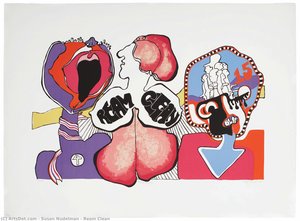
In the vast landscape of twentieth-century modernism, few names resonate with as much tactile power and organic grace as Henry Moore. While the world often recognizes him through his monumental bronze figures that command public squares across the globe, his foray into the two-dimensional realm offers a uniquely intimate window into his creative psyche. Sculptural Objects (Cramer 47) stands as a breathtaking testament to this versatility, a painting that does not merely depict shapes but breathes life into them. In this work, Moore transcends the boundaries of his usual medium, using the canvas to explore the very essence of volume, weight, and spatial relationship that defined his sculptural career.
The composition is a masterful dance of geometry and humanity. At first glance, the viewer is greeted by an array of striking shapes—a large, commanding blue sphere, a vibrant red shoe, and smaller crimson accents that punctuate the scene like rhythmic beats in a visual melody. Yet, these are not isolated relics; they exist within a living ecosystem. Moore populates this abstract landscape with figures who interact with these objects, creating a profound dialogue between the inanimate and the animate. This interplay suggests that art is not a distant, untouchable entity, but something woven into the fabric of human experience, inviting us to touch, move, and inhabit the space alongside the subjects.
Technique, Perspective, and the Modernist Spirit
What makes Sculptural Objects (Cramer 47) so captivating for the discerning collector or interior designer is its sophisticated use of perspective and depth. Moore employs a technique that allows for multiple viewpoints to coexist within a single frame, a hallmark of modernist innovation. This creates a sense of kinetic energy, as if the painting is shifting beneath our gaze. The way light and shadow play across the blue ball and the red forms gives them a palpable three-dimensionality, tricking the eye into perceiving weight where there is only pigment. It is this illusion of mass that makes the piece feel remarkably "sculptural" despite being a flat surface.
The emotional impact of the work lies in its balance of abstraction and familiarity. While the shapes are undeniably modern and abstract, the presence of the human figures anchors the piece in a recognizable reality. There is a sense of wonderment, a childlike curiosity as the people navigate this world of colorful totems. For those looking to adorn a sophisticated interior, this painting offers more than just decoration; it provides a focal point of intellectual depth and aesthetic joy. It brings with it the legacy of the English master—a legacy of finding the eternal in the organic and the monumental in the small.
Owning a high-quality reproduction of such a masterpiece allows one to bring the revolutionary spirit of Moore into the home. Whether placed in a minimalist contemporary gallery or a richly textured traditional study, Sculptural Objects (Cramer 47) serves as a conversation starter, an invitation to contemplate the beautiful tension between the shapes we create and the lives we lead.
Ähnliche Kunstwerke




Biografie des Künstlers
Frühes Leben und Ausbildung
Moore wurde in Castleford, West Riding von Yorkshire, England, als Sohn von Mary Baker und Raymond Spencer Moore geboren. Sein Vater, ein Autodidakt mit einer Leidenschaft für Musik und Literatur, ermutigte seine Söhne zu formaler Bildung. Henry Moore besuchte die Grund- und Elementarschule in Castleford, wo er begann, Ton zu modellieren und Holz zu schnitzen.Künstlerische Entwicklung und Stil
- Moores früheste dokumentierten Schnitzereien, wie die Plakette für die Scott Society an der Castleford Secondary School, stammen aus seiner frühen Jugend.
- Er übernahm später die Methode des direkten Schnitzens, die zu einem Kennzeichen seines Stils wurde, wie in Werken wie Die Jungfrau mit dem Kind zu sehen ist.
- Moores Formen sind meist Abstraktionen der menschlichen Figur, typischerweise Darstellungen von Mutter-Kind-Motiven oder liegenden Figuren. Viele Interpreten vergleichen die wellenförmige Form seiner liegenden Figuren mit der Landschaft und den Hügeln seines Geburtsortes Yorkshire.
Wichtige Werke und Vermächtnis
- Moores semiabstrakte, monumentale Bronzeskulpturen befinden sich auf der ganzen Welt als Kunstwerke im öffentlichen Raum und zeugen von seinem außergewöhnlichen Können und seinem Beitrag zur modernen britischen Bildhauerei.
- Seine Fähigkeit, Großaufträge zu erfüllen, machte ihn außergewöhnlich wohlhabend, doch er lebte sparsam, wobei ein Großteil seines Einkommens der Dotierung der Henry Moore Foundation diente, die weiterhin Bildung und Förderung der Künste unterstützt.
- Moores Werke sind in verschiedenen Museen zu finden, darunter die Ingram Collection of Modern British and Contemporary Art, die eine beeindruckende Auswahl moderner und zeitgenössischer Kunst aus Großbritannien und darüber hinaus zeigt.
Einflüsse und Bedeutung
Moore wurde von der Kunst verschiedener Kulturen beeinflusst, insbesondere von mexikanischen Skulpturen, die er während einer Reise in den 1930er Jahren sah. Diese Begegnungen trugen zu seiner Entwicklung hin zu vereinfachten, abstrakten Formen bei. Seine Arbeit war wegweisend für die moderne britische Bildhauerei und etablierte ihn als einen der wichtigsten Künstler des 20. Jahrhunderts. Er revolutionierte das Verständnis von Form, Raum und Balance in der Skulptur und beeinflusste Generationen nachfolgender Künstler.
Henry Moore
1898 - 1986 , Vereinigtes Königreich
Kurzinfos
- Bemerkenswerte Werke:
- Spitzes Torso
- Messerkante Spiegel Zwei Teile
- Schlafendes Haupt - Gutenachtlied
- Aufrechte Motive, Modell Nr. 1
- Geburtsdatum: 1898
- Geburtsort: Castleford, Vereinigtes Königreich
- Künstlerische Richtung: Abstrakte Skulptur
- Nationalität: Britisch
- Sterbedatum: 1986
- Vollständiger Name: Henry Moore
Ähnliche Artikel

Die Top 10 Gemälde in Schattierungen von 'Slate Blue': Kunst für Ihr Zuhause
Entdecken Sie die Top 10 Gemälde in faszinierenden 'Slate Blue' Tönen! Von Monet bis Manet – erleben Sie Kunstgeschichte und lassen Sie sich von Meisterwerken inspirieren. Hochwertige Kunstdrucke auf

Kandinsky: Die 25 Meisterwerke des Abstrakten – Kunst für Ihr Zuhause | ArtsDot
Entdecken Sie die 25 bedeutendsten Gemälde von Wassily Kandinsky! Tauchen Sie ein in die Welt der abstrakten Kunst, des Expressionismus und der Farbkomposition. Hochwertige Kunstdrucke & Inspiration für Ihr Zuhause auf ArtsDot.com.

Claude Monet: Die 25 Meisterwerke des Impressionismus für Ihr Zuhause | ArtsDot
Entdecken Sie die 25 Meisterwerke von Claude Monet! Tauchen Sie ein in die Welt des Impressionismus, erleben Sie Seerosen, Sonnenaufgänge & Kathedralen. Hochwertige Reproduktionen für Ihr Zuhause – exklusiv auf ArtsDot.com.

Abstrakter Expressionismus: Die 10 Meisterwerke, die eine Kunstbewegung prägten |
Entdecken Sie die 10 Meisterwerke des Abstrakten Expressionismus! Von Jackson Pollock bis Mark Rothko – erfahren Sie die Geschichten hinter ikonischen Gemälde und finden Sie hochwertige Reproduktionen für Ihr Zuhause. Jetzt bei entdecken!

Paul Cézanne: Die 25 Meisterwerke des Impressionismus | ArtsDot
Entdecken Sie die 25 Meisterwerke von Paul Cézanne! Tauchen Sie ein in die Welt des Impressionismus und Postimpressionismus. Erfahren Sie mehr über seine Stillleben, Landschaften & berühmten Gemälde – jetzt hochwertige Kunstdrucke auf ArtsDot.com.



