


 Vorschau anzeigen
 Versenden
 Teilen
 Details anzeigen

 Herunterladen
 Ähnliche Objekte
 Röntgenaufnahme
 Diashow
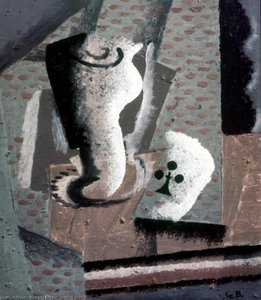
untitled (154)


 Weiterlesen
Giclée / Kunstdruck
Giclée- oder Leinwanddruck in Museumsqualität mit schneller Produktion und flexiblen Veredelungsoptionen. ( Zur handgemalten Reproduktion wechseln Zum Bild wechseln)




P118B $10

P118H $10

P118W $10

P438Z $10

P508JH $12

P508YH $12

P805H $10

P805Z $10

P919BZ $10

P919G $10

P919XJ $10

P959ZH $10

P968JZ $12

W106C $8

W218G $10

W218JH $8

W218Y $10

W307PJ $10

W316G $10

W316PJ $8

W316Y $10

W398PJ $8

W4111J $10

W500HY $15

W500JH $15

W692G $12

W849H $8

W940BG $15

W953PJ $8




Wählen Sie aus unseren vordefinierten Formaten, die den ursprünglichen Proportionen des Kunstwerks entsprechen.

Sie können Ihre eigenen Maße eingeben, um ein bestimmtes Format oder einen speziellen Platz einzupassen. Wenn das von Ihnen gewählte Format nicht den Proportionen des Originalbildes entspricht, werden wir das Kunstwerk entweder beschneiden oder das Bild mit einem gespiegelten oder einfarbigen Rand erweitern. Ein digitaler Entwurf wird Ihnen zur Genehmigung zugesandt, bevor die Produktion beginnt.
Bitte beachten Sie, dass die Vorschau auf dem Bildschirm nicht den tatsächlichen Zuschnitt oder die Erweiterung widerspiegelt. Nur der Entwurf zeigt die endgültige Komposition präzise an.
Obwohl Sondermaße verfügbar sind, empfehlen wir die Auswahl eines Maßes aus der vordefinierten Liste, um die ursprünglichen Proportionen zu bewahren.
Weltweiter Versand () innerhalb von 2 Wochen statt der üblichen 4/5 Wochen. (10 August)

Kostenloser weltweiter Expressversand

Hochwertige Leinenleinwand

Umfassender Versicherungsschutz beim Versand

Zollgebühren-Rückerstattungsgarantie

Garantie für exakte Farbtreue

60 Tage Rückgaberecht (nur bei Mängeln)

100% Geld-zurück-Garantie

Mengenrabatt verfügbar
 Die Glasoption ist nur für Größen unter 110 cm verfügbar.

untitled (154)
Giclée / Kunstdruck
Format der Reproduktion
-


Gesamtpreis
$ 62
Sammlerstück-Beschreibung
Georges Braque’s Quiet Revolution: Decoding ‘Untitled (154)’
Georges Braque’s “Untitled (154)” stands as a testament to the understated brilliance of Cubism, an artistic movement that irrevocably altered the course of modern art. Painted in 1913, this deceptively simple composition—a depiction of a man seated at a table laden with objects—holds within it layers of intellectual and visual complexity that continue to fascinate scholars and collectors alike.
- Subject Matter: The scene portrays an ordinary domestic tableau – a man absorbed in contemplation, accompanied by a table displaying commonplace items. This deliberate choice wasn’t intended to convey grand narratives but rather to explore the fundamental building blocks of perception itself.
- Style & Technique: Braque's masterful application of Cubist principles is immediately apparent. He employs fragmented planes and intersecting lines—a technique pioneered alongside Pablo Picasso—to dismantle traditional perspective and represent objects from multiple viewpoints simultaneously. The muted palette – predominantly browns, ochres, and creams – reinforces this sense of spatial ambiguity.
- Historical Context: Created during the turbulent years leading up to World War I, “Untitled (154)” reflects the anxieties and uncertainties of its time. Cubism emerged as a reaction against Impressionism’s focus on fleeting impressions, advocating instead for a more analytical approach to depicting reality. It mirrored the broader intellectual currents of the era, influenced by thinkers like Henri Bergson who questioned the notion of linear time.
Exploring Spatial Illusion and Analytical Cubism
The painting’s power resides in its ability to challenge our ingrained assumptions about how we see the world. Braque meticulously dissects each element—the man, the table, the vase, the cup—reducing them to geometric forms that overlap and intersect without adhering to conventional spatial conventions. This is quintessential Analytical Cubism; it's not about capturing a visual likeness but rather investigating the underlying structure of form.
- Color Palette: The subdued color scheme contributes significantly to the painting’s mood, fostering a feeling of quiet contemplation and introspection. Braque deliberately avoids vibrant hues, opting for earthy tones that emphasize texture and materiality.
- Material Exploration: Braque's innovative use of collage—incorporating textured paper fragments into the canvas—further underscores his commitment to experimentation. This technique reflects the broader artistic ethos of Cubism, which sought to break free from academic constraints and embrace new possibilities for visual expression.
Symbolic Resonance & Emotional Impact
"Untitled (154)" transcends mere representation; it invites viewers to engage in a dialogue about perception and consciousness. The man’s posture—seated calmly, gazing downwards—suggests a state of detached observation, mirroring the artist's own intellectual rigor. The objects on the table serve as symbols of everyday life, yet they are presented in a way that disrupts our habitual ways of seeing them.
- Compositional Harmony: Despite its fractured appearance, the painting achieves remarkable compositional balance. Braque skillfully arranges the elements to create a sense of visual stability, demonstrating his mastery of artistic form.
- Legacy & Influence: Braque’s “Untitled (154)” remains an enduring emblem of Cubist innovation and continues to inspire artists today. Its understated elegance and intellectual depth solidify its place as one of the most significant artworks of the early 20th century.
Ähnliche Kunstwerke


Über den Künstler
**frühes Leben und Ausbildung**
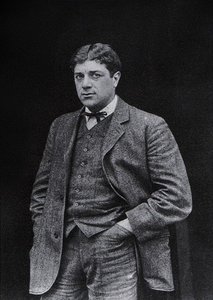
Georges Braque, ein prominenter französischer Maler, Kollagist, Bleistrichzeichner, Grafiker und Bildhauer, wurde am 13. Mai 1882 in Argenteuil, Val-d'oise, geboren. Er wuchs in Le Havre auf und erhielt zunächst eine Ausbildung als Hausmaler und Dekorateur wie sein Vater und Großvater. Braques künstlerische Neigungen führten ihn jedoch dazu, von 1897 bis 1899 an der École des Beaux-Arts in Le Havre Malerei zu studieren.**Künstlerische Entwicklung und Fauvisme**
Im Jahr 1902, nachdem er seine Lehre bei einem Dekorateur in Paris abgeschlossen hatte, besuchte Braque bis 1904 die Académie Humbert. Dieser Zeitraum markierte seine Einführung ins Fauvismus, einen Stil, der durch lebendige Farben und emotionale Reaktionen gekennzeichnet ist. Beeinflusst von den Werken von Henri Matisse und André Derain, übernahm Braque einen fauvistischen Ansatz, wie in seinem Gemälde The Patience (Fauvismus, Öl auf Leinwand).**Beitrag zum Kubismus**
Braques Zusammenarbeit mit Pablo Picasso von 1908 bis 1912 führte zur Entwicklung des Kubismus. Ihre analytischen kubistischen Werke, wie z.B. Georges Braque: The Patience und Pablo Picasso: Clarinet(analytischer Kubismus, Öl auf Leinwand), gelten heute als Meilensteine der Kunstgeschichte.**Erbe und bemerkenswerte Werke**
* Houses at L'Estaques: Ein Zeugnis für Braques innovatives Einsatz von Geometrie und simultaner Perspektive. * The Patience(Fauvismus, Öl auf Leinwand): Demonstriert Braques fauvistischen Stil. * Clarinet(analytischer Kubismus, Öl auf Leinwand): Eine kollaborative kubistische Arbeit mit Picasso.**Museen und Sammlungen**
* Musée d'Orsay: Bietet eine umfangreiche Sammlung impressionistischer und postimpressionistischer Kunst, darunter Werke von Braque. * Musée de l'Orangerie: Zeigt eine breite Palette von Kunstwerken, darunter Werke von Braque und anderen bedeutenden Künstlern.- Erfahren Sie mehr über Georges Braques Leben und Werk auf ArtsDot.com
- Entdecken Sie die Sammlung des Musée d'Orsay, die Werke von Braque und anderen Künstlern umfasst, unter Musée d'Orsay - Wikipedia
- Erfahren Sie mehr über den Fauvismus und seinen Einfluss auf die Entwicklung des Kubismus mit Fauvismus Kunstbewegung auf ArtsDot.com
Georges Braque
1882 - 1963 , Frankreich
Kurzinfos
- Beeinflusste Künstler: ['Pablo Picasso']
- Bemerkenswerte Werke:
- Häuser in L'Estaque
- Die Geduld (Fauvismus)
- Stillleben mit Pfeife
- Mandola
- Einflussreiche Künstler:
- Henri Matisse
- André Derain
- Paul Cézanne
- Geburtsdatum: 13. Mai 1882
- Geburtsort: Argenteuil, Frankreich
- Künstlerischer Stil: Kubismus, Fauvismus
- Nationalität: Französisch
- Sterbedatum: 1963
- Vollständiger Name: Georges Braque
Ähnliche Artikel

Deconstructing Reality: Analytical Cubism's Formative Years & Lasting Influence
Explore the revolutionary world of Analytical Cubism with ArtsDot. Discover Picasso & Braque's groundbreaking techniques, its philosophical roots, and lasting impact on modern art. Expert insights for collectors.

Georges Braque: Die 25 Meisterwerke des Kubismus für Ihr Zuhause | ArtsDot
Entdecken Sie die 25 bedeutendsten Kunstwerke von Georges Braque – vom Kubismus bis zum Fauvismus. Erfahren Sie die Geschichten hinter den Meisterwerken und finden Sie hochwertige Reproduktionen für Ihr Zuhause auf ArtsDot.com.

Die 10 Meisterwerke des Kubismus: Kunst für Ihr Zuhause | ArtsDot
Entdecken Sie die 10 bedeutendsten Meisterwerke des Kubismus von Picasso, Braque & Gris! Erfahren Sie mehr über Kunstgeschichte, Techniken und Farben. Hochwertige Kunstdrucke auf ArtsDot.com – für stilvolle Wandgestaltung.

Die 10 Meisterwerke des Kubismus: Kunstgeschichte für Ihr Zuhause |
Entdecken Sie die 10 prägendsten Meisterwerke des Kubismus! Von Picasso bis Braque – erfahren Sie die Geschichten hinter ikonischen Gemälde und lassen Sie sich von moderner Kunst inspirieren. Kunstreproduktionen in Museumsqualiät auf .

Georges Braque: Pionier des Kubismus und die Evolution moderner Formensprache
Entdecken Sie Georges Braques revolutionären Einfluss auf den Kubismus und die moderne Kunstgeschichte. Expertenanalyse seiner Formensprache, Werke & Bedeutung. Jetzt lesen!



