
- Startseite

- Ölgemälde-Reproduktion
- George Grosz
- Interrogation
 Druck bestellen Bild kaufen
 Versenden
 Teilen
 Details
 Zu Favoriten hinzufügen

 Herunterladen
 Ähnliche Objekte
 X-Ray
X-Ray
 Diashow anzeigen
Interrogation
 Acrylic
- WallArt
- Expressionist Satire
 1938
1938 46.0 x 59.0 cm
 Ben Uri Galerie und Museum
 Weiterlesen
Handgefertigte Öl-Reproduktion
Handgemaltes Ölgemälde auf Leinwand in Ihrer Wunschgröße und mit Rahmen, auf Bestellung von unseren Künstlern angefertigt.




P118B $10

P118H $10

P118W $10

P438Z $10

P508JH $12

P508YH $12

P805H $10

P805Z $10

P919BZ $10

P919G $10

P919XJ $10

P959ZH $10

P968JZ $12

W106C $8

W218G $10

W218JH $8

W218Y $10

W307PJ $10

W316G $10

W316PJ $8

W316Y $10

W398PJ $8

W4111J $10

W500HY $15

W500JH $15

W692G $12

W849H $8

W940BG $15

W953PJ $8




Wählen Sie aus unseren vordefinierten Größen, die den ursprünglichen Proportionen des Kunstwerks entsprechen.

Sie können Ihre eigenen Maße eingeben, um einen bestimmten Rahmen oder Platz auszufüllen. Wenn die gewählte Größe nicht den Proportionen des Originalbildes entspricht, werden wir das Kunstwerk entweder beschneiden oder das Gemälde durch zusätzliche, handgemalte Elemente erweitern. Ein digitales Mockup wird Ihnen zur Genehmigung zugesandt, bevor die Produktion beginnt.
Bitte beachten Sie, dass die Bildschirmvorschau nicht die tatsächliche Beschneidung oder Erweiterung widerspiegelt. Nur das Mockup zeigt die endgültige Komposition exakt an.
Obwohl Sondermaße verfügbar sind, empfehlen wir, eine Größe aus der vordefinierten Liste zu wählen, um die ursprünglichen Proportionen beizubehalten.
Nach der Bestellung wird das ArtsDot.com-Team dem Kunden Anweisungen per E-Mail zusenden und eine Mockup-Vorschau bereitstellen.
Weltweiter Versand () in nur 3 bis 4 Wochen statt der üblichen 5 Wochen. (1 Juli). Keine Kompromisse bei der Qualität.

Kostenloser weltweiter Expressversand

Hochwertige Leinenleinwand

Umfassender Versicherungsschutz beim Versand

Zollsteuer-Rückerstattungsgarantie

Garantie für echte Farbtreue

60-Tage-Rückgaberecht (nur bei Mängeln)

100% Geld-zurück-Garantie

Mengenrabatt verfügbar
 Die Glasoption ist nur in Größen unter 110 cm verfügbar.

Interrogation
Art der Reproduktion
Größe der Reproduktion
-


Endpreis aller Optionen
-
Beschreibung des Kunstwerks
A Portrait of Trauma: Examining George Grosz’s ‘Interrogation’
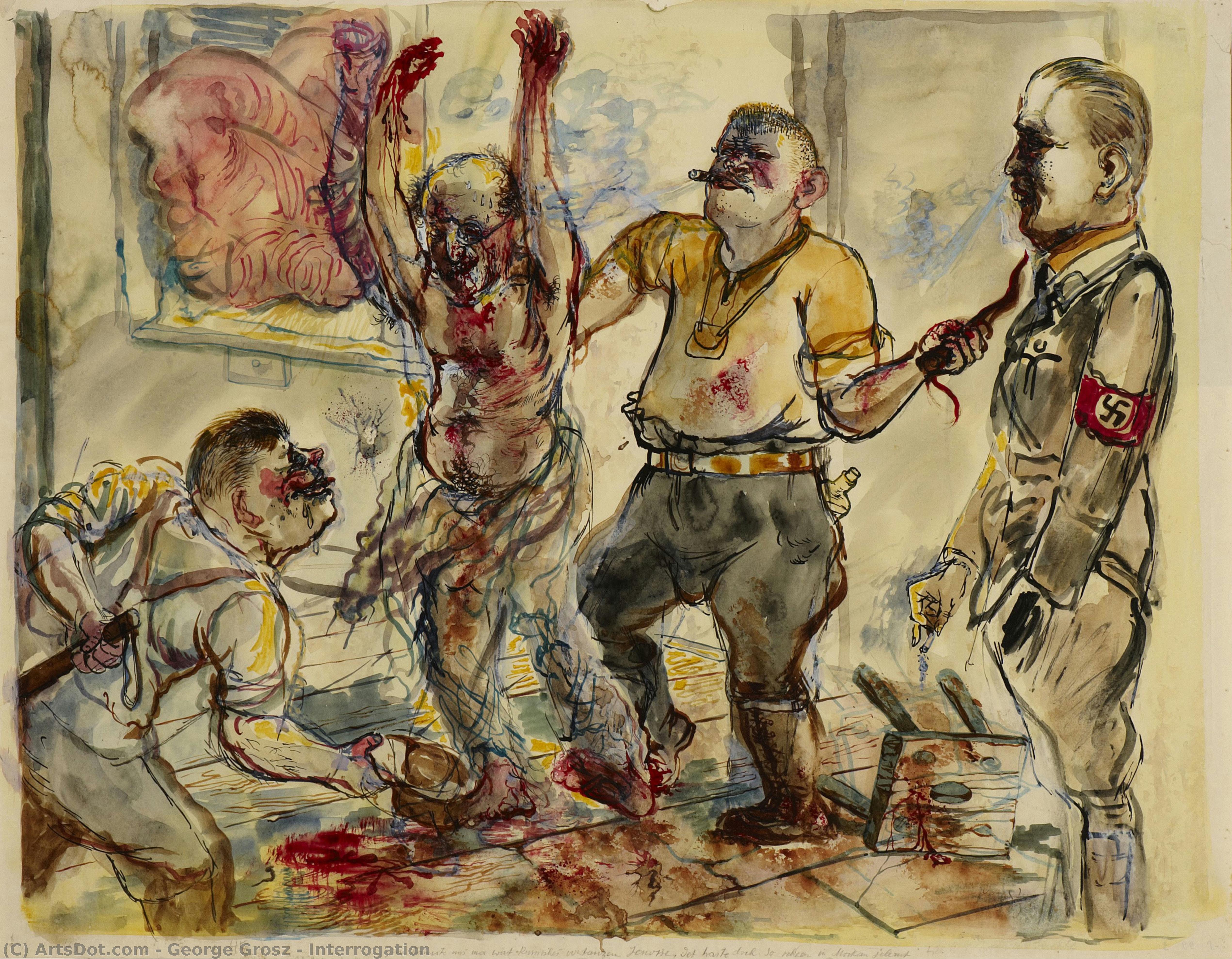
The painting “Interrogation,” created by German artist George Grosz in 1938, stands as a chilling testament to the anxieties and moral compromises plaguing Europe during the Weimar Republic. More than just a depiction of a single scene, it's an unsettling exploration of power dynamics, violence, and the psychological scars inflicted upon individuals caught within oppressive societal forces—a preoccupation that defines Grosz’s oeuvre throughout his career. This artwork resides within the Ben Uri collection, reflecting its significance as a visual record of a pivotal moment in German history.Style and Technique: Brutal Realism Infused with Expressionist Distortion
Grosz's artistic style is undeniably rooted in Expressionism, yet he transcends mere stylistic imitation. He employs jagged lines and angular shapes to convey raw emotion and psychological torment—a deliberate rejection of the idealized beauty championed by academic art circles. The artist’s meticulous attention to detail contrasts sharply with his expressive distortions; observe how the bloodstains on the floor and walls aren't merely decorative elements but crucial components in establishing a palpable atmosphere of dread and brutality. Grosz utilizes oil paints on canvas, layering textures to create a surface that feels both unsettlingly tactile and emotionally resonant. The stark contrast between light and shadow amplifies the dramatic tension inherent in the composition.Historical Context: Weimar Germany Under Siege
“Interrogation” emerged during a period of profound instability—the Weimar Republic was grappling with economic hardship, political polarization, and simmering antisemitism. Grosz’s work directly confronts these issues, mirroring the pervasive disillusionment felt by many intellectuals and artists of his time. The painting references the infamous murder of Grosz himself, highlighting the artist's vulnerability to persecution under increasingly authoritarian regimes. This biographical element underscores the broader context of artistic repression experienced across Europe during the lead-up to World War II—a chilling reminder that art can serve as both a reflection and critique of societal realities.Symbolism: The Chair and the Weight of Responsibility
The inclusion of a chair in the background is laden with symbolic significance. It represents not merely a place for rest but also embodies the burden of authority and judgment—the man being interrogated sits upon it, signifying his position as both victim and perpetrator within this oppressive environment. Furthermore, the positioning of the figures contributes to the painting’s dramatic impact; the dominant male interrogator casts a shadow over his subordinate, emphasizing the imbalance of power and highlighting the psychological toll exacted by confrontation. The bloodstains serve as visual metaphors for trauma and suffering—a constant reminder of the violence inherent in both physical and moral realms.Emotional Impact: A Visceral Confrontation with Darkness
“Interrogation” achieves its profound emotional resonance through Grosz’s masterful manipulation of visual language. The painting compels viewers to confront uncomfortable truths about human nature and societal corruption. It's a disturbing portrayal of vulnerability, fear, and the devastating consequences of unchecked aggression—themes that continue to resonate powerfully today. This artwork isn’t intended for passive contemplation; it demands engagement, prompting reflection on issues of justice, morality, and the enduring legacy of trauma. Its unsettling beauty lies precisely in its unflinching depiction of darkness, cementing Grosz's place as a seminal figure in 20th-century art history.Ähnliche Kunstwerke


Biografie des Künstlers
Frühes Leben und Einflüsse
George Grosz, ein bedeutender Vertreter der Berliner Dada- und Neuen Sachlichkeit-Bewegung während der Weimarer Republik, wurde am 26. Juli 1893 in Berlin, Deutschland, geboren. Als Georg Ehrenfried Groß wuchs er in einer gläubig-lutherischen Familie auf, wobei sein Vater Gasthofbesitzer war. Grosz' frühes Leben war geprägt davon, dass seine Mutter nach dem Tod seines Vaters im Jahr 1901 die Verwalterin der Offizierskaserne der Husaren wurde.Künstlerische Entwicklung
Grosz begann seinen künstlerischen Weg unter der Anleitung eines lokalen Malers namens Grot und entwickelte seine Fähigkeiten weiter durch akribische Kopien von Trink- und Schlachtbildern Eduard von Grützners. Er studierte anschließend an der Kunstakademie Dresden (1909–1911) und später an der Berliner Kunsthochschule für Bildende Künste.Wichtige Werke und Stil
- „Die Strassenbahnszene“ ist ein frühes Werk, das Grosz' frühen Stil zeigt.
- „Das Pit“, ein Gemälde, das Grosz’ Dadaismus-Stil demonstriert, ist ein bemerkenswertes Beispiel für seine Arbeit.
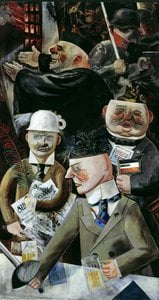
- Zusammen mit anderen Werken wie „Der Agitator“ und „Die Säulen der Gesellschaft“ zeigen diese Arbeiten seine satirische Kritik an der deutschen bürgerlichen Gemeinschaft.
- Diese Werke sind durch ihre karikaturistische Natur gekennzeichnet, oft mit morbiden und grausamen Bildern, die die faschistischen Kräfte in Deutschland symbolisierten.
Museumsbestände und Ausstellungen
Grosz' Werk befindet sich in verschiedenen Museen, darunter die Kunstsammlungen und Museen Augsburg und die Kunsthalle Bielefeld, die beide für ihre umfangreichen Sammlungen deutscher Kunst bekannt sind.Späteres Leben und Vermächtnis
Grosz emigrierte 1933 in die Vereinigten Staaten, wo er 1938 die US-amerikanische Staatsbürgerschaft erhielt. Er unterrichtete an der Art Students League of New York und stellte weiterhin seine Werke aus, bis zu seiner Rückkehr nach Berlin, wo er am 6. Juli 1959 verstarb. Wichtige Punkte:- Grosz war ein prominentes Mitglied der Berliner Dada- und Neuen Sachlichkeit-Gruppe.
- Seine Arbeit ist durch satirische Kritik an der deutschen bürgerlichen Gemeinschaft gekennzeichnet.
- Er emigrierte 1933 in die Vereinigten Staaten und erhielt 1938 die US-amerikanische Staatsbürgerschaft.
- Grosz' Vermächtnis wird weiterhin gefeiert, seine Werke sind in verschiedenen Museen in Deutschland zu finden.
- Für weitere Informationen über George Grosz besuchen Sie https://ArtsDot.com/@/george-grosz.
- Erkunden Sie die Sammlung der Kunstsammlungen und Museen Augsburg unter https://ArtsDot.com/@@/a@d3b449.
- Entdecken Sie die Kunsthalle Bielefeld und ihre umfangreiche Sammlung deutscher Kunst unter https://ArtsDot.com/@@/a@d3bw2r.
Referenzen:
Liste der deutsch-amerikanischen Personen (Wikipedia)
George Grosz
1893 - 1959 , Deutschland
Kurzinfos
- Bemerkenswerte Werke:
- Die Grube
- Die Stadt
- Angriff
- Dr. Billig
- Die Säulen der Gesellschaft
- Geburtsdatum: 26. Juli 1893
- Geburtsort: Berlin, Deutschland
- Künstlerische Bewegung: Dadaismus, Neue Sachlichkeit
- Künstlerische Einflüsse: ['Eduard von Grützner']
- Nationalität: Deutsch, Amerikanisch
- Todatum: 6. Juli 1959
- Vollständiger Name: George Grosz
Ähnliche Artikel

The Sharpest Wit: A Historical Exploration of Satire in Visual Culture
Explore the history of satire in art! From ancient masters like Aristophanes to Goya & Grosz, discover how artists use wit and critique to reflect—and challenge—society. Expert insights at ArtsDot.
Figurative Expressionism: Emotional Intensity & Subjective Reality in 20th-Century Art
Explore the powerful world of Figurative Expressionism with ArtsDot. Discover key artists like Kirchner & Beckmann, understand its emotional depth, and learn how to collect this influential 20th-century art movement.
Subverting Convention: Banksy's Identity, Art & Socio-Political Impact – A Critical Examination
Explore the complex world of Banksy's art & activism. This critical analysis delves into his identity, impact on the art market, and enduring socio-political relevance for discerning collectors.
Mark Rothkos Meisterwerke: Die Top 25 für Kunstliebhaber | ArtsDot
Entdecken Sie die 25 Meisterwerke von Mark Rothko! Tauchen Sie ein in die Welt der abstrakten Kunst, des Expressionismus und der Farbfeldmalerei. Hochwertige Kunstdrucke & Reproduktionen auf ArtsDot.com – für Ihre Wohnräume.

John Leech: Satirical Visions of Victorian Society – A Comprehensive Examination of His Art & Influence
Explore the satirical world of John Leech, Victorian England's master caricaturist! Discover his iconic work for Punch magazine, illustrations with Dickens, and lasting impact on social commentary & art history. A comprehensive analysis.



