
- Startseite

- Auf Leinwand drucken
- Fernand Léger
- Untitled

 Gemälde kaufen Bild kaufen
 Versenden
 Teilen
 Details anzeigen
 Zu Favoriten hinzufügen

 Herunterladen
 Ähnliche Objekte
 Röntgenaufnahme
 Diashow anzeigen
Untitled

 Weiterlesen
Giclée / Kunstdruck
Giclée- oder Leinwanddruck in Museumsqualität mit schneller Produktion und flexiblen Veredelungsoptionen.




P118B $10

P118H $10

P118W $10

P438Z $10

P508JH $12

P508YH $12

P805H $10

P805Z $10

P919BZ $10

P919G $10

P919XJ $10

P959ZH $10

P968JZ $12

W106C $8

W218G $10

W218JH $8

W218Y $10

W307PJ $10

W316G $10

W316PJ $8

W316Y $10

W398PJ $8

W4111J $10

W500HY $15

W500JH $15

W692G $12

W849H $8

W940BG $15

W953PJ $8




Wählen Sie aus unseren vordefinierten Größen, die den ursprünglichen Proportionen des Kunstwerks entsprechen.

Sie können Ihre eigenen Maße eingeben, um ein bestimmtes Format oder einen speziellen Platz einzupassen. Wenn das von Ihnen gewählte Format nicht den Proportionen des Originalbildes entspricht, werden wir das Kunstwerk entweder beschneiden oder das Bild mit einem gespiegelten oder einfarbigen Rand erweitern. Ein digitaler Entwurf wird Ihnen zur Genehmigung zugesandt, bevor die Produktion beginnt.
Bitte beachten Sie, dass die Vorschau auf dem Bildschirm nicht den tatsächlichen Zuschnitt oder die Erweiterung widerspiegelt. Nur der Entwurf zeigt die endgültige Komposition präzise an.
Obwohl Sondermaße verfügbar sind, empfehlen wir die Auswahl eines Maßes aus der vordefinierten Liste, um die ursprünglichen Proportionen zu bewahren.
Weltweiter Versand () innerhalb von 2 Wochen statt der üblichen 4/5 Wochen. (18 Juli)

Kostenloser weltweiter Expressversand

Hochwertige Leinenleinwand

Umfassender Versicherungsschutz beim Versand

Zollsteuer-Rückerstattungsgarantie

Garantie für echte Farbtreue

60-Tage-Rückgaberecht (nur bei Mängeln)

100% Geld-zurück-Garantie

Mengenrabatt verfügbar
 Die Glasoption ist nur in Größen unter 110 cm verfügbar.

Untitled
Giclée / Kunstdruck
Größe der Reproduktion
-


Endpreis aller Optionen
-
Beschreibung des Sammlerstücks
A Life Forged in Form: The World of Fernand Léger
Fernand Léger, born Joseph Fernand Henri Léger in 1881 amidst the rural landscapes of Argentan, Normandy, stands as a pivotal figure in the evolution of modern art. His journey from the farmlands of his youth to the forefront of Parisian avant-garde circles is a testament to an unwavering artistic vision and a relentless pursuit of capturing the spirit of the machine age. Unlike many of his contemporaries who embraced abstraction as a retreat from representation, Léger sought to *integrate* modernity – its dynamism, its mechanical forms, its very essence – into a new visual language that was both powerfully abstract and deeply rooted in the observable world. His early life, steeped in the physicality of agricultural labor, provided a grounding contrast to the industrialized future he would so passionately depict. Initially destined for architecture, Léger’s path shifted towards painting after arriving in Paris around 1900, supporting himself through illustration work and absorbing the influences of Impressionism and Cubism before forging his own distinctive style.The Birth of Geometric Abstraction
Léger's artistic breakthrough arrived during the tumultuous years following World War I, coinciding with the burgeoning fascination for industrialization and technological advancement. Rejecting the prevailing trend toward pure abstraction—the fragmentation and simplification championed by Picasso and Braque—Léger embarked on a radical experiment: to represent reality not through illusionistic depiction but through geometric forms – cubes, cylinders, spheres – arranged in bold, contrasting colors. This approach wasn’t merely stylistic; it was fundamentally conceptual. Léger believed that these shapes mirrored the underlying structure of machines and urban environments, reflecting the pervasive influence of industrial logic on human experience. He famously declared, “I want to paint what I see,” but insisted that he saw not what *appeared* but what *was*.Technique and Material Innovation
Léger’s distinctive technique involved applying pigment onto ceramic surfaces using a method known as "polychrome," which allowed for the creation of vibrant, textured murals. This innovative process—developed collaboratively with Georges Bauquier—involved layering multiple coats of glaze over earthenware tiles, resulting in astonishingly luminous and durable artworks. The meticulous preparation of each tile was itself an artistic endeavor, reflecting Léger’s commitment to precision and control. Furthermore, he experimented extensively with color palettes, favoring combinations of primary hues – red, yellow, blue – punctuated by black and white, creating visual compositions that were both visually arresting and intellectually stimulating.Symbolism Within Geometric Form
Despite its apparent simplicity, Léger’s art is laden with symbolic meaning. The geometric shapes themselves represent not just mechanical structures but also concepts of order, stability, and universality. Recurring motifs—such as the human figure rendered in simplified cubes—suggested a reimagining of humanity's relationship to technology and the environment. Léger envisioned humans as inhabiting a world dominated by machines, yet simultaneously retaining their essential human qualities – emotion, vitality, and connection to nature. The artist’s intention was to convey a sense of optimism about the future, portraying it not as a dystopian nightmare but as an opportunity for artistic renewal.Emotional Impact and Legacy
Fernand Léger's paintings resonate with viewers today precisely because they capture a profound emotional truth: the anxiety and exhilaration inherent in confronting the transformative forces of modernity. The bold colors, energetic compositions, and stylized figures evoke a feeling of dynamism and movement—a visual embodiment of the human spirit striving to adapt to an ever-changing world. Léger’s influence extends far beyond his own lifetime, inspiring generations of artists who continue to explore the possibilities of geometric abstraction as a means of expressing complex ideas about humanity's place in history. His enduring legacy serves as a reminder that art can illuminate both the beauty and the challenges of our time.Ähnliche Kunstwerke


Biografie des Künstlers
frühes Leben und Ausbildung
Fernand Légér, ein französischer Maler, Bildhauer und Filmemacher, wurde am 4. Februar 1881 in Argentan, Orne, Niedergermanien geboren. Sein Vater züchtete Rinder, und Légér erhielt zunächst eine Ausbildung als Architekt von 1897 bis 1899. Er zog dann im Jahr 1900 nach Paris und unterstützte sich dort als Architektenzeichner.Künstlerische Entwicklung
Légers frühe Werke wurden vom Impressionismus beeinflusst, wie in Le Jardin de ma Mère (Mein Muttergarten) (1905) zu sehen ist. Nach dem Besuch der Schule für dekorative Künste und der Académie Julian begann er ab seinem 25. Lebensjahr ernsthaft als Maler zu arbeiten. Sein Stil entwickelte sich zu einer persönlichen Form des Kubismus, der von Kritikern als "Tubism" bezeichnet wurde, da er sich auf zylindrische Formen konzentrierte.Kubismus und die Puteaux-Gruppe
Im Jahr 1910 stellte Légér im Salon d’Automne zusammen mit Jean Metzinger und Henri Le Fauconnier aus. Er schloss sich der Puteaux-Gruppe an, auch bekannt als die Section d’Or (die Goldene Proportion), zusammen mit anderen Künstlern wie Francis Picabia und Marcel Duchamp.Krieg und seine Auswirkungen auf Légers Werk
Légers Erfahrungen im Ersten Weltkrieg hatten einen erheblichen Einfluss auf sein Werk. Während seiner Zeit an der Front produzierte er Skizzen von Artilleriegeschützen, Flugzeugen und Soldaten. Sein Gemälde Soldat mit Pfeife (1916) spiegelt diese Zeit wider.Spätere Werke und Vermächtnis
Légers Nachkriegszeitliche Arbeiten, die von glatten, maschinellen Formen geprägt waren, verknüpften ihn mit der Tradition der französischen figurativen Malerei. Seine "animierten Landschaften" von 1921 zeigten Figuren und Tiere in harmonischen, stromlinienförmigen Formen.- Fernand Légers Werke auf ArtsDot
- Mehr über Fernand Légér auf Wikipedia
- Entdecken Sie das Musée National Fernand Légér (Frankreich) mit ArtsDot
- Die Sitzende Frau (100 x 81 cm, Tubism)
- Maschinenelement (Kubismus)

Fernand Léger
1881 - 1955 , Frankreich
Kurzinfos
- Beeinflusste Kunstrichtungen: ['Pop Art']
- Beeinflusste Künstler: ['Paul Cézanne']
- Bemerkenswerte Werke:
- Die Sitzende Frau
- Maschinenelement
- Der Große Umzug
- Die Stadt
- Geburtsdatum: 04. Februar 1881
- Geburtsort: Argentan, Frankreich
- Künstlerische Richtung: Kubismus, Tubismus
- Nationalität: Französisch
- Sterbedatum: 1955
- Vollständiger Name: Fernand Léger
- Von Kunstbewegungen Beeinflusst: ['Cézannismus']
- Von Künstlern Beeinflusst: ['Impressionismus']
Ähnliche Artikel
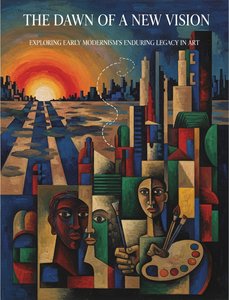
The Dawn of a New Vision: Exploring Early Modernism's Enduring Legacy in Art
Explore the revolutionary world of Early Modernism! Discover key artists like Picasso & Léger, pivotal movements, and lasting philosophical influences. Uncover the seeds of change that shaped 20th-century art.

Die 10 Meisterwerke des Kubismus: Kunstgeschichte für Ihr Zuhause |
Entdecken Sie die 10 prägendsten Meisterwerke des Kubismus! Von Picasso bis Braque – erfahren Sie die Geschichten hinter ikonischen Gemälde und lassen Sie sich von moderner Kunst inspirieren. Kunstreproduktionen in Museumsqualiät auf .

Akryl auf Leinwand: Die 10 Meisterwerke, die Kunst für immer veränderten |
Entdecken Sie die 10 legendärsten Akrylmalereien, die Kunstgeschichte schrieben! Von Jackson Pollock bis Gerhard Richter – erfahren Sie die Geschichten hinter den Meisterwerken und finden Sie hochwertige Reproduktionen für Ihr Zuhause. Jetzt bei entdecken!

Geometrische Abstraktion: Die 10 Meisterwerke, die Kunstgeschichte prägten | ArtsDot.com
Entdecken Sie die 10 Meisterwerke der geometrischen Abstraktion! Von Kandinsky bis Mondrian – erleben Sie die Geschichte, Farben & Formen dieser revolutionären Kunstrichtung. Hochwertige Kunstreproduktionen auf ArtsDot.com

Fernand Léger: Die 25 Meisterwerke des Kubismus für Ihr Zuhause | ArtsDot
Entdecken Sie die 25 Meisterwerke von Fernand Léger! Tauchen Sie ein in die Welt des Kubismus, Tubismus & der Avantgarde. Hochwertige Kunstreproduktionen für Ihr Zuhause – jetzt auf ArtsDot.com!



