


 Vorschau anzeigen
 Versenden
 Teilen
 Details anzeigen

 Herunterladen
 Ähnliche Objekte
 Röntgenaufnahme
 Diashow
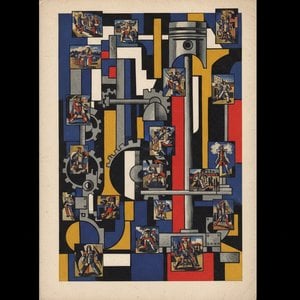
untitled (4219)


 Weiterlesen
Giclée / Kunstdruck
Giclée- oder Leinwanddruck in Museumsqualität mit schneller Produktion und flexiblen Veredelungsoptionen. ( Zur handgemalten Reproduktion wechseln Zum Bild wechseln)




P118B $10

P118H $10

P118W $10

P438Z $10

P508JH $12

P508YH $12

P805H $10

P805Z $10

P919BZ $10

P919G $10

P919XJ $10

P959ZH $10

P968JZ $12

W106C $8

W218G $10

W218JH $8

W218Y $10

W307PJ $10

W316G $10

W316PJ $8

W316Y $10

W398PJ $8

W4111J $10

W500HY $15

W500JH $15

W692G $12

W849H $8

W940BG $15

W953PJ $8




Wählen Sie aus unseren vordefinierten Formaten, die den ursprünglichen Proportionen des Kunstwerks entsprechen.

Sie können Ihre eigenen Maße eingeben, um ein bestimmtes Format oder einen speziellen Platz einzupassen. Wenn das von Ihnen gewählte Format nicht den Proportionen des Originalbildes entspricht, werden wir das Kunstwerk entweder beschneiden oder das Bild mit einem gespiegelten oder einfarbigen Rand erweitern. Ein digitaler Entwurf wird Ihnen zur Genehmigung zugesandt, bevor die Produktion beginnt.
Bitte beachten Sie, dass die Vorschau auf dem Bildschirm nicht den tatsächlichen Zuschnitt oder die Erweiterung widerspiegelt. Nur der Entwurf zeigt die endgültige Komposition präzise an.
Obwohl Sondermaße verfügbar sind, empfehlen wir die Auswahl eines Maßes aus der vordefinierten Liste, um die ursprünglichen Proportionen zu bewahren.
Weltweiter Versand () innerhalb von 2 Wochen statt der üblichen 4/5 Wochen. (7 August)

Kostenloser weltweiter Expressversand

Hochwertige Leinenleinwand

Umfassender Versicherungsschutz beim Versand

Zollgebühren-Rückerstattungsgarantie

Garantie für exakte Farbtreue

60 Tage Rückgaberecht (nur bei Mängeln)

100% Geld-zurück-Garantie

Mengenrabatt verfügbar
 Die Glasoption ist nur für Größen unter 110 cm verfügbar.

untitled (4219)
Giclée / Kunstdruck
Format der Reproduktion
-


Gesamtpreis
$ 62
Sammlerstück-Beschreibung
Unveiling the Mechanical Muse: An Exploration of Léger’s “Untitled (4219)”
Fernand Léger's "Untitled (4219)" presents a captivating visual paradox – a scene brimming with classical subject matter – a woman and horse – rendered through the rigorously fractured lens of early Cubism. This work, dating from an unknown period within Léger’s prolific career (1881-1955), embodies his unique approach to modernity: not rejecting representation entirely, but actively engaging with the burgeoning influence of industrial forms and a rapidly changing world. The painting immediately draws the eye to the central figures – a woman in a vibrant red dress, confidently mounted upon a horse whose mane explodes in a brilliant yellow. Yet, this familiar tableau is dramatically deconstructed through Léger’s signature technique. The horse and rider are fragmented into geometric planes, echoing the shapes of machinery and urban structures that dominated the early 20th century. This isn't simply an artistic exercise; it’s a profound commentary on the relationship between humanity and technology.
- Cubist Fragmentation: Léger’s use of geometric forms, characteristic of Cubism, breaks down traditional perspective and representation.
- Mechanical Influence: The fragmented forms directly reflect the impact of industrialization – a key theme in Léger's work.
- Bold Color Palette: The striking juxtaposition of red and yellow adds to the painting’s dynamism and visual intensity.
A Symphony of Forms: Technique and Materiality
Léger’s technique is immediately recognizable, a meticulous layering of paint applied with a deliberate, almost sculptural quality. He employed a dry brushstroke, building up thick impasto in certain areas to create a tactile surface that emphasizes the three-dimensionality of his fragmented forms. The black and white palette intensifies this effect, highlighting the sharp angles and planes of the composition. The artist’s meticulous attention to detail is evident in the rendering of the horse's musculature and the woman’s flowing dress – even within the fractured perspective, a sense of anatomical accuracy prevails. This careful construction suggests a desire not just for visual impact but also for a profound understanding of form, mirroring Léger’s earlier architectural studies.
Symbolism Within the Machine Age
Beyond its purely formal qualities, “Untitled (4219)” is rich in symbolic meaning. The horse, traditionally representing power and nobility, is rendered as a mechanical entity, suggesting a shift in societal values and the rise of industrial dominance. The woman’s confident posture speaks to female agency within this new landscape, while the inclusion of a clock and bowls adds further layers of interpretation. These objects – symbols of time and domesticity – are presented alongside the fragmented forms, creating a tension between the past and the future, tradition and modernity. The placement of the clock in the upper right corner subtly introduces themes of measurement and control, central concerns within Léger’s exploration of the machine age.
Emotional Resonance and Artistic Legacy
"Untitled (4219)" is more than just a visually arresting artwork; it's a powerful statement about humanity’s place in an increasingly mechanized world. Léger’s ability to translate the dynamism of industrial forms into a compelling visual language cemented his position as one of the most important figures of early 20th-century modern art. This piece exemplifies his unique vision, inviting viewers to contemplate the complex relationship between form, function, and human experience. A hand-painted reproduction offers an unparalleled opportunity to appreciate the depth and sophistication of Léger’s artistic legacy.


Über den Künstler
frühes Leben und Ausbildung
Fernand Légér, ein französischer Maler, Bildhauer und Filmemacher, wurde am 4. Februar 1881 in Argentan, Orne, Niedergermanien geboren. Sein Vater züchtete Rinder, und Légér erhielt zunächst eine Ausbildung als Architekt von 1897 bis 1899. Er zog dann im Jahr 1900 nach Paris und unterstützte sich dort als Architektenzeichner.Künstlerische Entwicklung
Légers frühe Werke wurden vom Impressionismus beeinflusst, wie in Le Jardin de ma Mère (Mein Muttergarten) (1905) zu sehen ist. Nach dem Besuch der Schule für dekorative Künste und der Académie Julian begann er ab seinem 25. Lebensjahr ernsthaft als Maler zu arbeiten. Sein Stil entwickelte sich zu einer persönlichen Form des Kubismus, der von Kritikern als "Tubism" bezeichnet wurde, da er sich auf zylindrische Formen konzentrierte.Kubismus und die Puteaux-Gruppe
Im Jahr 1910 stellte Légér im Salon d’Automne zusammen mit Jean Metzinger und Henri Le Fauconnier aus. Er schloss sich der Puteaux-Gruppe an, auch bekannt als die Section d’Or (die Goldene Proportion), zusammen mit anderen Künstlern wie Francis Picabia und Marcel Duchamp.Krieg und seine Auswirkungen auf Légers Werk
Légers Erfahrungen im Ersten Weltkrieg hatten einen erheblichen Einfluss auf sein Werk. Während seiner Zeit an der Front produzierte er Skizzen von Artilleriegeschützen, Flugzeugen und Soldaten. Sein Gemälde Soldat mit Pfeife (1916) spiegelt diese Zeit wider.Spätere Werke und Vermächtnis
Légers Nachkriegszeitliche Arbeiten, die von glatten, maschinellen Formen geprägt waren, verknüpften ihn mit der Tradition der französischen figurativen Malerei. Seine "animierten Landschaften" von 1921 zeigten Figuren und Tiere in harmonischen, stromlinienförmigen Formen.- Fernand Légers Werke auf ArtsDot
- Mehr über Fernand Légér auf Wikipedia
- Entdecken Sie das Musée National Fernand Légér (Frankreich) mit ArtsDot
- Die Sitzende Frau (100 x 81 cm, Tubism)
- Maschinenelement (Kubismus)

Fernand Léger
1881 - 1955 , Frankreich
Kurzinfos
- Beeinflusste Kunstrichtungen: ['Pop Art']
- Beeinflusste Künstler: ['Paul Cézanne']
- Bemerkenswerte Werke:
- Die Sitzende Frau
- Maschinenelement
- Der Große Umzug
- Die Stadt
- Geburtsdatum: 04. Februar 1881
- Geburtsort: Argentan, Frankreich
- Künstlerische Richtung: Kubismus, Tubismus
- Nationalität: Französisch
- Sterbedatum: 1955
- Vollständiger Name: Fernand Léger
- Von Kunstbewegungen Beeinflusst: ['Cézannismus']
- Von Künstlern Beeinflusst: ['Impressionismus']
Ähnliche Artikel

John Nost Sartorius: Equestrian Portraiture & the Shifting Social Landscape of 18th-Century England
Explore the captivating equestrian art of John Nost Sartorius (1759-1828). Discover his detailed paintings of racehorses, hunting scenes & aristocratic life. Learn about collecting Sartorius's work and its lasting value.

Crimson Threads of Narrative: Exploring Symbolism & Representation in Artworks Featuring the Red Dress
Explore the rich symbolism of the red dress in art history! From ancient power displays to iconic portraits like Cézanne’s 'Madame Cezanne', discover the cultural and artistic significance behind this captivating color. Expert analysis & insights.

Meisterwerke in Schwarz: Die 10 berühmtesten Gemälde mit Elfenbeinsschattierungen |
Entdecken Sie die düsteren Schönheiten der Kunst! Unsere Top 10 Gemälde dominieren durch Elfenbeinschwarz – von Rembrandt bis Goya. Erfahren Sie mehr über Künstler, Techniken & Bedeutung. Hochwertige Reproduktionen auf
Fernand Léger: Die 25 Meisterwerke des Kubismus für Ihr Zuhause | ArtsDot
Entdecken Sie die 25 Meisterwerke von Fernand Léger! Tauchen Sie ein in die Welt des Kubismus, Tubismus & der Avantgarde. Hochwertige Kunstreproduktionen für Ihr Zuhause – jetzt auf ArtsDot.com!

Die Top 10 berühmter Gemälde im Reich der dunklen Töne |
Entdecken Sie die Top 10 berühmter Gemälde, beherrscht von dunklen Tönen! Von Caravaggio bis Manet – erfahren Sie die Geschichten hinter Meisterwerken der Kunstgeschichte. Finden Sie Ihre perfekte Reproduktion auf .



