


 In echtem Maßstab anzeigen
 Versenden als Grußkarte
 Teilen
 Details anzeigen
 Leitfaden öffnen

 Herunterladen
 Ähnliche Objekte
 Röntgenaufnahme
 Diashow
 Besucherstatistiken
untitled (2966)


 Mehr anzeigen
Giclée / Kunstdruck
Giclée- oder Leinwanddruck in Museumsqualität mit schneller Produktion und flexiblen Veredelungsoptionen. ( Handgemalte Reproduktion kaufen Zum digitalen Bild wechseln)




P118B €10

P118H €10

P118W €10

P438Z €10

P508JH €12

P508YH €12

P805H €10

P805Z €10

P919BZ €10

P919G €10

P919XJ €10

P959ZH €10

P968JZ €12

W106C €8

W218G €10

W218JH €8

W218Y €10

W307PJ €10

W316G €10

W316PJ €8

W316Y €10

W398PJ €8

W4111J €10

W500HY €15

W500JH €15

W692G €12

W849H €8

W940BG €15

W953PJ €8




Wählen Sie aus unseren vordefinierten Formaten, die den ursprünglichen Proportionen des Kunstwerks entsprechen.

Sie können Ihre eigenen Maße eingeben, um ein bestimmtes Format oder einen speziellen Platz einzupassen. Wenn das von Ihnen gewählte Format nicht den Proportionen des Originalbildes entspricht, werden wir das Kunstwerk entweder beschneiden oder das Bild mit einem gespiegelten oder einfarbigen Rand erweitern. Ein digitaler Entwurf wird Ihnen zur Genehmigung zugesandt, bevor die Produktion beginnt.
Bitte beachten Sie, dass die Vorschau auf dem Bildschirm nicht den tatsächlichen Zuschnitt oder die Erweiterung widerspiegelt. Nur der Entwurf zeigt die endgültige Komposition präzise an.
Obwohl Sondermaße verfügbar sind, empfehlen wir die Auswahl eines Maßes aus der vordefinierten Liste, um die ursprünglichen Proportionen zu bewahren.
Weltweiter Versand () innerhalb von 2 Wochen statt der üblichen 4/5 Wochen. (10 Oktober)

Kostenloser weltweiter Expressversand

Hochwertige Leinenleinwand

Vollständiger Versicherungsschutz beim Versand

Zollgebühren-Rückerstattungsgarantie

Garantie für exakte Farbtreue

100-tägiges Rückgaberecht (nur bei Mängeln)

100% Geld-zurück-Garantie

Angebot für Mengenrabatt
 Die Glasoption ist nur für Größen unter 110 cm verfügbar.

untitled (2966)
Giclée / Kunstdruck
Format der Reproduktion
-


Gesamtpreis
€ 53
The Pulse of Modernity: A Cubist Vision
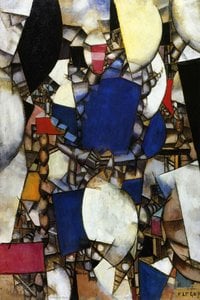
Fernand Léger's untitled (2966) is far more than a mere arrangement of shapes; it is a crystallized moment from the dawn of the industrial era. Created around 1930, during the height of the Cubist movement, this work serves as a daring assertion that abstraction could capture both the frantic energy of progress and the tangible reality of a changing world. As one gazes upon the canvas, they are immediately met with a riot of geometric forms—angular blocks of white, gray, and vibrant orange that seem to defy traditional perspective. Léger, a master of the machine aesthetic, utilizes these fragmented shapes to mimic the repetitive, rhythmic patterns of factory machinery, inviting the viewer to experience the transformative power of industrialization through a purely visual language.Texture, Color, and the Mechanical Rhythm
The brilliance of this piece lies in its profound physicality. Léger employed a technique known as impasto, applying thick, deliberate layers of oil paint to create a surface that is as much about touch as it is about sight. By building up pigments such as cadmium orange and titanium white, he achieved a palpable texture that captures the very essence of his subject matter. This heavy layering does not merely add richness; it provides a sense of weight and permanence to the fleeting movement depicted on the canvas. The interplay between the stark whites and the energetic oranges creates a striking contrast, much like the bright sparks of a working engine against a cold, metallic backdrop. For the collector or interior designer, this piece offers a commanding presence, bringing a sophisticated, tactile energy to any contemporary space.Symbolism Amidst the Fragments
Within this complex web of geometry, Léger embeds profound symbols of hope and liberation. At the heart of the composition sits a large, white bird, acting as a central anchor amidst the fractured landscape. This soaring figure serves as a poignant metaphor for freedom, rising above the rigid, mechanical structures that represent the constraints of modern life. Scattered throughout the scene, smaller birds and vibrant oranges add layers of depth and organic complexity to the otherwise structured environment. It is this delicate balance between the mechanical and the natural—the tension between the industrial machine and the spirit of life—that gives untitled (2966) its enduring emotional impact. To possess a reproduction of this work is to invite a conversation about progress, resilience, and the beautiful chaos of the modern age into one's home.Fragen & Antworten
Wer verkauft handgemalte Kopien von "untitled (2966)" von Fernand Léger?
"untitled (2966)" ist als eine handgemalte Ölreproduktion auf Leinenleinwand erhältlich. Die Bestellung kann auf diese Seite aufgegeben werden, wobei verschiedene Größen zur Auswahl stehen.
Welche Stimmung und welche Emotion vermittelt "untitled (2966)" von Fernand Léger?
Die festgehaltene Stimmung von "untitled (2966)" von Fernand Léger ist Zeitgenössisch minimalistisch, und ihr emotionaler Tonfall ist Gelassen.
Ist "untitled (2966)" als Kunstdruck erhältlich?
Ein Druck von "untitled (2966)" von Fernand Léger kann direkt auf diese Seite bestellt werden: ein Fine Art Print auf Baumwollkanvas oder Archiv-Leinwandpapier.
Wo kann ich eine Vorschau von „untitled (2966)“ sehen?
Um eine Reproduktion von "untitled (2966)" von Fernand Léger in der Vorschau zu sehen, öffnen Sie die Vorschau-Seite des Kunstwerks.
Welche Farbe dominiert in "untitled (2966)" von Fernand Léger?
Die dominante Farbe von "untitled (2966)" von Fernand Léger ist Warme Sonnenuntergangstöne. Dieser Farbton bildet die Grundlage der Palette.
Wer ist der Künstler hinter "untitled (2966)"?
"untitled (2966)" wird Fernand Léger zugeschrieben.
Welche Stimmung würde "untitled (2966)" in einen Raum bringen?
"untitled (2966)" von Fernand Léger besitzt eine Zeitgenössisch minimalistisch Atmosphäre und wird für ein Wohnbereich empfohlen. Die Stimmung beschreibt das Gefühl, das das Werk in den umgebenden Raum bringt.
Ähnliche Kunstwerke




Biografie des Künstlers
frühes Leben und Ausbildung
Fernand Légér, ein französischer Maler, Bildhauer und Filmemacher, wurde am 4. Februar 1881 in Argentan, Orne, Niedergermanien geboren. Sein Vater züchtete Rinder, und Légér erhielt zunächst eine Ausbildung als Architekt von 1897 bis 1899. Er zog dann im Jahr 1900 nach Paris und unterstützte sich dort als Architektenzeichner.Künstlerische Entwicklung
Légers frühe Werke wurden vom Impressionismus beeinflusst, wie in Le Jardin de ma Mère (Mein Muttergarten) (1905) zu sehen ist. Nach dem Besuch der Schule für dekorative Künste und der Académie Julian begann er ab seinem 25. Lebensjahr ernsthaft als Maler zu arbeiten. Sein Stil entwickelte sich zu einer persönlichen Form des Kubismus, der von Kritikern als "Tubism" bezeichnet wurde, da er sich auf zylindrische Formen konzentrierte.Kubismus und die Puteaux-Gruppe
Im Jahr 1910 stellte Légér im Salon d’Automne zusammen mit Jean Metzinger und Henri Le Fauconnier aus. Er schloss sich der Puteaux-Gruppe an, auch bekannt als die Section d’Or (die Goldene Proportion), zusammen mit anderen Künstlern wie Francis Picabia und Marcel Duchamp.Krieg und seine Auswirkungen auf Légers Werk
Légers Erfahrungen im Ersten Weltkrieg hatten einen erheblichen Einfluss auf sein Werk. Während seiner Zeit an der Front produzierte er Skizzen von Artilleriegeschützen, Flugzeugen und Soldaten. Sein Gemälde Soldat mit Pfeife (1916) spiegelt diese Zeit wider.Spätere Werke und Vermächtnis
Légers Nachkriegszeitliche Arbeiten, die von glatten, maschinellen Formen geprägt waren, verknüpften ihn mit der Tradition der französischen figurativen Malerei. Seine "animierten Landschaften" von 1921 zeigten Figuren und Tiere in harmonischen, stromlinienförmigen Formen.- Fernand Légers Werke auf ArtsDot
- Mehr über Fernand Légér auf Wikipedia
- Entdecken Sie das Musée National Fernand Légér (Frankreich) mit ArtsDot
- Die Sitzende Frau (100 x 81 cm, Tubism)
- Maschinenelement (Kubismus)

Fernand Léger
1881 - 1955 , Frankreich
Eckdaten zum Künstler
- Beeinflusste Kunstrichtungen: ['Pop Art']
- Beeinflusste Künstler: ['Paul Cézanne']
- Bemerkenswerte Werke:
- Die Sitzende Frau
- Maschinenelement
- Der Große Umzug
- Die Stadt
- Geburtsdatum: 04. Februar 1881
- Geburtsort: Argentan, Frankreich
- Künstlerische Richtung: Kubismus, Tubismus
- Nationalität: Französisch
- Sterbedatum: 1955
- Vollständiger Name: Fernand Léger
- Von Kunstbewegungen Beeinflusst: ['Cézannismus']
- Von Künstlern Beeinflusst: ['Impressionismus']
Verwandte Artikel

Geometrische Abstraktion: Die 10 Meisterwerke, die Kunstgeschichte prägten | ArtsDot.com
Entdecken Sie die 10 Meisterwerke der geometrischen Abstraktion! Von Kandinsky bis Mondrian – erleben Sie die Geschichte, Farben & Formen dieser revolutionären Kunstrichtung. Hochwertige Kunstreproduktionen auf ArtsDot.com

Georges Braque: Die 25 Meisterwerke des Kubismus für Ihr Zuhause | ArtsDot
Entdecken Sie die 25 bedeutendsten Kunstwerke von Georges Braque – vom Kubismus bis zum Fauvismus. Erfahren Sie die Geschichten hinter den Meisterwerken und finden Sie hochwertige Reproduktionen für Ihr Zuhause auf ArtsDot.com.

Kandinsky: Die 25 Meisterwerke des Abstrakten – Kunst für Ihr Zuhause | ArtsDot
Entdecken Sie die 25 bedeutendsten Gemälde von Wassily Kandinsky! Tauchen Sie ein in die Welt der abstrakten Kunst, des Expressionismus und der Farbkomposition. Hochwertige Kunstdrucke & Inspiration für Ihr Zuhause auf ArtsDot.com.

Abstrakter Expressionismus: Die 10 Meisterwerke, die eine Kunstbewegung prägten |
Entdecken Sie die 10 Meisterwerke des Abstrakten Expressionismus! Von Jackson Pollock bis Mark Rothko – erfahren Sie die Geschichten hinter ikonischen Gemälde und finden Sie hochwertige Reproduktionen für Ihr Zuhause. Jetzt bei entdecken!

Fernand Léger: Die 25 Meisterwerke des Kubismus für Ihr Zuhause | ArtsDot
Entdecken Sie die 25 Meisterwerke von Fernand Léger! Tauchen Sie ein in die Welt des Kubismus, Tubismus & der Avantgarde. Hochwertige Kunstreproduktionen für Ihr Zuhause – jetzt auf ArtsDot.com!


