


 In echtem Maßstab anzeigen
 Versenden als Grußkarte
 Teilen
 Details anzeigen
 Leitfaden öffnen

 Herunterladen
 Ähnliche Objekte
 Röntgenaufnahme
 Diashow
 Besucherstatistiken
untitled (2056)

 Mehr anzeigen
Handgefertigte Ölreproduktion
Handgemaltes Ölgemälde auf Leinwand in Ihrer Wunschgröße und mit Rahmen, auf Bestellung von unseren Künstlern angefertigt. ( Zum Druck wechseln Zum digitalen Bild wechseln)




































Wählen Sie aus unseren vordefinierten Formaten, die den ursprünglichen Proportionen des Kunstwerks entsprechen.

Sie können Ihre eigenen Maße eingeben, um einen bestimmten Rahmen oder Platz auszufüllen. Wenn die gewählte Größe nicht den Proportionen des Originalbildes entspricht, werden wir das Kunstwerk entweder beschneiden oder das Gemälde durch zusätzliche, handgemalte Elemente erweitern. Ein digitales Mockup wird Ihnen zur Genehmigung zugesandt, bevor die Produktion beginnt.
Bitte beachten Sie, dass die Bildschirmvorschau nicht die tatsächliche Beschneidung oder Erweiterung widerspiegelt. Nur das Mockup zeigt die endgültige Komposition exakt an.
Obwohl Sondermaße verfügbar sind, empfehlen wir, eine Größe aus der vordefinierten Liste zu wählen, um die ursprünglichen Proportionen beizubehalten.
Nach der Bestellung wird das ArtsDot.com-Team dem Kunden Anweisungen per E-Mail zusenden und eine Mockup-Vorschau bereitstellen.
Weltweiter Versand () in nur 3 bis 4 Wochen statt der üblichen 5 Wochen. (25 September). Keine Kompromisse bei der Qualität.

Kostenloser weltweiter Expressversand

Hochwertige Leinenleinwand

Vollständiger Versicherungsschutz beim Versand

Zollgebühren-Rückerstattungsgarantie

Garantie für exakte Farbtreue

100-tägiges Rückgaberecht (nur bei Mängeln)

100% Geld-zurück-Garantie

Angebot für Mengenrabatt
 Die Glasoption ist nur für Größen unter 110 cm verfügbar.

untitled (2056)
Reproduktionsmedium
Format der Reproduktion
-


Gesamtpreis
$ 263
Fernand Léger: A Pioneer of Cubist Tubism – Exploring the Machine Age Aesthetic
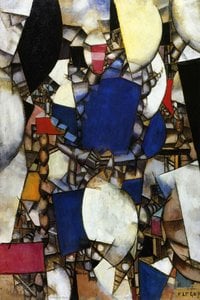
Fernand Léger’s “untitled (2056)” isn't merely a book page scan; it’s a window into the artistic soul of a pivotal moment in modern art history. Published by ArtsDot.com, this piece encapsulates the essence of Cubist Tubism – Léger’s groundbreaking approach that fused geometric abstraction with observations of industrial life and human anatomy. Examining its visual elements reveals layers of meaning beyond simple representation, offering insights into both artistic innovation and the broader cultural anxieties surrounding the burgeoning machine age.- Composition & Style: The image presents a predominantly textual layout—a large block of printed words overlaid with color plates—characteristic of book design during Léger’s era. However, these plates aren't decorative flourishes; they are meticulously crafted geometric abstractions mirroring Léger’s core stylistic principles. Lines dominate the composition, delineating text and illustrations with purposeful precision, reflecting Léger’s fascination with mechanical forms and structural clarity.
- Technique: Offset printing—a common technique of the time—contributes to a subtle tonal variation across the page, hinting at the meticulous craftsmanship involved in reproducing Léger's artwork. The color plates utilize muted palettes, prioritizing tonal harmony over vibrant hues, aligning with Léger’s desire for an art that resonated with everyday experience rather than indulging in opulent visual spectacle.
- Historical Context: Léger emerged during a period of intense industrial expansion and societal transformation—the early 20th century—a time marked by rapid urbanization and the pervasive influence of machinery. His artistic vision responded directly to these developments, rejecting traditional representational art forms in favor of exploring new visual languages that captured the dynamism and fragmentation inherent in modern life.
- Symbolism & Emotional Impact: Léger’s work transcends mere aesthetic concerns; it communicates a profound emotional response to the world around him. The simplified geometric shapes—tubes, spheres, cubes—represent not just physical forms but also concepts of movement, energy, and interconnectedness – mirroring Léger's belief that art should illuminate the human condition amidst technological progress.
- Details: A prominent watermark from ArtsDot.com / ArtsDot.com is visible in the bottom left corner, signifying the artwork’s provenance and highlighting its status as a high-quality reproduction intended for discerning collectors and interior designers.
Exploring Tubism – Léger's Geometric Revolution
Tubism, developed by Léger alongside Pablo Picasso, represents a radical departure from Impressionism and Cubism’s initial focus on capturing fleeting impressions of light and color. Instead, Tubists dissected objects into geometric components—primarily tubes and spheres—presenting them simultaneously in multiple perspectives. This technique aimed to convey not just visual appearance but also underlying structural relationships – mirroring Léger's conviction that art should reflect the fundamental principles governing the natural world. The resulting images are strikingly austere yet imbued with a palpable sense of movement and energy, embodying Léger’s fascination with industrial machinery and its transformative impact on human experience.The Influence of Industrial Aesthetics
Léger's artistic inspiration stemmed from his observations of the factories and urban landscapes of Paris during the Belle Époque—a period characterized by unprecedented industrial growth and social upheaval. He sought to translate these experiences into visual language, rejecting idealized depictions of nature in favor of confronting viewers with the realities of modern life. The geometric abstractions found in “untitled (2056)” directly reflect this preoccupation, mirroring Léger’s desire to capture the essence of the machine age—its rigid structures, its repetitive motions, and its pervasive influence on human perception.A Legacy Beyond Representation
Fernand Léger's contribution to modern art extends far beyond stylistic innovation; he fundamentally challenged conventional notions of artistic expression. By prioritizing geometric abstraction over realistic depiction, Léger paved the way for subsequent movements like Pop Art—a genre that embraced mass culture and celebrated everyday objects as sources of aesthetic inspiration. “untitled (2056)” stands as a testament to Léger’s enduring vision – an art form capable of conveying profound emotional truths while simultaneously engaging with the complexities of the modern world.Ähnliche Kunstwerke




Biografie des Künstlers
frühes Leben und Ausbildung
Fernand Légér, ein französischer Maler, Bildhauer und Filmemacher, wurde am 4. Februar 1881 in Argentan, Orne, Niedergermanien geboren. Sein Vater züchtete Rinder, und Légér erhielt zunächst eine Ausbildung als Architekt von 1897 bis 1899. Er zog dann im Jahr 1900 nach Paris und unterstützte sich dort als Architektenzeichner.Künstlerische Entwicklung
Légers frühe Werke wurden vom Impressionismus beeinflusst, wie in Le Jardin de ma Mère (Mein Muttergarten) (1905) zu sehen ist. Nach dem Besuch der Schule für dekorative Künste und der Académie Julian begann er ab seinem 25. Lebensjahr ernsthaft als Maler zu arbeiten. Sein Stil entwickelte sich zu einer persönlichen Form des Kubismus, der von Kritikern als "Tubism" bezeichnet wurde, da er sich auf zylindrische Formen konzentrierte.Kubismus und die Puteaux-Gruppe
Im Jahr 1910 stellte Légér im Salon d’Automne zusammen mit Jean Metzinger und Henri Le Fauconnier aus. Er schloss sich der Puteaux-Gruppe an, auch bekannt als die Section d’Or (die Goldene Proportion), zusammen mit anderen Künstlern wie Francis Picabia und Marcel Duchamp.Krieg und seine Auswirkungen auf Légers Werk
Légers Erfahrungen im Ersten Weltkrieg hatten einen erheblichen Einfluss auf sein Werk. Während seiner Zeit an der Front produzierte er Skizzen von Artilleriegeschützen, Flugzeugen und Soldaten. Sein Gemälde Soldat mit Pfeife (1916) spiegelt diese Zeit wider.Spätere Werke und Vermächtnis
Légers Nachkriegszeitliche Arbeiten, die von glatten, maschinellen Formen geprägt waren, verknüpften ihn mit der Tradition der französischen figurativen Malerei. Seine "animierten Landschaften" von 1921 zeigten Figuren und Tiere in harmonischen, stromlinienförmigen Formen.- Fernand Légers Werke auf ArtsDot
- Mehr über Fernand Légér auf Wikipedia
- Entdecken Sie das Musée National Fernand Légér (Frankreich) mit ArtsDot
- Die Sitzende Frau (100 x 81 cm, Tubism)
- Maschinenelement (Kubismus)

Fernand Léger
1881 - 1955 , Frankreich
Eckdaten zum Künstler
- Beeinflusste Kunstrichtungen: ['Pop Art']
- Beeinflusste Künstler: ['Paul Cézanne']
- Bemerkenswerte Werke:
- Die Sitzende Frau
- Maschinenelement
- Der Große Umzug
- Die Stadt
- Geburtsdatum: 04. Februar 1881
- Geburtsort: Argentan, Frankreich
- Künstlerische Richtung: Kubismus, Tubismus
- Nationalität: Französisch
- Sterbedatum: 1955
- Vollständiger Name: Fernand Léger
- Von Kunstbewegungen Beeinflusst: ['Cézannismus']
- Von Künstlern Beeinflusst: ['Impressionismus']
Verwandte Artikel

Industrielle Ästhetik: 10 Meisterwerke für Ihr Zuhause | ArtsDot
Entdecken Sie 10 Meisterwerke der Industriekunst! Von Expressionismus bis Kubismus – erleben Sie die Ästhetik von Fabriken, Arbeitern & urbanen Landschaften. Hochwertige Reproduktionen auf ArtsDot.com.

Redefining Nature: A Collector's Guide to the Geometric Beauty of Cubist Landscapes
Explore the revolutionary world of Cubist landscapes. Discover how masters like Picasso and Braque redefined nature through geometric beauty, and learn expert tips for curating these transformative masterpieces in your modern home collection.

Fernand Léger: Die 25 Meisterwerke des Kubismus für Ihr Zuhause | ArtsDot
Entdecken Sie die 25 Meisterwerke von Fernand Léger! Tauchen Sie ein in die Welt des Kubismus, Tubismus & der Avantgarde. Hochwertige Kunstreproduktionen für Ihr Zuhause – jetzt auf ArtsDot.com!

Die 10 Meisterwerke des Kubismus: Revolutionäre Porträts für Ihr Zuhause | ArtsDot
Entdecken Sie die 10 revolutionärsten kubistischen Porträts von Picasso, Braque & Co.! Erfahren Sie die Geschichten hinter Meisterwerken der Moderne und lassen Sie sich für Ihre Wohnraumgestaltung inspirieren. Museum-Qualität bei ArtsDot.
Kubistischer Expressionismus: Die 10 Meisterwerke, die eine Kunstrevolution prägten | ArtsDot
Entdecken Sie die 10 prägendsten Meisterwerke des Kubismus & Expressionismus! Erfahren Sie die Geschichten von Picasso, Braque und mehr. Kunstdrucke in Museumsqualiät für Ihr Zuhause – jetzt auf ArtsDot.com!


