


 Vorschau anzeigen
 Versenden
 Teilen
 Details anzeigen

 Herunterladen
 Ähnliche Objekte
 Röntgenaufnahme
 Diashow
Two discs in the city


 Weiterlesen
Giclée / Kunstdruck
Giclée- oder Leinwanddruck in Museumsqualität mit schneller Produktion und flexiblen Veredelungsoptionen. ( Handgemalte Reproduktion bestellen Bild kaufen)




P118B $10

P118H $10

P118W $10

P438Z $10

P508JH $12

P508YH $12

P805H $10

P805Z $10

P919BZ $10

P919G $10

P919XJ $10

P959ZH $10

P968JZ $12

W106C $8

W218G $10

W218JH $8

W218Y $10

W307PJ $10

W316G $10

W316PJ $8

W316Y $10

W398PJ $8

W4111J $10

W500HY $15

W500JH $15

W692G $12

W849H $8

W940BG $15

W953PJ $8




Wählen Sie aus unseren vordefinierten Formaten, die den ursprünglichen Proportionen des Kunstwerks entsprechen.

Sie können Ihre eigenen Maße eingeben, um ein bestimmtes Format oder einen speziellen Platz einzupassen. Wenn das von Ihnen gewählte Format nicht den Proportionen des Originalbildes entspricht, werden wir das Kunstwerk entweder beschneiden oder das Bild mit einem gespiegelten oder einfarbigen Rand erweitern. Ein digitaler Entwurf wird Ihnen zur Genehmigung zugesandt, bevor die Produktion beginnt.
Bitte beachten Sie, dass die Vorschau auf dem Bildschirm nicht den tatsächlichen Zuschnitt oder die Erweiterung widerspiegelt. Nur der Entwurf zeigt die endgültige Komposition präzise an.
Obwohl Sondermaße verfügbar sind, empfehlen wir die Auswahl eines Maßes aus der vordefinierten Liste, um die ursprünglichen Proportionen zu bewahren.
Weltweiter Versand () innerhalb von 2 Wochen statt der üblichen 4/5 Wochen. (7 September)

Kostenloser weltweiter Expressversand

Hochwertige Leinenleinwand

Umfassender Versicherungsschutz beim Versand

Zollgebühren-Rückerstattungsgarantie

Garantie für exakte Farbtreue

100-Tage-Rückgaberecht (nur bei Mängeln)

100% Geld-zurück-Garantie

Mengenrabatt verfügbar
 Die Glasoption ist nur für Größen unter 110 cm verfügbar.

Two discs in the city
Giclée / Kunstdruck
Format der Reproduktion
-


Gesamtpreis
$ 62
A Chronicle of Urban Rhythm: "Two Discs in the City" by Fernand Léger
Fernand Léger’s “Two Discs in the City,” painted in 1918, is more than a depiction of a Parisian street scene; it's a vibrant manifesto of early 20th-century modernity. Emerging from the heart of Argentan, Normandy, Léger’s artistic trajectory was profoundly shaped by his rural upbringing – a grounding experience that would later fuel his revolutionary approach to representing the burgeoning machine age. This painting, created during a period of immense social and technological upheaval, captures the frenetic energy of urban life with an almost feverish intensity, reflecting the anxieties and aspirations of a world rapidly transforming under the influence of industrialization.
- Subject Matter: The scene unfolds with a striking clarity – a man in a tie, a common figure amidst the city’s bustle, stands before a building crowned with a bold red sphere. Surrounding him are other figures, many clutching umbrellas, suggesting a downpour and adding to the overall sense of urgency.
- Composition: Léger masterfully employs geometric forms – the discs themselves, the angular architecture, and the linear arrangement of figures – to convey movement and dynamism. The composition isn’t simply observational; it's deliberately constructed to evoke the feeling of a machine in motion.
Decoding the Symbolism: Machines and Humanity
Léger’s work is deeply rooted in his fascination with machines, particularly their impact on human life. The “discs” themselves are central to this symbolism. They represent not just mechanical components but also the fragmented nature of modern experience – a world increasingly defined by industrial processes and geometric forms. The red sphere atop the building could be interpreted as a beacon, a symbol of progress, or perhaps even a warning, highlighting the potential dangers of unchecked technological advancement. The inclusion of figures within this mechanized landscape underscores the artist's concern with the human condition in an age of rapid change – how individuals navigate and adapt to a world dominated by machines.
- Color Palette: Léger’s use of bold, primary colors—particularly the striking red—amplifies the painting’s emotional impact.
- Clock Symbolism: The presence of two clocks adds another layer of complexity, referencing both time and the relentless march of progress.
Technique and Style: Cubist Roots with a Modern Twist
“Two Discs in the City” exemplifies Léger’s distinctive style, which evolved from early influences like Paul Cézanne and Pablo Picasso (Cubism) to develop into something uniquely his own. He employed a technique characterized by flattened planes, simplified forms, and a deliberate rejection of traditional perspective. This approach wasn't merely stylistic; it was a fundamental shift in how Léger perceived and represented the world – he sought to capture not just appearances but also the underlying structure of objects and spaces. The painting’s surface is built up with thick impasto strokes, adding texture and further emphasizing the materiality of the forms.
Historical Context and Legacy
Painted in 1918, at the dawn of the 20th century, “Two Discs in the City” reflects a pivotal moment in art history. Léger’s work anticipated many of the developments that would characterize modernism – its embrace of abstraction, its exploration of industrial themes, and its challenge to traditional notions of representation. His influence extended beyond painting, impacting sculpture and design. Today, “Two Discs in the City” stands as a testament to Léger's visionary approach and his enduring contribution to the development of modern art. A hand-painted reproduction offers an unparalleled opportunity to experience this seminal work firsthand.
Ähnliche Kunstwerke


Über den Künstler
frühes Leben und Ausbildung
Fernand Légér, ein französischer Maler, Bildhauer und Filmemacher, wurde am 4. Februar 1881 in Argentan, Orne, Niedergermanien geboren. Sein Vater züchtete Rinder, und Légér erhielt zunächst eine Ausbildung als Architekt von 1897 bis 1899. Er zog dann im Jahr 1900 nach Paris und unterstützte sich dort als Architektenzeichner.Künstlerische Entwicklung
Légers frühe Werke wurden vom Impressionismus beeinflusst, wie in Le Jardin de ma Mère (Mein Muttergarten) (1905) zu sehen ist. Nach dem Besuch der Schule für dekorative Künste und der Académie Julian begann er ab seinem 25. Lebensjahr ernsthaft als Maler zu arbeiten. Sein Stil entwickelte sich zu einer persönlichen Form des Kubismus, der von Kritikern als "Tubism" bezeichnet wurde, da er sich auf zylindrische Formen konzentrierte.Kubismus und die Puteaux-Gruppe
Im Jahr 1910 stellte Légér im Salon d’Automne zusammen mit Jean Metzinger und Henri Le Fauconnier aus. Er schloss sich der Puteaux-Gruppe an, auch bekannt als die Section d’Or (die Goldene Proportion), zusammen mit anderen Künstlern wie Francis Picabia und Marcel Duchamp.Krieg und seine Auswirkungen auf Légers Werk
Légers Erfahrungen im Ersten Weltkrieg hatten einen erheblichen Einfluss auf sein Werk. Während seiner Zeit an der Front produzierte er Skizzen von Artilleriegeschützen, Flugzeugen und Soldaten. Sein Gemälde Soldat mit Pfeife (1916) spiegelt diese Zeit wider.Spätere Werke und Vermächtnis
Légers Nachkriegszeitliche Arbeiten, die von glatten, maschinellen Formen geprägt waren, verknüpften ihn mit der Tradition der französischen figurativen Malerei. Seine "animierten Landschaften" von 1921 zeigten Figuren und Tiere in harmonischen, stromlinienförmigen Formen.- Fernand Légers Werke auf ArtsDot
- Mehr über Fernand Légér auf Wikipedia
- Entdecken Sie das Musée National Fernand Légér (Frankreich) mit ArtsDot
- Die Sitzende Frau (100 x 81 cm, Tubism)
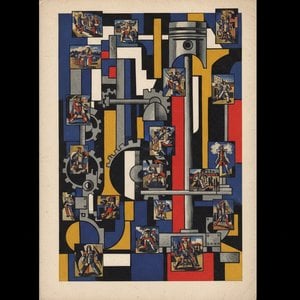
- Maschinenelement (Kubismus)

Fernand Léger
1881 - 1955 , Frankreich
Kurzinfos
- Beeinflusste Kunstrichtungen: ['Pop Art']
- Beeinflusste Künstler: ['Paul Cézanne']
- Bemerkenswerte Werke:
- Die Sitzende Frau
- Maschinenelement
- Der Große Umzug
- Die Stadt
- Geburtsdatum: 04. Februar 1881
- Geburtsort: Argentan, Frankreich
- Künstlerische Richtung: Kubismus, Tubismus
- Nationalität: Französisch
- Sterbedatum: 1955
- Vollständiger Name: Fernand Léger
- Von Kunstbewegungen Beeinflusst: ['Cézannismus']
- Von Künstlern Beeinflusst: ['Impressionismus']
Ähnliche Artikel
Fernand Léger: Die 25 Meisterwerke des Kubismus für Ihr Zuhause | ArtsDot
Entdecken Sie die 25 Meisterwerke von Fernand Léger! Tauchen Sie ein in die Welt des Kubismus, Tubismus & der Avantgarde. Hochwertige Kunstreproduktionen für Ihr Zuhause – jetzt auf ArtsDot.com!

Giclée Prints: Archival Quality & Aesthetic Nuances for the Discerning Collector
Explore the world of giclée prints with ArtsDot. Learn about archival quality, aesthetic nuances & investment potential. Expert guidance for discerning art collectors seeking museum-quality reproductions and lasting value.

Industrielle Ästhetik: 10 Meisterwerke für Ihr Zuhause | ArtsDot
Entdecken Sie 10 Meisterwerke der Industriekunst! Von Expressionismus bis Kubismus – erleben Sie die Ästhetik von Fabriken, Arbeitern & urbanen Landschaften. Hochwertige Reproduktionen auf ArtsDot.com.

Echoes of Time: Exploring the Enduring Appeal & Historical Context of Vintage Art Prints
Explore the captivating world of vintage art prints! Discover their history, collecting tips & enduring appeal. Expert insights on chromolithography and building a legacy collection with ArtsDot.

The Enduring Legacy of Fine Art Prints: Technique, History & Aesthetic Impact
Explore the rich history & techniques of fine art prints. Discover investment potential, assess authenticity, and learn how to preserve your collection with expert guidance. Trusted insights for discerning collectors.


