

 Vorschau anzeigen
 Versenden
 Teilen
 Details anzeigen
 Leitfaden

 Herunterladen
 Ähnliche Objekte
 Röntgenaufnahme
 Diashow
 Fragen & Antworten
 Statistiken
The man in the blue hat

- 73.0 x 92.0 cm


 Weiterlesen
Giclée / Kunstdruck
Giclée- oder Leinwanddruck in Museumsqualität mit schneller Produktion und flexiblen Veredelungsoptionen. ( Handgemalte Reproduktion bestellen Zum digitalen Bild wechseln)




P118B €10

P118H €10

P118W €10

P438Z €10

P508JH €12

P508YH €12

P805H €10

P805Z €10

P919BZ €10

P919G €10

P919XJ €10

P959ZH €10

P968JZ €12

W106C €8

W218G €10

W218JH €8

W218Y €10

W307PJ €10

W316G €10

W316PJ €8

W316Y €10

W398PJ €8

W4111J €10

W500HY €15

W500JH €15

W692G €12

W849H €8

W940BG €15

W953PJ €8




Wählen Sie aus unseren vordefinierten Formaten, die den ursprünglichen Proportionen des Kunstwerks entsprechen.

Geben Sie die benötigte Breite und Höhe an, damit der Druck perfekt in Ihren Rahmen oder an Ihre Wand passt. Ein Druck kann nur beschnitten, aber niemals größer als das Originalbild angefertigt werden; daher verliert ein Format mit anderen Proportionen einen Teil des Bildes. Wir senden Ihnen ein digitales Mockup zur Freigabe, bevor wir den Druck ausführen. Das auf dieser Seite gezeigte Bild zeigt nicht den tatsächlichen Beschnitt – dies ist nur im Mockup ersichtlich.
Weltweiter Versand () innerhalb von 2 Wochen statt der üblichen 4/5 Wochen. (3 November)

Kostenloser weltweiter Expressversand

Hochwertige Leinenleinwand

Umfassender Versicherungsschutz beim Versand

Zollgebühren-Rückerstattungsgarantie

Garantie für exakte Farbtreue

100 Tage Rückgaberecht (nur bei Mängeln)

100% Geld-zurück-Garantie

Mengenrabatt verfügbar
 Die Glasoption ist nur für Größen unter 110 cm verfügbar.

The man in the blue hat
Giclée / Kunstdruck
Format der Reproduktion
-


Endpreis
€ 56
A Portrait of Quiet Contemplation Amidst Mechanical Forms
Fernand Léger’s “The Man in the Blue Hat,” painted in 1937, stands as a striking embodiment of Purism – an artistic movement that sought to reconcile abstraction with observation. Born Joseph Fernand Henri Léger in Argentan, Normandy, Léger's formative years instilled within him a profound appreciation for physicality and craftsmanship, experiences that would later inform his revolutionary approach to painting. Unlike many artists of his era who abandoned representational art altogether, Léger championed the fusion of geometric abstraction with recognizable elements from the industrial landscape, reflecting the anxieties and aspirations of a rapidly changing world.- Subject Matter: The artwork depicts a solitary man seated beside a window, gazing outwards. He wears a prominent blue hat – a deliberate choice that draws attention to form and color—and holds a vase brimming with flowers. Scattered vases adorn the interior space, creating a visual dialogue between organic beauty and mechanized precision.
- Style: Léger’s Purist style prioritizes simplified geometric shapes—circles, squares, rectangles—over detailed realism. These forms dominate the composition, conveying a sense of stability and order despite their inherent abstraction. The artist deliberately avoids illusionistic techniques, opting instead for flat planes of color that emphasize texture and surface.
- Technique: Léger employed tempera on canvas, a medium known for its durability and luminous quality. He applied paint in thick layers—impasto—creating palpable textural surfaces that capture the essence of industrial materials like metal and concrete. This technique contributes to the artwork’s expressive power and reinforces its connection to the machine age.
Historical Context: The Shadow of War and Optimistic Futurism
Painted in 1937, “The Man in the Blue Hat” emerged during a turbulent period marked by escalating tensions leading up to World War II. Léger’s artistic vision was deeply influenced by Futurism – an Italian movement that celebrated speed, dynamism, and technological progress. Futurists envisioned a future dominated by machines and embraced bold geometric forms as symbols of this new era. Léger absorbed these ideas, translating them into his own distinctive aesthetic, demonstrating a belief in the transformative potential of technology while simultaneously acknowledging the anxieties surrounding impending conflict.Symbolism: Harmony Between Nature and Industry
Despite its abstract style, “The Man in the Blue Hat” is laden with symbolic significance. The blue hat serves as a focal point, representing both color and form—a deliberate homage to Purist principles. Simultaneously, the vases filled with flowers symbolize resilience and beauty amidst industrial surroundings – an assertion of nature’s enduring presence even within a mechanized world. Léger's careful arrangement of these elements invites contemplation on the relationship between humanity and technology, suggesting that progress should not come at the expense of aesthetic appreciation.Emotional Impact: Tranquility Amidst Complexity
Ultimately, “The Man in the Blue Hat” transcends mere visual representation. It communicates a profound sense of tranquility—a quiet moment of introspection—despite its geometric abstraction and industrial backdrop. Léger’s masterful use of color and texture evokes feelings of warmth and serenity, inviting viewers to consider the beauty inherent in simplicity and order. This artwork remains an enduring testament to Léger's ability to capture the spirit of his time while conveying timeless themes of contemplation and harmony.Fragen & Antworten
Wo finde ich einen Leitfaden zu „The man in the blue hat“?
Die Leitfaden-Seite von "The man in the blue hat" von Fernand Léger bietet ein druckbares, zweiseitiges Infoblatt: das Kunstwerk mit seiner Identifikationstabelle, eine zeitliche Einordnung in die Lebensspanne des Künstlers, weitere Werke des Künstlers, die gemessene Farbpalette sowie kopierfertige Zitate in vier verschiedenen Stilen.
Wofür wird eine Reproduktion von "The man in the blue hat" von Fernand Léger empfohlen?
Die empfohlene Verwendung für "The man in the blue hat" von Fernand Léger ist Akzentuierung. Es kann jedoch auch für andere Zwecke genutzt werden.
Welche Stimmung würde "The man in the blue hat" in einen Raum bringen?
"The man in the blue hat" von Fernand Léger strahlt eine Edel und klassisch Atmosphäre aus und wird für ein Wohnbereich empfohlen. Die Stimmung beschreibt das Gefühl, das das Werk in den umgebenden Raum bringt.
Ähnliche Kunstwerke


Künstlerbiografie
frühes Leben und Ausbildung
Fernand Légér, ein französischer Maler, Bildhauer und Filmemacher, wurde am 4. Februar 1881 in Argentan, Orne, Niedergermanien geboren. Sein Vater züchtete Rinder, und Légér erhielt zunächst eine Ausbildung als Architekt von 1897 bis 1899. Er zog dann im Jahr 1900 nach Paris und unterstützte sich dort als Architektenzeichner.Künstlerische Entwicklung
Légers frühe Werke wurden vom Impressionismus beeinflusst, wie in Le Jardin de ma Mère (Mein Muttergarten) (1905) zu sehen ist. Nach dem Besuch der Schule für dekorative Künste und der Académie Julian begann er ab seinem 25. Lebensjahr ernsthaft als Maler zu arbeiten. Sein Stil entwickelte sich zu einer persönlichen Form des Kubismus, der von Kritikern als "Tubism" bezeichnet wurde, da er sich auf zylindrische Formen konzentrierte.Kubismus und die Puteaux-Gruppe
Im Jahr 1910 stellte Légér im Salon d’Automne zusammen mit Jean Metzinger und Henri Le Fauconnier aus. Er schloss sich der Puteaux-Gruppe an, auch bekannt als die Section d’Or (die Goldene Proportion), zusammen mit anderen Künstlern wie Francis Picabia und Marcel Duchamp.Krieg und seine Auswirkungen auf Légers Werk
Légers Erfahrungen im Ersten Weltkrieg hatten einen erheblichen Einfluss auf sein Werk. Während seiner Zeit an der Front produzierte er Skizzen von Artilleriegeschützen, Flugzeugen und Soldaten. Sein Gemälde Soldat mit Pfeife (1916) spiegelt diese Zeit wider.Spätere Werke und Vermächtnis
Légers Nachkriegszeitliche Arbeiten, die von glatten, maschinellen Formen geprägt waren, verknüpften ihn mit der Tradition der französischen figurativen Malerei. Seine "animierten Landschaften" von 1921 zeigten Figuren und Tiere in harmonischen, stromlinienförmigen Formen.- Fernand Légers Werke auf ArtsDot
- Mehr über Fernand Légér auf Wikipedia
- Entdecken Sie das Musée National Fernand Légér (Frankreich) mit ArtsDot
- Die Sitzende Frau (100 x 81 cm, Tubism)
- Maschinenelement (Kubismus)

Fernand Léger
1881 - 1955 , Frankreich
Kurzinfos
- Beeinflusste Kunstrichtungen: ['Pop Art']
- Beeinflusste Künstler: ['Paul Cézanne']
- Bemerkenswerte Werke:
- Die Sitzende Frau
- Maschinenelement
- Der Große Umzug
- Die Stadt
- Geburtsdatum: 04. Februar 1881
- Geburtsort: Argentan, Frankreich
- Künstlerische Richtung: Kubismus, Tubismus
- Nationalität: Französisch
- Sterbedatum: 1955
- Vollständiger Name: Fernand Léger
- Von Kunstbewegungen Beeinflusst: ['Cézannismus']
- Von Künstlern Beeinflusst: ['Impressionismus']
Ähnliche Artikel

Industrielle Ästhetik: 10 Meisterwerke für Ihr Zuhause | ArtsDot
Entdecken Sie 10 Meisterwerke der Industriekunst! Von Expressionismus bis Kubismus – erleben Sie die Ästhetik von Fabriken, Arbeitern & urbanen Landschaften. Hochwertige Reproduktionen auf ArtsDot.com.

Die 25 besten Kunstwerke von Fernand Léger: Meister des Maschinenzeitalters
Entdecken Sie die 25 besten Werke von Fernand Léger und den Tubismus. Erleben Sie Meisterwerke auf ArtsDot.com.
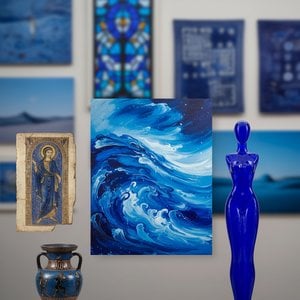
The Allure of Azure: Exploring the Symbolic & Aesthetic Depths of Blue in Art History
Explore the rich history of blue in art! Discover its symbolism, from ancient pigments to modern masterpieces by Kandinsky & Seurat. Uncover the psychological impact and cultural meanings behind this captivating hue.

Azure Visions: Exploring Representations of the Blue Dress in Western Art History
Explore the rich history of the blue dress in Western art! Discover its symbolism, from Renaissance masterpieces to modern interpretations by artists like Martin & Schiele. Uncover cultural meanings and artistic techniques.

Die Top 10 Gemälde in Schattierungen von 'Slate Blue': Kunst für Ihr Zuhause
Entdecken Sie die Top 10 Gemälde in faszinierenden 'Slate Blue' Tönen! Von Monet bis Manet – erleben Sie Kunstgeschichte und lassen Sie sich von Meisterwerken inspirieren. Hochwertige Kunstdrucke auf


