


 Vorschau anzeigen
 Versenden
 Teilen
 Details anzeigen

 Herunterladen
 Ähnliche Objekte
 Röntgenaufnahme
 Diashow
The Circus


 Weiterlesen
Giclée / Kunstdruck
Giclée- oder Leinwanddruck in Museumsqualität mit schneller Produktion und flexiblen Veredelungsoptionen. ( Handgemalte Reproduktion bestellen Bild kaufen)




P118B $10

P118H $10

P118W $10

P438Z $10

P508JH $12

P508YH $12

P805H $10

P805Z $10

P919BZ $10

P919G $10

P919XJ $10

P959ZH $10

P968JZ $12

W106C $8

W218G $10

W218JH $8

W218Y $10

W307PJ $10

W316G $10

W316PJ $8

W316Y $10

W398PJ $8

W4111J $10

W500HY $15

W500JH $15

W692G $12

W849H $8

W940BG $15

W953PJ $8




Wählen Sie aus unseren vordefinierten Formaten, die den ursprünglichen Proportionen des Kunstwerks entsprechen.

Sie können Ihre eigenen Maße eingeben, um ein bestimmtes Format oder einen speziellen Platz einzupassen. Wenn das von Ihnen gewählte Format nicht den Proportionen des Originalbildes entspricht, werden wir das Kunstwerk entweder beschneiden oder das Bild mit einem gespiegelten oder einfarbigen Rand erweitern. Ein digitaler Entwurf wird Ihnen zur Genehmigung zugesandt, bevor die Produktion beginnt.
Bitte beachten Sie, dass die Vorschau auf dem Bildschirm nicht den tatsächlichen Zuschnitt oder die Erweiterung widerspiegelt. Nur der Entwurf zeigt die endgültige Komposition präzise an.
Obwohl Sondermaße verfügbar sind, empfehlen wir die Auswahl eines Maßes aus der vordefinierten Liste, um die ursprünglichen Proportionen zu bewahren.
Weltweiter Versand () innerhalb von 2 Wochen statt der üblichen 4/5 Wochen. (1 September)

Kostenloser weltweiter Expressversand

Hochwertige Leinenleinwand

Umfassender Versicherungsschutz beim Versand

Zollgebühren-Rückerstattungsgarantie

Garantie für exakte Farbtreue

60 Tage Rückgaberecht (nur bei Mängeln)

100% Geld-zurück-Garantie

Mengenrabatt verfügbar
 Die Glasoption ist nur für Größen unter 110 cm verfügbar.

The Circus
Giclée / Kunstdruck
Format der Reproduktion
-


Gesamtpreis
$ 62
A Symphony of Form and Modernity
In the vibrant tapestry of early 20th-century avant-garde art, few works capture the electric pulse of a changing world as masterfully as Fernand Léger’s “The Circus.” Completed in 1918, this masterpiece serves as a breathtaking window into a moment where the traditional and the industrial began to collide. Léger, a visionary who found profound inspiration in the rhythmic precision of the machine age, does not merely depict a circus; he orchestrates a visual symphony. The canvas is a dizzying, joyful collage of movement, where acrobats, animals, and mechanical elements dance together in a choreographed chaos that feels both ancient and startlingly modern.
To gaze upon this work is to experience the very essence of Cubism through Léger’s unique lens. Unlike the more fragmented and monochromatic explorations of his contemporaries, Léger infused his compositions with a robust, sculptural energy. In “The Circus,” he utilizes flattened planes and bold, geometric shapes—cylinders, spheres, and cubes—to reconstruct reality. This technique, often referred to as "Tubism," allows the viewer to perceive the world not as a collection of static objects, but as a dynamic interplay of volumes and light. The presence of an elephant, a clock, and even architectural echoes like trains creates a sense of layered perception, mirroring how the human eye captures the fragmented, rapid-fire stimuli of modern urban life.
The Pulse of the Machine Age
The historical context of 1918 provides a poignant backdrop to this exuberant display. As the world emerged from the shadows of conflict, there was a burgeoning fascination with progress, technology, and the relentless pace of industrialization. Léger, whose early life in rural Normandy instilled in him a deep respect for physical labor and structure, translated this fascination into a visual language of strength and clarity. In “The Circus,” the circus performers are not merely entertainers; they are embodiments of vitality and resilience. The way their forms are broken down into essential, powerful shapes suggests a world being rebuilt—one that is more structured, more mechanical, yet undeniably alive.
For the discerning collector or interior designer, this painting offers much more than mere decoration; it provides a focal point of intellectual and emotional depth. The composition’s inherent energy makes it an extraordinary addition to contemporary spaces, where its bold lines can interact with modern architecture to create a sense of sophisticated movement. The interplay of disparate elements—the organic curve of an elephant contrasted against the rigid geometry of a chair or a clock—invites endless contemplation. It is a piece that demands attention, offering a sense of theatrical spectacle that can transform a room into a gallery of modern thought.
A Legacy of Visual Rhythm
Ultimately, the emotional impact of “The Circus” lies in its ability to evoke wonder. There is a profound sense of optimism embedded within Léger’s fragmented forms—a celebration of the spectacle that life presents to us. The painting captures that fleeting moment of equilibrium found in an acrobat's leap or a performer's feat, reminding the viewer of the beauty found in balance and tension. By integrating the mechanical with the human, Léger created a timeless aesthetic that continues to resonate with anyone moved by the intersection of art and life.
Owning a high-quality reproduction of this work allows one to bring this historical dynamism into the home. It is an invitation to live surrounded by the rhythmic beauty of the modern era, providing a constant source of inspiration through its masterful use of color, form, and the enduring spirit of the avant-garde.
Ähnliche Kunstwerke


Über den Künstler
frühes Leben und Ausbildung
Fernand Légér, ein französischer Maler, Bildhauer und Filmemacher, wurde am 4. Februar 1881 in Argentan, Orne, Niedergermanien geboren. Sein Vater züchtete Rinder, und Légér erhielt zunächst eine Ausbildung als Architekt von 1897 bis 1899. Er zog dann im Jahr 1900 nach Paris und unterstützte sich dort als Architektenzeichner.Künstlerische Entwicklung
Légers frühe Werke wurden vom Impressionismus beeinflusst, wie in Le Jardin de ma Mère (Mein Muttergarten) (1905) zu sehen ist. Nach dem Besuch der Schule für dekorative Künste und der Académie Julian begann er ab seinem 25. Lebensjahr ernsthaft als Maler zu arbeiten. Sein Stil entwickelte sich zu einer persönlichen Form des Kubismus, der von Kritikern als "Tubism" bezeichnet wurde, da er sich auf zylindrische Formen konzentrierte.Kubismus und die Puteaux-Gruppe
Im Jahr 1910 stellte Légér im Salon d’Automne zusammen mit Jean Metzinger und Henri Le Fauconnier aus. Er schloss sich der Puteaux-Gruppe an, auch bekannt als die Section d’Or (die Goldene Proportion), zusammen mit anderen Künstlern wie Francis Picabia und Marcel Duchamp.Krieg und seine Auswirkungen auf Légers Werk
Légers Erfahrungen im Ersten Weltkrieg hatten einen erheblichen Einfluss auf sein Werk. Während seiner Zeit an der Front produzierte er Skizzen von Artilleriegeschützen, Flugzeugen und Soldaten. Sein Gemälde Soldat mit Pfeife (1916) spiegelt diese Zeit wider.Spätere Werke und Vermächtnis
Légers Nachkriegszeitliche Arbeiten, die von glatten, maschinellen Formen geprägt waren, verknüpften ihn mit der Tradition der französischen figurativen Malerei. Seine "animierten Landschaften" von 1921 zeigten Figuren und Tiere in harmonischen, stromlinienförmigen Formen.- Fernand Légers Werke auf ArtsDot
- Mehr über Fernand Légér auf Wikipedia
- Entdecken Sie das Musée National Fernand Légér (Frankreich) mit ArtsDot
- Die Sitzende Frau (100 x 81 cm, Tubism)
- Maschinenelement (Kubismus)

Fernand Léger
1881 - 1955 , Frankreich
Kurzinfos
- Beeinflusste Kunstrichtungen: ['Pop Art']
- Beeinflusste Künstler: ['Paul Cézanne']
- Bemerkenswerte Werke:
- Die Sitzende Frau
- Maschinenelement
- Der Große Umzug
- Die Stadt
- Geburtsdatum: 04. Februar 1881
- Geburtsort: Argentan, Frankreich
- Künstlerische Richtung: Kubismus, Tubismus
- Nationalität: Französisch
- Sterbedatum: 1955
- Vollständiger Name: Fernand Léger
- Von Kunstbewegungen Beeinflusst: ['Cézannismus']
- Von Künstlern Beeinflusst: ['Impressionismus']
Ähnliche Artikel

Fernand Léger: Die 25 Meisterwerke des Kubismus für Ihr Zuhause | ArtsDot
Entdecken Sie die 25 Meisterwerke von Fernand Léger! Tauchen Sie ein in die Welt des Kubismus, Tubismus & der Avantgarde. Hochwertige Kunstreproduktionen für Ihr Zuhause – jetzt auf ArtsDot.com!

Giclée Prints: Archival Quality & Aesthetic Nuances for the Discerning Collector
Explore the world of giclée prints with ArtsDot. Learn about archival quality, aesthetic nuances & investment potential. Expert guidance for discerning art collectors seeking museum-quality reproductions and lasting value.
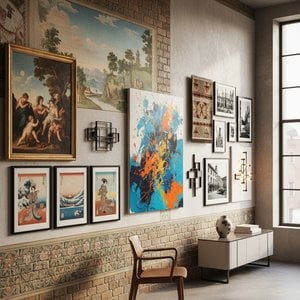
Transforming Spaces: A Comprehensive Exploration of Wall Decor Through Art History & Contemporary Practice
Explore the art of transforming spaces with our comprehensive guide to wall decor. From historical movements to contemporary trends, discover how to curate impactful interiors and commission bespoke artwork for a truly personalized aesthetic.

F.A.Q.: Poster Prints – Haltbarkeit, Vergleich zu Leinwanddrucken und verfügbare Größen
F.A.Q.: Entdecken Sie die Haltbarkeit unserer Poster Prints! Vergleichen Sie Leinwanddrucke, wählen Sie Ihre ideale Größe & profitieren Sie von Premium-Rahmung – für Kunstsammler und höchste Ansprüche.

Echoes of Time: Exploring the Enduring Appeal & Historical Context of Vintage Art Prints
Explore the captivating world of vintage art prints! Discover their history, collecting tips & enduring appeal. Expert insights on chromolithography and building a legacy collection with ArtsDot.



