


 In echtem Maßstab anzeigen
 Versenden als Grußkarte
 Teilen
 Details anzeigen
 Leitfaden öffnen

 Herunterladen
 Ähnliche Objekte
 Röntgenaufnahme
 Diashow
 Besucherstatistiken
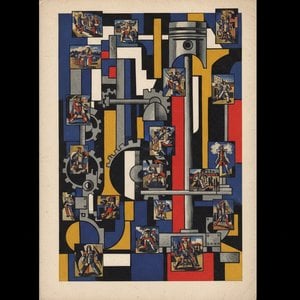
Komposition 503


 Mehr anzeigen
Giclée / Kunstdruck
Giclée- oder Leinwanddruck in Museumsqualität mit schneller Produktion und flexiblen Veredelungsoptionen. ( Handgemalte Reproduktion kaufen Zum digitalen Bild wechseln)




P118B €10

P118H €10

P118W €10

P438Z €10

P508JH €12

P508YH €12

P805H €10

P805Z €10

P919BZ €10

P919G €10

P919XJ €10

P959ZH €10

P968JZ €12

W106C €8

W218G €10

W218JH €8

W218Y €10

W307PJ €10

W316G €10

W316PJ €8

W316Y €10

W398PJ €8

W4111J €10

W500HY €15

W500JH €15

W692G €12

W849H €8

W940BG €15

W953PJ €8




Wählen Sie aus unseren vordefinierten Formaten, die den ursprünglichen Proportionen des Kunstwerks entsprechen.

Geben Sie die Breite und die Höhe an, die Sie benötigen, damit der Druck perfekt in Ihren Rahmen oder an Ihre Wand passt. Ein Druck kann nur beschnitten werden und niemals größer als das Originalbild gemacht werden; daher verliert ein Format mit einer anderen Proportion einen Teil des Bildes. Wir senden Ihnen ein digitales Mockup zur Freigabe, bevor wir den Druck ausführen. Das auf dieser Seite gezeigte Bild zeigt nicht den tatsächlichen Beschnitt – dies ist nur im Mockup ersichtlich.
Weltweiter Versand () innerhalb von 2 Wochen statt der üblichen 4/5 Wochen. (22 Oktober)

Kostenloser weltweiter Expressversand

Hochwertige Leinenleinwand

Vollständiger Versicherungsschutz beim Versand

Zollgebühren-Rückerstattungsgarantie

Garantie für exakte Farbtreue

100-tägiges Rückgaberecht (nur bei Mängeln)

100% Geld-zurück-Garantie

Angebot für Mengenrabatt
 Die Glasoption ist nur für Größen unter 110 cm verfügbar.

Komposition 503
Giclée / Kunstdruck
Format der Reproduktion
-


Gesamtpreis
€ 54
A Bold Vision of Modernity: Exploring Fernand Léger’s Composition 503
Fernand Léger's "Composition 503," painted in 1943, stands as a cornerstone of Cubist and Tubist aesthetics—a defiant assertion that abstraction could simultaneously capture the dynamism of industrial progress and retain an undeniable connection to organic forms. More than just a visual spectacle, this artwork embodies Léger’s profound engagement with the burgeoning machine age, reflecting his belief in its transformative potential while acknowledging its inherent geometric rigor.The Visual Language of Tubism
Léger pioneered Tubism (Tubisme), a distinctive style born from Cubism but pushing beyond mere fragmentation into a deliberate simplification of shapes and forms. Unlike Picasso’s fractured portraits, Léger sought to distill objects – bowls, clocks, figures – into elemental geometric primitives: cubes, cylinders, spheres—a technique that mirrored the repetitive patterns found in factories and urban landscapes. The resulting image is characterized by a striking palette dominated by earthy tones punctuated by vibrant reds and yellows, colors reminiscent of industrial pigments and conveying an energetic pulse.Symbolism Within Geometric Precision
Despite its apparent austerity, “Composition 503” is laden with symbolic resonance. Léger’s upward-reaching hands represent aspiration and movement—a yearning for transcendence amidst the mechanical world. The placement of the bowls contributes to a sense of spatial depth and balance, subtly hinting at the harmonious coexistence of organic and inorganic elements. Furthermore, the clock serves as a poignant reminder of time's relentless march forward, juxtaposed against the static geometric forms that dominate the canvas. Léger wasn’t merely depicting objects; he was conveying an emotional response to their presence—a fascination with both beauty and functionality.Historical Context: The Shadow of War
Painted during World War II, “Composition 503” reflects the anxieties and hopes of a generation grappling with unprecedented technological advancements alongside existential dread. Léger’s artistic vision aligns perfectly with the broader cultural preoccupation with industrialization and its impact on human experience. He sought to communicate not just what he saw but how he *felt* about it—a conviction that resonated powerfully with fellow artists and intellectuals of his time.A Legacy of Innovation
“Composition 503” cemented Léger’s reputation as a visionary artist who dared to reimagine art's role in confronting the complexities of modernity. Its influence extends beyond Cubism, foreshadowing elements of Pop Art and establishing Léger as an enduring figure in the history of twentieth-century abstraction—a testament to his unwavering belief that form could express emotion and intellect alike.Fragen & Antworten
Für welchen Ort und welchen Zweck wird "Komposition 503" empfohlen?
"Komposition 503" von Fernand Léger wird für Akzentuierung empfohlen, idealerweise in einem Wohnbereich. Verwendung und Raumgestaltung geben gemeinsam Aufschluss darüber, wo eine Reproduktion am besten zur Geltung kommt.
Welches Format hat "Komposition 503" von Fernand Léger?
"Komposition 503" von Fernand Léger hat ein Hochformat-Format. Das Format beschreibt die Proportionen der Komposition.
Wie finde ich Kunstwerke, die "Komposition 503" von Fernand Léger ähneln?
Die Seite Ähnliche Werke von "Komposition 503" von Fernand Léger zeigt verwandte Kunstwerke.
Ähnliche Kunstwerke


Biografie des Künstlers
frühes Leben und Ausbildung
Fernand Légér, ein französischer Maler, Bildhauer und Filmemacher, wurde am 4. Februar 1881 in Argentan, Orne, Niedergermanien geboren. Sein Vater züchtete Rinder, und Légér erhielt zunächst eine Ausbildung als Architekt von 1897 bis 1899. Er zog dann im Jahr 1900 nach Paris und unterstützte sich dort als Architektenzeichner.Künstlerische Entwicklung
Légers frühe Werke wurden vom Impressionismus beeinflusst, wie in Le Jardin de ma Mère (Mein Muttergarten) (1905) zu sehen ist. Nach dem Besuch der Schule für dekorative Künste und der Académie Julian begann er ab seinem 25. Lebensjahr ernsthaft als Maler zu arbeiten. Sein Stil entwickelte sich zu einer persönlichen Form des Kubismus, der von Kritikern als "Tubism" bezeichnet wurde, da er sich auf zylindrische Formen konzentrierte.Kubismus und die Puteaux-Gruppe
Im Jahr 1910 stellte Légér im Salon d’Automne zusammen mit Jean Metzinger und Henri Le Fauconnier aus. Er schloss sich der Puteaux-Gruppe an, auch bekannt als die Section d’Or (die Goldene Proportion), zusammen mit anderen Künstlern wie Francis Picabia und Marcel Duchamp.Krieg und seine Auswirkungen auf Légers Werk
Légers Erfahrungen im Ersten Weltkrieg hatten einen erheblichen Einfluss auf sein Werk. Während seiner Zeit an der Front produzierte er Skizzen von Artilleriegeschützen, Flugzeugen und Soldaten. Sein Gemälde Soldat mit Pfeife (1916) spiegelt diese Zeit wider.Spätere Werke und Vermächtnis
Légers Nachkriegszeitliche Arbeiten, die von glatten, maschinellen Formen geprägt waren, verknüpften ihn mit der Tradition der französischen figurativen Malerei. Seine "animierten Landschaften" von 1921 zeigten Figuren und Tiere in harmonischen, stromlinienförmigen Formen.- Fernand Légers Werke auf ArtsDot
- Mehr über Fernand Légér auf Wikipedia
- Entdecken Sie das Musée National Fernand Légér (Frankreich) mit ArtsDot
- Die Sitzende Frau (100 x 81 cm, Tubism)
- Maschinenelement (Kubismus)

Fernand Léger
1881 - 1955 , Frankreich
Eckdaten zum Künstler
- Beeinflusste Kunstrichtungen: ['Pop Art']
- Beeinflusste Künstler: ['Paul Cézanne']
- Bemerkenswerte Werke:
- Die Sitzende Frau
- Maschinenelement
- Der Große Umzug
- Die Stadt
- Geburtsdatum: 04. Februar 1881
- Geburtsort: Argentan, Frankreich
- Künstlerische Richtung: Kubismus, Tubismus
- Nationalität: Französisch
- Sterbedatum: 1955
- Vollständiger Name: Fernand Léger
- Von Kunstbewegungen Beeinflusst: ['Cézannismus']
- Von Künstlern Beeinflusst: ['Impressionismus']
Verwandte Artikel

Geometrische Abstraktion: Die 10 Meisterwerke, die Kunstgeschichte prägten | ArtsDot.com
Entdecken Sie die 10 Meisterwerke der geometrischen Abstraktion! Von Kandinsky bis Mondrian – erleben Sie die Geschichte, Farben & Formen dieser revolutionären Kunstrichtung. Hochwertige Kunstreproduktionen auf ArtsDot.com

Georges Braque: Die 25 Meisterwerke des Kubismus für Ihr Zuhause | ArtsDot
Entdecken Sie die 25 bedeutendsten Kunstwerke von Georges Braque – vom Kubismus bis zum Fauvismus. Erfahren Sie die Geschichten hinter den Meisterwerken und finden Sie hochwertige Reproduktionen für Ihr Zuhause auf ArtsDot.com.

Beyond Form & Color: Geometric Abstraction's Evolution in 20th/21st Century Art
Explore the evolution of geometric abstraction from Cubism to contemporary art. Discover key artists like Malevich & Mondrian, investment insights, and expert collecting advice at ArtsDot.

Kandinsky: Die 25 Meisterwerke des Abstrakten – Kunst für Ihr Zuhause | ArtsDot
Entdecken Sie die 25 bedeutendsten Gemälde von Wassily Kandinsky! Tauchen Sie ein in die Welt der abstrakten Kunst, des Expressionismus und der Farbkomposition. Hochwertige Kunstdrucke & Inspiration für Ihr Zuhause auf ArtsDot.com.
Fernand Léger: Die 25 Meisterwerke des Kubismus für Ihr Zuhause | ArtsDot
Entdecken Sie die 25 Meisterwerke von Fernand Léger! Tauchen Sie ein in die Welt des Kubismus, Tubismus & der Avantgarde. Hochwertige Kunstreproduktionen für Ihr Zuhause – jetzt auf ArtsDot.com!


