


 Vorschau anzeigen
 Versenden
 Teilen
 Details anzeigen

 Herunterladen
 Ähnliche Objekte
 Röntgenaufnahme
 Diashow
Divers polychrome


 Weiterlesen
Handgefertigte Ölreproduktion
Handgemaltes Ölgemälde auf Leinwand in Ihrer Wunschgröße und mit Rahmen, auf Bestellung von unseren Künstlern angefertigt. ( Druck bestellen Bild kaufen)




P118B $10

P118H $10

P118W $10

P438Z $10

P508JH $12

P508YH $12

P805H $10

P805Z $10

P919BZ $10

P919G $10

P919XJ $10

P959ZH $10

P968JZ $12

W106C $8

W218G $10

W218JH $8

W218Y $10

W307PJ $10

W316G $10

W316PJ $8

W316Y $10

W398PJ $8

W4111J $10

W500HY $15

W500JH $15

W692G $12

W849H $8

W940BG $15

W953PJ $8




Wählen Sie aus unseren vordefinierten Formaten, die den ursprünglichen Proportionen des Kunstwerks entsprechen.

Sie können Ihre eigenen Maße eingeben, um einen bestimmten Rahmen oder Platz auszufüllen. Wenn die gewählte Größe nicht den Proportionen des Originalbildes entspricht, werden wir das Kunstwerk entweder beschneiden oder das Gemälde durch zusätzliche, handgemalte Elemente erweitern. Ein digitales Mockup wird Ihnen zur Genehmigung zugesandt, bevor die Produktion beginnt.
Bitte beachten Sie, dass die Bildschirmvorschau nicht die tatsächliche Beschneidung oder Erweiterung widerspiegelt. Nur das Mockup zeigt die endgültige Komposition exakt an.
Obwohl Sondermaße verfügbar sind, empfehlen wir, eine Größe aus der vordefinierten Liste zu wählen, um die ursprünglichen Proportionen beizubehalten.
Nach der Bestellung wird das ArtsDot.com-Team dem Kunden Anweisungen per E-Mail zusenden und eine Mockup-Vorschau bereitstellen.
Weltweiter Versand () in nur 3 bis 4 Wochen statt der üblichen 5 Wochen. (17 August). Keine Kompromisse bei der Qualität.

Kostenloser weltweiter Expressversand

Hochwertige Leinenleinwand

Umfassender Versicherungsschutz beim Versand

Zollgebühren-Rückerstattungsgarantie

Garantie für exakte Farbtreue

60 Tage Rückgaberecht (nur bei Mängeln)

100% Geld-zurück-Garantie

Mengenrabatt verfügbar
 Die Glasoption ist nur für Größen unter 110 cm verfügbar.

Divers polychrome
Art der Reproduktion
Format der Reproduktion
-


Gesamtpreis
$ 263
Beschreibung des Kunstwerks
A Symphony of Form and Color: Exploring Fernand Léger’s “Divers Polychrome”
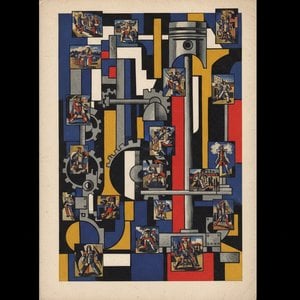
Fernand Léger's "Divers Polychrome" isn’t merely a painting; it’s an embodiment of the anxieties and aspirations surrounding the burgeoning industrial revolution. Created in 1942 during the tumultuous backdrop of World War II, this artwork transcends its historical moment to speak directly to our contemporary sensibilities about perception, movement, and the transformative power of visual representation. The photograph accompanying the piece reveals a complex composition—a deliberate collage of figures interwoven against a serene azure sky—that immediately draws the eye into its intricate dance of shapes and hues.- Subject Matter: Léger’s depiction centers on a group of individuals engaged in various activities, ranging from seated postures to dynamic stances. The figures aren't idealized representations; they are rendered with an unflinching honesty that reflects the realities of everyday life during wartime—a stark contrast to the romanticized narratives prevalent at the time.
- Style: Léger’s style is undeniably geometric abstraction, yet it’s far from sterile. He employs bold, angular forms reminiscent of machine parts and architectural structures – a conscious homage to the industrial landscape that dominated his era. However, these rigid shapes are punctuated by splashes of vibrant color—primarily reds, yellows, and blues—creating an energetic interplay between structure and spontaneity.
Technique: Embracing Constructivism’s Legacy
Léger's approach to painting aligns closely with the principles of Constructivism, a Russian artistic movement that championed geometric abstraction as a tool for conveying social and political ideas. He utilized tempera on canvas—a technique known for its durability and luminosity—to achieve a surface finish that is both matte and subtly textured. This meticulous layering contributes to the artwork’s palpable physicality, mirroring Léger's fascination with materiality and his desire to capture the essence of industrial forms. The artist deliberately avoided blending colors seamlessly; instead, he applied them in distinct blocks, emphasizing their individual presence and creating a visual rhythm that mimics the movement inherent in mechanical processes.Historical Context: Navigating Uncertainty Amidst Wartime Propaganda
“Divers Polychrome” emerged during a period of profound societal upheaval. The Second World War cast a long shadow over Europe, fueling anxieties about technological advancement and prompting artists to grapple with questions of identity and purpose. Léger’s artwork can be interpreted as a response to this climate—a deliberate rejection of traditional artistic conventions in favor of a visual language that prioritizes clarity and directness. Simultaneously, it subtly incorporates elements of propaganda – the pervasive use of color and geometric forms echoes the messaging campaigns designed to inspire patriotism and bolster morale during wartime.Symbolism Beyond Geometry: Exploring Human Presence
Despite its predominantly geometric aesthetic, “Divers Polychrome” isn’t devoid of symbolic resonance. Léger's figures represent not merely individuals but also humanity itself—a collective striving for stability amidst chaos. The angular forms symbolize resilience and determination, while the vibrant colors convey optimism and vitality. More importantly, Léger’s insistence on depicting human presence within an abstract framework challenges viewers to consider how we perceive and interpret the world around us. He compels us to confront the tension between rational thought and emotional experience—a theme that remains remarkably pertinent in our contemporary context.Emotional Impact: A Quiet Assertion of Form’s Power
Ultimately, “Divers Polychrome” succeeds in conveying a powerful emotional message despite its seemingly detached visual style. The artwork's subdued palette – dominated by blues and reds – creates an atmosphere of contemplative seriousness. Yet, the dynamism of the composition—the interplay of shapes and colors—injects a sense of energy and movement that resonates deeply with the viewer. Léger’s masterpiece serves as a reminder that even in the face of adversity, art can offer solace and inspiration—a testament to its enduring ability to capture the complexities of human experience.Ähnliche Kunstwerke


Über den Künstler
frühes Leben und Ausbildung
Fernand Légér, ein französischer Maler, Bildhauer und Filmemacher, wurde am 4. Februar 1881 in Argentan, Orne, Niedergermanien geboren. Sein Vater züchtete Rinder, und Légér erhielt zunächst eine Ausbildung als Architekt von 1897 bis 1899. Er zog dann im Jahr 1900 nach Paris und unterstützte sich dort als Architektenzeichner.Künstlerische Entwicklung
Légers frühe Werke wurden vom Impressionismus beeinflusst, wie in Le Jardin de ma Mère (Mein Muttergarten) (1905) zu sehen ist. Nach dem Besuch der Schule für dekorative Künste und der Académie Julian begann er ab seinem 25. Lebensjahr ernsthaft als Maler zu arbeiten. Sein Stil entwickelte sich zu einer persönlichen Form des Kubismus, der von Kritikern als "Tubism" bezeichnet wurde, da er sich auf zylindrische Formen konzentrierte.Kubismus und die Puteaux-Gruppe
Im Jahr 1910 stellte Légér im Salon d’Automne zusammen mit Jean Metzinger und Henri Le Fauconnier aus. Er schloss sich der Puteaux-Gruppe an, auch bekannt als die Section d’Or (die Goldene Proportion), zusammen mit anderen Künstlern wie Francis Picabia und Marcel Duchamp.Krieg und seine Auswirkungen auf Légers Werk
Légers Erfahrungen im Ersten Weltkrieg hatten einen erheblichen Einfluss auf sein Werk. Während seiner Zeit an der Front produzierte er Skizzen von Artilleriegeschützen, Flugzeugen und Soldaten. Sein Gemälde Soldat mit Pfeife (1916) spiegelt diese Zeit wider.Spätere Werke und Vermächtnis
Légers Nachkriegszeitliche Arbeiten, die von glatten, maschinellen Formen geprägt waren, verknüpften ihn mit der Tradition der französischen figurativen Malerei. Seine "animierten Landschaften" von 1921 zeigten Figuren und Tiere in harmonischen, stromlinienförmigen Formen.- Fernand Légers Werke auf ArtsDot
- Mehr über Fernand Légér auf Wikipedia
- Entdecken Sie das Musée National Fernand Légér (Frankreich) mit ArtsDot
- Die Sitzende Frau (100 x 81 cm, Tubism)
- Maschinenelement (Kubismus)

Fernand Léger
1881 - 1955 , Frankreich
Kurzinfos
- Beeinflusste Kunstrichtungen: ['Pop Art']
- Beeinflusste Künstler: ['Paul Cézanne']
- Bemerkenswerte Werke:
- Die Sitzende Frau
- Maschinenelement
- Der Große Umzug
- Die Stadt
- Geburtsdatum: 04. Februar 1881
- Geburtsort: Argentan, Frankreich
- Künstlerische Richtung: Kubismus, Tubismus
- Nationalität: Französisch
- Sterbedatum: 1955
- Vollständiger Name: Fernand Léger
- Von Kunstbewegungen Beeinflusst: ['Cézannismus']
- Von Künstlern Beeinflusst: ['Impressionismus']
Ähnliche Artikel
Fernand Léger: Die 25 Meisterwerke des Kubismus für Ihr Zuhause | ArtsDot
Entdecken Sie die 25 Meisterwerke von Fernand Léger! Tauchen Sie ein in die Welt des Kubismus, Tubismus & der Avantgarde. Hochwertige Kunstreproduktionen für Ihr Zuhause – jetzt auf ArtsDot.com!

Geometrische Abstraktion: Die 10 Meisterwerke, die Kunstgeschichte prägten | ArtsDot.com
Entdecken Sie die 10 Meisterwerke der geometrischen Abstraktion! Von Kandinsky bis Mondrian – erleben Sie die Geschichte, Farben & Formen dieser revolutionären Kunstrichtung. Hochwertige Kunstreproduktionen auf ArtsDot.com

Industrielle Ästhetik: 10 Meisterwerke für Ihr Zuhause | ArtsDot
Entdecken Sie 10 Meisterwerke der Industriekunst! Von Expressionismus bis Kubismus – erleben Sie die Ästhetik von Fabriken, Arbeitern & urbanen Landschaften. Hochwertige Reproduktionen auf ArtsDot.com.

Kandinsky: Die 25 Meisterwerke des Abstrakten – Kunst für Ihr Zuhause | ArtsDot
Entdecken Sie die 25 bedeutendsten Gemälde von Wassily Kandinsky! Tauchen Sie ein in die Welt der abstrakten Kunst, des Expressionismus und der Farbkomposition. Hochwertige Kunstdrucke & Inspiration für Ihr Zuhause auf ArtsDot.com.

Beyond Form & Color: Geometric Abstraction's Evolution in 20th/21st Century Art
Explore the evolution of geometric abstraction from Cubism to contemporary art. Discover key artists like Malevich & Mondrian, investment insights, and expert collecting advice at ArtsDot.



