


 In echtem Maßstab anzeigen
 Versenden als Grußkarte
 Teilen
 Details anzeigen
 Leitfaden öffnen

 Herunterladen
 Ähnliche Objekte
 Röntgenaufnahme
 Diashow
 Besucherstatistiken
Album Le Cirque


 Mehr anzeigen
Handgefertigte Ölreproduktion
Handgemaltes Ölgemälde auf Leinwand in Ihrer Wunschgröße und mit Rahmen, auf Bestellung von unseren Künstlern angefertigt. ( Zum Druck wechseln Zum digitalen Bild wechseln)




P118B €10

P118H €10

P118W €10

P438Z €10

P508JH €12

P508YH €12

P805H €10

P805Z €10

P919BZ €10

P919G €10

P919XJ €10

P959ZH €10

P968JZ €12

W106C €8

W218G €10

W218JH €8

W218Y €10

W307PJ €10

W316G €10

W316PJ €8

W316Y €10

W398PJ €8

W4111J €10

W500HY €15

W500JH €15

W692G €12

W849H €8

W940BG €15

W953PJ €8




Wählen Sie aus unseren vordefinierten Formaten, die den ursprünglichen Proportionen des Kunstwerks entsprechen.

Geben Sie die Breite und die Höhe an, die Sie für Ihren Rahmen oder Ihre Wand benötigen. Da dieses Werk handgemalt ist, kann der Künstler bei einer anderen Form etwas mehr um das Bild herum malen oder etwas abschneiden – Sie entscheiden. Wir senden Ihnen ein digitales Mockup zur Freigabe, bevor mit dem Malen begonnen wird. Das auf dieser Seite gezeigte Bild stellt nicht das tatsächliche Ergebnis dar – dies tut nur das Mockup.
Nach der Bestellung wird das ArtsDot.com-Team dem Kunden Anweisungen per E-Mail zusenden und eine Mockup-Vorschau bereitstellen.
Weltweiter Versand () in nur 3 bis 4 Wochen statt der üblichen 5 Wochen. (23 Oktober). Keine Kompromisse bei der Qualität.

Kostenloser weltweiter Expressversand

Hochwertige Leinenleinwand

Vollständiger Versicherungsschutz beim Versand

Zollgebühren-Rückerstattungsgarantie

Garantie für exakte Farbtreue

100-tägiges Rückgaberecht (nur bei Mängeln)

100% Geld-zurück-Garantie

Angebot für Mengenrabatt
 Die Glasoption ist nur für Größen unter 110 cm verfügbar.

Album Le Cirque
Reproduktionsmedium
Format der Reproduktion
-


Gesamtpreis
€ 231
A Symphony of Steel and Spectacle: Exploring Fernand Léger’s *Album Le Cirque*
Fernand Léger's *Album Le Cirque*, painted in 1950, is more than just a depiction of a circus; it’s a vibrant embodiment of the artist’s lifelong fascination with the burgeoning machine age and its impact on human experience. Born in Argentan, Normandy, in 1881, Léger's formative years were spent amidst the rhythms of rural life – a stark contrast to the industrial landscapes he would later translate onto canvas. This duality informs *Album Le Cirque*, where the raw energy of a circus performance is filtered through a distinctly modern lens.
- Subject Matter: The painting captures a quintessential circus scene, brimming with life and movement. A dominant elephant, rendered in Léger’s signature geometric style, commands attention at the center, surrounded by a supporting cast of smaller elephants, horses, and human figures.
- Style & Technique: Léger's approach is firmly rooted in Cubism, yet he transcends mere fragmentation. He employs bold, simplified forms – angular planes and sharp edges – to represent the mechanical aspects of the circus while simultaneously imbuing his subjects with a sense of vitality. The use of black and white further emphasizes this contrast, creating a dramatic visual impact.
- Historical Context: Created in 1950, *Album Le Cirque* reflects Léger’s ongoing engagement with the themes of industrialization and urbanization that dominated the post-World War II era. His work anticipated the rise of consumer culture and the increasing influence of technology on daily life.
Decoding the Symbolism: Form and Function in a Modern Spectacle
Léger’s choice of subject – the circus – is deliberately symbolic. The circus, with its elaborate machinery, dazzling displays, and carefully orchestrated performances, served as a potent metaphor for the modern world itself. The elephants, often associated with strength and power, are presented in a fragmented, almost robotic manner, reflecting Léger's belief that humans were becoming increasingly shaped by industrial forces. The horses, traditionally symbols of freedom and nobility, are similarly rendered with geometric precision, suggesting a loss of traditional values. The scattered human figures contribute to the overall sense of dynamism and chaos, mirroring the frenetic pace of modern life.
- Geometric Abstraction: Léger’s use of geometric abstraction isn't simply an aesthetic choice; it’s a philosophical statement about the nature of reality. He believed that by reducing objects to their fundamental forms, he could reveal their underlying structure and capture the essence of modern life.
- Color & Tone: The monochromatic palette – primarily black and white – intensifies the visual impact of the painting and emphasizes Léger’s focus on form over color. This deliberate restraint contributes to the painting's stark, almost brutalist quality.
Emotional Resonance and Artistic Legacy
*Album Le Cirque* possesses a remarkable emotional resonance despite its formal rigor. The dynamism of the composition, combined with Léger’s masterful use of line and form, evokes a sense of excitement, energy, and even a touch of melancholy. It's a painting that invites contemplation on the relationship between humanity and technology – a question that remains profoundly relevant today. Léger’s influence extends far beyond his own time; he is considered one of the most important figures in the development of modern art, paving the way for subsequent generations of artists who explored abstraction and engaged with the challenges of the industrial age.
Reproductions Available: ArtsDot.com offers meticulously crafted hand-painted reproductions of Fernand Léger’s *Album Le Cirque*, ensuring that you can experience the full impact of this iconic artwork in your own space.Fragen & Antworten
Wo kann ich eine digitale Abbildung von "Album Le Cirque" von Fernand Léger kaufen?
"Album Le Cirque" ist als ein hochauflösender digitaler Bild-Download erhältlich, direkt über die Seite Digitales Bild.
Wie harmonisch sind die Farben von "Album Le Cirque" von Fernand Léger?
Die Farben von "Album Le Cirque" von Fernand Léger zeigen eine Balanced Harmony Harmonie. Harmonie beschreibt, wie die Farben zueinander in Beziehung stehen.
Wie kann ich einen Druck von "Album Le Cirque" von Fernand Léger erwerben?
Ein Druck von "Album Le Cirque" von Fernand Léger kann direkt auf der entsprechenden Kunstdruck-Seite bestellt werden: ein Fine Art Print auf Baumwollkanvas oder Archiv-Leinwandpapier.
Ähnliche Kunstwerke


Biografie des Künstlers
frühes Leben und Ausbildung
Fernand Légér, ein französischer Maler, Bildhauer und Filmemacher, wurde am 4. Februar 1881 in Argentan, Orne, Niedergermanien geboren. Sein Vater züchtete Rinder, und Légér erhielt zunächst eine Ausbildung als Architekt von 1897 bis 1899. Er zog dann im Jahr 1900 nach Paris und unterstützte sich dort als Architektenzeichner.Künstlerische Entwicklung
Légers frühe Werke wurden vom Impressionismus beeinflusst, wie in Le Jardin de ma Mère (Mein Muttergarten) (1905) zu sehen ist. Nach dem Besuch der Schule für dekorative Künste und der Académie Julian begann er ab seinem 25. Lebensjahr ernsthaft als Maler zu arbeiten. Sein Stil entwickelte sich zu einer persönlichen Form des Kubismus, der von Kritikern als "Tubism" bezeichnet wurde, da er sich auf zylindrische Formen konzentrierte.Kubismus und die Puteaux-Gruppe
Im Jahr 1910 stellte Légér im Salon d’Automne zusammen mit Jean Metzinger und Henri Le Fauconnier aus. Er schloss sich der Puteaux-Gruppe an, auch bekannt als die Section d’Or (die Goldene Proportion), zusammen mit anderen Künstlern wie Francis Picabia und Marcel Duchamp.Krieg und seine Auswirkungen auf Légers Werk
Légers Erfahrungen im Ersten Weltkrieg hatten einen erheblichen Einfluss auf sein Werk. Während seiner Zeit an der Front produzierte er Skizzen von Artilleriegeschützen, Flugzeugen und Soldaten. Sein Gemälde Soldat mit Pfeife (1916) spiegelt diese Zeit wider.Spätere Werke und Vermächtnis
Légers Nachkriegszeitliche Arbeiten, die von glatten, maschinellen Formen geprägt waren, verknüpften ihn mit der Tradition der französischen figurativen Malerei. Seine "animierten Landschaften" von 1921 zeigten Figuren und Tiere in harmonischen, stromlinienförmigen Formen.- Fernand Légers Werke auf ArtsDot
- Mehr über Fernand Légér auf Wikipedia
- Entdecken Sie das Musée National Fernand Légér (Frankreich) mit ArtsDot
- Die Sitzende Frau (100 x 81 cm, Tubism)
- Maschinenelement (Kubismus)

Fernand Léger
1881 - 1955 , Frankreich
Eckdaten zum Künstler
- Beeinflusste Kunstrichtungen: ['Pop Art']
- Beeinflusste Künstler: ['Paul Cézanne']
- Bemerkenswerte Werke:
- Die Sitzende Frau
- Maschinenelement
- Der Große Umzug
- Die Stadt
- Geburtsdatum: 04. Februar 1881
- Geburtsort: Argentan, Frankreich
- Künstlerische Richtung: Kubismus, Tubismus
- Nationalität: Französisch
- Sterbedatum: 1955
- Vollständiger Name: Fernand Léger
- Von Kunstbewegungen Beeinflusst: ['Cézannismus']
- Von Künstlern Beeinflusst: ['Impressionismus']
Verwandte Artikel
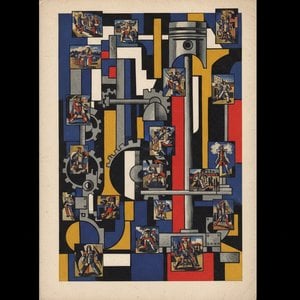
Fernand Léger: Die 25 Meisterwerke des Kubismus für Ihr Zuhause | ArtsDot
Entdecken Sie die 25 Meisterwerke von Fernand Léger! Tauchen Sie ein in die Welt des Kubismus, Tubismus & der Avantgarde. Hochwertige Kunstreproduktionen für Ihr Zuhause – jetzt auf ArtsDot.com!

Die Top 10 berühmter Gemälde im Reich der dunklen Töne |
Entdecken Sie die Top 10 berühmter Gemälde, beherrscht von dunklen Tönen! Von Caravaggio bis Manet – erfahren Sie die Geschichten hinter Meisterwerken der Kunstgeschichte. Finden Sie Ihre perfekte Reproduktion auf .

Giclée Prints: Archival Quality & Aesthetic Nuances for the Discerning Collector
Explore the world of giclée prints with ArtsDot. Learn about archival quality, aesthetic nuances & investment potential. Expert guidance for discerning art collectors seeking museum-quality reproductions and lasting value.

Weiße Meisterwerke: Die Top 10 berühmtesten Gemälde und ihre zeitlose Eleganz
Entdecken Sie die Top 10 berühmter Gemälde, dominiert von Weiß! Von Malewitsch bis Rothko – erfahren Sie Geschichten hinter ikonischen Kunstwerke und lassen Sie sich für Ihre Wohnraumgestaltung inspirieren. Kunstreproduktionen in Museumsqualiät auf
Timeless & Chic: Elevating Your New Home with the Sophistication of Black and White Photography
Transform your new home with the timeless allure of black and white photography. ArtsDot.com specializes in elegant monochrome decor and custom hand-painted wedding portraits that turn cherished milestones into lasting, soulful masterpieces. Elevate your space with ease.


