


 Vorschau anzeigen
 Versenden
 Teilen
 Details anzeigen
 Leitfaden

 Herunterladen
 Ähnliche Objekte
 Röntgenaufnahme
 Diashow
 Statistiken
St Andrew


 Weiterlesen
Handgefertigte Ölreproduktion
Handgemaltes Ölgemälde auf Leinwand in Ihrer Wunschgröße und mit Rahmen, auf Bestellung von unseren Künstlern angefertigt. ( Zum Druck wechseln Zum digitalen Bild wechseln)




P118B €10

P118H €10

P118W €10

P438Z €10

P508JH €12

P508YH €12

P805H €10

P805Z €10

P919BZ €10

P919G €10

P919XJ €10

P959ZH €10

P968JZ €12

W106C €8

W218G €10

W218JH €8

W218Y €10

W307PJ €10

W316G €10

W316PJ €8

W316Y €10

W398PJ €8

W4111J €10

W500HY €15

W500JH €15

W692G €12

W849H €8

W940BG €15

W953PJ €8




Wählen Sie aus unseren vordefinierten Formaten, die den ursprünglichen Proportionen des Kunstwerks entsprechen.

Geben Sie die Breite und die Höhe an, die Sie für Ihren Rahmen oder Ihre Wand benötigen. Da dieses Werk handgemalt ist, kann der Künstler bei einer anderen Form etwas mehr um das Bild herum malen oder etwas abschneiden – Sie entscheiden. Wir senden Ihnen ein digitales Mockup zur Freigabe, bevor mit dem Malen begonnen wird. Das auf dieser Seite gezeigte Bild stellt nicht das tatsächliche Ergebnis dar – dies tut nur das Mockup.
Nach der Bestellung wird das ArtsDot.com-Team dem Kunden Anweisungen per E-Mail zusenden und eine Mockup-Vorschau bereitstellen.
Weltweiter Versand () in nur 3 bis 4 Wochen statt der üblichen 5 Wochen. (27 Oktober). Keine Kompromisse bei der Qualität.

Kostenloser weltweiter Expressversand

Hochwertige Leinenleinwand

Umfassender Versicherungsschutz beim Versand

Zollgebühren-Rückerstattungsgarantie

Garantie für exakte Farbtreue

100 Tage Rückgaberecht (nur bei Mängeln)

100% Geld-zurück-Garantie

Mengenrabatt verfügbar
 Die Glasoption ist nur für Größen unter 110 cm verfügbar.

St Andrew
Art der Reproduktion
Format der Reproduktion
-


Endpreis
€ 231
The Weight of Faith: Camillo Rusconi’s St Andrew
Camillo Rusconi's "St Andrew," completed in 1708-9 and residing within the magnificent Archbasilica of Saint John Lateran in Rome, is more than just a marble sculpture; it’s a profound meditation on martyrdom, faith, and the transition between the dynamism of the Baroque and the restrained elegance of Neoclassicism. Rusconi, a pivotal figure bridging these artistic movements, masterfully captures the apostle's final struggle – a potent image that speaks to enduring spiritual resilience. The sculpture isn’t merely a depiction of Andrew; it’s an embodiment of his unwavering devotion in the face of imminent death, radiating a palpable sense of both agony and profound serenity.
Rusconi inherited a rich artistic legacy, trained initially by Giuseppe Rusnati in Milan before finding his footing within Ercole Ferrata's workshop in Rome. This lineage instilled in him a deep understanding of both the expressive fervor of the late Baroque – particularly influenced by Bernini’s dramatic use of form and gesture – and the burgeoning emphasis on clarity and order championed by Carlo Maratta. “St Andrew” exemplifies this delicate balance; it retains the powerful physicality characteristic of Baroque sculpture while subtly incorporating elements that foreshadow the emerging Neoclassical style, notably in its carefully controlled composition and refined detailing.
A Study in Marble and Movement
The sculpture itself is a breathtaking achievement in marble carving. Rusconi’s skill lies not just in his technical mastery – evident in the incredibly detailed drapery, the meticulously rendered musculature of Andrew's body, and the luminous quality of the stone – but also in his ability to imbue the figure with life. Andrew is depicted in a dynamic pose, leaning forward as if bracing himself against an unseen force, his arm outstretched towards the heavy cross he struggles to bear. The folds of his garment ripple and flow around him, creating a sense of movement that contrasts sharply with the stillness of the marble.
Rusconi’s use of *contrapposto* – a technique where the figure's weight is shifted onto one leg – creates an inherent tension within the sculpture. This subtle imbalance contributes to the feeling of struggle and vulnerability, while simultaneously conveying Andrew’s strength and determination. The lighting, carefully considered during the original installation, would have further accentuated these effects, casting dramatic shadows that emphasized the contours of his body and the weight of the cross.
Symbolism and Spiritual Weight
Beyond its technical brilliance, “St Andrew” is rich in symbolic meaning. The cross, a central motif throughout Christian art, represents sacrifice, redemption, and the triumph over death. Andrew’s struggle to hold it aloft speaks to the arduous nature of faith – the constant effort required to maintain one's commitment even in the face of adversity. The apostle’s facial expression is particularly poignant; his brow furrowed in concentration, his eyes fixed on the cross, conveys a sense of intense inner turmoil mingled with unwavering resolve.
The setting within the niche – flanked by imposing columns adorned with intricate carvings – further enhances the sculpture's significance. This architectural context elevates Andrew to a position of honor and reverence, solidifying his role as a martyr and a symbol of Christian faith. The overall composition evokes a sense of solemnity and contemplation, inviting viewers to reflect on the themes of sacrifice, perseverance, and the enduring power of spiritual conviction.
A Legacy in Stone
“St Andrew” by Camillo Rusconi stands as a testament to the artist’s remarkable talent and his pivotal role in bridging the gap between Baroque and Neoclassical sculpture. It's a work that continues to resonate with viewers today, offering a powerful visual representation of faith, struggle, and the enduring legacy of one of Christianity’s most revered apostles. Reproductions of this iconic piece capture not only its aesthetic beauty but also the profound emotional depth that defines Rusconi’s masterpiece.
Fragen & Antworten
Ist "St Andrew" von Camillo Rusconi gemeinfrei?
Die urheberrechtliche Situation für "St Andrew" von Camillo Rusconi: Das Werk ist gemeinfrei – das Urheberrecht ist abgelaufen. Dies bestimmt, ob Reproduktionen des Bildes frei erstellt werden dürfen.
Woher kommen die Besucher von "St Andrew" von Camillo Rusconi?
Für „St Andrew“ gibt es eine Besucherzahlen-Seite. Sie zeigt die monatlichen Aufrufe des Kunstwerks sowie weiterer Werke des Künstlers mit einer Aufschlüsselung nach Land und Sprache an.
Welches Format hat "St Andrew"?
"St Andrew" von Camillo Rusconi hat ein Portrait-Format. Das Format beschreibt die Proportionen der Komposition.
Ähnliche Kunstwerke

![Legende Des Heiligen Franziskus - [23] - Der Heilsame Franziskus Wird Von Der Heiligen Klara Beweint — Giotto Di Bondone, Gotik](/media/artworks/images-thumb/17/1c/171c284c41dc3ef8bca83e51c1e1e531.jpg)


Künstlerbiografie
Camillo Rusconi: Leben und Erbe
Frühes Leben und Ausbildung
Camillo Rusconi (Mailand, Italien, 1658 – 1728) war ein bedeutender italienischer Bildhauer der späten Barockzeit in Rom. Seine künstlerische Reise begann mit einer Ausbildung in seiner Heimatstadt Mailand bei Giuseppe Rusnati, der selbst Verbindungen zum Werkstatt von Ercole Ferrata in Rom hatte. Diese frühe Exposition legte den Grundstein für Rusconis späteren Erfolg und seine stilistische Entwicklung.
Umzug nach Rom und Früher Karriere
Bis 1685-1686 zog sich Rusconi nach Rom und trat in die Werkstatt von Ercole Ferrata ein. Leider verstarb Ferrata kurz nach Rusconis Ankunft, aber nicht ohne ihm wertvolle Kenntnisse und Erfahrungen zu vermitteln. Rusconi etablierte sich schnell als talentierter Bildhauer und erhielt Aufträge für allegorische Skulpturen aus Gips, die die vier Tugenden – Weisheit, Gerechtigkeit, Mäßigung und Stärke – für die Ludovisi-Kapelle in der Kirche Sant’Ignazio darstellten. Er arbeitete auch mit Le Gros zusammen an Engelsdarstellungen für das Tympanon des Altars von Saint Ignatius in der Kirche Gesù.
Künstlerischer Stil und Einflüsse
Rusconis Stil ist durch eine einzigartige Mischung aus Barockdynamik und Neoklassischer Zurückhaltung gekennzeichnet. Er war stark von früheren Meistern wie Algardi und Bernini beeinflusst und übernahm Elemente ihrer expressiven Formen und granden Manier. Der bedeutendste Einfluss auf seine Arbeit kam jedoch vom Maler Carlo Maratta, dessen Betonung einer geordneten Komposition und klarer Darstellung von Figuren Rusconis Ansatz für die Bildhauerei prägte.
Wichtige Leistungen
- Die Apostel in St. Johannes Lateran: Rusconis wohl bekannteste Leistung ist die Reihe von vier lebensgroßen Apostelsäulen (Matthäus, Jakobus der Große, Andreas und Johannes), die zwischen 1708 und 1718 für die Nischen des Petersdoms St. Johannes Lateran geschaffen wurden. Dieses Projekt war zu dieser Zeit ein großes Unterfangen in Rom, bei dem Rusconi mehr Aufträge erhielt als seine Kollegen Le Gros und Pierre-Etienne Monnot.
- Grabstätte von Papst Gregor XIII.: Fertiggestellt zwischen 1715 und 1723 für den Petersdom, ist diese Grabstätte ein Beweis für Rusconis Können bei der Gestaltung monumentaler Bestattungsskulpturen.
- Weitere bemerkenswerte Werke: Rusconi trug auch zur architektonischen Dekoration von San Silvestro in Capite, San Salvatore in Lauro und der Chiesa Nuova (Santa Maria in Vallicella) bei. Er schuf das Grab von Bartolomeo Corsino in San Giovanni in Laterano und ein Denkmal für Fürst Alessandro Sobieski in Santa Maria della Concezione.
Historische Bedeutung
Camillo Rusconi spielte eine entscheidende Rolle bei der Übergangsphase vom Barock zum Neoklassizismus in der römischen Bildhauerei. Seine Werke, insbesondere die Apostel in St. Johannes Lateran, zeigten eine wachsende Präferenz für klassische Zurückhaltung und Klarheit und legten einen Trend nahe, der nachfolgende Generationen von Künstlern beeinflusste. Er wurde als “Carlo Maratta aus Marmor” beschrieben, was seine Fähigkeit verdeutlichte, den raffinierten ästhetischen Stil des Malers in die Bildhauerei zu übersetzen.
Vermächtnis und Schüler
Rusconis Vermächtnis erstreckt sich über seine eigenen künstlerischen Schöpfungen hinaus. Er unterrichtete eine Reihe erfolgreicher Bildhauer, darunter Pietro Bracci, Giovanni Battista Maini und Filippo della Valle, und sorgte so für die Fortsetzung seiner stilistischen Prinzipien. Im Jahr 1727 wurde er mit dem Titel Principe (Prinz) der Accademia di San Luca geehrt, ein Beweis für seinen Status innerhalb der römischen Kunstgemeinschaft.

Camillo Rusconi
1658 - 1728 , Italien
Kurzinfos
- Artistic Movement Or Style: Spätes Barock, Neoklassizismus
- Artists Or Movements Influenced By This Artist:
- Pietro Bracci
- Giovanni Battista Maini
- Filippo della Valle
- Artists Who Influenced This Artist:
- Alessandro Algardi
- Gian Lorenzo Bernini
- Carlo Maratta
- Date Of Birth: 1658
- Date Of Death: 1728
- Full Name: Camillo Rusconi
- Nationality: Italienisch
- Notable Artworks:
- Apostelssäulen St. Johannes Lateran
- Grab Papst Gregor XIII.
- Jakobus der Große
- Fortitude
- Johannes
- Place Of Birth: Mailand, Italien
Ähnliche Artikel

The Enduring Legacy of Marble: A Comprehensive Exploration of Technique, Symbolism & Artistic Expression
Explore the rich history of marble sculpture from antiquity to the Renaissance! Discover key techniques, influential artists & enduring themes in classical art. Expert insights for collectors and enthusiasts at ArtsDot.

Bronze-Meisterwerke: Die 10 Skulpturen, die Kunstgeschichte schrieben | ArtsDot
Entdecken Sie die 10 legendärsten Bronze Skulpturen der Kunstgeschichte! Von Michelangelo bis Rodin – erfahren Sie die Geschichten hinter den Meisterwerken und lassen Sie sich von Wanddeko-Ideen inspirieren. Hochwertige Kunstdrucke auf ArtsDot.com.

The Enduring Form: Exploring Themes & Techniques in Sculpture Across Historical Periods
Explore the rich history of sculpture from ancient masterpieces to contemporary innovations. Discover key techniques, influential artists & investment potential for discerning art collectors.
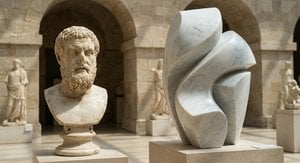
The Enduring Allure of Marble in Art History: From Classical Sculpture to Modern Abstraction
Explore the captivating history of marble sculpture from ancient Greece to modern art. Discover renowned artists like Canova & Michelangelo, carving techniques, and investment insights at ArtsDot.

The Enduring Form: Sculpture Across History, Technique & Emotional Resonance
Explore the rich history of sculpture with ArtsDot. Discover key techniques, influential artists & investment potential for discerning collectors. Expert insights into valuing and collecting timeless masterpieces.
