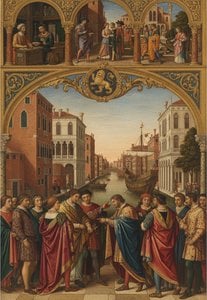
Der Architekt des Bologneser Barock
Im pulsierenden, intellektuellen Herzen von Bologna, einer Stadt, in der die Tradition der Renaissance auf den aufkeimenden Geist einer neuen Ära traf, trat Ludovico Carracci als transformative Kraft der europäischen Kunst hervor. Geboren im Jahr 1555, war sein Leben untrennbar mit den Grundfesten der Bologneser Schule verbunden. Als Teil der illustren Familie Carracci, an der Seite seiner Cousins Annibale und Agostino, nahm Ludovico nicht nur an einer künstlerischen Bewegung teil; er half dabei, den Übergang von der stilisierten, oft künstlichen Eleganz des Manierismus zum tiefgründigen, emotionalen Naturalismus des Barock zu gestalten. Seine frühen Jahre wurden durch die Werkstatt seines Vaters, Prospero Carracci, geprägt – ein Umfeld, das als Keimzelle für Experimente und als Zufluchtsort für das Studium des disegno diente: der akribischen Beobachtung von Form und Anatomie, die zum Markenzeichen seines Vermächtnis werden sollte.
Während seine Cousins oft den Ruhm an den prächtigen Höfen Roms suchten, blieb Ludovico tief in seiner Heimat Bologna verwurzelt. Diese beständige Verbindung ermöglichte es ihm, ein einzigartiges künstlerisches Refugium zu schaffen, indem er eine Akademie leitete, die zu einem Leuchtturm für die nächste Generation von Meistern wurde, darunter Guido Reni und Domenichino. Sein Werk stellt eine meisterhafte Synthese historischer Einflüsse dar; er schöpfte aus der göttlichen Gnade Raffaels, der sanften Luminosität Correggios und dem reichen Kolorit Tizians, doch er erfüllte diese klassischen Elemente mit einer neuen, dramatischen Vitalität. Indem er die gelängten und oft angestrengten Posen spätmanieristischer Maler wie Parmigianino ablehnte, wandte sich Ludovico einer unmittelbareren Realität zu und nutzte kühne Gesten sowie ein flackerndes, atmosphärisches Licht, um die Seelen seiner Betrachter zu bewegen.
Licht, Schatten und spirituelle Intensität
Das wahre Genie Ludovico Carraccis liegt in seiner Fähigkeit, das Chiaroscuro – das dramatische Zusammenspiel von Licht und Schatten – als Medium für spirituelle Kontemplation zu nutzen. Seine Leinwände sind selten bloße Darstellungen biblischer Ereignisse; sie sind immersive Erfahrungen, die darauf ausgelegt sind, religiöse Inbrunst zu wecken. In Werken wie Ein Engel befreit die Seelen des Fegefeuers kann man miterleben, wie sein Einsatz von Licht eine Szene nicht einfach nur beleuchtet, sondern aktiv an ihrer Erzählung teilnimmt, indem er Figuren aus der Dunkelheit herausmeißelt, um Momente göttlichen Mitgefühls und Gnade hervorzuheben. Diese Technik, die an den aufstrebenden Naturalismus Caravaggios erinnert, erlaubte es ihm, selbst die heiligsten Sujets mit einer spürbaren, menschlichen Emotion zu durchdringen.
Seine Meisterschaft erstreckte sich über verschiedene Medien, von der monumentalen Größe der Fresken bis hin zur feinen Präzision von Radierungen und Drucken. Ob er nun die heitere Heiligkeit der Darbringung im Tempel einfing oder die muskulöse, heroische Spannung in seinem männlichen Akt (Herkules ?) darstellte – ein beständiger Faden emotionaler Tiefe zieht sich durch sein gesamtes Schaffen. Seine religiösen Gemälde, wie die Bargellini-Madonna, zeugen von der Fähigkeit, komplexe Gruppen von Heiligen und Engeln in harmonische und doch dynamische Kompositionen zu ordnen, bei denen jede Falte des Gewandes und jede Neigung eines Kopfes zu einem größeren Gefühl himmlischer Bewegung beiträgt.
Ein bleibendes Vermächtnis im italienischen Kanon
Die historische Bedeutung Ludovico Carraccis kann nicht hoch genug eingeschätzt werden. Er war eine Schlüsselfigur, die dazu beitrug, die italienische Kunst zu einer Zeit wiederzubeleben, als sie unter der Last ihrer eigenen formalistischen Traditionen zu stagnieren drohte. Indem er einen Stil vertrat, der emotionale Wahrheit und naturalistische Beobachtung priorisierte, lieferte er den Entwurf für die berühmtesten Errungenschaften der Barockära. Sein Einfluss strahlte von Bologna aus, prägte die ästhetische Sprache eines Großteils Europas und schuf das Fundament für den klassischen Naturalismus, der das 17. Jahrhundert dominieren sollte.
Wenn wir über sein Leben und sein Werk nachdenken, sehen wir einen Künstler, der zwei Welten erfolgreich überbrückte: die strukturierte Perfektion der Renaissance und die dramatische, theatralische Energie des Barock. Seine Fähigkeit, die intellektuelle Strenge des disegno mit einem tiefen Sinn für colore und emotionaler Resonanz zu vereinen, sichert ihm seinen Platz als einer der vitalsten Maler seiner Zeit. Durch seine Hingabe an sein Handwerk und sein Engagement für die spirituelle Kraft der Kunst hinterließ Ludovico Carracci einen unauslöschlichen Eindruck in der Geschichte der westlichen Malerei und erinnert uns daran, dass wahre Schönheit dort liegt, wo technische Meisterschaft und das menschliche Herz aufeinandertreffen.
Fragen & Antworten
Woher kommt Ludovico Carracci?
Ludovico Carracci wurde in Italien geboren.
Kann ich die Werke von Ludovico Carracci nach Farbpalette durchsuchen?
Auf der Seite Nach Farbpaletten werden die Kunstwerke von Ludovico Carracci nach ihren Farbpaletten gruppiert.
Wo finde ich Statistiken zu den Werken von Ludovico Carracci?
Die Seite Statistiken von Ludovico Carracci zeigt Statistiken, die auf Basis der auf diese Webseite gelisteten Kunstwerke des Künstlers berechnet wurden.