


 In echtem Maßstab anzeigen
 Versenden als Grußkarte
 Teilen
 Details anzeigen
 Leitfaden öffnen

 Herunterladen
 Ähnliche Objekte
 Röntgenaufnahme
 Diashow
 Besucherstatistiken
Classical Landscape with Rocks
 Oil On Copper
- Italianate Landscape
 1629
1629 21.0 x 21.0 cm
 Fitzwilliam-Museum
 Mehr anzeigen
Giclée / Kunstdruck
Giclée- oder Leinwanddruck in Museumsqualität mit schneller Produktion und flexiblen Veredelungsoptionen. ( Handgemalte Reproduktion kaufen Zum digitalen Bild wechseln)




P118B €10

P118H €10

P118W €10

P438Z €10

P508JH €12

P508YH €12

P805H €10

P805Z €10

P919BZ €10

P919G €10

P919XJ €10

P959ZH €10

P968JZ €12

W106C €8

W218G €10

W218JH €8

W218Y €10

W307PJ €10

W316G €10

W316PJ €8

W316Y €10

W398PJ €8

W4111J €10

W500HY €15

W500JH €15

W692G €12

W849H €8

W940BG €15

W953PJ €8




Wählen Sie aus unseren vordefinierten Formaten, die den ursprünglichen Proportionen des Kunstwerks entsprechen.

Geben Sie die Breite und die Höhe an, die Sie benötigen, damit der Druck perfekt in Ihren Rahmen oder an Ihre Wand passt. Ein Druck kann nur beschnitten werden und niemals größer als das Originalbild gemacht werden; daher verliert ein Format mit einer anderen Proportion einen Teil des Bildes. Wir senden Ihnen ein digitales Mockup zur Freigabe, bevor wir den Druck ausführen. Das auf dieser Seite gezeigte Bild zeigt nicht den tatsächlichen Beschnitt – dies ist nur im Mockup ersichtlich.
Weltweiter Versand () innerhalb von 2 Wochen statt der üblichen 4/5 Wochen. (25 Oktober)

Kostenloser weltweiter Expressversand

Hochwertige Leinenleinwand

Vollständiger Versicherungsschutz beim Versand

Zollgebühren-Rückerstattungsgarantie

Garantie für exakte Farbtreue

100-tägiges Rückgaberecht (nur bei Mängeln)

100% Geld-zurück-Garantie

Angebot für Mengenrabatt
 Die Glasoption ist nur für Größen unter 110 cm verfügbar.

Classical Landscape with Rocks
Giclée / Kunstdruck
Format der Reproduktion
-


Gesamtpreis
€ 54
Classical Landscape with Rocks by Bartholomeus Breenbergh
Bartholomeus Breenbergh (1598–1657), a Dutch Golden Age painter, stands as an emblem of artistic innovation during his era. Born before November 13, 1598, likely in Deventer, Netherlands, his early life remains shrouded in relative obscurity—a fact that fueled the fervent curiosity of scholars like Arnold Houbraken who tirelessly sought to illuminate Breenbergh’s biography.
His artistic journey commenced with formative training under Pieter Lastman and Jacob Symonsz Pynas in Amsterdam, absorbing influences from the burgeoning landscape movement. Notably, Lastman's dramatic narrative style subtly permeated Breenbergh’s oeuvre, shaping his approach to portraying scenes of human activity interwoven with the grandeur of nature.
Roman Sojourn and the Italianate Style
A pivotal moment arrived in 1619 when Breenbergh embarked on a transformative voyage to Rome—a city renowned for its artistic patronage and stylistic experimentation. This immersion within the Roman landscape profoundly impacted his artistic sensibilities, propelling him toward an Italianate style characterized by idealized forms and luminous color palettes. He diligently studied the works of Claude Lorrain and Andrea Pozzo, absorbing their mastery of atmospheric perspective and compositional grandeur.
Technique and Composition
Breenbergh’s technique was meticulous—primarily employing oil paint on copper—a medium favored for its durability and ability to capture subtle tonal variations. The painting's composition is deliberately balanced, featuring a prominent mountain dominating the horizon line against which figures are positioned in the foreground. Careful attention was paid to detail, particularly in rendering rocks and foliage, reflecting the prevailing artistic conventions of his time.
Symbolism and Emotional Impact
“Classical Landscape with Rocks” transcends mere visual representation; it embodies a deeper symbolic resonance. The depiction of people gathered around a fire speaks to themes of human resilience and communal spirit—a poignant reminder of humanity’s connection to the natural world. Furthermore, the cloudy sky contributes to an atmosphere of contemplative solemnity, inviting viewers to contemplate the sublime beauty and enduring power of nature.
Fitzwilliam Museum Reproduction
Currently housed in the Fitzwilliam Museum in Cambridge, England (Accession number 431), this artwork exemplifies the artistic achievements of the Dutch Golden Age. Its reproduction offers a captivating glimpse into Breenbergh’s vision—a testament to his skill as a painter and his contribution to the legacy of European art history.
Fragen & Antworten
Wo kann ich das Original von "Classical Landscape with Rocks" von Bartholomeus Breenbergh sehen?
Das Original von "Classical Landscape with Rocks" von Bartholomeus Breenbergh befindet sich im Fitzwilliam-Museum, Cambridge, Vereinigtes Königreich. Eine Reproduktion ermöglicht es, das Werk zu Hause auszustellen.
Aus welchen Materialien besteht "Classical Landscape with Rocks" und in welchem Stil ist es gehalten?
"Classical Landscape with Rocks" ist in Oil On Copper im Stil der Italianate Landscape-Epoche gefertigt.
Wie stehen die Farben von "Classical Landscape with Rocks" zueinander?
Die Farbharmonie von „Classical Landscape with Rocks“ wird als Strong Color Unity beschrieben.
Ähnliche Kunstwerke


Biografie des Künstlers
Frühes Leben und Ausbildung
- Name: Bartholomeus Breenbergh
- Geboren: Vor dem 13. November 1598 in Deventer, Niederlande
- Gestorben: Nach dem 5. Oktober 1657 in Amsterdam, Niederlande
- Details zum frühen Leben sind spärlich. Die Familie zog nach Hoorn, nachdem sein Vater 1607 gestorben war.
- Er war zeitgenössisch mit Jacques Waben und erhielt wahrscheinlich eine frühe Ausbildung dort.
- Registrierte Lehrer umfassen Pieter Lastman und Jacob Symonsz Pynas.
Karriere: Rom und der italienische Stil
- Erstmals 1619 als Maler in Amsterdam registriert.
- 1619 reiste er nach Rom, wo er bis etwa 1630 lebte.
- Arbeitete mit dem flämischen Maler Frans van de Kasteele zusammen und wurde stark von Paul Bril beeinflusst.
- Entwickelte einen unverwechselbaren italienischen Landschaftsstil, der durch idealisierte Darstellungen der Campagna Romana (ländliche Region) gekennzeichnet ist.
- Beeinflusst von den Landschaften Cornelis van Poelenburghs; ihre Stile wurden manchmal schwer zu unterscheiden.
- Wurde zu einem der Gründer der Bentvueghels ("Malerzunft") in Rom und erhielt den Spitznamen "het fret" (das Ferkel).
Rückkehr nach Amsterdam und künstlerische Entwicklung
- Kehrte um 1630 nach Amsterdam zurück.
- Heiratete 1633 und erhielt ein jährliches Gehalt von König Karl I. von Großbritannien.
- Seine Arbeit begann, mythologische und biblische Figuren in italienischen Landschaften zu integrieren, beeinflusst von Künstlern wie Pieter Lastman.
- Entwickelte einen monumentaleren Stil mit ausdrucksstarken Figurentypen.
- Sein einziger registrierter Schüler war Jan de Bisschop, der in den 1640er Jahren bei ihm studierte.
Einflüsse und Vermächtnis
- Einflüsse: Pieter Lastman, Nicolaes Moeyaert, Paul Bril, Cornelis van Poelenburgh, Claude Lorrain.
- Einfluss auf Andere: Jan Linsen, Scipione Compagno, Laurens Barata, Charles Cornelisz. de Hooch, Pieter Anthonisz. van Groenewegen, Francois van Knibbergen und Catharina van Knibbergen.
- Breenbergh war eine Schlüsselfigur bei der Entwicklung des italienischen Landschaftsstils in den Niederlanden.
- Seine Arbeit trug dazu bei, Darstellungen klassischer Ruinen und idealisierter Landschaften unter nordeuropäischen Künstlern zu popularisieren.
- Er schloss die Lücke zwischen früheren niederländischen Meistern und späteren, raffinierteren Landschaftsmalern.
Historische Bedeutung
- Breenberghs Beitrag liegt in seiner Pionierrolle bei der Etablierung des italienischen Stils innerhalb der niederländischen Kunst.
- Seine Fähigkeit, Einflüsse verschiedener Künstler zu synthetisieren – Lastman, Moeyaert, Bril, Poelenburgh – schuf eine einzigartige und wiedererkennbare künstlerische Stimme.
- Er spielte einen bedeutenden Teil bei der Gestaltung der ästhetischen Vorlieben des Goldenen Zeitalters der Niederlande und inspirierte nachfolgende Generationen von Landschaftsmalern.
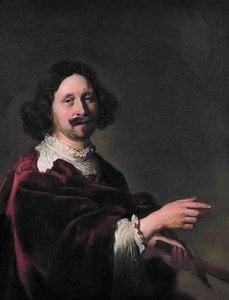
Bartholomeus Breenbergh
1598 - 1657 , Niederlande
Eckdaten zum Künstler
- Beeinflusste Künstler: ['Claude Lorrain']
- Einflüsse:
- Paul Bril
- Cornelis van Poelenburgh
- Geburtsdatum: 1598-11-13
- Geburtsort: Deventer, Niederlande
- Künstlerischer Stil: Italienische Landschaftsmalerei
- Nationalität: Niederländisch
- Todestag: 1657-10-05
- Vollständiger Name: Bartholomeus Breenbergh
Verwandte Artikel

Charles Leickert: Capturing the Dutch Golden Age Light – A Comprehensive Study of Technique, Context, and Legacy
Explore the captivating winter landscapes of Charles Leickert, a master of Dutch Golden Age light & atmosphere. Discover his techniques, symbolism, and lasting legacy – a comprehensive study for art enthusiasts and collectors.

Die 10 Meisterwerke des Goldenen Zeitalters der niederländischen Malerei |
Entdecken Sie die 10 Meisterwerke des Niederländischen Goldenen Zeitalters! Von Rembrandt bis Vermeer – erleben Sie Kunstgeschichte, Techniken & Emotionen. Hochwertige Gemäldereproduktionen für Ihr Zuhause auf .

Golden Age Reflections: Dutch Baroque Painting & Cultural Innovation
Explore the Dutch Golden Age of painting! Discover key artists like Vermeer & ter Borch, their innovative techniques, and the rich cultural context behind these Baroque masterpieces. Learn about collecting & appreciating this iconic art period.
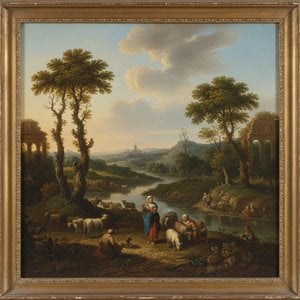
Nicolaes Berchem und das Goldene Zeitalter: Pastoralismus, Idealisierung & Künstlerische Innovation
Entdecken Sie die faszinierende Welt von Nicolaes Berchem und das Goldene Zeitalter der niederländischen Landschaftsmalerei. Expertenanalyse, Hintergrundinformationen & künstlerische Innovationen.

Golden Light & Dutch Skies: Bringing the Magic of Dutch Golden Age Landscapes into Your Home
Transform your home with the breathtaking light of Dutch Golden Age landscapes. Discover how hand-painted oil reproductions of masterworks like Ruisdael and Vermeer bring timeless elegance, atmosphere, and soulful texture to modern interiors. Elevate your space with museum-quality art.

