

- 21.0 x 21.0 cm


Das Bild passt sich Ihren Auswahlmöglichkeiten an: , .
Beschreibung des Sammlerstücks
Delve into the serene beauty of Bartholomeus Breenbergh’s ‘Classical Landscape with Ruins,’ painted circa 1627-1629. Admire its Dutch Golden Age charm and explore Roman influences.
 Weiterlesen
Künstlerbiografie
Bartholomeus Breenbergh (1598-1657): Holländischer Maler der Goldenen Zeit, bekannt für italienische Landschaften & biblische Szenen in klassischer Ruinenarchitektur. Brücke zwischen Tradition und Moderne.
Handgefertigte Ölreproduktion
Handgemaltes Ölgemälde auf Leinwand in Ihrer Wunschgröße und mit Rahmen, auf Bestellung von unseren Künstlern angefertigt. ( Zum Druck wechseln Zum digitalen Bild wechseln)
Mehr über dieses Gemälde
 Vorschau anzeigen
 Versenden
 Teilen
 Details anzeigen
 Leitfaden

 Herunterladen
 Ähnliche Objekte
 Röntgenaufnahme
 Diashow
 Fragen & Antworten
 Statistiken
Bestellen Sie Ihr Gemälde in vier einfachen Schritten
Lassen Sie sich Zeit. Sie können jede Antwort jederzeit ändern; der Preis in Ihrem Warenkorb passt sich jeder Auswahl automatisch an.
1 Schritt eins von vier
Welche Größe möchten Sie wählen?
Diese Formate bewahren die Proportionen des Originalgemäldes. Die Zeichnung zeigt Ihre Auswahl an einer Wand, oberhalb eines zwei Meter breiten Sofas.
Oder geben Sie Ihre eigenen Maße an
Wählen Sie aus unseren vordefinierten Formaten, die den ursprünglichen Proportionen des Kunstwerks entsprechen.

Geben Sie die Breite und die Höhe an, die Sie für Ihren Rahmen oder Ihre Wand benötigen. Da dieses Werk handgemalt ist, kann der Künstler bei einer anderen Form etwas mehr um das Bild herum malen oder etwas abschneiden – Sie entscheiden. Wir senden Ihnen ein digitales Mockup zur Freigabe, bevor mit dem Malen begonnen wird. Das auf dieser Seite gezeigte Bild stellt nicht das tatsächliche Ergebnis dar – dies tut nur das Mockup.
2 Schritt zwei von vier
Wie soll es vorbereitet werden: gerollt, auf Keilrahmen gespannt oder gerahmt?
Die unten aufgeführten Preise beziehen sich auf die in Schritt eins gewählte Größe.
Wählen Sie die Kanten der Leinwand aus
Wählen Sie Ihren Rahmen

Weißer Rand €1

verlaufende Kanten €1

Umrandung €1

P118B €10

P118H €10

P118W €10

P438Z €10

P508JH €12

P508YH €12

P805H €10

P805Z €10

P919BZ €10

P919G €10

P919XJ €10

P959ZH €10

P968JZ €12

W106C €8

W218G €10

W218JH €8

W218Y €10

W307PJ €10

W316G €10

W316PJ €8

W316Y €10

W398PJ €8

W4111J €10

W500HY €15

W500JH €15

W692G €12

W849H €8

W940BG €15

W953PJ €8

H24-GOLD €30

H24-SILVER €30

H36-GOLD €45

H36-SILVER €45
Gerahmt
Profil: . Gesamtgröße mit Rahmen: .
3 Schritt drei von vier
Möchten Sie am Gemälde noch etwas ändern?
Die meisten Menschen antworten mit Nein. Da jedes Gemälde von Hand gefertigt wird, kann unser Künstler es jedoch auch individuell für Sie anpassen.
Nach der Bestellung wird das Team von ArtsDot.com den Kunden per E-Mail kontaktieren, um Anweisungen einzuholen und eine Vorschau des Entwurfs bereitzustellen
4 Schritt vier von vier
Einige Veredelungsmöglichkeiten
Alle Angaben sind optional. Für bereits ausgewählte Antworten entstehen keine zusätzlichen Kosten.
Wer hat es gemalt?
Weltweiter Versand () in nur 3 bis 4 Wochen statt der üblichen 5 Wochen. (4 November). Keine Kompromisse bei der Qualität.
Ein Namensschild, wie im Museum?
Details der gravierten Bronzetafel
This elegant plaque features the artist's name and the title of the artwork, finely engraved for a timeless presentation.
It is made from bronze with a refined, elegant finish. The text is precisely laser-engraved for a sharp and permanent result. Measuring 9x2 cm, the plaque is compact yet easy to read. It's built to be durable and scratch-resistant, offering a professional, museum-quality look. Mounting is simple thanks to the included adhesive backing.
Details zur Acrylglas-Plakette (transparent)
The plaque includes essential engraved details such as the artist's name, the title of the artwork, the date it was created, the type of media used-like oil on canvas or watercolor-a brief description of the piece, and a QR code that links to the complete artwork information.
It is crafted from clear acrylic, offering a sleek, modern appearance. The text is UV-engraved in black to ensure strong visual contrast. With a size of 10x15 cm, it ensures optimal readability. It comes equipped with two metal hooks for secure wall mounting. The plaque is designed to be weather-resistant, making it suitable for various environments, and it includes interactive features that work seamlessly with smartphone scanning.
Details zur schwarzen Acryltafel
This elegant plaque includes engraved information such as the artist's name, the title of the artwork, the date it was created, the type of media used (like oil on canvas or watercolor), a short description of the artwork, and a QR code for quick access to more information.
The plaque itself is made from refined black acrylic with a premium finish. The text is laser-engraved in white for high contrast and readability. Its size is 10x15 cm, designed to be easy to read. It comes with two metal hooks for professional mounting. The design is sleek and fits any interior style. It is also weather-resistant and durable, with built-in digital integration for mobile compatibility.
Ein Schutzlack?
Bis wann benötigen Sie es?
✓ Prüfen und bestellen
Ihr Gemälde, wie von Ihnen bestellt

Classical Landscape with Ruins
Art der Reproduktion
Format der Reproduktion
-

Erstklassige Meisterkünstler
Mehr Detailtiefe, Raffinesse und zusätzliche Produktionszeit
-

Rahmen für Reproduktionen
-
-
Bei Kunstwerken oder Reproduktionen, die an einer Seite größer als 105 cm (ca. 41 Zoll) sind, wird der Rahmen zerlegt als Bausatz geliefert. Diese Methode gewährleistet eine sichere Zustellung und verhindert Schäden während des Transports.
Professionelle Montage erforderlich – dies ist kein DIY-Produkt.
Der Bausatz muss von einem erfahrenen professionellen Rahmenmacher zusammengebaut und die Leinwand gespannt werden. Hierfür werden Holzleim (nicht im Lieferumfang enthalten), eine Leinwandspannzange sowie Klemmen benötigt, um die Keilleisten während des Trocknungsvorgangs rechtwinklig zu halten. Eine unsachgemäße Montage oder eine ungleichmäßige Spannung der Leinwand kann das Kunstwerk dauerhaft beschädigen und ist nicht durch unsere Garantie abgedeckt.
 Bei Kunstwerken oder Reproduktionen, die an einer Seite größer als 105 cm (ca. 41 Zoll) sind, wird der Rahmen zerlegt als Bausatz geliefert. Diese Methode gewährleistet eine sichere Zustellung und verhindert Schäden während des Transports.
Alle Vollholzkomponenten sind enthalten, präzise auf Maß zugeschnitten.
Der Zusammenbau erfolgt mit den mitgelieferten Schrauben sowie Holzkleber für die Eckverbindungen, der nicht im Lieferumfang enthalten ist und vom Rahmenbauer selbst beschafft werden muss.
Professionelles Werkzeug ist erforderlich und nicht im Lieferumfang enthalten: eine Keilrahmenzange (Spannwerkzeug) sowie Klammern, um die Leisten während der Trocknungszeit des Klebers rechtwinklig zu fixieren.
Wichtiger Hinweis:
Für die Eckverbindungen wird Holzleim benötigt, die Leisten müssen mit Zwingen fixiert werden, bis der Leim vollständig getrocknet ist, und das Spannen der Leinwand auf dem fertigen Rahmen erfordert eine Keilrahmen-Zange. Keines dieser Utensilien ist im Set enthalten. Bitte stellen Sie sicher, dass ein erfahrener Rahmenmacher zur Verfügung steht, bevor Sie diese Größe bestellen.

Beschriftung
-
-

Schutzlackierung
Glanzlack (verstärkt die Farben, schützt vor Licht und Feuchtigkeit)
-

Mein Kunstwerk personalisieren
Beispiele für Anpassungsmöglichkeiten: Gesicht durch Kundenfoto ersetzen; Haustier hinzufügen (z. B. Katze durch Hund ersetzen); Versteckte Nachricht im Hintergrund einfügen; Hintergrundlandschaft oder -elemente ändern.
-

Eilt sehr
Weltweiter Versand () in nur 3 bis 4 Wochen statt der üblichen 5 Wochen. (4 November). Keine Kompromisse bei der Qualität.
-
Expressversand
Weltweiter Versand () innerhalb von 5 Wochen. (11 November).
Inklusive Versand
Endpreis
€ 234
Die Glasoption ist nur für Größen unter 110 cm verfügbar.
In jeder Bestellung enthalten
- Kostenloser weltweiter Expressversand
- Hochwertige Leinenleinwand
- Umfassender Versicherungsschutz beim Versand
- Zollgebühren-Rückerstattungsgarantie
- Garantie für exakte Farbtreue
- 100 Tage Rückgaberecht (nur bei Mängeln)
- 100% Geld-zurück-Garantie
- Mengenrabatt verfügbar


A Vision of Roman Decay: The Melancholy Beauty of Breenbergh
In the quiet corners of the Fitzwilliam Museum, there exists a window into a lost era—a watercolor titled Classical Landscape with Ruins by the Dutch master Bartholomeus Breenbergh. Created around 1629, this delicate work is far more than a mere topographical record; it is a profound meditation on the passage of time and the inevitable triumph of nature over human ambition. As one gazes upon the crumbling stone structures in the foreground, there is an immediate sense of the sublime—that intoxicating mixture of awe and terror that comes from witnessing the slow, relentless decay of once-great civilizations. Breenbergh captures a moment where the grandeur of Rome meets the quiet persistence of the earth, inviting the viewer to contemplate their own place within the vast, cyclical rhythm of history.
The composition is masterfully orchestrated to lead the eye through a narrative of light and shadow. In the foreground, the skeletal remains of classical architecture serve as a poignant memento mori, while life continues in its humble, unbothered forms around them. Two figures wander near the ruins, perhaps travelers or shepherds lost in thought, their small scale emphasizing the monumental weight of the past. Scattered throughout this pastoral scene are the gentle rhythms of rural life: cows and sheep graze peacefully, a horse rests in the mid-ground, and a solitary bird drifts through the sky. Even the presence of a tranquil body of water near the right edge of the frame adds a layer of reflective stillness, mirroring the contemplative mood that permeates the entire landscape.
The Alchemy of Light and Italianate Grace
Technically, Breenbergh departs from the rigid, microscopic realism often associated with his Dutch contemporaries. Instead, he embraces an Italianate sensibility, characterized by a soft, atmospheric perspective that breathes life into the paper. His brushwork is loose and expressive, eschewing sharp outlines in favor of luminous transitions. Light is the true protagonist of this piece; shafts of sunlight pierce through the architectural debris, illuminating patches of verdant foliage and casting long, dramatic shadows that stretch across the terrain. This manipulation of light creates a sense of depth and drama, pulling the viewer into a world where the air feels heavy with humidity and history.
The color palette is a sophisticated study in muted elegance. Dominated by earthy browns, deep ochres, and mossy greens, the painting evokes the feeling of an ancient, sun-drenched landscape. Yet, Breenbergh punctuates these somber tones with subtle splashes of crimson and gold, reminiscent of the dramatic chiaroscuro found in the works of Caravaggio. For the discerning collector or interior designer, this piece offers a remarkable versatility. Its tonal depth and classical subject matter allow it to serve as a sophisticated focal point in a traditional study, a serene anchor in a contemporary minimalist space, or a soulful addition to a gallery wall dedicated to the Golden Age of painting.
An Eternal Echo for the Modern Collector
To possess a reproduction of this work is to bring a piece of the 17th-century soul into the modern home. Breenbergh’s ability to weave together the architectural ghosts of antiquity with the living, breathing pulse of nature creates an emotional resonance that transcends centuries. The painting does not merely depict a scene; it evokes a feeling of nostalgia for a greatness we can no longer touch, yet still deeply admire. It is an invitation to slow down, to observe the play of light upon stone, and to find beauty in the ephemeral. Whether you are drawn to its historical significance, its masterful use of atmospheric perspective, or its quiet, melancholic grace, this artwork remains a timeless testament to the enduring power of the classical spirit.
Fragen & Antworten
Gibt es ein Factsheet zu "Classical Landscape with Ruins" von Bartholomeus Breenbergh für Studierende?
Der Leitfaden zu „Classical Landscape with Ruins“ ist die Leitfaden-Seite des Kunstwerks – ein druckbares Infoblatt, das das Werk mit Bildunterschrift, Urhebervermerk und einer Identifikationstabelle (Künstler, Daten, Medium, Originalgröße, Sammlung) darstellt.
Welche Stellung nimmt „Classical Landscape with Ruins“ unter den wiederkehrenden Motiven von Bartholomeus Breenbergh ein?
Zu den wiederkehrenden Themen von Bartholomeus Breenbergh gehören italianate style, baroque legacy, religious faith, moral reflection, roman decay, pastoral vision, landscape narrative, dramatic flair; „Classical Landscape with Ruins“ konzentriert sich auf landscape, ruins, classical art, religious scene, roman influence, dutch golden age, pastoral imagery, biblical narrative.
Kann ich "Classical Landscape with Ruins" von Bartholomeus Breenbergh vor der Bestellung in einer Vorschau ansehen?
Um eine Vorschau einer Reproduktion von "Classical Landscape with Ruins" von Bartholomeus Breenbergh zu erhalten, öffnen Sie die Vorschau im Raum-Seite des Kunstwerks.
Ähnliche Kunstwerke


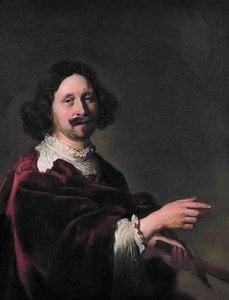
Bartholomeus Breenbergh
1598 - 1657, Niederlande
Künstlerbiografie
Frühes Leben und Ausbildung
- Name: Bartholomeus Breenbergh
- Geboren: Vor dem 13. November 1598 in Deventer, Niederlande
- Gestorben: Nach dem 5. Oktober 1657 in Amsterdam, Niederlande
- Details zum frühen Leben sind spärlich. Die Familie zog nach Hoorn, nachdem sein Vater 1607 gestorben war.
- Er war zeitgenössisch mit Jacques Waben und erhielt wahrscheinlich eine frühe Ausbildung dort.
- Registrierte Lehrer umfassen Pieter Lastman und Jacob Symonsz Pynas.
Karriere: Rom und der italienische Stil
- Erstmals 1619 als Maler in Amsterdam registriert.
- 1619 reiste er nach Rom, wo er bis etwa 1630 lebte.
- Arbeitete mit dem flämischen Maler Frans van de Kasteele zusammen und wurde stark von Paul Bril beeinflusst.
- Entwickelte einen unverwechselbaren italienischen Landschaftsstil, der durch idealisierte Darstellungen der Campagna Romana (ländliche Region) gekennzeichnet ist.
- Beeinflusst von den Landschaften Cornelis van Poelenburghs; ihre Stile wurden manchmal schwer zu unterscheiden.
- Wurde zu einem der Gründer der Bentvueghels ("Malerzunft") in Rom und erhielt den Spitznamen "het fret" (das Ferkel).
Rückkehr nach Amsterdam und künstlerische Entwicklung
- Kehrte um 1630 nach Amsterdam zurück.
- Heiratete 1633 und erhielt ein jährliches Gehalt von König Karl I. von Großbritannien.
- Seine Arbeit begann, mythologische und biblische Figuren in italienischen Landschaften zu integrieren, beeinflusst von Künstlern wie Pieter Lastman.
- Entwickelte einen monumentaleren Stil mit ausdrucksstarken Figurentypen.
- Sein einziger registrierter Schüler war Jan de Bisschop, der in den 1640er Jahren bei ihm studierte.
Einflüsse und Vermächtnis
- Einflüsse: Pieter Lastman, Nicolaes Moeyaert, Paul Bril, Cornelis van Poelenburgh, Claude Lorrain.
- Einfluss auf Andere: Jan Linsen, Scipione Compagno, Laurens Barata, Charles Cornelisz. de Hooch, Pieter Anthonisz. van Groenewegen, Francois van Knibbergen und Catharina van Knibbergen.
- Breenbergh war eine Schlüsselfigur bei der Entwicklung des italienischen Landschaftsstils in den Niederlanden.
- Seine Arbeit trug dazu bei, Darstellungen klassischer Ruinen und idealisierter Landschaften unter nordeuropäischen Künstlern zu popularisieren.
- Er schloss die Lücke zwischen früheren niederländischen Meistern und späteren, raffinierteren Landschaftsmalern.
Historische Bedeutung
- Breenberghs Beitrag liegt in seiner Pionierrolle bei der Etablierung des italienischen Stils innerhalb der niederländischen Kunst.
- Seine Fähigkeit, Einflüsse verschiedener Künstler zu synthetisieren – Lastman, Moeyaert, Bril, Poelenburgh – schuf eine einzigartige und wiedererkennbare künstlerische Stimme.
- Er spielte einen bedeutenden Teil bei der Gestaltung der ästhetischen Vorlieben des Goldenen Zeitalters der Niederlande und inspirierte nachfolgende Generationen von Landschaftsmalern.


Ähnliche Artikel

Golden Light & Dutch Skies: Bringing the Magic of Dutch Golden Age Landscapes into Your Home
Transform your home with the breathtaking light of Dutch Golden Age landscapes. Discover how hand-painted oil reproductions of masterworks like Ruisdael and Vermeer bring timeless elegance, atmosphere, and soulful texture to modern interiors. Elevate your space with museum-quality art.

Die 10 Meisterwerke des Goldenen Zeitalters der niederländischen Malerei |
Entdecken Sie die 10 Meisterwerke des Niederländischen Goldenen Zeitalters! Von Rembrandt bis Vermeer – erleben Sie Kunstgeschichte, Techniken & Emotionen. Hochwertige Gemäldereproduktionen für Ihr Zuhause auf .
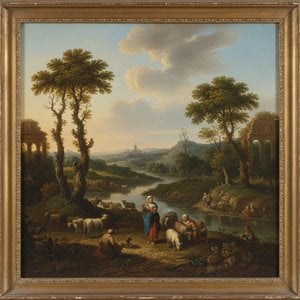
Nicolaes Berchem und das Goldene Zeitalter: Pastoralismus, Idealisierung & Künstlerische Innovation
Entdecken Sie die faszinierende Welt von Nicolaes Berchem und das Goldene Zeitalter der niederländischen Landschaftsmalerei. Expertenanalyse, Hintergrundinformationen & künstlerische Innovationen.