
1


Opdateret november 2026 · rangeret efter vores popularitetsscore (søgninger, besøg og ordrer for hvert værk) · 1 værker af Jacques Beys i vores katalog
Kort sagt
Hvis du kender ét maleri af Jacques Beys, er det sandsynligvis View of the Gulf of Naples with Mount Vesuvius (1784), som hænger på Nationalmuseum i Stockholm. Vores katalog indeholder 1 værker af Jacques Beys. Nedenfor er de 1 mest kendte værker, hver med årstal, hvor de kan findes, og hvad der gør dem specielle.
Det museum, der rummer flest af malerierne på denne side.
| Museum | By | Værker af Jacques Beys | Malerier fra denne liste |
|---|---|---|---|
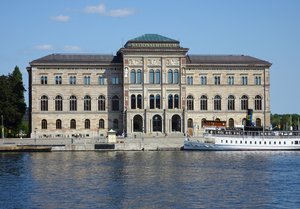 Nationalmuseum |
Stockholm | 1 | View of the Gulf of Naples with Mount Vesuvius |
Hvert dateret værk af Jacques Beys på denne side stammer fra et enkelt år, 1784. Her er de.
Vælg et årstal for at se værkerne fra det år.
Øverst på listen står View of the Gulf of Naples with Mount Vesuvius (1784).
Vi har 1 værker af Jacques Beys i vores katalog.
Du finder de fleste af dem i Nationalmuseum (Stockholm). Listen over museer ovenfor giver en fuldstændig oversigt.
Jacques Beys focused his attention on the shifting light and the heavy presence of the landscape. His work often centers on the relationship between the sea and the land, capturing the way the atmosphere settles over a coastline. In his 1784 work, View of the Gulf of Naples with Mount Vesuvius, there is a quiet observation of the scale of the world. He did not seek to dramatize the volcano, but rather to place it within the context of the surrounding water and sky.
The brushwork suggests a steady hand accustomed to the specificities of light. He looked at the way the sun hits the surface of the Gulf, noting the subtle changes in color that occur as the day moves forward. His approach was one of careful placement, ensuring that the geography of the region was rendered with a sense of physical weight.
His output provides a window into the way certain landscapes were perceived during his time. The details of his compositions offer a sense of the topography and the atmosphere of the Mediterranean. His work is held in collections that preserve the visual history of these locations, such as the Nationalmuseum in Stockholm.
Beys remains a figure of interest for those studying the topographical traditions of the late eighteenth century. His ability to capture the specific character of the Gulf of Naples allows the viewer to see the landscape as it was documented in 1784. He worked with a focus on the tangible elements of the earth and the sea, leaving behind a record of the natural world that remains in museum archives.