Portræt af Anton Melbye

Anton Melbyes mest berømte malerier: Alle 27, rangeret

Opdateret november 2026 · rangeret efter vores popularitetsscore (søgninger, besøg og ordrer for hvert værk) · 30 værker af Anton Melbye i vores katalog

Kort sagt

Det mest kendte maleri af Anton Melbye er Seascape (1843), som du kan se på Hermitage Museum i Sankt Petersborg. Lige efter følger A ship in high seas at sunset (1847) og Marine Landscape (1845). Ud af 30 værker af Anton Melbye i vores katalog er disse 27 de mest kendte. Hvert værk er ledsaget af årstal, museum og en kort note om, hvad der gør det bemærkelsesværdigt.

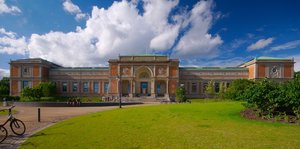
1818 – 1875, Copenhagen Flest værker: Statens Museum for Kunst

Anton Melbyes top 10: de værker alle kender

1
Seascape (1843) af Anton Melbye

Seascape

1843 · Oil On Canvas · Hermitage Museum, Sankt Petersborg

To gaze upon this seascape is to feel the immense breath of the ocean itself—a captivating confluence of water, sky, and human endeavor. Painted in 1843, this work by Anton Melbye transports the viewer directly onto a dynamic stretch of water where life unfolds amidst the grandeur of nature. The composition is richly populated; one can count at least thirteen vessels dotting the surface, their varying sizes and placements suggesting…

Håndmalet oliereproduktion fra $183 36 × 27 cm Samme størrelse som originalen $203 46 × 35 cm Bestil i original størrelse →
Få den håndmalet Læs historien bag

Fortsæt med at udforske Anton Melbye: 11 til 27

Hvad Anton Melbye har malet mest af

De fire motiver, der optræder hyppigst i disse værker, hver med sit mest kendte eksempel.

Hvor du kan se Anton Melbye's malerier

De 7 museer, der rummer flest af malerierne på denne side.

Museum By Værker af Anton Melbye Malerier fra denne liste
Statens Museum for Kunst, KøbenhavnStatens Museum for Kunst København 9 En shetlandsk fiskerbåd i stormfuldt vejr nord for Orkneyøerne, Paris med Tour St. Jacques og Notre Dame. Aftenstemning, En dansk korvet i rum sø efter en storm
Hermitage Museum, Sankt PetersborgHermitage Museum Sankt Petersborg 2 Seascape, Sea at Night
Nivaagaards Malerisamling, NibeNivaagaards Malerisamling Nibe 2 A ship in high seas at sunset, Quiet Evening in the Copenhagen Roads
Finnish National Gallery, HelsinkiFinnish National Gallery Helsinki 1 Marine Landscape
ARoS Aarhus Kunstmuseum, AarhusARoS Aarhus Kunstmuseum Aarhus 1 Jylland
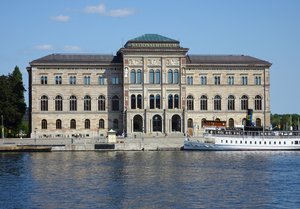
Nationalmuseum, StockholmNationalmuseum Stockholm 1 The sailing ship ‚Johanna‘ and other vessels in Sundet off Kronborg Castle
Auckland Art Gallery Toi o Tāmaki, AucklandAuckland Art Gallery Toi o Tāmaki Auckland 1 View Of The Adriatic

Et berømt værk af Anton Melbye for hvert årti

Værker per årti

Vælg et årti for at se dets mest fremtrædende værk.

Anton Melbye malerier: det, folk gerne vil vide

Hvilket maleri er Anton Melbye bedst kendt for?Se svaret

Øverst på listen er Seascape (1843), Hermitage Museum, Sankt Petersborg. Lige efter kommer: A ship in high seas at sunset (1847) og Marine Landscape (1845).

Hvor gammel var Anton Melbye på tidspunktet for Seascape?Se svaret

25 år gammel. Anton Melbye blev født i 1818, og Seascape er fra 1843.

Hvilke 10 malerier af Anton Melbye er de mest berømte?Se svaret

Seascape, A ship in high seas at sunset, Marine Landscape, En shetlandsk fiskerbåd i stormfuldt vejr nord for Orkneyøerne, Paris med Tour St. Jacques og Notre Dame. Aftenstemning, En dansk korvet i rum sø efter en storm, Marine, Coastal Landscape with Mountains. A Storm Brewing, A Seascape og Marine. Du finder årstallet og museet for hver af dem i listen ovenfor.

Hvor mange værker af Anton Melbye er der?Se svaret

Vi har 30 værker af Anton Melbye i vores katalog, dateret fra 1842 til 1866.

Hvilke museer har Anton Melbyes mest kendte malerier?Se svaret

Du finder de fleste af dem i Statens Museum for Kunst (København), Hermitage Museum (Sankt Petersborg) og Nivaagaards Malerisamling (Nibe). Listen over museer ovenfor giver en fuldstændig oversigt.

Hvornår blev Anton Melbyes mest berømte værker malet?Se svaret

I 1840s, mere end på andre tidspunkter: 8 af de 27 værker på denne side stammer fra dengang, herunder Seascape.

Hvad er de ældste og nyeste berømte malerier af Anton Melbye?Se svaret

Det tidligste værk her er En shetlandsk fiskerbåd i stormfuldt vejr nord for Orkneyøerne (1842); det nyeste er French River Landscape with a Bridge (1866).

Hvad kan du se af Anton Melbye på Statens Museum for Kunst?Se svaret

Du kan se 9 af værkerne på denne side på Statens Museum for Kunst, København, herunder En shetlandsk fiskerbåd i stormfuldt vejr nord for Orkneyøerne, Paris med Tour St. Jacques og Notre Dame. Aftenstemning og En dansk korvet i rum sø efter en storm.

Kan jeg bestille en Anton Melbye reproduktion til mit hjem?Se svaret

Ja. Hvert maleri på denne side er tilgængeligt som en håndmalet oliereproduktion eller som et print i den størrelse, der passer dig. Åbn blot maleriets side for at bestille.

Mød Anton Melbye

The Mariner’s Eye: Unveiling the Seascapes of Anton Melbye

Anton Melbye, a name perhaps less familiar than many of his Romantic contemporaries, nevertheless holds a unique and compelling place in 19th-century art. Born in Copenhagen in 1818, he wasn't destined for a life at sea, initially pursuing an engineering career before recognizing his true calling: capturing the raw beauty and formidable power of the maritime world. His journey from shipbuilding apprentice to celebrated painter and photographer reveals a fascinating evolution shaped by personal circumstance, artistic influences, and a profound connection to the rhythms of the ocean. Melbye’s legacy rests primarily in his evocative seascapes – paintings that transcend mere representation, instead offering glimpses into the soul of the sea itself.

Early Life and Artistic Foundations

Melbye's early life was marked by a degree of constraint. His father, a Royal Customs officer, steered him towards a practical profession, while his myopia initially diverted him from naval aspirations. However, a burgeoning passion for music and art ultimately led him to the Royal Danish Academy of Fine Arts in 1838, where he studied under the esteemed C.W. Eckersberg. This formative period instilled in him a rigorous understanding of technique and composition, yet it was his own deep fascination with the sea that truly ignited his artistic drive. Crucially, Melbye’s early work wasn't solely focused on idyllic coastal scenes; he meticulously documented voyages, capturing the realities of shipboard life – cramped quarters, arduous labor, and the ever-present threat of storms. These observations provided a grounding for his later, more celebrated seascapes, imbuing them with an authentic sense of maritime experience.
The Baltic Voyage and the Rise to Prominence

Melbye’s career took a pivotal turn in 1845 when he was invited to accompany King Christian VIII on a voyage through the Baltic and North Seas aboard the corvette *Cimbria*. This extraordinary opportunity provided him with unparalleled access to the ocean's dramatic moods, allowing him to paint directly from observation. The resulting paintings – particularly those depicting the turbulent waters around the Eddystone Lighthouse – garnered immediate acclaim and secured his place within the Danish art establishment. The King’s patronage was a significant boost, but it was the recommendation of the influential German art collector, Karl Friedrich von Rumohr, that truly propelled Melbye onto the international stage. This connection opened doors to Parisian artistic circles, where he would spend several formative years refining his style and technique.

Parisian Influences and Photographic Experimentation

Melbye’s time in Paris proved transformative. He immersed himself in the work of artists like Camille Corot, whose loose brushwork and emphasis on atmospheric effects profoundly influenced Melbye's approach to seascape painting. He embraced a looser, more expressive style, prioritizing capturing the *feeling* of the sea over precise detail. Simultaneously, he became deeply involved with the burgeoning field of photography, initially apprenticing under Louis Daguerre shortly before the photographer’s death. This experience proved invaluable, allowing him to develop a keen understanding of light and shadow – skills that he subsequently applied to his paintings, creating an astonishingly realistic depiction of the sea's surface and its ever-changing moods. His experimentation with daguerreotype photography during this period further solidified his reputation as a forward-thinking artist.

A Legacy of Dramatic Seascapes

Returning to Denmark in 1853, Melbye continued to produce works that showcased his mastery of light, color, and composition. His paintings are characterized by their dramatic intensity – the churning waves, the ominous skies, and the subtle shifts in tone all contribute to a palpable sense of drama. He wasn’t simply painting seascapes; he was conveying the *experience* of being at sea, capturing both its beauty and its inherent danger. While his work received considerable recognition during his lifetime, it's only in recent decades that Anton Melbye has achieved the widespread acclaim he deserves. His unique perspective – a blend of meticulous observation, artistic sensitivity, and innovative techniques – ensures that his seascapes continue to resonate with viewers today, offering a powerful reminder of the ocean’s enduring allure and its profound impact on the human spirit. His legacy is not just as a painter, but as one of the first artists to truly capture the essence of the maritime world through both brush and lens.