The Sharp Wit of Jules Abel Faivre
To look at the work of Abel Faivre is to see the Belle Époque through a lens of calculated humor and social observation. He was not merely a painter; he was a chronicler of the French spirit, using both the brush and the pen to dissect the bourgeoisie and the medical community. His talent resided in his ability to balance fine art training with the biting edge of a caricaturist. While many of his contemporaries sought purely aesthetic pursuits, Faivre found his strength in the satirical. He understood that a well-placed line in a comic strip for Le Rire or Le Figaro could carry as much social weight as a formal portrait.
His technical foundation was rigorous. Born in Lyon, he spent three years at the École nationale des beaux-arts de Lyon under Jean-Baptiste Poncet before moving to Paris. This academic discipline provided the structural integrity behind his more playful works. At the Académie Julian, studying alongside Benjamin-Constant and Jules Lefebvre, he mastered the formal requirements of portraiture and composition. This training allowed him to move seamlessly between the high art of the Salon de Paris and the mass-produced energy of lithography and posters.
A Career Defined by Contrast
Faivre’s output was marked by a striking duality. On one hand, he produced formal works that earned him honors, such as his third-class medal in Anvers in 1894 and a medal of honour at the Lyon exhibition in 1897 for Retour de Wagram. These pieces demonstrated a command of classical themes and a respect for tradition. On the other hand, his identity was deeply tied to the ephemeral world of illustration. He possessed a singular stroke that could capture the absurdity of social classes with ease.
The First World War forced a shift in his professional utility. The artist moved from the satirical pages of magazines to the urgent medium of propaganda. Creating posters for the French Army, he utilized his skill as an illustrator to encourage national support for the war effort. This period proved that his visual language was effective even when stripped of its humor and repurposed for political mobilization. His ability to communicate directly with the public through print remains one of his most significant professional achievements.
Legacy in Print and Paint
The permanence of Faivre’s work is found in the major institutions that hold his pieces today. His presence in collections like the Musée d'Orsay, the Louvre Museum, and the Brooklyn Museum confirms that his contributions extend far beyond the temporary nature of a newspaper cartoon. He left behind a body of work that spans several distinct modes of expression:
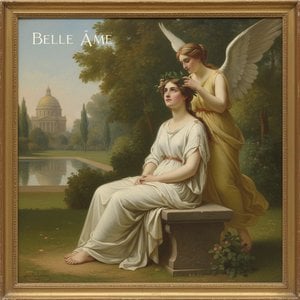
- Formal Painting: Works such as La Femme à l'éventail and Rêveuse showcase his ability to engage with the portraiture traditions of his era.
- Caricature and Illustration: His contributions to Le Rire and L'Écho de Paris captured the social nuances of French life through humor.
- Propaganda Art: His wartime posters utilized mass communication to influence public sentiment during a global crisis.
Faivre died in 1945 in La Croix-Valmer, near Nice. He left behind a legacy that refuses to be categorized as solely fine art or purely commercial illustration. By bridging the gap between the prestigious Salon and the popular press, he ensured his vision of French society would endure.
Spørgsmål og svar
Kan jeg gennemse Abel Faivres værker efter medie?
For at finde alle værker af Abel Faivre inden for et bestemt medie, kan du bruge kunstnerens Alle medier side.
Hvor kan jeg se Abel Faivres værker opdelt efter stemning?
På kunstnerens Stemningsfulde rum side kan du finde Abel Faivres værker sorteret efter stemning.
Hvor mange kunstværker af Abel Faivre er tilgængelige at gennemse?
Du kan gennemse 3 kunstværker værker af Abel Faivre på siden Alle kunstværker.
Hvor populære er Abel Faivres kunstværker?
Der findes en Statistik-side for Abel Faivre, som præsenterer statistikker om kunstnerens værker på denne hjemmeside.