


Billedet følger dine valg: , .
Beskrivelse af samlerobjektet
Explore the Arts and Crafts movement's influence on ceramic art with William Morris’s Petroglyph Vessel – a beautifully textured vase blending organic lines and vibrant blues, reds, and yellows.
 Vis mere
Kunstnerbiografi
William Morris var en dansk kunstner og socialistisk aktivist, hvis ikoniske tekstiler og vægmalerier revolutionerede viktoriansk design og satte fokus på naturlighed og håndværkstradition. Oplev hans arv gennem kunst og filosofi!
Håndlavet oliereproduktion
Håndmalet olie på lærred i din valgte størrelse og ramme, udført efter bestilling af vores kunstnere. ( Skift til printsalg Skift til digitalt billede)
Læs mere om dette maleri
 Se i rummet
 Del som kort
 Del
Del
 Detaljer
 Guide
Guide

 Download
 Lignende værker
 Røntgenundersøgelse
 Diasshow
 Spørgsmål og svar
 Statistikker
Bestil dit maleri i fire enkle trin
Tag dig god tid. Du kan ændre alle svar; prisen i din indkøbskurv opdateres efter hvert valg.
1 Trin et af fire
Hvilken størrelse ønsker du?
Disse størrelser bevarer det originale maleris proportioner. Tegningen viser dit valg på en væg, over en to meter lang sofa.
Eller angiv dine egne mål
Vælg mellem vores forudindstillede størrelser, der matcher kunstværkets originale proportioner.

Indtast den bredde og højde, du har brug for, så det passer til din ramme eller din væg. Da dette er håndmalet, kan kunstneren ved en anden form på størrelsen male lidt mere rundt om billedet eller skære lidt væk — det er op til dig. Vi sender dig et digitalt mockup til godkendelse, før maleriet påbegyndes. Billedet, der vises på denne side, viser ikke det endelige resultat — det er kun mockuppet, der gør.
2 Trin to ud af fire
Hvordan skal det klargøres: rullet, udstrakt eller indrammet?
Priserne nedenfor gælder for den størrelse, du valgte i trin ét.
Vælg kanterne på det opspændte lærred
Vælg din ramme

Hvid kant Dkr1

Udvasket kant Dkr1

Fortsat motiv Dkr1

P118B Dkr10

P118H Dkr10

P118W Dkr10

P438Z Dkr10

P508JH Dkr12

P508YH Dkr12

P805H Dkr10

P805Z Dkr10

P919BZ Dkr10

P919G Dkr10

P919XJ Dkr10

P959ZH Dkr10

P968JZ Dkr12

W106C Dkr8

W218G Dkr10

W218JH Dkr8

W218Y Dkr10

W307PJ Dkr10

W316G Dkr10

W316PJ Dkr8

W316Y Dkr10

W398PJ Dkr8

W4111J Dkr10

W500HY Dkr15

W500JH Dkr15

W692G Dkr12

W849H Dkr8

W940BG Dkr15

W953PJ Dkr8

H24-GOLD Dkr30

H24-SILVER Dkr30

H36-GOLD Dkr45

H36-SILVER Dkr45
Indrammet
Profil: . Samlet størrelse med ramme: .
3 Trin tre ud af fire
Ønsker du at få ændret noget i maleriet?
De fleste svarer nej. Da hvert maleri er håndlavet, kan vores kunstner også tilpasse det til dig.
Efter bestilling vil ArtsDot.com-teamet sende en e-mail til kunden for at få instruktioner og levere et udkast til forhåndsvisning
4 Trin fire ud af fire
Et par forskellige efterbehandlingsmuligheder
Alle er valgfrie. De svar, der allerede er valgt, koster ikke ekstra.
Hvem har malet det?
Verdensomspændende levering () på 3-4 uger i stedet for de standard 5 uger. (6 november). Ingen kompromiser med kvaliteten.
En navneplade, ligesom på et museum?
Detaljer om indgraveret bronzeskilt
This elegant plaque features the artist's name and the title of the artwork, finely engraved for a timeless presentation.
It is made from bronze with a refined, elegant finish. The text is precisely laser-engraved for a sharp and permanent result. Measuring 9x2 cm, the plaque is compact yet easy to read. It's built to be durable and scratch-resistant, offering a professional, museum-quality look. Mounting is simple thanks to the included adhesive backing.
Detaljer om gennemsigtig akrylplade
The plaque includes essential engraved details such as the artist's name, the title of the artwork, the date it was created, the type of media used-like oil on canvas or watercolor-a brief description of the piece, and a QR code that links to the complete artwork information.
It is crafted from clear acrylic, offering a sleek, modern appearance. The text is UV-engraved in black to ensure strong visual contrast. With a size of 10x15 cm, it ensures optimal readability. It comes equipped with two metal hooks for secure wall mounting. The plaque is designed to be weather-resistant, making it suitable for various environments, and it includes interactive features that work seamlessly with smartphone scanning.
Detaljer om sort akrylplade
This elegant plaque includes engraved information such as the artist's name, the title of the artwork, the date it was created, the type of media used (like oil on canvas or watercolor), a short description of the artwork, and a QR code for quick access to more information.
The plaque itself is made from refined black acrylic with a premium finish. The text is laser-engraved in white for high contrast and readability. Its size is 10x15 cm, designed to be easy to read. It comes with two metal hooks for professional mounting. The design is sleek and fits any interior style. It is also weather-resistant and durable, with built-in digital integration for mobile compatibility.
En beskyttende lak?
Hvornår skal det leveres?
✓ Tjek og bestil
Dit maleri, præcis som du har bestilt det

Petroglyph Vessel
Reproduktionsmetode
Størrelse på reproduktion
-

Eksklusivt udvalgte senior-kunstnere
Mere detaljerigdom, finesse og ekstra produktionstid
-

Indramning af reproduktion
-
-
For kunstværker eller reproduktioner, der er større end 105 cm (ca. 41 tommer) på en hvilken som helst side, vil rammen blive leveret som et adskilt sæt. Denne metode sikrer sikker levering og forhindrer skader under transport.
Professionel montering er påkrævet – dette er ikke et gør-det-selv produkt.
Sættet skal samles, og lærredet skal opspændes af en erfaren professionel indrammer ved brug af trælim (ikke medfølger), en lærredsspænder og klemmer til at holde blindrammen vinkelret, mens limen tørrer. Forkert samling eller ujævn spænding af lærredet kan beskadige kunstværket permanent og er ikke dækket af vores garanti.
 For kunstværker eller reproduktioner, der er større end 105 cm (ca. 41 tommer) på en hvilken som helst side, vil rammen blive leveret som et adskilt sæt. Denne metode sikrer sikker levering og forhindrer skader under transport.
Alle massive trælister er inkluderet, præcist tilpasset i størrelsen.
Samles med de medfølgende skruer samt trælim til hjørneforbindelserne, som ikke medfølger og skal anskaffes af din indrammer.
Professionelt værktøj er påkrævet og medfølger ikke: en lærredsstrækker (spændetang) og klemmer til at holde blindrammen vinkelret, mens limen tørrer.
Vigtigt:
Hjørneforbindelserne kræver trælim, listerne skal holdes fast med skruetvinger, indtil limen er helt tør, og opspænding af lærredet på den samlede ramme kræver en lærredsspænder. Ingen af disse dele er inkluderet i sættet. Vi anbefaler, at du kontakter en erfaren professionel indrammer, før du bestiller denne størrelse.

Navneskilt
-
-

Beskyttende fernis
Blank lak (fremhæver farverne og beskytter mod lys og fugt)
-

Tilpas mit kunstværk
Eksempler på tilpasningsmuligheder: Udskift ansigt med kunde-foto; Tilføj kæledyr (f.eks. udskift kat med hund); Inkluder skjult besked i baggrunden; Ændr baggrundslandskab eller elementer.
-

Hurtig levering
Verdensomspændende levering () på 3-4 uger i stedet for de standard 5 uger. (6 november). Ingen kompromiser med kvaliteten.
-
Ekspreslevering
Verdensomspændende levering til inden for 5 uger. (13 november).
Inkluderet
Samlet pris
Dkr 1758
Glasmulighed er kun tilgængelig i størrelser under 110 cm
Inkluderet i hver ordre
- Gratis ekspresforsendelse til hele verden
- Lærred af linned i høj kvalitet
- Fuld transportforsikring
- Garanti for refusion af told og importafgifter
- Garanti for præcis farvegengivelse
- 100 dages returret ved fabrikationsfejl
- 100% fuld returret
- Mængderabat ved flere køb


A Vessel Echoing Ancient Whispers: Exploring William Morris’s Petroglyph Vase
The ceramic vase stands quietly in the gallery light, its unassuming form concealing a profound connection to artistic heritage and a masterful embodiment of Arts and Crafts ideals. Created in 1987 by William Morris—a name synonymous with organic beauty and romantic storytelling—this piece transcends mere decoration; it’s an invitation into a world where craftsmanship speaks louder than convention and nature reigns supreme.The Inspiration Behind the Design
Morris's artistic vision stemmed from a deep reverence for the medieval past, specifically the traditions of Celtic and Norse art. He drew inspiration from petroglyphs—ancient rock carvings found across Europe—where stylized images convey narratives and spiritual beliefs through simplified forms and repetitive patterns. These symbols weren’t intended to represent literal depictions but rather to evoke emotions and communicate ideas in a timeless manner – mirroring the vase's aim to capture essence rather than precise detail. The artist deliberately eschewed academic precision, prioritizing instead an intuitive understanding of visual language rooted in folklore and mythology.A Symphony of Color and Texture
The vase’s palette—dominated by blues and reds accented with yellows and greens—reflects Morris’s belief that color possesses inherent moral qualities. Deep navy blues symbolize tranquility and contemplation, while vibrant reds evoke passion and vitality. These hues are skillfully blended to create a harmonious visual experience, mirroring the natural world's interplay of light and shadow. Furthermore, the textured glaze—a technique honed by Morris’s workshop—adds another layer of complexity. Visible mottled effects across the surface emulate the weathered appearance of stone formations, grounding the vase in its artistic inspiration and emphasizing the tactile quality of handmade artistry. The artist meticulously applied pigment to achieve this effect, demonstrating a dedication to material exploration that was characteristic of the Arts and Crafts movement.Craftsmanship as Moral Expression
Morris championed craftsmanship not merely as a skill but as a moral imperative—a way of honoring tradition and elevating the everyday through meticulous attention to detail. He firmly opposed mass production, advocating instead for handcrafted objects created with care and imbued with artistic intention. The vase exemplifies this ethos; its creation demanded considerable labor and expertise, reflecting Morris’s conviction that beauty arises from purposeful engagement with materials and techniques. This dedication to artisanal excellence aligns perfectly with the Arts and Crafts movement's broader critique of industrialization and its celebration of handcrafted artistry as a counterpoint to soulless uniformity.Symbolism Beyond Surface Decoration
Beyond its aesthetic qualities, the vase’s design carries symbolic weight. The curvilinear forms—inspired by Celtic spirals—represent cycles of life and death, mirroring Morris's fascination with natural rhythms and spiritual transformation. Similarly, the repetition of geometric patterns echoes the stylized imagery found in petroglyphs, reinforcing the connection to ancient traditions and conveying a sense of timelessness. These subtle visual cues invite contemplation and encourage viewers to consider the vase as more than just an object—but as a vessel for conveying profound ideas about beauty, spirituality, and human connection to the natural world.A Legacy Enduring Through Reproduction
Today, reproductions of Morris’s Petroglyph Vase offer art lovers and collectors alike the opportunity to experience the enduring power of Arts and Crafts artistry. By capturing the essence of Morris's vision—his reverence for nature, his commitment to craftsmanship, and his belief in the moral significance of artistic expression—these high-quality prints allow admirers to bring a piece of this remarkable heritage into their homes.Spørgsmål og svar
Kan "Petroglyph Vessel" forhåndsvises i augmented reality?
Siden Se i AR for "Petroglyph Vessel" af William Morris bruger augmented reality til at vise kunstværket i dit eget rum på en kompatibel enhed.
Hvornår og i hvilken stil er "Petroglyph Vessel" af William Morris skabt?
"Petroglyph Vessel" blev skabt i 1987 som et værk inden for Arts and Crafts-bevægelsen. Datoen og stilen forankrer kunstværket i kunsthistorien.
I hvilket år blev "Petroglyph Vessel" af William Morris skabt?
"Petroglyph Vessel" af William Morris er dateret til 1987.
Lignende kunstværker


William Morris
1834 - 1896, Storbritannien
Kunstnerbiografi
William Morris (1834-1896): A Life Rooted in Nature and Romance
William Morris, born on March 24, 1834, in Walthamstow, Essex, emerged from a comfortably affluent middle-class background—a circumstance that afforded him the freedom to pursue passions rather than professions. His father’s success as a financier provided not only security but also an environment where aesthetic sensibilities could flourish. Morris's childhood was deeply shaped by the English countryside surrounding his home and a fascination with tales of medieval chivalry, laying the groundwork for a lifelong devotion to both natural beauty and romantic narratives. These early influences weren’t merely sentimental; they formed the core of his artistic philosophy. He wasn’t simply *inspired* by nature or the past—he believed in their inherent moral and aesthetic superiority to the rapidly industrializing present. His formal education at Oxford University initially steered him toward a clerical path, but it was within the vibrant intellectual circles of the university that his true calling began to take shape. He joined “The Set,” a group of students who shared an intense interest in art, literature, and medieval history, forging friendships—most notably with Edward Burne-Jones—that would profoundly impact his artistic trajectory. It was during this period that he encountered the writings of John Ruskin, whose critique of industrial society and advocacy for craftsmanship resonated deeply with Morris’s burgeoning beliefs.The Arts & Crafts Revolution
Following Oxford, a brief foray into architecture quickly gave way to painting, as Morris collaborated with Dante Gabriel Rossetti on mural projects. However, it was the founding of Morris, Marshall, Faulkner & Co. in 1861—later known simply as Morris & Co.—that marked a pivotal moment, not just in his career but in the history of design. This wasn’t merely a business venture; it was an attempt to create a new way of life, one where art permeated every aspect of daily existence and craftsmanship was valued above all else. Alongside Burne-Jones, Rossetti, Philip Webb, and others, Morris sought to revive traditional techniques and produce beautiful, well-made objects for the home. The firm’s early work was profoundly influenced by Red House, a home Morris commissioned from Webb—a structure that embodied the Arts & Crafts ideal of creating a unified aesthetic environment through handcrafted furnishings and decoration. Morris became a leading voice in the burgeoning Arts & Crafts movement, championing handmade craftsmanship as an antidote to the perceived dehumanizing effects of mass production. He believed passionately that art should be accessible to all, not just the wealthy elite, and that it should be integrated into everyday life—a radical notion at a time when design was often seen as separate from function. This wasn’t abstract theorizing; he actively supported various socialist causes and used his platform to raise awareness about the plight of working people. He envisioned a society where beauty and utility harmoniously coexisted, rejecting the utilitarian dogma that dominated Victorian thought.A Legacy Woven in Textiles, Poetry, and Print
Morris’s artistic output spanned diverse mediums—painting, sculpture, illustration, poetry, and design—each reflecting his unwavering commitment to naturalism and romantic idealism. His paintings often depicted scenes from medieval legends and folklore, imbued with vibrant colors and meticulous detail. He was particularly celebrated for his depictions of biblical narratives, capturing the grandeur and emotion of these stories with masterful brushstrokes. However, it was Morris’s textile designs that cemented his reputation as one of the most influential decorative artists of his era. These weren't merely patterns; they were elaborate narratives woven with flowing floral motifs, lush foliage, and rich, evocative colors—a deliberate rejection of the repetitive geometric designs favored by industrial manufacturers. He meticulously researched botanical specimens and experimented with dyeing techniques to achieve unparalleled hues and textures. His wallpapers mirrored this ethos, eschewing sterile imitation for bold compositions inspired by nature’s rhythms and forms. Morris understood that beauty wasn't merely superficial; it possessed a moral dimension—a reflection of the natural order and a celebration of human creativity.Socialism, Conservation, and Enduring Influence
Morris’s intellectual convictions extended beyond aesthetics into the realm of social reform. He was deeply affected by Ruskin’s critique of industrial capitalism and championed the cause of workers' rights with unwavering conviction. He believed that true progress demanded not only economic prosperity but also ethical considerations—a stance that informed both his artistic endeavors and his political activism. Morris actively campaigned for improved working conditions, fair wages, and social justice, recognizing that a flourishing society required compassion and solidarity. Furthermore, he possessed a profound appreciation for the natural world and advocated for its preservation—a conviction that resonated deeply with the growing anxieties about environmental degradation in the late Victorian period. He established The Kelmscott Press to produce books of exceptional quality using traditional printing methods—a deliberate rebuke to the mechanized production of mass-produced publications. Morris’s legacy continues to inspire artists, designers, and thinkers today—his insistence on craftsmanship, natural beauty, and social responsibility remains as relevant as it was in the 19th century. He demonstrated that art could serve as a catalyst for societal transformation, fostering empathy, promoting ethical values, and safeguarding the heritage of humankind.

Relaterede artikler
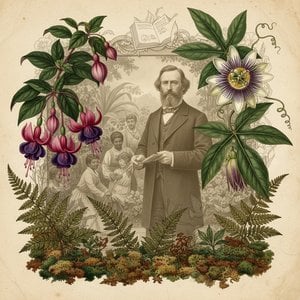
William Salter: A Life Immersed in Colour – Victorian Botanical Art & Social Vision
Explore the life & art of William Salter (1804-1875), a Victorian master renowned for his botanical illustrations and striking portraits. Discover his social vision & legacy at ArtsDot.

The Alchemy of Clay: A Collector's Guide to the Mastery, Texture, and Timeless Form of Ceramic Art
Discover the profound beauty of ceramic art. Our expert guide explores the alchemy of clay, texture, and glaze, offering collectors deep insights into mastering earth and fire to create timeless, sculptural masterpieces for any curated collection.

Sir William Blake Richmond: A Visionary of Aestheticism & Symbolism
Explore the life & art of Sir William Blake Richmond, a pivotal figure bridging Pre-Raphaelitism and Aestheticism. Discover his stunning portraits, mosaics at St Paul's Cathedral, and lasting influence on Victorian art.