

 Se i rummet
 Del som kort
 Del
Del
 Detaljer
 Guide
Guide

 Download
 Lignende værker
 Røntgenundersøgelse
 Diasshow
 Spørgsmål og svar
 Statistikker
Greater plantain,

 Vis mere
Giclée / Kunsttryk
Giclée- eller lærredstryk i museumskvalitet med hurtig produktion og fleksible muligheder for finish. ( Køb håndmalet maleri Skift til digitalt billede)




P118B Dkr10

P118H Dkr10

P118W Dkr10

P438Z Dkr10

P508JH Dkr12

P508YH Dkr12

P805H Dkr10

P805Z Dkr10

P919BZ Dkr10

P919G Dkr10

P919XJ Dkr10

P959ZH Dkr10

P968JZ Dkr12

W106C Dkr8

W218G Dkr10

W218JH Dkr8

W218Y Dkr10

W307PJ Dkr10

W316G Dkr10

W316PJ Dkr8

W316Y Dkr10

W398PJ Dkr8

W4111J Dkr10

W500HY Dkr15

W500JH Dkr15

W692G Dkr12

W849H Dkr8

W940BG Dkr15

W953PJ Dkr8




Vælg mellem vores forudindstillede størrelser, der matcher kunstværkets originale proportioner.

Indtast den bredde og højde, du har brug for, så det passer til din ramme eller din væg. Et print kan kun beskæres, aldrig gøres større end selve billedet, så en størrelse med et andet format vil medføre, at dele af motivet går tabt. Vi sender dig en digital mockup til godkendelse, før vi printer noget. Billedet vist på denne side viser ikke den faktiske beskæring — det er kun mockuppen, der gør.
Verdensomspændende levering () på 2 uger i stedet for de sædvanlige 4/5 uger. (4 november)

Gratis ekspresforsendelse til hele verden

Lærred af linned i høj kvalitet

Fuld transportforsikring

Garanti for refusion af told og importafgifter

Garanti for præcis farvegengivelse

100 dages returret ved fabrikationsfejl

100% fuld returret

Mængderabat ved flere køb
 Glasmulighed er kun tilgængelig i størrelser under 110 cm

Greater plantain,
Giclée / Kunsttryk
Størrelse på reproduktion
-


Samlet pris
Dkr 418
Lignende kunstværker
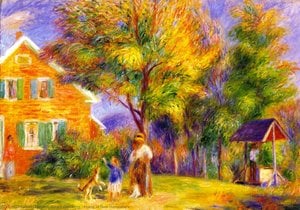


Kunstnerbiografi
The Life and Legacy of William James Linton
Born in the vibrant, industrious atmosphere of Mile End, East London, in 1812, William James Linton was a man whose life was defined by an unyielding passion for both artistic precision and political liberty. His journey began far from the grand galleries of Europe, rooted in the disciplined world of craftsmanship. As a young apprentice to the wood-engraver George Wilmot Bonner, Linton mastered the intricate language of line and shadow, a skill that would later allow him to bridge the gap between fine art and mass communication. His early career was marked by a rigorous dedication to the craft, contributing to significant pictorial works such as the biblical illustrations of John Martin and Richard Westall, where his burgeoning talent for capturing light and texture first began to emerge.
The trajectory of Linton’s life was never merely about the pursuit of aesthetic beauty; it was deeply intertwined with the turbulent political currents of the 19th century. After a period of journeyman work and personal financial struggles, Linton emerged as a formidable figure in the realm of republican propaganda and social reform. His move to America and his involvement in international political movements transformed him from a skilled engraver into a true intellectual and activist. Whether he was exposing violations of privacy by the English post office or writing under the pseudonym "Spartacus" for the Dublin Nation, Linton used his pen and his burin as weapons for justice. His friendship with Italian revolutionaries like Mazzini infused his work with a sense of romantic struggle and a profound commitment to the cause of European liberty.
Mastery of the White Line and Artistic Evolution
In the realm of technical achievement, Linton is perhaps most celebrated for his revolutionary contributions to the art of wood engraving. He was a staunch champion of the "white line" technique, a method that allowed engravers to create luminous, delicate details by focusing on the removal of material rather than the addition of ink. This approach demanded an extraordinary level of foresight and precision, as every stroke carved into the wood block was permanent. Through this method, Linton achieved a level of tonal complexity and atmospheric depth that few of his contemporaries could match, making him a pivotal figure in the evolution of printmaking.
Beyond the stark contrasts of political prints, Linton’s artistic soul found solace in the natural world. His development as a landscape painter and botanical illustrator revealed a softer, more contemplative side of his genius. His works often featured:
- Intricate Botanical Studies: Capturing the delicate architecture of flora with scientific accuracy and poetic grace.
- Evocative Italian Landscapes: Scenes that reflected his deep connection to European history and the romanticism of the Mediterranean light.
- Detailed Textural Depictions: A mastery of organic forms, from the ruggedness of stone to the softness of foliage.
A Polymath of the Nineteenth Century
The historical significance of William James Linton lies in his refusal to be confined by a single discipline. He was a true polymath—an engraver, painter, author, poet, and reformer whose life work spanned the boundaries of art and activism. His memoirs and novels provided a window into the social upheavals of his era, while his political verses echoed the cries for reform across the Atlantic and beyond. Even as he navigated the complexities of running a business and supporting families through the volatility of the publishing industry, his commitment to the "international league" of patriots remained steadfast.
Ultimately, Linton’s legacy is one of profound intersectionality. He demonstrated that the precision required for fine engraving could be applied to the pursuit of political truth, and that the observant eye of a naturalist could find beauty amidst the chaos of revolution. To study the works of William James Linton is to witness the heartbeat of the 19th century—a period of immense change, where the stroke of an engraver's tool could help shape the consciousness of a generation.

William James Linton
1812 - 1897 , United Kingdom
Kort om kunstneren
- Artistic Movement Or Style: Wood engraving and landscape painting
- Artists Who Influenced This Artist: ['George Wilmot Bonner']
- Date Of Birth: 1812
- Date Of Death: 1897
- Full Name: William James Linton
- Nationality: British-American
- Place Of Birth: London, United Kingdom
Relaterede artikler
The Flourishing Canvas: A Historical & Artistic Exploration of Botanical Illustration
Explore the rich history of botanical illustration! Discover key artists like Havell & Barraband, learn about scientific accuracy & aesthetic beauty. Shop museum-quality reproductions at ArtsDot.

James Abbott McNeill Whistler: Top 25 Kunstværker – Skønhed, Harmoni & Historie | ArtsDot
Oplev James Abbott McNeill Whistlers 25 mest ikoniske kunstværker. Fordyb dig i æstetismens verden, tonale malerier & harmoniske kompositioner. Find reproduktioner af højeste kvalitet og inspiration til din indretning på ArtsDot.com.

Sir Alfred James Munnings' Top 25 Værker: En Hyldest til Heste og Engelsk Landskab | ArtsDot.dk
Oplev Sir Alfred James Munnings' 25 mest ikoniske værker – fra betagende hestemalerier til engelske landskaber. Lær om kunstnerens historie, teknik og stil. Find luksus reproduktioner & inspiration til dit hjem på ArtsDot.com
William Salter: A Life Immersed in Colour – Victorian Botanical Art & Social Vision
Explore the life & art of William Salter (1804-1875), a Victorian master renowned for his botanical illustrations and striking portraits. Discover his social vision & legacy at ArtsDot.
The Flourishing Canvas: A Historical Journey Through Botanical Illustration
Explore the captivating history of botanical illustration! Discover renowned artists like Robert Havell & Mary Walcott, learn about techniques, and find museum-quality art at ArtsDot.com.