


 Se i rummet
 Send
Send Del
Del
 Detaljer
 Studieguide til kunstværker

 Download
 Lignende værker
 Røntgenundersøgelse
 Se diasshow
 Statistik
Julia Reading


 Læs mere
Håndlavet oliereproduktion
Håndmalet olie på lærred i din valgte størrelse og ramme, udført efter bestilling af vores kunstnere. ( Skift til printversion Skift til digitalt billede)




P118B Dkr10

P118H Dkr10

P118W Dkr10

P438Z Dkr10

P508JH Dkr12

P508YH Dkr12

P805H Dkr10

P805Z Dkr10

P919BZ Dkr10

P919G Dkr10

P919XJ Dkr10

P959ZH Dkr10

P968JZ Dkr12

W106C Dkr8

W218G Dkr10

W218JH Dkr8

W218Y Dkr10

W307PJ Dkr10

W316G Dkr10

W316PJ Dkr8

W316Y Dkr10

W398PJ Dkr8

W4111J Dkr10

W500HY Dkr15

W500JH Dkr15

W692G Dkr12

W849H Dkr8

W940BG Dkr15

W953PJ Dkr8




Vælg mellem vores forudindstillede størrelser, der matcher kunstværkets originale proportioner.

Indtast den bredde og højde, du har brug for, så det passer til din ramme eller din væg. Da dette er håndmalet, kan kunstneren ved en anden form på størrelsen male lidt mere rundt om billedet eller skære lidt væk — det er op til dig. Vi sender dig et digitalt mockup til godkendelse, før maleriet påbegyndes. Billedet, der vises på denne side, viser ikke det endelige resultat — det er kun mockuppet, der gør.
Efter bestilling vil ArtsDot.com team sende en e-mail til kunden for at indhente instruktioner og fremsende et udkast til gennemgang.
Levering i hele verden () på 3-4 uger i stedet for de standard 5 uger. (23 oktober). Ingen kompromiser med kvaliteten.

Gratis ekspresforsendelse til hele verden

Lærred af linned i høj kvalitet

Komplet transportforsikring

Garanti for refusion af told og importafgifter

Garanti for autentisk farvegengivelse

100 dages returret ved fabrikationsfejl

100% fuld returret

Mængderabat ved flere køb
 Glasmulighed er kun tilgængelig i størrelser under 110 cm

Julia Reading
Reproduktionsmateriale
Reproduktionsstørrelse
-


Samlet pris
Dkr 1729
A Snapshot of Urban Life: Unveiling "Julia Reading"
William James Glackens’ “Julia Reading,” painted in 1916, isn't merely a portrait; it’s a meticulously crafted window into the burgeoning dynamism and subtle social currents of early 20th-century New York City. Born during the height of the Ashcan School movement, Glackens rejected the idealized depictions favored by the National Academy of Design, instead choosing to capture the gritty reality of everyday life – the bustling streets, the casual interactions, and the quiet moments within a rapidly changing metropolis. “Julia Reading” exemplifies this approach, offering a glimpse into a specific scene that simultaneously feels intimate and profoundly connected to the larger urban narrative.
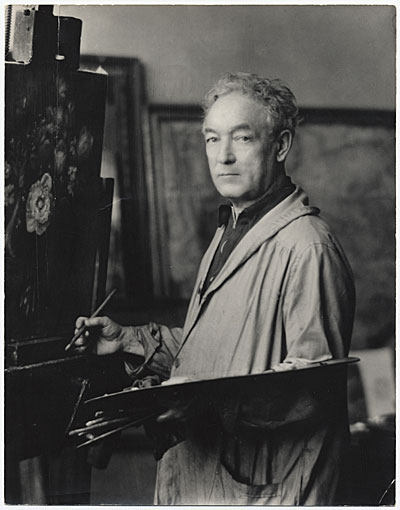
The painting immediately draws the eye to its central figure, a woman engrossed in a book. Her posture – slightly turned towards the viewer, her hand resting delicately on the page – conveys a sense of quiet contemplation amidst the implied activity around her. Glackens’ masterful use of light and shadow establishes a strong focal point, directing our gaze to Julia's face and highlighting the subtle details of her expression. The inclusion of two other individuals—a man standing behind her and another seated further back—adds layers of narrative complexity without disrupting the primary focus. These figures, though less defined, contribute to the sense of a shared space, a moment captured within the larger tapestry of urban life.
The Ashcan School: A Rejection of Tradition
Glackens was a key figure in the Ashcan School, a movement that challenged the established norms of American art. Rejecting the polished surfaces and grand narratives of academic painting, the Ashcan artists sought to depict the realities of urban life with honesty and immediacy. They favored working-class subjects, unvarnished scenes, and often employed a darker palette—a deliberate choice reflecting the sometimes bleak conditions of city living. “Julia Reading” embodies this spirit perfectly; it’s not a romanticized vision of New York, but rather a realistic portrayal of a woman finding solace in literature within its crowded streets.
The painting's style is characterized by loose brushstrokes and an emphasis on capturing the essence of the scene. Glackens employed a technique reminiscent of Impressionism, using broken color and subtle gradations to create a sense of movement and atmosphere. The composition itself—a slightly off-center arrangement with overlapping planes—adds to the painting’s dynamism and invites the viewer to become part of the scene.
Symbolism and Context: A Moment in Time
The book Julia is reading likely symbolizes escape, knowledge, or perhaps simply a moment of respite from the demands of city life. It's a small detail that speaks volumes about the human desire for intellectual stimulation amidst the chaos of urban existence. The setting itself—a public space filled with implied activity—suggests a sense of anonymity and connection within a large population. “Julia Reading” was painted during a period of rapid industrialization and urbanization in America, a time of significant social and economic change. The painting reflects this transformation, capturing the spirit of a city grappling with modernity while still retaining its inherent human qualities.
A Legacy of Realism: Glackens' Enduring Influence
William James Glackens’ work continues to resonate today because it offers a powerful and honest portrayal of American life. “Julia Reading” stands as a testament to his skill as an artist and his commitment to capturing the realities of the urban experience. His legacy extends beyond individual paintings; he helped pave the way for future generations of artists who sought to depict America with greater authenticity and social awareness. Reproductions of this evocative piece offer a valuable window into a bygone era, inviting viewers to contemplate the timeless themes of human connection, solitude, and the enduring power of art.
Spørgsmål & svar
Hvilken fase af William James Glackenss karriere tilhører "Julia Reading" (1916)?
"Julia Reading", skabt i 1916, tilhører Early Period af William James Glackens's karriere.
Hvordan finder jeg kunstværker, der minder om "Julia Reading" af William James Glackens?
Værker, der ligner "Julia Reading" af William James Glackens, er samlet på værkets Lignende værker-side.
Hvilken teknik er brugt til "Julia Reading" af William James Glackens?
William James Glackens brugte Acrylic On Canvas-teknikken til "Julia Reading". Teknikken definerer det originale værks materielle karakter.
Lignende kunstværker


Om kunstneren
William James Glackens – En Pioner Af Ashcan Skolen
William James Glackens (født 13. marts 1870 i Philadelphia, Pennsylvania; død 22. maj 1938 i Westport, Connecticut) var en amerikansk realistisk maler og en af grundlæggerne af Ashcan Skolen, hvilket rejste sig imod kunstakademiets konservative rammer og fokuserede på den rå virkelighed af storbylivet. Han er også kendt for sin rolle i at hjælpe Albert C. Barnes med at anskaffe europæiske malerier til Barnes Fondet i Philadelphia – en samling, der nu står som et fundamentalt værk af amerikansk kunsthistorie. Glackens efterlod sig et varigt præg på lærredet og blev husket for sine betagende realistiske oliemalerier, der fangede essensen af tidlig 20. århundrede i New York og Paris.Tidligt Liv Og Påvirkninger
Glackens’ interesse for kunst begyndte tidligt i livet og førte til hans optræden på Pennsylvania Akademiet For Fine Arts, hvor han blev undervist af Thomas Anshutz, en fremtrædende realistisk maler. Under Anshutz’ vejledning udviklede Glackens sine færdigheder og blev en af skolens grundlæggere – en bevægelse, der nægtede kunstens smukke konventionelle grænser og i stedet søgte efter ærlighed og autenticitet i storbylivets hårde realiteter. Denne stil var direkte inspireret af kunstnere som Gustave Courbet og Jean-François Millet, hvis fokus på sociale spørgsmål og hverdagslivet udfordrede den akademiske verdensanskuelse præget af aristokratisk ære og perfektionisme.Kunstnerens Karriere
Glackens’ arbejde karakteriseres ved dets dybe brune nuancer og dynamiske penselstrøg, hvilket skildrer ofte scenarier fra storbylivet – særligt New York og Paris før første verdenskrig. Han var en aktiv del af Ashcan Skolen og arbejdede sammen med andre kunstnere som Robert Henri og George Ives, hvor han udviklede en unik stil præget af impressionisme og ekspressionisme. Glackens var ikke blot en talentfuld maler, men også en dygtig illustrator for aviser og magasiner i Philadelphia og New York City – hvilket gav ham mulighed for at nå ud til et bredt publikum og formidle sine kunstneriske visioner på en måde, der var både visuelt slående og socialt engagerende. Hans mest kendte værker inkluderer ”View of Haarlem with Bleaching Grounds” (1908), hvor han præsenterede et detaljeret billede af storbylivets atmosfære og kontrast mellem fattigdom og rigdom, samt ”The Shoppers” (1913), hvor han udforskede temaet menneskelig kontakt og fællesskab i en travl handelsgade. Disse værker blev senere udstillet på prestigefulde museer som Chrysler Museum of Art og ArtsDot.com.Samarbejde Og Eftervirkning
Glackens var ikke blot en selvstændig kunstner, men også en aktiv del af kunstneriske initiativer og samarbejdsrelationer. Han spillede en vigtig rolle i Albert C. Barnes’ arbejde med at anskaffe europæiske malerier til Barnes Fondet – hvilket bidrog væsentligt til udviklingen af amerikansk kunsthistorie og prægede kunstens ekspansion mod nye perspektiver og udtryksformer. Hans konstante fokus på sociale spørgsmål og hans engagement i kunstnerisk udforskning efterlod sig et varigt aftryk på kunstverdenen og inspirerede efterfølgende generationer af kunstnere til at søge efter ærlighed og autenticitet i deres egen kunstproduktion. William James Glackens’ kunst fortsætter med at fascinere publikum og fremkalde refleksion over menneskeligheden og vores forhold til omgivelsen – hvilket cementerer hans status som en ikonisk figur inden for amerikansk kunst og kultur.
William James Glackens
1870 - 1938 , USA
Hurtige fakta
- Artistic Movement Or Style: Ashcan School
- Artists Or Movements Influenced By This Artist: ['Pierre Auguste Renoir']
- Artists Who Influenced This Artist: ['Thomas Anshutz']
- Date Of Birth: Philadelphia, USA (1870)
- Date Of Death: Westport, CT (1938)
- Full Name: William James Glackens
- Nationality: Amerikaner
- Notable Artworks:
- The Shoppers
- View of Haarlem
- Place Of Birth: Philadelphia
Relaterede artikler

The Ashcan School: Realism, Urban Life & the Democratization of American Art
Explore the revolutionary Ashcan School! Discover how artists like Henri & Sloan challenged tradition with gritty realism, capturing urban life in early 20th-century America. Learn about their impact on American art history.

Amerikansk Realisme: 10 Mesterværker der Definerede En Kunstbevægelse – Find Din Inspiration Hos ArtsDot
Oplev de 10 mest ikoniske værker inden for amerikansk realisme! Fra Edward Hopper til Andrew Wyeth – lær historierne bag mesterværkerne og find inspiration til dit hjem. Køb museumskvalitets reproduktioner på ArtsDot.com.

Grant Wood & American Regionalism: Identity, Myth & the Rural Landscape
Explore the world of Grant Wood & American Regionalism with ArtsDot. Discover the symbolism behind 'American Gothic', recurring themes, and the movement's lasting impact on art history. High-quality reproductions available.

American Realism: Social Commentary & Artistic Representation in Early 20th-Century Painting
Explore the powerful social commentary & artistic representation of American Realism. Discover key artists like Bellows & Sloan, and understand the movement's lasting impact on 20th-century art history.
William Glackens: Capturing Modern American Life with Ashcan Realism
Explore the life & art of William Glackens, a pioneer of American Realism and founding member of the Ashcan School. Discover his vibrant depictions of early 20th-century New York & Paris. Learn about his influences & lasting legacy.

