

 Se i rummet
 Del som kort
 Del
Del
 Detaljer
 Guide
Guide

 Download
 Lignende værker
 Røntgenundersøgelse
 Diasshow
 Spørgsmål og svar
 Statistikker
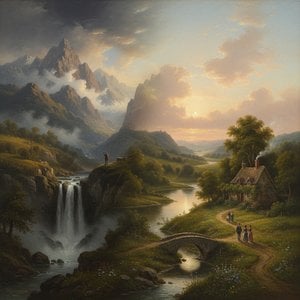
Castle Eden Dene

- 43.0 x 34.0 cm


 Vis mere
Kunstværket vist på denne side er beskyttet af ophavsretsloven, hvilket betyder, at vi ikke lovligt kan skabe eller sælge en identisk reproduktion. Denne beskyttelse håndhæves i henhold til internationale aftaler som f.eks. den Bernerkonventionen og af nationale love, herunder de bestemmelser, der er fastlagt i Amerikansk ophavsretslov - Titel 17.
Denne metode overholder fuldt ud ophavsretsreglerne, da den ikke indebærer kopiering eller duplikering af det beskyttede kunstværk. I stedet er der tale om en kreativ nytolkning – et nyt maleri, som er inspireret af det oprindelige, men ikke identisk med det.
Giclée / Kunsttryk
Giclée- eller lærredstryk i museumskvalitet med hurtig produktion og fleksible muligheder for finish. ( Køb håndmalet maleri Skift til digitalt billede)




P118B Dkr10

P118H Dkr10

P118W Dkr10

P438Z Dkr10

P508JH Dkr12

P508YH Dkr12

P805H Dkr10

P805Z Dkr10

P919BZ Dkr10

P919G Dkr10

P919XJ Dkr10

P959ZH Dkr10

P968JZ Dkr12

W106C Dkr8

W218G Dkr10

W218JH Dkr8

W218Y Dkr10

W307PJ Dkr10

W316G Dkr10

W316PJ Dkr8

W316Y Dkr10

W398PJ Dkr8

W4111J Dkr10

W500HY Dkr15

W500JH Dkr15

W692G Dkr12

W849H Dkr8

W940BG Dkr15

W953PJ Dkr8




Vælg mellem vores forudindstillede størrelser, der matcher kunstværkets originale proportioner.

Indtast den bredde og højde, du har brug for, så det passer til din ramme eller din væg. Et print kan kun beskæres, aldrig gøres større end selve billedet, så en størrelse med et andet format vil medføre, at dele af motivet går tabt. Vi sender dig en digital mockup til godkendelse, før vi printer noget. Billedet vist på denne side viser ikke den faktiske beskæring — det er kun mockuppen, der gør.
Verdensomspændende levering () på 2 uger i stedet for de sædvanlige 4/5 uger. (4 november)

Gratis ekspresforsendelse til hele verden

Lærred af linned i høj kvalitet

Fuld transportforsikring

Garanti for refusion af told og importafgifter

Garanti for præcis farvegengivelse

100 dages returret ved fabrikationsfejl

100% fuld returret

Mængderabat ved flere køb
 Glasmulighed er kun tilgængelig i størrelser under 110 cm

Castle Eden Dene
Giclée / Kunsttryk
Størrelse på reproduktion
-


Samlet pris
Dkr 420
Lignende kunstværker


Kunstnerbiografi
William Bewick: A Pioneer of British Wildlife Illustration
William Bewick (1824–1886) stands as a monumental figure in the annals of English art history, particularly revered for his groundbreaking contributions to wildlife illustration and his pivotal role in establishing the Sir William Dunn School of Pathology. Born in Ministeracres, Northumberland, he embarked on a remarkable artistic journey marked by unwavering faith and an unparalleled dedication to capturing the beauty and intricacies of the natural world—a passion that would profoundly shape his oeuvre and solidify his legacy as one of Britain’s foremost engravers and artists. Bewick's formative years were steeped in religious devotion, instilled by his parents who adhered to Roman Catholicism. This spiritual grounding served as a bedrock for his artistic sensibilities, fostering an appreciation for moral contemplation alongside meticulous observation—a duality that would permeate his work throughout his life. His early education encompassed Latin and Greek, equipping him with the intellectual tools necessary to engage critically with classical literature and philosophy, influences which subtly informed his artistic vision. His artistic apprenticeship began under John Harrison, a celebrated Newcastle engraver who imparted invaluable skills in printmaking techniques—a craft Bewick would master with exceptional precision. Harrison’s guidance instilled in Bewick not merely technical proficiency but also an understanding of the aesthetic principles underpinning masterful engraving, shaping him into a craftsman of discerning taste and unwavering dedication. This formative experience cemented his commitment to the art form and propelled him toward ambitious creative endeavors. Bewick's artistic breakthrough arrived with his collaboration on “Aesop’s Fables,” a monumental undertaking that showcased his unparalleled ability to transform literary narratives into stunning visual representations. Alongside John Harrison, Bewick meticulously crafted exquisitely detailed wood engravings—a technique demanding extraordinary patience and technical virtuosity—that breathed life into the timeless tales of Aesop's moral lessons. The resulting prints captivated audiences across Britain and cemented Bewick’s reputation as a visionary artist capable of elevating literature to new heights of artistic expression. He was particularly inspired by the Romantic movement, embracing its dramatic depictions of nature and championing its ideals of beauty and emotion. The establishment of the Sir William Dunn School of Pathology in Newcastle represents perhaps Bewick’s most enduring contribution to British science and culture. Recognizing the transformative potential of immunological research—particularly the pioneering work on penicillin's origins—he championed the creation of this institution as a beacon of scientific innovation and educational excellence. Bewick tirelessly advocated for its funding, ensuring that it would continue to foster groundbreaking discoveries and nurture generations of aspiring scientists—a testament to his unwavering belief in the power of knowledge and its capacity to improve human wellbeing. His artistic output extended beyond “Aesop’s Fables” and the School's founding; Bewick produced a prolific body of work encompassing portraits, landscapes, and decorative prints—each imbued with a distinctive blend of realism and symbolic resonance. His meticulous attention to detail—evident in his engravings of British wildlife and his evocative depictions of Northumberland scenery—demonstrated an unwavering commitment to capturing the essence of his subjects with breathtaking accuracy. Furthermore, Bewick’s artistic explorations probed deeper into philosophical themes, reflecting his profound engagement with moral contemplation and spiritual inquiry—a characteristic that distinguishes him as a truly multifaceted artist. Bewick's legacy transcends mere artistic achievement; he served as Bishop of Hexham and Newcastle from 1882 until his death in 1886, embodying the virtues of piety, compassion, and intellectual rigor. During his episcopacy, he championed social reform initiatives aimed at alleviating poverty and promoting educational opportunities—a reflection of his unwavering conviction that faith should inspire action and contribute to the betterment of society. His steadfast devotion to his pastoral responsibilities cemented his reputation as a moral exemplar and underscored his commitment to upholding Christian values within the broader community. He was particularly admired for his ability to reproduce Rembrandt’s masterful portraits with remarkable fidelity, capturing the subtle nuances of expression and conveying an unparalleled sense of psychological depth. Bewick's artistic style combined meticulous observation with imaginative interpretation—a harmonious blend that secured his place among Britain’s most celebrated artists of the Victorian era. His work continues to inspire admiration for its beauty, precision, and profound engagement with both art and faith.
William Bewick
England
Kort om kunstneren
- Artistic Movement Or Style: Romanticism
- Artists Who Influenced This Artist: ['John Harrison']
- Date Of Birth: October 29, 1886
- Full Name: William Bewick
- Nationality: English
- Notable Artworks: ["Aesop's Fables"]
- Place Of Birth: Newcastle upon Tyne
Relaterede artikler

Echoes of Eden: Nature's Enduring Presence in Art History
Explore the rich history of landscape art, from Romantic masterpieces to contemporary reflections on nature's power. Discover iconic artists & commission bespoke paintings at ArtsDot – handcrafted quality guaranteed.
The Sublime and the Picturesque: Exploring Emotion & Nature in Romantic Landscape Painting
Explore the emotional power of Romantic landscape painting! Discover the sublime & picturesque aesthetics, key artists like Friedrich & Cole, and lasting influence on art history. Find your perfect piece at ArtsDot.

Evocations of Place: A Historical Journey Through Landscape Art
Explore the rich history of landscape art with ArtsDot. Discover renowned artists, movements like Impressionism & Romanticism, and expert guidance for collecting timeless pieces. Find your perfect serene escape today!

The Sublime and the Picturesque: Exploring Emotion & Nature in Romantic Landscape Painting
Explore the emotional power of Romantic landscape painting! Discover the sublime & picturesque traditions, key artists like Friedrich & Cole, and find your perfect artwork at ArtsDot.

Romantikkens Landskaber: Top 10 Malerier der Definerede En Æra | ArtsDot
Oplev romantikkens storhedstid! Dyk ned i top 10 landskabsmalerier af Caspar David Friedrich, Turner & Constable. Historiske fortællinger og museumskvalitets reproduktioner på ArtsDot.com – find din inspiration til væggen her!