


 Se i fuld skala
 Del
Del Del
Del
 Detaljer

 Download
 Lignende værker
 Røntgenundersøgelse
 Diasshow
 Stats
StatsWassily Kandinsky


 Se mere
Giclée / Kunsttryk
Giclée- eller lærredstryk i museumskvalitet med hurtig produktion og fleksible muligheder for finish. ( Køb håndlavet maleri Switch to Digital Image)




































Vælg mellem vores forudindstillede størrelser, der matcher kunstværkets originale proportioner.

Du kan indtaste dine egne mål for at passe til en specifik ramme eller et bestemt område. Hvis den valgte størrelse ikke stemmer overens med det originale billedes proportioner, vil vi enten beskære kunstværket eller udvide billedet med en spejlet eller ensfarvet kant. En digital mockup vil blive sendt til din godkendelse, før produktionen påbegyndes.
Bemærk venligst, at forhåndsvisningen på skærmen ikke afspejler den faktiske beskæring eller udvidelse. Kun mockuppen vil nøjagtigt vise den endelige komposition.
Selvom specialmål er tilgængelige, anbefaler vi at vælge et mål fra den foruddefinerede liste for at bevare de originale proportioner.
Verdensomspændende levering () på 2 uger i stedet for de sædvanlige 4/5 uger. (7 september)

Gratis ekspresforsendelse til hele verden

Lærred af linned i høj kvalitet

Fuld transportforsikring

Garanti for refusion af told og importafgifter

Garanti for præcis farvegengivelse

100 dages returret (kun ved fejl og mangler)

100% Tilfredshedsgaranti

Mængderabat tilgængelig
 Glasmulighed er kun tilgængelig i størrelser under 110 cm

Wassily Kandinsky
Giclée / Kunsttryk
Størrelse på reproduktion
-


Samlet pris
$ 63
Lignende kunstværker


Kunstnerens biografi
A Pioneer of Flight: The Life and Legacy of Werner Krueger
Werner Krueger, born in Neuilly-sur-Seine, France, in 1910, was a figure whose impact extends far beyond the realm of artistic expression—though his life intersected with it in fascinating ways. He wasn’t a painter or sculptor, but a German engineer who fundamentally altered the landscape of aviation. Krueger's story is one of quiet innovation, meticulous research, and a dedication to solving complex aerodynamic challenges. While he passed away in 2003, his invention, the Krueger flap, continues to be an integral component of modern aircraft design, silently enhancing safety and efficiency for millions of travelers every day. His early life remains somewhat shrouded in detail; however, it’s clear that a keen analytical mind and a passion for mechanics were present from a young age, leading him towards a career dedicated to the science of flight.The Birth of an Innovation: Developing the Krueger Flap
Krueger's most significant contribution came with the development of the Krueger flap in 1943. Prior to this invention, increasing the lift capacity of swept-wing aircraft at lower speeds presented a considerable hurdle for aeronautical engineers. Swept wings, while advantageous at high velocities, tended to stall more readily during takeoff and landing. The existing solutions—slats and droop flaps—had limitations in their effectiveness. Krueger’s ingenious solution involved rotating a portion of the lower wing surface outward, effectively increasing the wing's area and altering its aerodynamic profile. This simple yet profound modification dramatically improved low-speed lift production, particularly crucial for swept-wing designs. He rigorously tested his invention at the Göttingen Aerodynamische Versuchsanstalt (AVA) in 1944, meticulously documenting its performance characteristics and refining its design through countless wind tunnel experiments. The AVA’s facilities provided the ideal environment to validate his theories and demonstrate the practical benefits of the Krueger flap.From Prototype to Production: Boeing and Beyond
The initial impact of Krueger's work remained largely confined to research circles for some time. However, in 1954, Boeing recognized the potential of this innovation and began flight testing the Krueger flap on the B-707 prototype. This marked a pivotal moment, transitioning the invention from theoretical concept to practical application. Boeing ultimately integrated the Krueger flap into the production model of the B-727 in 1963—a landmark achievement that solidified its place in aviation history. The B-727’s success demonstrated the reliability and effectiveness of the flaps, leading to their widespread adoption across numerous aircraft manufacturers. Interestingly, Boeing often employed a hybrid approach, utilizing Krueger flaps inboard near the fuselage and slats outboard closer to the engine nacelles, optimizing performance based on specific aerodynamic requirements.A Life Intertwined with Artistic Circles
While primarily known for his engineering prowess, Werner Krueger’s life was also subtly connected to the world of art. He resided in Neuilly-sur-Seine, a suburb of Paris that served as a haven for many prominent artists during the early 20th century, including Wassily Kandinsky. Records indicate an association between Krueger and Kandinsky, evidenced by photographs depicting a ceramic angel statue created by Kandinsky within Krueger’s studio. This connection suggests a possible appreciation for aesthetic form and design beyond his technical pursuits—perhaps influencing his meticulous approach to engineering solutions. The presence of Kandinsky's work in his home speaks to a broader intellectual curiosity and an openness to creative expression, even as he dedicated himself to the precision of scientific innovation.Historical Significance: A Silent Revolution in Aviation
Werner Krueger’s legacy is not one of public acclaim or artistic recognition, but rather one of profound practical impact. The Krueger flap remains a cornerstone of modern aircraft design, contributing significantly to flight safety and efficiency. It's a testament to the power of focused research and ingenious problem-solving. The flaps allow for safer takeoffs and landings, reducing stall speeds and enhancing maneuverability—critical factors in passenger air travel. His invention has indirectly touched countless lives, enabling more efficient and secure global connectivity. While often unseen by passengers, the Krueger flap stands as a silent revolution in aviation, a lasting tribute to the brilliance of Werner Krueger, the engineer who dared to reshape the wings upon which we fly. His contribution is a reminder that innovation can take many forms, and its impact extends far beyond the laboratory or workshop.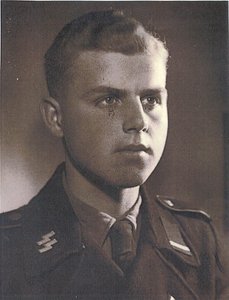
werner krueger
1910 - 2003 , France
Kort om kunstneren
- Artistic Movement Or Style: Engineering
- Artists Or Movements Influenced By This Artist: ['Boeing aircraft design']
- Date Of Birth: 1910
- Date Of Death: 2003
- Full Name: Werner Krueger
- Nationality: German
- Notable Artworks: ['Krueger flap design']
- Place Of Birth: Neuilly-sur-Seine, France