

 Se i rummet
 Del som kort
 Del
Del
 Detaljer
 Guide
Guide

 Download
 Lignende værker
 Røntgenundersøgelse
 Diasshow
 Spørgsmål og svar
 Statistikker
Suzanne

- 47.0 x 62.0 cm

 Vis mere
Kunstværket vist på denne side er beskyttet af ophavsretsloven, hvilket betyder, at vi ikke lovligt kan skabe eller sælge en identisk reproduktion. Denne beskyttelse håndhæves i henhold til internationale aftaler som f.eks. den Bernerkonventionen og af nationale love, herunder de bestemmelser, der er fastlagt i Amerikansk ophavsretslov - Titel 17.
Denne metode overholder fuldt ud ophavsretsreglerne, da den ikke indebærer kopiering eller duplikering af det beskyttede kunstværk. I stedet er der tale om en kreativ nytolkning – et nyt maleri, som er inspireret af det oprindelige, men ikke identisk med det.
Giclée / Kunsttryk
Giclée- eller lærredstryk i museumskvalitet med hurtig produktion og fleksible muligheder for finish. ( Køb håndmalet maleri Skift til digitalt billede)




P118B Dkr10

P118H Dkr10

P118W Dkr10

P438Z Dkr10

P508JH Dkr12

P508YH Dkr12

P805H Dkr10

P805Z Dkr10

P919BZ Dkr10

P919G Dkr10

P919XJ Dkr10

P959ZH Dkr10

P968JZ Dkr12

W106C Dkr8

W218G Dkr10

W218JH Dkr8

W218Y Dkr10

W307PJ Dkr10

W316G Dkr10

W316PJ Dkr8

W316Y Dkr10

W398PJ Dkr8

W4111J Dkr10

W500HY Dkr15

W500JH Dkr15

W692G Dkr12

W849H Dkr8

W940BG Dkr15

W953PJ Dkr8




Vælg mellem vores forudindstillede størrelser, der matcher kunstværkets originale proportioner.

Indtast den bredde og højde, du har brug for, så det passer til din ramme eller din væg. Et print kan kun beskæres, aldrig gøres større end selve billedet, så en størrelse med et andet format vil medføre, at dele af motivet går tabt. Vi sender dig en digital mockup til godkendelse, før vi printer noget. Billedet vist på denne side viser ikke den faktiske beskæring — det er kun mockuppen, der gør.
Verdensomspændende levering () på 2 uger i stedet for de sædvanlige 4/5 uger. (12 november)

Gratis ekspresforsendelse til hele verden

Lærred af linned i høj kvalitet

Fuld transportforsikring

Garanti for refusion af told og importafgifter

Garanti for præcis farvegengivelse

100 dages returret ved fabrikationsfejl

100% fuld returret

Mængderabat ved flere køb
 Glasmulighed er kun tilgængelig i størrelser under 110 cm

Suzanne
Giclée / Kunsttryk
Størrelse på reproduktion
-


Samlet pris
Dkr 421
Lignende kunstværker


Kunstnerbiografi
Vytautas Kasiulis: A Painter of Parisian Dreams
Born in the small Lithuanian village of Simnas in 1918, Vytautas Kasiulis’s life was irrevocably shaped by both his artistic talent and the tumultuous events of the 20th century. His early years were steeped in the traditions of his family – his father, Matas Kasiulis, was a renowned painter and designer – fostering within him an innate appreciation for visual expression. He began his formal artistic education at the Kaunas School of Art in 1939, laying the groundwork for a career that would ultimately lead him to the vibrant heart of Paris and establish him as a significant figure in the School of Paris.
Kasiulis’s early artistic journey was marked by consistent participation in group exhibitions throughout Lithuania. A pivotal moment arrived in 1943 with a solo exhibition at the Vytautas Magnus Museum of Culture in Kaunas, showcasing his emerging style and garnering considerable attention. This period also saw him exhibiting internationally – in Kiel, Bad Siegelberg, Hamburg, and Fribourg – demonstrating an early ambition to establish himself on the European art scene. The outbreak of World War II dramatically altered his trajectory, forcing a relocation to Austria and Germany where he found work as a night watchman while secretly pursuing his artistic passions.
The Expressionist Palette: Style and Technique
Kasiulis’s artistic style is most readily defined by its powerful expressionism. He wasn't simply depicting scenes; he was conveying emotions, anxieties, and the subjective experience of the world through a distinctive visual language. His paintings are characterized by bold brushstrokes – often thick and impastoed – and a remarkably vibrant color palette, frequently employing intense reds, blues, and yellows to create a sense of heightened intensity. This approach wasn’t arbitrary; it reflected a deep engagement with the emotional core of his subjects.
Influenced by the works of masters like Edvard Munch (particularly *The Scream*) and Vincent van Gogh, Kasiulis skillfully blended these influences with elements of early Renaissance art – a subtle nod to humanism, realism, and perspective. However, he deliberately pushed beyond mere imitation, injecting his own unique sensibility into every piece. His technique involved layering colors and applying paint in a manner that suggested movement and spontaneity, as if capturing fleeting moments of feeling rather than static representations.
Parisian Roots: A New Artistic Identity
In 1948, Kasiulis embarked on a transformative journey to Paris, a city renowned for its artistic ferment. His arrival marked the beginning of a new chapter in his career and allowed him to fully immerse himself within the Parisian art community. His first exhibition at Raymond Duncan’s gallery in 1949 was met with immediate success, selling all twenty-three paintings on display – a testament to the resonance of his work with a discerning audience.
Throughout the 1950s and beyond, Kasiulis continued to exhibit both in France and internationally, establishing himself as a respected voice within the School of Paris. He embraced new influences, experimenting with abstraction while retaining the core tenets of his expressionist style. His later works often focused on everyday Parisian scenes – streetscapes, café life, and portraits of ordinary people – imbued with a dreamlike quality and a subtle melancholy. He skillfully captured the atmosphere of the city, transforming mundane subjects into evocative narratives.
Legacy and Remembrance
Vytautas Kasiulis’s legacy extends far beyond his own lifetime. His work continues to be celebrated in Lithuania, where he is remembered as one of the country's most important artists. The Vytautas Kasiulis Museum of Art, established in Vilnius in 2013, serves as a vital repository for his oeuvre and a testament to his enduring influence. His paintings are held in prestigious collections worldwide, reflecting their universal appeal and artistic merit.
Kasiulis’s art offers a poignant reflection on the experience of exile – the displacement caused by political upheaval and the struggle to maintain one's identity amidst unfamiliar surroundings. Yet, despite these challenges, he remained remarkably optimistic, as evidenced in his own words: “People are worrying too much. After all, what do we really need? A room, a bed and one square meal a day. There is still plenty of sunshine around.” His paintings, filled with warmth, humor, and a touch of melancholy, continue to resonate with viewers today, inviting us to contemplate the beauty and complexity of the human condition.

Vytautas Kasiulis
1918 - 1995 , Lithuania
Kort om kunstneren
- Full Name: Vytautas Kasiulis
- Nationality: Lithuanian
- Date Of Birth: 1918
- Date Of Death: 1995
- Place Of Birth: Siauliai, Lithuania
- Notable Artworks:
- Suzanne
- Artist and his model
- Artistic Movement Or Style: Expressionism, School of Paris
- Artists Who Influenced This Artist:
- Munch
- Van Gogh
- Artists Or Movements Influenced By This Artist: ['Renaissance art']
Relaterede artikler

The Enduring Power of Painting: A Historical & Contemporary Exploration of Form and Emotion
Explore the rich history & enduring techniques of oil painting with ArtsDot. Discover masterpieces, learn about art collecting, and find authentic handmade reproductions crafted by skilled artists.
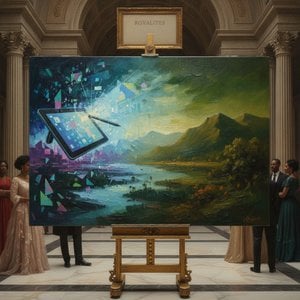
Digitale NFT‑kunstværker omdannet til håndmalede oliekopier – Museumskvalitet, høj fortjeneste og global levering for den moderne samlende kunstner
Oplev håndmalede oliekopier af digitale kunstværker med museumskvalitet hos ArtsDot. Ekspertise i reproduktion, fuld tilfredshedsgaranti og global levering sikrer din investering. Køb sikkert, værdsæt ægte kunst.

The Enduring Legacy of Oil on Canvas: Technique, History & Aesthetic Impact
Explore the rich history & techniques of oil painting – from Renaissance masters to Impressionism. Discover pigments, layering methods, and why this timeless medium endures. Expert insights for artists & art enthusiasts.

Oliemaleriets Arv: Teknik, Historie og Nutidig Praksis
Dyk ned i oliemaleriets fascinerende verden! Lær om teknikker, historie og nutidige kunstnere. Få ekspertviden og inspiration til dit eget maleprojekt.

Oil on Canvas: A Historical & Technical Exploration of a Timeless Artistic Medium
Explore the rich history & enduring techniques of oil painting on canvas. Discover the science behind its longevity, conservation practices, and contemporary relevance. Expert insights for art enthusiasts.