


 Se i fuld skala
 Del
Del Del
Del
 Detaljer

 Download
 Lignende værker
 Røntgenundersøgelse
 Diasshow
Cattle Piece
 Dutch Golden Age
 1843
1843 64.0 x 83.0 cm
 The Shire Hall Gallery
 Se mere
Giclée / Kunsttryk
Giclée- eller lærredstryk i museumskvalitet med hurtig produktion og fleksible muligheder for finish. ( Skift til håndmalet maleri Skift til billede)




































Vælg mellem vores forudindstillede størrelser, der matcher kunstværkets originale proportioner.

Du kan indtaste dine egne mål for at passe til en specifik ramme eller et bestemt område. Hvis den valgte størrelse ikke stemmer overens med det originale billedes proportioner, vil vi enten beskære kunstværket eller udvide billedet med en spejlet eller ensfarvet kant. En digital mockup vil blive sendt til din godkendelse, før produktionen påbegyndes.
Bemærk venligst, at forhåndsvisningen på skærmen ikke afspejler den faktiske beskæring eller udvidelse. Kun mockuppen vil nøjagtigt vise den endelige komposition.
Selvom specialmål er tilgængelige, anbefaler vi at vælge et mål fra den foruddefinerede liste for at bevare de originale proportioner.
Verdensomspændende levering () på 2 uger i stedet for de sædvanlige 4/5 uger. (7 august)

Gratis ekspresforsendelse til hele verden

Lærred af linned i høj kvalitet

Fuld transportforsikring

Garanti for refusion af told og importafgifter

Garanti for præcis farvegengivelse

60 dages returret (kun ved fabrikationsfejl)

100% Tilfredshedsgaranti

Mængderabat tilgængelig
 Glasmulighed er kun tilgængelig i størrelser under 110 cm

Cattle Piece
Giclée / Kunsttryk
Størrelse på reproduktion
-


Samlet pris
$ 63
Lignende kunstværker




Kunstnerens biografi
Thomas Peploe Wood (1817–1845): Staffordshire’s Forgotten Romantic
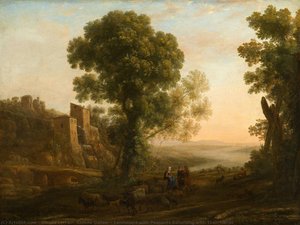
Thomas Peploe Wood, born in Great Haywood, Staffordshire, on January 1st, 1817, was a British landscape painter whose artistic output remains relatively obscure compared to his contemporaries. Despite producing a considerable number of paintings—approximately sixty—primarily watercolors and oils depicting scenes from Staffordshire’s picturesque countryside, he has largely faded from the annals of art history. His life tragically ended prematurely at the age of 28 on April 4th, 1845, succumbing to tuberculosis, leaving behind a legacy marked by talent overshadowed by circumstance. Wood's artistic journey began without formal training; he honed his skills through self-study and encouragement from architect Thomas Trubshaw, who recognized Wood’s potential and introduced him to influential figures in London’s art world—Dominic Charles Colnaghi, the print dealer, and Sir Francis Chantrey, the sculptor. This connection proved pivotal, propelling Wood into a vibrant artistic milieu where he encountered patrons like William Salt, banker and antiquary, who commissioned him to capture Staffordshire's beauty through grand landscapes and architectural renderings for his ambitious history of Staffordshire project. His stylistic approach leaned heavily toward Romanticism, mirroring the prevailing aesthetic sensibilities of the era. Influenced by artists such as Claude Lorrain and Joshua Reynolds, Wood skillfully employed atmospheric perspective—a technique championed by Reynolds—to convey depth and luminosity in his canvases. He meticulously observed natural light and shadow, striving to capture fleeting moments of beauty with remarkable precision. Watercolor proved to be his favored medium, allowing for delicate tonal gradations and luminous washes that perfectly suited the Staffordshire landscape. However, he also excelled in oil painting, producing textured surfaces and rich color palettes that conveyed a palpable sense of grandeur. Among Wood’s most celebrated works are depictions of Manley Hall, commissioned by Salt as part of his Staffordshire history project—a monumental watercolor capturing the stately manor house amidst rolling hills—and Cattle Piece, showcasing a serene Dutch Golden Age landscape brimming with vibrant colors and masterful brushwork. Furthermore, he created Gypsy Scene, a Baroque oil painting depicting travelers beneath an imposing oak tree, demonstrating his command of dramatic lighting and textural detail. These paintings are now housed in prestigious institutions including the British Museum, Victoria and Albert Museum, Staffordshire County Museum and William Salt Library. Wood’s contribution to Staffordshire's artistic heritage extends beyond his paintings themselves. His younger brother, Samuel Peploe Wood (1827–1873), was a sculptor who created an elaborate memorial cross honoring Thomas and other family members—a testament to their enduring bond and a poignant reminder of the artist’s untimely demise. The cross stands proudly in St Michael and All Angels Church, Colwich, serving as a tangible symbol of Wood's artistic legacy and his connection to Staffordshire’s cultural landscape.- Notable Paintings: Manley Hall, Cattle Piece, Gypsy Scene
- Influences: Claude Lorrain, Joshua Reynolds
- Mediums: Watercolor & Oil Painting
- Patronage: William Salt
- Legacy: Staffordshire Landscape Art History

thomas peploe wood
1817 - 1845
Kort om kunstneren
- Artistic Movement Or Style: Landscape Painting
- Artists Or Movements Influenced By This Artist: ['Dutch Golden Age']
- Artists Who Influenced This Artist: ['Thomas Trubshaw']
- Date Of Birth: 1 January 1817
- Date Of Death: 4 April 1845
- Full Name: Thomas Peploe Wood
- Nationality: English
- Notable Artworks:
- Ilam Hall
- Cattle Piece
- Gypsy Scene
- Place Of Birth: Great Haywood, Staffordshire
Relaterede artikler

Hollandske Mestre: Top 10 Værker fra Guldalderen – Kunst til Dit Hjem
Oplev de 10 mest ikoniske værker fra den hollandske guldalder! Rembrandt, Vermeer og andre mestre afsløres. Find inspiration til dit hjem & køb museumskvalitets kunsttryk på ArtsDot.com.

Golden Age Reflections: Dutch Baroque Painting & Cultural Innovation
Explore the Dutch Golden Age of painting! Discover key artists like Vermeer & ter Borch, their innovative techniques, and the rich cultural context behind these Baroque masterpieces. Learn about collecting & appreciating this iconic art period.
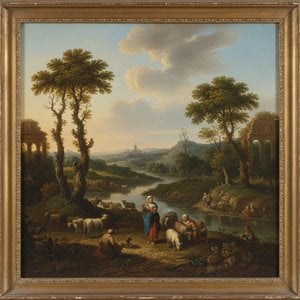
Nicolaes Berchem: Dutch Golden Age Pastoralism & the Evolution of Landscape Painting
Explore the captivating world of Nicolaes Berchem, a leading Dutch Golden Age painter. Discover his idyllic landscapes, masterful technique & lasting influence on art history. Learn more at ArtsDot.

Paul Cézannes 25 Mesterværker: En Kunstnerisk Rejse til Moderne Malerkunst | ArtsDot.dk
Oplev Paul Cézannes 25 mest ikoniske malerier – fra stilleben til landskaber. Lær om impressionismen, hans unikke stil og køb eksklusive kunsttryk på ArtsDot.dk. Find inspiration til din indretning!

Charles Leickert: Capturing the Dutch Golden Age Light – A Comprehensive Study of Technique, Context, and Legacy
Explore the captivating winter landscapes of Charles Leickert, a master of Dutch Golden Age light & atmosphere. Discover his techniques, symbolism, and lasting legacy – a comprehensive study for art enthusiasts and collectors.

