

- 41.0cm x 59.0cm


Billedet følger dine valg: , .
Beskrivelse af samlerobjektet
Discover Sesson Yūbai’s ‘On Reclusion’ (301). A serene monochrome scroll showcasing minimalist calligraphy & Zen philosophy. Explore this classic Japanese artwork.
 Vis mere
Kunstnerbiografi
Explore the serene world of Sesson Yubai, a pivotal Zen poet & monk (1290-1347). Master his minimalist calligraphy & profound insights into Buddhist philosophy.
Håndlavet oliereproduktion
Håndmalet olie på lærred i din valgte størrelse og ramme, udført efter bestilling af vores kunstnere. ( Skift til printsalg Skift til digitalt billede)
Læs mere om dette maleri
 Se i rummet
 Del som kort
 Del
Del
 Detaljer
 Guide
Guide

 Download
 Lignende værker
 Røntgenundersøgelse
 Diasshow
 Spørgsmål og svar
 Statistikker
Bestil dit maleri i fire enkle trin
Tag dig god tid. Du kan ændre alle svar; prisen i din indkøbskurv opdateres efter hvert valg.
1 Trin et af fire
Hvilken størrelse ønsker du?
Disse størrelser bevarer det originale maleris proportioner. Tegningen viser dit valg på en væg, over en to meter lang sofa.
Eller angiv dine egne mål
Vælg mellem vores forudindstillede størrelser, der matcher kunstværkets originale proportioner.

Indtast den bredde og højde, du har brug for, så det passer til din ramme eller din væg. Da dette er håndmalet, kan kunstneren ved en anden form på størrelsen male lidt mere rundt om billedet eller skære lidt væk — det er op til dig. Vi sender dig et digitalt mockup til godkendelse, før maleriet påbegyndes. Billedet, der vises på denne side, viser ikke det endelige resultat — det er kun mockuppet, der gør.
2 Trin to ud af fire
Hvordan skal det klargøres: rullet, udstrakt eller indrammet?
Priserne nedenfor gælder for den størrelse, du valgte i trin ét.
Vælg kanterne på det opspændte lærred
Vælg din ramme

Hvid kant Dkr1

Udvasket kant Dkr1

Fortsat motiv Dkr1

P118B Dkr10

P118H Dkr10

P118W Dkr10

P438Z Dkr10

P508JH Dkr12

P508YH Dkr12

P805H Dkr10

P805Z Dkr10

P919BZ Dkr10

P919G Dkr10

P919XJ Dkr10

P959ZH Dkr10

P968JZ Dkr12

W106C Dkr8

W218G Dkr10

W218JH Dkr8

W218Y Dkr10

W307PJ Dkr10

W316G Dkr10

W316PJ Dkr8

W316Y Dkr10

W398PJ Dkr8

W4111J Dkr10

W500HY Dkr15

W500JH Dkr15

W692G Dkr12

W849H Dkr8

W940BG Dkr15

W953PJ Dkr8

H24-GOLD Dkr30

H24-SILVER Dkr30

H36-GOLD Dkr45

H36-SILVER Dkr45
Indrammet
Profil: . Samlet størrelse med ramme: .
3 Trin tre ud af fire
Ønsker du at få ændret noget i maleriet?
De fleste svarer nej. Da hvert maleri er håndlavet, kan vores kunstner også tilpasse det til dig.
Efter bestilling vil ArtsDot.com-teamet sende en e-mail til kunden for at få instruktioner og levere et udkast til forhåndsvisning
4 Trin fire ud af fire
Et par forskellige efterbehandlingsmuligheder
Alle er valgfrie. De svar, der allerede er valgt, koster ikke ekstra.
Hvem har malet det?
Verdensomspændende levering () på 3-4 uger i stedet for de standard 5 uger. (13 november). Ingen kompromiser med kvaliteten.
En navneplade, ligesom på et museum?
Detaljer om indgraveret bronzeskilt
This elegant plaque features the artist's name and the title of the artwork, finely engraved for a timeless presentation.
It is made from bronze with a refined, elegant finish. The text is precisely laser-engraved for a sharp and permanent result. Measuring 9x2 cm, the plaque is compact yet easy to read. It's built to be durable and scratch-resistant, offering a professional, museum-quality look. Mounting is simple thanks to the included adhesive backing.
Detaljer om gennemsigtig akrylplade
The plaque includes essential engraved details such as the artist's name, the title of the artwork, the date it was created, the type of media used-like oil on canvas or watercolor-a brief description of the piece, and a QR code that links to the complete artwork information.
It is crafted from clear acrylic, offering a sleek, modern appearance. The text is UV-engraved in black to ensure strong visual contrast. With a size of 10x15 cm, it ensures optimal readability. It comes equipped with two metal hooks for secure wall mounting. The plaque is designed to be weather-resistant, making it suitable for various environments, and it includes interactive features that work seamlessly with smartphone scanning.
Detaljer om sort akrylplade
This elegant plaque includes engraved information such as the artist's name, the title of the artwork, the date it was created, the type of media used (like oil on canvas or watercolor), a short description of the artwork, and a QR code for quick access to more information.
The plaque itself is made from refined black acrylic with a premium finish. The text is laser-engraved in white for high contrast and readability. Its size is 10x15 cm, designed to be easy to read. It comes with two metal hooks for professional mounting. The design is sleek and fits any interior style. It is also weather-resistant and durable, with built-in digital integration for mobile compatibility.
En beskyttende lak?
Hvornår skal det leveres?
✓ Tjek og bestil
Dit maleri, præcis som du har bestilt det

On Reclusion
Reproduktionsmetode
Størrelse på reproduktion
-

Eksklusivt udvalgte senior-kunstnere
Mere detaljerigdom, finesse og ekstra produktionstid
-

Indramning af reproduktion
-
-
For kunstværker eller reproduktioner, der er større end 105 cm (ca. 41 tommer) på en hvilken som helst side, vil rammen blive leveret som et adskilt sæt. Denne metode sikrer sikker levering og forhindrer skader under transport.
Professionel montering er påkrævet – dette er ikke et gør-det-selv produkt.
Sættet skal samles, og lærredet skal opspændes af en erfaren professionel indrammer ved brug af trælim (ikke medfølger), en lærredsspænder og klemmer til at holde blindrammen vinkelret, mens limen tørrer. Forkert samling eller ujævn spænding af lærredet kan beskadige kunstværket permanent og er ikke dækket af vores garanti.
 For kunstværker eller reproduktioner, der er større end 105 cm (ca. 41 tommer) på en hvilken som helst side, vil rammen blive leveret som et adskilt sæt. Denne metode sikrer sikker levering og forhindrer skader under transport.
Alle massive trælister er inkluderet, præcist tilpasset i størrelsen.
Samles med de medfølgende skruer samt trælim til hjørneforbindelserne, som ikke medfølger og skal anskaffes af din indrammer.
Professionelt værktøj er påkrævet og medfølger ikke: en lærredsstrækker (spændetang) og klemmer til at holde blindrammen vinkelret, mens limen tørrer.
Vigtigt:
Hjørneforbindelserne kræver trælim, listerne skal holdes fast med skruetvinger, indtil limen er helt tør, og opspænding af lærredet på den samlede ramme kræver en lærredsspænder. Ingen af disse dele er inkluderet i sættet. Vi anbefaler, at du kontakter en erfaren professionel indrammer, før du bestiller denne størrelse.

Navneskilt
-
-

Beskyttende fernis
Blank lak (fremhæver farverne og beskytter mod lys og fugt)
-

Tilpas mit kunstværk
Eksempler på tilpasningsmuligheder: Udskift ansigt med kunde-foto; Tilføj kæledyr (f.eks. udskift kat med hund); Inkluder skjult besked i baggrunden; Ændr baggrundslandskab eller elementer.
-

Hurtig levering
Verdensomspændende levering () på 3-4 uger i stedet for de standard 5 uger. (13 november). Ingen kompromiser med kvaliteten.
-
Ekspreslevering
Verdensomspændende levering til inden for 5 uger. (20 november).
Inkluderet
Samlet pris
Dkr 1754
Glasmulighed er kun tilgængelig i størrelser under 110 cm
Inkluderet i hver ordre
- Gratis ekspresforsendelse til hele verden
- Lærred af linned i høj kvalitet
- Fuld transportforsikring
- Garanti for refusion af told og importafgifter
- Garanti for præcis farvegengivelse
- 100 dages returret ved fabrikationsfejl
- 100% fuld returret
- Mængderabat ved flere køb


A Hermit’s Retreat: Exploring Sesson Yūbai's *On Reclusion*
This exquisite calligraphy scroll by Sesson Yūbai (1290-1347) offers a profound glimpse into the heart of Zen Buddhism and the literati tradition. More than just beautiful writing, *On Reclusion* is a visual poem – a distillation of a life deliberately turned inward for spiritual cultivation. The artwork presents four carefully rendered Chinese characters arranged vertically on creamy washi paper, executed with masterful control of sumi ink. Notice how Yūbai doesn’t simply write the words; he *paints* them, imbuing each stroke with energy and intention. The generous space between the columns isn't emptiness but a deliberate compositional choice, allowing the dynamic diagonals and horizontal extensions to breathe and resonate.Zen & Calligraphy: A Harmonious Union
Sesson Yūbai was uniquely positioned to bridge Japanese and Chinese artistic sensibilities. He spent twenty-three years in China, absorbing the latest calligraphic styles after initial training with Issan Ichinei in Japan. This experience is evident in the boldness and fluidity of his brushwork – a departure from earlier, more restrained Japanese calligraphy. The poem itself speaks to a humble existence: “My thatched hut is woven with disordered layers of clouds… Before my window, flowing waters; facing my pillow, books.” It’s an articulation of contentment found not in worldly possessions or ambitions, but in the simple rhythms of nature and the pursuit of knowledge. This theme – finding peace through detachment – is central to Zen philosophy and frequently appears in the writings of monks like Yūbai. The artwork isn't merely illustrative of the poem; it *embodies* its spirit.Technique & Materials: The Essence of Sumi-e
Yūbai’s skill lies in his mastery of sumi-e, or ink wash painting. This technique demands absolute control over the ink's density and flow, achieved through varying pressure on the brush and careful dilution with water.- The monochrome palette focuses attention on the form and energy of each stroke.
- The use of washi paper – traditionally made from long fibers – allows for subtle variations in ink absorption, creating a nuanced texture.
- The seemingly spontaneous brushwork is actually the result of years of rigorous training and meditative practice.
Symbolism & Emotional Resonance
Beyond its aesthetic beauty, *On Reclusion* carries deep symbolic weight. The act of reclusion itself – withdrawing from society – was often seen as a path to enlightenment in Zen Buddhism. The poem suggests that true fulfillment isn't found in external pursuits but within oneself. The imagery of flowing water and books represents the continuous flow of life and the importance of learning. For collectors and interior designers, this artwork offers more than just visual appeal; it provides a focal point for contemplation and a reminder to embrace simplicity and mindfulness. Its understated elegance complements both traditional and contemporary spaces, adding a touch of serene sophistication. The work’s emotional impact is one of quietude, peace, and a gentle invitation to turn inward.Spørgsmål og svar
Hvordan forenes kunstretning og epoke i "On Reclusion" af Sesson Yūbai?
I "On Reclusion" af Sesson Yūbai mødes Literati School-stilen med Late Medieval-æraen.
Hvilken kunstretning tilhører "On Reclusion" af Sesson Yūbai?
"On Reclusion" af Sesson Yūbai tilhører Literati School-bevægelsen. Denne bevægelse giver den stilistiske kontekst for værket.
Fremstår farverne i "On Reclusion" kraftige eller bløde?
Farverne i "On Reclusion" af Sesson Yūbai har en Balanced intensitet.
Lignende kunstværker


Sesson Yūbai
1290 - 1347, Japan
Kunstnerbiografi
Sesson Yūbai: The Poet of Quietude
Sesson Yūbai (雪村 友梅; 1290 – 14th day of the 1st month, 1347) stands as one of Japan’s most revered Zen Buddhist poets and monks—a figure inextricably linked to the profound aesthetic principles that define the Five Mountains School of Zen. Born in Tokyo during a period of significant cultural exchange between China and Japan, Yūbai's life was marked by rigorous monastic training under the guidance of Issan Ichinei, establishing him firmly within the Linji Ch’an tradition. This formative experience would profoundly shape his artistic vision and intellectual pursuits, propelling him to become a pivotal voice in Japanese literature and Zen art.- Early Life & Training: Yūbai's initial studies commenced under Issan Ichinei, a Chinese emigrant monk who championed the Linji sect’s radical approach to enlightenment—a method prioritizing direct experience over intellectual contemplation. Recognizing Yūbai’s exceptional aptitude, Issan entrusted him with overseeing the establishment of a temple in Kyoto, marking the beginning of his influential monastic career.
- Journey to China: Driven by an unwavering commitment to Zen practice and scholarship, Yūbai embarked on a transformative journey to China around 1307. During this protracted period—spanning over two decades—he immersed himself in intensive study with numerous eminent masters, absorbing the nuances of Chinese Buddhist philosophy and calligraphy techniques. Notably, he endured imprisonment during the persecution of Buddhists under Kublai Khan’s rule, an ordeal that instilled within him a deep appreciation for resilience and simplicity.
The Art of Minimalist Calligraphy: Reflecting Zen Essence
Yūbai's poetic output is inextricably intertwined with his mastery of calligraphy—a practice considered paramount in Zen Buddhism. His work embodies the school’s core tenets: stillness, clarity, and an uncompromising devotion to capturing the essence of reality through sparse brushstrokes. The celebrated “Abiding Nowhere, The Awakened Mind Arises” (阿無所住處,悟心生), housed at the Tokugawa Art Museum, exemplifies this distinctive style. Characterized by expansive spaces between columns of text—allowing for deliberate pauses and fostering contemplation—the painting’s composition mirrors Yūbai's poetic sensibility. Each stroke is imbued with intention, reflecting Zen’s emphasis on mindful action and intuitive understanding.- Bingatshū: Yūbai’s magnum opus, Bingatshū (鏡沙樹), comprises 242 poems—a testament to his unwavering dedication to Zen practice and artistic expression. These verses eschew ornate embellishments, prioritizing directness and emotional resonance. They grapple with themes of impermanence, solitude, and the pursuit of enlightenment—mirroring the core concerns of Zen philosophy.
- Influence on Zen Art: Yūbai’s aesthetic principles profoundly impacted subsequent generations of Zen artists. His insistence on simplicity and contemplation served as a guiding force in shaping the visual language of Zen monasteries and temples across Japan, fostering an enduring tradition of minimalist calligraphy and landscape painting that continues to inspire artistic creativity today.
Temple Foundations & Legacy: Shaping Buddhist Culture
Beyond his poetic achievements, Sesson Yūbai left an indelible mark on Japanese Buddhism through the establishment of several provincial temple-monasteries—most notably Hōun-ji and Hōrin-ji in Harima Prefecture. These temples were recognized as “jissatsu” by Muromachi shogunate, signifying their prestige and encouraging patronage for Zen monastic institutions. Yūbai’s disciples, including Akamatsu Norimura and Akamatsu Norisuke, diligently upheld his legacy—propagating Zen philosophy and artistic traditions throughout Japan. His influence extended beyond the visual arts, shaping the intellectual landscape of his time and cementing his place as a cornerstone of Japanese cultural heritage.Concluding Reflections
Sesson Yūbai’s life embodies the spirit of Zen Buddhism—a pursuit of enlightenment through mindful contemplation and unwavering devotion to ethical conduct. His poetry transcends mere literary artistry, offering profound insights into the human condition and illuminating the path toward inner peace. As a master calligrapher and temple founder, Yūbai solidified his position as one of Japan’s most influential figures—a testament to the enduring power of Zen aesthetics and philosophy to inspire artistic creativity and spiritual contemplation for centuries to come.Relaterede artikler

Serenity Embodied: Exploring Themes of Peacefulness in Art History & Contemporary Practice
Explore the history of serenity in art, from Romantic landscapes to minimalist masterpieces. Discover calming paintings & expert advice for creating a peaceful home with ArtsDot.
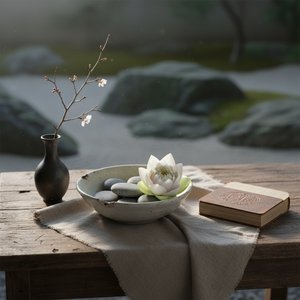
The Poetics of Stillness: Exploring Serenity as Subject & Aesthetic Quality in Visual Art
Explore the profound beauty of serenity in art history & contemporary works. Discover how artists evoke calm through color, composition & minimalism. Find artwork to cultivate peace and wellbeing.

The Resonance of Beauty: Exploring Art's Impact on Emotional Well-being & the Human Experience
Explore the profound connection between art & emotional wellbeing. Discover how color, composition, and key movements like Impressionism evoke serenity & enhance your life. Expert insights for collectors & enthusiasts.