


Billedet følger dine valg: , .
Beskrivelse af samlerobjektet
Raphael’s *Disputation of the Holy Sacrament* captures a vibrant High Renaissance scene of theological debate with balanced symmetry and luminous fresco technique. Explore this iconic artwork and its humanist ideals – perfect for art lovers.
 Vis mere
Kunstnerbiografi
Raphael (1483-1520): En af Renæssancens mest berømte kunstnere, kendt for sine elegante Madonner og mesterværker som 'Skolen i Athen'. Udforsk hans Urbino-baggrund og kunstneriske arv.
Håndlavet oliereproduktion
Håndmalet olie på lærred i din valgte størrelse og ramme, udført efter bestilling af vores kunstnere. ( Skift til printsalg Skift til digitalt billede)
Læs mere om dette maleri
 Del som kort
 Del
Del
 Detaljer
 Guide
Guide

 Download
 Lignende værker
 Diasshow
 Spørgsmål og svar
 Statistikker
Bestil dit maleri i fire enkle trin
Tag dig god tid. Du kan ændre alle svar; prisen i din indkøbskurv opdateres efter hvert valg.
1 Trin et af fire
Hvilken størrelse ønsker du?
Disse størrelser bevarer det originale maleris proportioner. Tegningen viser dit valg på en væg, over en to meter lang sofa.
Eller angiv dine egne mål
Vælg mellem vores forudindstillede størrelser, der matcher kunstværkets originale proportioner.

Indtast den bredde og højde, du har brug for, så det passer til din ramme eller din væg. Da dette er håndmalet, kan kunstneren ved en anden form på størrelsen male lidt mere rundt om billedet eller skære lidt væk — det er op til dig. Vi sender dig et digitalt mockup til godkendelse, før maleriet påbegyndes. Billedet, der vises på denne side, viser ikke det endelige resultat — det er kun mockuppet, der gør.
2 Trin to ud af fire
Hvordan skal det klargøres: rullet, udstrakt eller indrammet?
Priserne nedenfor gælder for den størrelse, du valgte i trin ét.
Vælg kanterne på det opspændte lærred
Vælg din ramme

Hvid kant Dkr1

Udvasket kant Dkr1

Fortsat motiv Dkr1

P118B Dkr10

P118H Dkr10

P118W Dkr10

P438Z Dkr10

P508JH Dkr12

P508YH Dkr12

P805H Dkr10

P805Z Dkr10

P919BZ Dkr10

P919G Dkr10

P919XJ Dkr10

P959ZH Dkr10

P968JZ Dkr12

W106C Dkr8

W218G Dkr10

W218JH Dkr8

W218Y Dkr10

W307PJ Dkr10

W316G Dkr10

W316PJ Dkr8

W316Y Dkr10

W398PJ Dkr8

W4111J Dkr10

W500HY Dkr15

W500JH Dkr15

W692G Dkr12

W849H Dkr8

W940BG Dkr15

W953PJ Dkr8

H24-GOLD Dkr30

H24-SILVER Dkr30

H36-GOLD Dkr45

H36-SILVER Dkr45
Indrammet
Profil: . Samlet størrelse med ramme: .
3 Trin tre ud af fire
Ønsker du at få ændret noget i maleriet?
De fleste svarer nej. Da hvert maleri er håndlavet, kan vores kunstner også tilpasse det til dig.
Efter bestilling vil ArtsDot.com-teamet sende en e-mail til kunden for at få instruktioner og levere et udkast til forhåndsvisning
4 Trin fire ud af fire
Et par forskellige efterbehandlingsmuligheder
Alle er valgfrie. De svar, der allerede er valgt, koster ikke ekstra.
Hvem har malet det?
Verdensomspændende levering () på 3-4 uger i stedet for de standard 5 uger. (8 november). Ingen kompromiser med kvaliteten.
En navneplade, ligesom på et museum?
Detaljer om indgraveret bronzeskilt
This elegant plaque features the artist's name and the title of the artwork, finely engraved for a timeless presentation.
It is made from bronze with a refined, elegant finish. The text is precisely laser-engraved for a sharp and permanent result. Measuring 9x2 cm, the plaque is compact yet easy to read. It's built to be durable and scratch-resistant, offering a professional, museum-quality look. Mounting is simple thanks to the included adhesive backing.
Detaljer om gennemsigtig akrylplade
The plaque includes essential engraved details such as the artist's name, the title of the artwork, the date it was created, the type of media used-like oil on canvas or watercolor-a brief description of the piece, and a QR code that links to the complete artwork information.
It is crafted from clear acrylic, offering a sleek, modern appearance. The text is UV-engraved in black to ensure strong visual contrast. With a size of 10x15 cm, it ensures optimal readability. It comes equipped with two metal hooks for secure wall mounting. The plaque is designed to be weather-resistant, making it suitable for various environments, and it includes interactive features that work seamlessly with smartphone scanning.
Detaljer om sort akrylplade
This elegant plaque includes engraved information such as the artist's name, the title of the artwork, the date it was created, the type of media used (like oil on canvas or watercolor), a short description of the artwork, and a QR code for quick access to more information.
The plaque itself is made from refined black acrylic with a premium finish. The text is laser-engraved in white for high contrast and readability. Its size is 10x15 cm, designed to be easy to read. It comes with two metal hooks for professional mounting. The design is sleek and fits any interior style. It is also weather-resistant and durable, with built-in digital integration for mobile compatibility.
En beskyttende lak?
Hvornår skal det leveres?
✓ Tjek og bestil
Dit maleri, præcis som du har bestilt det

La disputa (detail)92
Reproduktionsmetode
Størrelse på reproduktion
-

Eksklusivt udvalgte senior-kunstnere
Mere detaljerigdom, finesse og ekstra produktionstid
-

Indramning af reproduktion
-
-
For kunstværker eller reproduktioner, der er større end 105 cm (ca. 41 tommer) på en hvilken som helst side, vil rammen blive leveret som et adskilt sæt. Denne metode sikrer sikker levering og forhindrer skader under transport.
Professionel montering er påkrævet – dette er ikke et gør-det-selv produkt.
Sættet skal samles, og lærredet skal opspændes af en erfaren professionel indrammer ved brug af trælim (ikke medfølger), en lærredsspænder og klemmer til at holde blindrammen vinkelret, mens limen tørrer. Forkert samling eller ujævn spænding af lærredet kan beskadige kunstværket permanent og er ikke dækket af vores garanti.
 For kunstværker eller reproduktioner, der er større end 105 cm (ca. 41 tommer) på en hvilken som helst side, vil rammen blive leveret som et adskilt sæt. Denne metode sikrer sikker levering og forhindrer skader under transport.
Alle massive trælister er inkluderet, præcist tilpasset i størrelsen.
Samles med de medfølgende skruer samt trælim til hjørneforbindelserne, som ikke medfølger og skal anskaffes af din indrammer.
Professionelt værktøj er påkrævet og medfølger ikke: en lærredsstrækker (spændetang) og klemmer til at holde blindrammen vinkelret, mens limen tørrer.
Vigtigt:
Hjørneforbindelserne kræver trælim, listerne skal holdes fast med skruetvinger, indtil limen er helt tør, og opspænding af lærredet på den samlede ramme kræver en lærredsspænder. Ingen af disse dele er inkluderet i sættet. Vi anbefaler, at du kontakter en erfaren professionel indrammer, før du bestiller denne størrelse.

Navneskilt
-
-

Beskyttende fernis
Blank lak (fremhæver farverne og beskytter mod lys og fugt)
-

Tilpas mit kunstværk
Eksempler på tilpasningsmuligheder: Udskift ansigt med kunde-foto; Tilføj kæledyr (f.eks. udskift kat med hund); Inkluder skjult besked i baggrunden; Ændr baggrundslandskab eller elementer.
-

Hurtig levering
Verdensomspændende levering () på 3-4 uger i stedet for de standard 5 uger. (8 november). Ingen kompromiser med kvaliteten.
-
Ekspreslevering
Verdensomspændende levering til inden for 5 uger. (15 november).
Inkluderet
Samlet pris
Dkr 1754
Glasmulighed er kun tilgængelig i størrelser under 110 cm
Inkluderet i hver ordre
- Gratis ekspresforsendelse til hele verden
- Lærred af linned i høj kvalitet
- Fuld transportforsikring
- Garanti for refusion af told og importafgifter
- Garanti for præcis farvegengivelse
- 100 dages returret ved fabrikationsfejl
- 100% fuld returret
- Mængderabat ved flere køb


La Disputa: A Symphony of Faith and Reason
The *Disputation of the Holy Sacrament*, painted between 1509 and 1510 by Raphael during his tenure decorating the Stanza della Segnatura in Vatican City, stands as a cornerstone of High Renaissance art—a testament to humanist ideals intertwined with profound theological contemplation. Commissioned by Pope Julius II for the papal library, this fresco transcends mere visual representation; it embodies an intellectual dialogue between divine grace and human understanding, meticulously crafted by Raphael’s unparalleled artistic vision.- Subject Matter: The scene depicts a formal debate concerning the Eucharist—the sacrament of Holy Communion—a central pillar of Christian faith. It's not simply a depiction of religious ritual but an exploration of its philosophical implications.
- Style & Composition: Raphael’s masterful use of perspective and balanced symmetry creates a harmonious visual experience, characteristic of Renaissance aesthetics. The fresco is divided into two semicircles—one above the altar representing the Church Triumphant, the other below symbolizing the Church Militant—establishing a dynamic interplay between earthly struggles and heavenly glory.
- Technique: Raphael employed the technique of *fresco*, applying pigment directly onto wet plaster, ensuring remarkable durability and preserving the artwork’s vibrant colors for centuries. The meticulous layering of glaze over underpainting contributes to the luminous quality of the painting, capturing the ethereal glow of divine light.
Historical Context: Renaissance Humanism Meets Papal Patronage
The *Disputation of the Holy Sacrament*, painted between 1509 and 1510 during Raphael’s tenure as papal architect in Rome, stands at the forefront of Michelangelo's artistic legacy. Commissioned by Pope Julius II for the Stanza della Segnatura—one of four opulent rooms decorating the Vatican Palace—the fresco embodies the spirit of Renaissance humanism, a movement that championed reason and observation alongside classical ideals. However, it’s equally rooted in papal patronage, reflecting the Church's ambition to assert its authority and prestige during a period marked by political upheaval and religious reform. Julius II himself was a fervent supporter of humanist scholarship and artistic innovation, recognizing Raphael’s genius as instrumental in elevating the Vatican’s visual splendor. The painting reflects this intellectual fervor through its careful arrangement of figures and symbols—a deliberate effort to communicate theological truths with clarity and grandeur.Subject Matter and Composition
At its core, the Disputation is a profound meditation on divine revelation and Christian theology. Raphael meticulously depicts a scene from scripture: Christ debating Saint Peter about the Eucharist – the sacrament of Holy Communion—before Mary and John the Baptist. This central tableau dominates the composition, framed by an aureole encircling Christ and illuminated by ethereal light, symbolizing God’s omnipresence and grace. The figures are arranged in two semicircles, mirroring the biblical narrative itself, creating a harmonious balance that underscores the importance of theological contemplation. Raphael skillfully employs perspective to convey depth and realism, grounding the celestial realm in earthly reality—a hallmark of Renaissance artistic ambition.Style and Technique
Raphael’s masterful technique exemplifies the ideals of High Renaissance art. Executed between 1509 and 1510 as part of his monumental commission to decorate the Stanza della Segnatura in Vatican City, the fresco demonstrates an unparalleled command of chiaroscuro—the dramatic interplay of light and shadow—creating a palpable sense of atmosphere and conveying emotional intensity. Raphael’s brushstrokes are smooth and delicate, achieving remarkable tonal gradation and capturing subtle nuances of expression. The artist's meticulous attention to detail is evident in every aspect of the painting, from the drapery folds to the facial features, reflecting the humanist fascination with anatomical accuracy and naturalism.Historical Context
The Disputation stands as a cornerstone of Renaissance artistic achievement, situated within the broader intellectual and spiritual currents of its time. Commissioned by Pope Julius II during his ambitious patronage of the arts—a period marked by papal ambition and rivalry—the fresco reflects the humanist conviction that art could illuminate moral truths and elevate the human spirit. Raphael’s work aligns seamlessly with Leonardo da Vinci's and Michelangelo's groundbreaking explorations of perspective, anatomy, and emotion, establishing a triumvirate of artistic geniuses who reshaped Western visual culture. The Stanza della Segnatura itself was conceived as a didactic space intended to inspire contemplation on divine mysteries—a testament to the papal desire to foster piety and intellectual enlightenment.Symbolism and Emotional Impact
Beyond its formal brilliance, the Disputation is laden with symbolic significance. The central tableau depicts the Holy Eucharist—the sacrament of communion—representing Christ’s sacrifice for humanity and embodying the divine Trinity. The figures surrounding Christ embody both earthly and heavenly realms, symbolizing the Church Militant (those actively battling evil) and the Church Triumphant (those victorious in eternal life). Raphael's masterful use of light and color contributes to an atmosphere of solemn grandeur, conveying a profound sense of spiritual reverence. The inclusion of portraits of prominent figures—Bramante, Francesco Maria Della Rovere, Dante—underscores the painting’s engagement with humanist ideals and its celebration of intellectual accomplishment. Ultimately, “La Disputa” transcends mere visual representation; it aspires to evoke contemplation on faith, reason, and the sublime beauty of God's revelation—leaving an indelible impression on viewers who appreciate the artistic legacy of Renaissance Italy.Spørgsmål og svar
Er "La disputa (detail)92" af Rafael et lyst eller et mørkt kunstværk?
"La disputa (detail)92" har en overordnet lysstyrke på balanced, og dens luminans er Gentle Luminance.
Hvilken kunstner og hvilken stil står bag "La disputa (detail)92"?
Rafael skabte "La disputa (detail)92" inden for High Renaissance-bevægelsen.
Hvor kommer de besøgende til "La disputa (detail)92" af Rafael fra?
Siden Besøgsstatistik for "La disputa (detail)92" af Rafael præsenterer statistikker over offentlige besøg: månedlige besøg af dette kunstværk, en sammenligning med kunstnerens mest sete værker og hvor de besøgende kommer fra.
Lignende kunstværker


Rafael
1483 - 1520, Italien
Kunstnerbiografi
Raffael: Renæssancens Mester fra Urbino
Raffaello Sanzio da Urbino, kendt under navnet Raffael, er en af renæssancens mest betydningsfulde kunstnere. Født i 1483 i den lille, men kulturelt blomstrende bystat Urbino, voksede han op omgivet af en atmosfære præget af både kunstnerisk dygtighed og humanistiske idealer. Hans far, Giovanni Santi, var ikke blot maler hos hertug Federico da Montefeltro, men også en belæst mand med interesse for tidens tanker og strømninger. Han kronikerede hertugens liv og søgte aktivt inspiration fra kunstnere i hele Italien. Denne opvækst i et hofmiljø, hvor raffinement og intellektuel samtale blev værdsat højt, formede den unge Raffaels følsomhed dybt. Tab af faderen i en alder af elleve år pålagde ham ansvar, men gav også mulighed for at udvikle sine færdigheder i familie-værkstedet under vejledning af lokale kunstnere. Selv i disse tidlige værker begyndte en blid elegance og omhyggelig detaljegrad – kendetegnende for hans modne stil – at vise sig.
Fra Umbrien til Firenze: Nye Indflydelser
Raffaels kunstneriske rejse var præget af kontinuerlig udvikling og assimilation. Hans tidlige træning under Pietro Perugino i Perugia lagde et solidt fundament i den umbriske stil – karakteriseret ved bløde former, harmoniske kompositioner og rolige religiøse scener. Men Raffael besad en umættelig nysgerrighed, der drev ham til at søge nye udfordringer og udvide sine kunstneriske horisonter. I 1504 rejste han til Firenze, en by i fuld blomst af kunstnerisk innovation. Her stødte han på mesterværkerne af Leonardo da Vinci og Michelangelo, kunstnere der skubbede maleriets grænser på hidtil usete måder. Han studerede deres teknikker omhyggeligt – Leonardos sfumato, hans subtile lys- og skyggegraderinger, og Michelangelos kraftfulde anatomiske præcision og dramatiske kompositioner. Denne florentinske periode var en skæbnesvanger tid for Raffael, der tvang ham til at konfrontere nye kunstneriske muligheder og syntetisere dem i sin egen unikke vision. Indflydelsen ses tydeligt i den øgede dynamik og psykologiske dybde i hans værker fra denne periode, især i hans serie af Madonna-malerier.
Det Romerske Triumph: Bestillinger og Mesterværker
I 1508 modtog Raffael en indkaldelse, der skulle ændre hans karriere – en invitation fra pave Julius II til at komme til Rom. Dette markerede begyndelsen på hans mest produktive og berømte periode. Den Evige Stad gav ham en enestående mulighed for at fremvise sit talent i stor skala ved at dekorere de pavelige lejligheder i Vatikanet med betagende freskoer. Skolen i Athen, måske hans mest kendte værk, står som et vidnesbyrd om hans mesterskab inden for komposition, perspektiv og filosofisk allegori. Inden for dette majestætiske rum samlede Raffael figurer fra den klassiske antikk – Platon, Aristoteles, Pythagoras, Euklid – og skabte et levende tableau, der fejrede menneskelig fornuft og stræben efter viden. Han fortsatte med at arbejde for efterfølgende paver, Leo X blandt dem, og påtog sig monumentale projekter som dekorationen af Stanze della Segnatura og Stanza d'Eliodoro. Hans freskoer i disse rum er ikke blot dekorative; de er dybe udsagn om pavelig magt, religiøs tro og renæssancens idealer.
En Syntese af Ynde og Storhed: Raffaels Kunstneriske Stil
Raffaels kunstneriske stil beskrives ofte som en harmonisk blanding af ynde, klarhed og idealiseret skønhed. Han besad en ekstraordinær evne til at syntetisere forskellige indflydelser – den umbriske tradition, florentinske innovationer, klassisk antikk – i et unikt balanceret æstetik. Hans kompositioner er omhyggeligt planlagte og udviser en følelse af orden og proportion, der afspejler hans dybe forståelse af renæssanceprincipperne. Hans figurer udstråler en rolig værdighed og emotionel udtryksfuldhed, der legemliggør det humanistiske ideal om menneskelig perfektion. Han var også en mester i farvelægningen og brugte rige, lysende nuancer til at skabe værker, der både er visuelt fængslende og intellektuelt stimulerende. I modsætning til Michelangelos ofte dramatiske og turbulente stil udstråler Raffaels arbejde en følelse af ro og harmoni – en kvalitet, der har gjort ham elsket af publikum i århundreder.
Eftermæle og Varig Indflydelse
Raffaels for tidlige død i 1520 i en alder af syvogtredive år afkortede en karriere fyldt med potentiale. Alligevel består hans arv som en af de mest betydningsfulde figurer i vestlig kunsthistorie. Hans arbejde blev en hjørnesten i den høje renæssances æstetik og tjente som en model for generationer af kunstnere. Mens Michelangelos indflydelse senere dominerede kunstnerisk diskurs, oplevede Raffaels vægt på klarhed, harmoni og idealiseret skønhed en genopblomstring under neoklassicismen, fremmet af kritikere som Johann Joachim Winckelmann. I dag fortsætter hans malerier med at inspirere ærefrygt og beundring og fange seerne med deres tekniske brillante, emotionelle dybde og varige appel. Hans indflydelse kan ses i utallige kunstværker efterfølgende, hvilket cementerer hans plads som en sand mester af renæssancen – en maler, der ikke kun fangede sine emners fysiske lighed, men også essensen af menneskelig ynde og værdighed.


Relaterede artikler
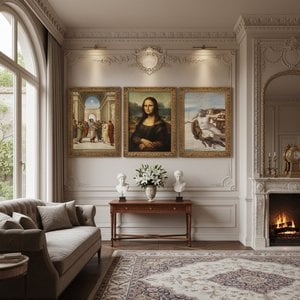
Renæssancens Mestre: Top 10 Kunstværker der Definerede Epoken | ArtsDot.dk
Oplev højrenæssancens 10 mest ikoniske mesterværker! Lær historierne bag Leonardo da Vinci, Michelangelo & Raffaello. Find museumskvalitets reproduktioner og inspiration til din indretning på ArtsDot.com – klassisk kunst for enhver smag.

Raphaels 25 Mesterværker: Kunst, Historie & Inspiration til Dit Hjem | ArtsDot
Oplev Raphaels 25 mest ikoniske værker! Dyk ned i renæssancens kunsthistorie, fra 'Skolen i Athen' til smukke madonna-malerier. Find inspiration & køb museumskvalitets reproduktioner på ArtsDot.com.

The Enduring Legacy of Fresco Painting: Techniques, History & Contemporary Relevance
Explore the rich history & enduring artistry of fresco painting – from Giotto to Michelangelo! Discover techniques, conservation efforts, & modern applications. Learn how ArtsDot brings this timeless art form to your home.