


 Se i fuld skala
 Del
Del Del
Del
 Detaljer

 Download
 Lignende værker
 Røntgenundersøgelse
 Diasshow
The workshop 1


 Se mere
Giclée / Kunsttryk
Giclée- eller lærredstryk i museumskvalitet med hurtig produktion og fleksible muligheder for finish. ( Køb håndlavet maleri Køb billede)




P118B $10

P118H $10

P118W $10

P438Z $10

P508JH $12

P508YH $12

P805H $10

P805Z $10

P919BZ $10

P919G $10

P919XJ $10

P959ZH $10

P968JZ $12

W106C $8

W218G $10

W218JH $8

W218Y $10

W307PJ $10

W316G $10

W316PJ $8

W316Y $10

W398PJ $8

W4111J $10

W500HY $15

W500JH $15

W692G $12

W849H $8

W940BG $15

W953PJ $8




Vælg mellem vores forudindstillede størrelser, der matcher kunstværkets originale proportioner.

Du kan indtaste dine egne mål for at passe til en specifik ramme eller et bestemt område. Hvis den valgte størrelse ikke stemmer overens med det originale billedes proportioner, vil vi enten beskære kunstværket eller udvide billedet med en spejlet eller ensfarvet kant. En digital mockup vil blive sendt til din godkendelse, før produktionen påbegyndes.
Bemærk venligst, at forhåndsvisningen på skærmen ikke afspejler den faktiske beskæring eller udvidelse. Kun mockuppen vil nøjagtigt vise den endelige komposition.
Selvom specialmål er tilgængelige, anbefaler vi at vælge et mål fra den foruddefinerede liste for at bevare de originale proportioner.
Verdensomspændende levering () på 2 uger i stedet for de sædvanlige 4/5 uger. (5 september)

Gratis ekspresforsendelse til hele verden

Lærred af linned i høj kvalitet

Fuld transportforsikring

Garanti for refusion af told og importafgifter

Garanti for præcis farvegengivelse

60 dages returret (kun ved fabrikationsfejl)

100% Tilfredshedsgaranti

Mængderabat tilgængelig
 Glasmulighed er kun tilgængelig i størrelser under 110 cm

The workshop 1
Giclée / Kunsttryk
Størrelse på reproduktion
-


Samlet pris
$ 63
A Glimpse into the Creative Soul: Pablo Picasso’s “The Workshop”
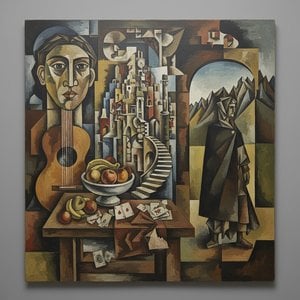
Painted in 1927, during a period of remarkable artistic evolution for Pablo Picasso, “The Workshop” isn't merely a depiction of a studio; it’s a vibrant, almost frenetic snapshot of the artist himself immersed in his craft. The painting immediately captivates with its bold contrasts and dynamic composition—a world rendered in stark black and white that pulsates with an undeniable energy. It’s a piece that invites prolonged contemplation, revealing layers of meaning and hinting at the complex emotions simmering beneath the surface.
Picasso, already a titan of modern art by this point, was navigating a period of intense experimentation, moving beyond the rigid confines of Cubism while retaining its core principles. “The Workshop” embodies this transitional phase—a departure from the analytical fragmentation of his earlier work yet still retaining a distinctly Picassoesque approach to form and perspective. The figures are not precisely rendered but rather suggested through expressive lines and overlapping planes, creating an illusionistic depth that is both unsettling and compelling.
A Study in Form and Gesture
The central focus of the painting is undoubtedly the nude woman seated on a chair, engaged in animated conversation with two other figures—a man wearing a beret and another sporting a hat. These aren’t portraits in the traditional sense; they are embodiments of gesture and movement, captured with remarkable immediacy. Picasso masterfully utilizes hatching and cross-hatching to build up tonal values and texture, creating a surface that feels both rough and intensely tactile. The lines themselves seem to vibrate with energy, conveying not just the appearance of these figures but also their emotional state.
Notice how Picasso deliberately obscures the faces of many of his subjects—a technique frequently employed during this period. This deliberate ambiguity forces the viewer to focus on the overall composition and the interplay between the figures, rather than getting lost in individual details. The blurred features contribute to a sense of mystery and intimacy, suggesting that we are privy to a private moment, a shared conversation filled with unspoken thoughts and feelings.
Symbolism and Emotional Resonance
“The Workshop” is rich in symbolic potential. The setting itself—a cluttered studio overflowing with tools, canvases, and half-finished projects—represents the chaotic yet fertile ground of artistic creation. The presence of multiple figures suggests collaboration, debate, and the exchange of ideas – essential components of Picasso’s creative process. The woman's pose, relaxed yet engaged, hints at a sense of contentment and perhaps even vulnerability.
Furthermore, the painting’s melancholic mood—evoked by the muted palette and the slightly unsettling composition—reflects a recurring theme in Picasso’s work: the bittersweet beauty of human connection amidst the inevitability of loss. The overall impression is one of intimacy, contemplation, and a profound appreciation for the act of creation itself. It's a piece that lingers in the mind long after you've turned away, prompting reflection on the nature of art, life, and the enduring power of the human spirit.
Technical Details & Historical Context
- Artist: Pablo Picasso
- Year: 1927
- Medium: Aquatint, engraving, and drypoint on Rives paper
- Dimensions: 8 in x 9 1/2 in (20.3 cm x 24.1 cm)
- Edition: Numbered from the edition of 50 in pencil in the lower left margin
Lignende kunstværker


Kunstnerens biografi
Pablo Picassos Liv og Arv
Pablo Ruiz Picasso, født i Málaga, Spanien, den 25. oktober 1881, er et navn der uomtvisteligt forbindes med kunstnerisk revolution. Fra en tidlig alder viste han tegn på et exceptionelt talent; legenden fortæller at hans første ord var “piz, piz”, et forsøg på at sige ‘blyant’. Denne spirende interesse blev næret af faderen, José Ruiz y Blasco, selv maler og kunstlærer, som gav den unge Pablo en solid grunduddannelse. Hurtigt overgik eleven dog mesteren, demonstrerede en bemærkelsesværdig evne til naturalistisk gengivelse, der antydede det enorme potentiale inden i ham. Familiens efterfølgende flytninger – først til A Coruña og derefter Barcelona – var præget af personlige tragedier, især tabet af Picassos søster, oplevelser som subtilt ville forme hans senere værker med temaer om melankoli og dødelighed. Selv under formelle studier på Skolen for Fine Arts i Barcelona og et kort ophold på Royal Academy of San Fernando i Madrid, følte Picasso sig begrænset af de stive akademiske krav og foretrak at fordybe sig i værkerne af mestre som Velázquez og Goya, hvorved han banede sin egen vej mod kunstnerisk innovation.
Fra Blå Melankoli til Rosatonet Håb
De tidlige år i det 20. århundrede var vidne til fremkomsten af to markante perioder i Picassos oeuvre: Den Blå Periode (omtrent 1901-1904) og Rosenperioden (1904-1906). Den Blå Periode, født ud af personlige vanskeligheder og en skarp bevidsthed om social lidelse, er karakteriseret ved malerier gennemsyret af dystre nuancer af blå og turkis. Disse værker befolkes af marginaliserede figurer – tiggere, blinde, prostituerede – gengivet med en hjerteskærende empati, der taler til temaer om isolation og fortvivlelse. La Vie (1903) og Den Gamle Guitarist (1903-1904) står som gribende eksempler på denne følelsesladede fase. Et skift i Picassos personlige liv, kombineret med et flyt til Paris, indledte Rosenperioden. Paletten blev betydeligt varmere og omfavnede lyserøde, orange og røde farver, hvilket afspejlede et mere optimistisk synspunkt. Denne periode var præget af en fascination af cirkusperformere – harlekiner, akrobater og familier – figurer der legemliggjorde både skrøbelighed og modstandskraft. Family of Saltimbanques (1905) indkapsler smukt denne overgang og antyder de stilistiske udforskninger, der lå forude.
Perspektivets Brud: Kubismen og Udbredelsen
Året 1907 markerede et afgørende øjeblik i kunsthistorien med skabelsen af Les Demoiselles d'Avignon. Inspireret af iberisk skulptur og afrikanske masker, brød dette banebrydende maleri traditionelle forestillinger om perspektiv og repræsentation. Det var et radikalt afbrud, en bevidst afvisning af århundredgamle konventioner, der banede vejen for Kubismen. I tæt samarbejde med Georges Braque grundlagde Picasso denne revolutionerende bevægelse, som fundamentalt ændrede den måde, kunstnere opfattede og gengav virkeligheden på. Analytisk Kubisme (1909-1912) involverede fragmenteringen af objekter i geometriske former, gengivet i dæmpede farver, som om formen selv blev dissekeret. Dette udviklede sig til Syntetisk Kubisme (1912-1919), der inkorporerede collageelementer – avisudklip, stofstykker – og tilføjede tekstur og nye lag af visuel kompleksitet. Picasso var ikke tilfreds med blot at repræsentere verden; han søgte at dekonstruere den og rekonstruere den på sine egne betingelser.
En Rastløs Eksperimentator: Neoklassicisme, Surrealisme og Krig
1920’erne så Picasso kort udforske neoklassiske stilarter og skabe monumentale figurer, der genklang af klassiske former, samtidig med at de bevarede en distinkt moderne følsomhed. Samtidig engagerede han sig i den spirende surrealistiske bevægelse, selvom han aldrig fuldt ud tilsluttede sig dens principper. Hans arbejde i denne periode blandede tidligere stilistiske påvirkninger med surrealistiske billeder og forvrængede perspektiver, hvilket demonstrerede hans utrættelige eksperimentering. Rædslerne ved den spanske borgerkrig havde en dybtgående indflydelse på Picasso, kulminerende i skabelsen af Guernica (1937), et visceral og følelsesmæssigt ødelæggende svar på bombningen af Guernica. Dette monumentale værk blev et varigt symbol på krigens grusomheder og cementerede Picassos rolle som ikke blot en kunstner, men også en kraftfuld stemme for fred og social retfærdighed. Gennem 1950’erne og 60’erne fortsatte han med at skubbe grænserne og udforskede keramik, skulptur og trykning med urokkelig nysgerrighed og dygtighed. Hans ægteskab med Jacqueline Roque i 1961 bragte en ny dimension til hans personlige liv og kunstneriske udtryk.
En Uvurderlig Indflydelse
Pablo Picasso døde den 8. april 1973 i Mougins, Frankrig, og efterlod sig et fantastisk oeuvre – anslået til over 50.000 værker – der fortsat fanger og inspirerer. Hans kunstneriske udvikling blev formet af en mangfoldighed af påvirkninger, fra spanske mestre som Velázquez og Goya til iberisk skulptur, afrikansk kunst og de levende farvepaletter hos Henri Matisse. Hans indflydelse på det 20. århundredes kunst er umålelig. Han grundlagde Kubismen, pionerede collage og konstrueret skulptur og udfordrede konstant kunstneriske konventioner. Picassos utrættelige eksperimentering omdefinerede moderne kunst, efterlod et uudsletteligt mærke på generationer af kunstnere og cementerede hans position som en af de vigtigste og mest indflydelsesrige figurer i historien. Hans arv rækker ud over lærredet og genlyder i utallige aspekter af nutidskulturen og minder os om den transformative kraft i kunstnerisk vision.

Pablo Picasso
1881 - 1973 , Spanien
Kort om kunstneren
- Bemærkelsesværdige Værker:
- Les Demoiselles d'Avignon
- Guernica
- The Old Guitarist
- Dødsdato: 8. april 1973
- Fulde Navn: Pablo Diego Ruiz Picasso
- Fødested: Málaga, Spanien
- Fødselsdato: 25. oktober 1881
- Kunstnere Der Påvirkede:
- Velázquez
- Goya
- Matisse
- Kunstnerisk Stil: Kubisme, Surrealisme
- Nationalitet: Spansk
- Påvirkede Kunstnere/Bevægelser:
- Kubisme
- Moderne kunst
Relaterede artikler

Hvide Mesterværker: Top 10 Maler der Fascinerer – Kunst til Dit Hjem | ArtsDot.dk
Oplev skønheden i hvide malerier! Fra Monet til Van Gogh – udforsk 10 ikoniske kunstværker og deres historie. Find inspiration til dit hjem & køb museumskvalitets reproduktioner på ArtsDot.com.

Kubismens Mestre: Top 10 Kunstværker der Definerede en Epoke | ArtsDot.dk
Oplev kubismens revolution! Dyk ned i top 10 mesterværker af Picasso, Braque og andre pionerer. Lær historien bag disse ikoniske malerier & find inspiration til din boligindretning på ArtsDot.com. Køb kunsttryk i museumskvalitet online.

Kubismens Portrætter: Top 10 Mesterværker der Ændrede Kunsten | ArtsDot
Oplev kubismens revolution! Dyk ned i de 10 mest ikoniske kubistiske portrætter af Picasso, Braque og andre mestre. Find inspiration til din indretning & køb museumskvalitets kunstreproduktioner på ArtsDot.com.

The Eloquent Line: Exploring the Artistic Significance of Sketches Across Movements and Media
Explore the profound artistic significance of sketches throughout history. From Renaissance masters to modern innovators like Van Gogh & Guston, discover how these foundational works reveal technique, emotion, and vision. Learn more at ArtsDot.
Cubismens Mestre: Top 10 Værker der Definerede en Kunstnerisk Revolution | ArtsDot
Oplev kubismens revolution! Dyk ned i historien bag 10 mesterværker af Picasso, Braque og andre. Find inspiration til din indretning & køb museumskvalitets kunsttryk på ArtsDot.com. Udforsk samlingen online!



