

 Se i rummet
 Del som kort
 Del
Del
 Detaljer
 Guide
Guide

 Download
 Lignende værker
 Røntgenundersøgelse
 Diasshow
 Spørgsmål og svar
 Statistikker
Entombment


 Vis mere
Giclée / Kunsttryk
Giclée- eller lærredstryk i museumskvalitet med hurtig produktion og fleksible muligheder for finish. ( Køb håndmalet maleri Skift til digitalt billede)




































Vælg mellem vores forudindstillede størrelser, der matcher kunstværkets originale proportioner.

Indtast den bredde og højde, du har brug for, så det passer til din ramme eller din væg. Et print kan kun beskæres, aldrig gøres større end selve billedet, så en størrelse med et andet format vil medføre, at dele af motivet går tabt. Vi sender dig en digital mockup til godkendelse, før vi printer noget. Billedet vist på denne side viser ikke den faktiske beskæring — det er kun mockuppen, der gør.
Verdensomspændende levering () på 2 uger i stedet for de sædvanlige 4/5 uger. (11 november)

Gratis ekspresforsendelse til hele verden

Lærred af linned i høj kvalitet

Fuld transportforsikring

Garanti for refusion af told og importafgifter

Garanti for præcis farvegengivelse

100 dages returret ved fabrikationsfejl

100% fuld returret

Mængderabat ved flere køb
 Glasmulighed er kun tilgængelig i størrelser under 110 cm

Entombment
Giclée / Kunsttryk
Størrelse på reproduktion
-


Samlet pris
Dkr 421
Lignende kunstværker


Kunstnerbiografi
Michel Colombe (1430–1515): Bridging Gothic Splendor and Renaissance Innovation
Michel Colombe (c. 1430 – c. 1513) stands as a pivotal figure in French art history, representing the delicate yet transformative transition between late Gothic formalism and burgeoning Renaissance ideals. Born in Bourges into a family of artisans—a lineage steeped in craftsmanship—his artistic journey unfolded primarily in Tours, where he established himself as a sculptor whose legacy continues to resonate through monumental achievements like the tombs of Francis II and his wife Marguerite de Foix, cementing his place among the masters of Breton funerary art.- Early Life & Training: Colombe’s formative years were marked by exposure to the artistic traditions of Bourges and Tours, fostering a grounding in Gothic sculptural techniques. While biographical details remain sparse, evidence suggests he honed his skills under Jean Goujon, arguably the foremost sculptor of his time, absorbing influences from the monumental works adorning Saint-Gatien Cathedral.
- The Francis II Monument: Colombe’s magnum opus resides within Nantes Cathedral—the magnificent tomb of Francis II, Duke of Brittany and his consort Marguerite de Foix. Collaborating with Jean Perréal, he undertook a daring project to dismantle and bury the original monument during the tumultuous French Revolution, safeguarding its artistic integrity for posterity. The resulting reconstruction embodies the humanist spirit of the Renaissance, prioritizing anatomical accuracy and expressive drapery—a deliberate departure from the stylized conventions of earlier Gothic sculpture.
- The Tomb of the Children of Charles VIII: Alongside the Francis II tomb, Colombe’s contribution to Tours Cathedral is equally noteworthy: the poignant gisant figures commemorating the deceased children of King Charles VIII. These sculptures exemplify the meticulous attention to detail characteristic of his style and underscore his mastery of conveying emotion through sculptural form.
- Other Notable Commissions: Beyond these monumental undertakings, Colombe's oeuvre includes the entombment at the Abbey of Solesmes (1494–98), a testament to his dedication to religious art, and the bas-relief commissioned by Georges d’Ambise for Château Gaillon—a piece that showcases his versatility and artistic vision.
Influences & Artistic Style
Colombe's artistic style reflects the convergence of Gothic and Renaissance sensibilities. He skillfully assimilated techniques honed during the Gothic period – particularly in drapery and carving – while simultaneously embracing the humanist ideals championed by artists like Leonardo da Vinci and Michelangelo. This fusion resulted in sculptures imbued with both grandeur and psychological depth, capturing the essence of human emotion within meticulously crafted forms. His meticulous approach to modeling and surface treatment distinguishes him from many of his contemporaries, elevating his work to a level of artistic sophistication rarely achieved during his era.Legacy & Historical Significance
Michel Colombe’s contribution to French art is undeniable. He stands as a crucial link between two dominant stylistic movements, demonstrating the dynamism and evolution inherent in artistic history. His monumental tombs—particularly the Francis II monument—remain enduring symbols of Breton royal patronage and represent a pinnacle of Renaissance sculptural achievement. Furthermore, his involvement with Jean Goujon and Guillaume Regnault established him as a pivotal figure within the artistic milieu of Tours, shaping the trajectory of French sculpture for decades to come. Colombe’s legacy continues to inspire artists today, reminding us that true innovation arises from embracing tradition while simultaneously striving for new expressive possibilities.Related Artists
- Jean Goujon
- Guillaume Regnault

Michel Colombe
1430 - 1515 , France
Kort om kunstneren
- Full Name: Michel Colombe
- Nationality: French
- Date Of Birth: 1430
- Date Of Death: 1515
- Place Of Birth: Bourges, France
- Notable Artworks:
- Tomb of Francis II, Duke of Brittany
- Monument to the Children of Charles VIII
- Entombment
- Bas-relief commissioned by George d'amboise for Château Gaillon
- Artistic Movement Or Style: Late Gothic & Renaissance
- Artists Who Influenced This Artist: ['Jean Perréal']
- Artists Or Movements Influenced By This Artist: ['Renaissance']
Relaterede artikler

The Bountiful Still Life: Symbolism & Artistic Representation of Fruit Across Art History
Explore the rich history of still life painting & the symbolism of fruit across art movements. Discover masterpieces from Caravaggio to Cézanne with ArtsDot – expert guidance & museum-quality reproductions.

Master of Emotion: The 25 Greatest Artworks by Rogier van der Weyden
Immerse yourself in the profound emotion of Rogier van der Weyden’s greatest works. Explore 25 Northern Renaissance masterpieces, from intricate textures to divine pathos. Find museum-quality art reproductions and decor inspiration. Discover all masterpieces on ArtsDot.com.

Michelangelo Buonarottis 25 Mesterværker: Skulpturer & Malerier til Dit Hjem | ArtsDot
Oplev Michelangelos 25 mest ikoniske værker – fra David til Pietà og Sixtinske Kapel. Lær om renæssancens mester, hans teknikker & tidløse kunst. Find museumskvalitets reproduktioner på ArtsDot.com.

Vanitas & Beyond: Exploring Mortality's Artistic Legacy for the Elite Collector
Explore the rich history & symbolism of Vanitas paintings with ArtsDot. Discover masterpieces reflecting mortality, societal values, & collecting insights for discerning art enthusiasts.
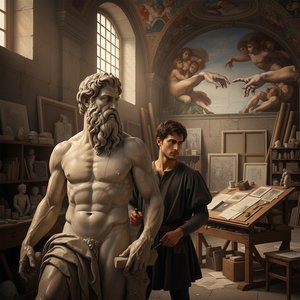
Michelangelo Buonarroti: A Renaissance Titan – Life, Works & Enduring Legacy
Explore the life, works & enduring legacy of Michelangelo Buonarroti, a Renaissance titan. Discover his iconic sculptures, frescoes, and architectural achievements. Expert art consultation & high-quality reproductions at ArtsDot.