


 Se i rummet
 Send
Send Del
Del
 Detaljer
 Studieguide til kunstværker

 Download
 Lignende værker
 Røntgenundersøgelse
 Se diasshow
 Statistik
Keres


 Læs mere
Giclée / Kunsttryk
Giclée- eller lærredstryk i museumskvalitet med hurtig produktion og fleksible muligheder for finish. ( Bestil håndmalet reproduktion Skift til digitalt billede)




P118B Dkr10

P118H Dkr10

P118W Dkr10

P438Z Dkr10

P508JH Dkr12

P508YH Dkr12

P805H Dkr10

P805Z Dkr10

P919BZ Dkr10

P919G Dkr10

P919XJ Dkr10

P959ZH Dkr10

P968JZ Dkr12

W106C Dkr8

W218G Dkr10

W218JH Dkr8

W218Y Dkr10

W307PJ Dkr10

W316G Dkr10

W316PJ Dkr8

W316Y Dkr10

W398PJ Dkr8

W4111J Dkr10

W500HY Dkr15

W500JH Dkr15

W692G Dkr12

W849H Dkr8

W940BG Dkr15

W953PJ Dkr8




Vælg mellem vores forudindstillede størrelser, der matcher kunstværkets originale proportioner.

Indtast den bredde og højde, du har brug for, så det passer til din ramme eller din væg. Et print kan kun beskæres, aldrig gøres større end billedet, så en størrelse med en anden form vil miste en del af motivet. Vi sender dig en digital mockup til godkendelse, før vi printer noget. Billedet vist på denne side viser ikke den faktiske beskæring — det er kun mockuppen, der gør.
Verdensomspændende levering () på 2 uger i stedet for de sædvanlige 4/5 uger. (24 oktober)

Gratis ekspresforsendelse til hele verden

Lærred af linned i høj kvalitet

Komplet transportforsikring

Garanti for refusion af told og importafgifter

Garanti for autentisk farvegengivelse

100 dages returret ved fabrikationsfejl

100% fuld returret

Mængderabat ved flere køb
 Glasmulighed er kun tilgængelig i størrelser under 110 cm

Keres
Giclée / Kunsttryk
Reproduktionsstørrelse
-


Samlet pris
Dkr 413
Michel Anguier og Ceres’ Dramatiske Elegance
Michel Anguier (1612 – 1686) var en dansk kunstner, hvis betydning ligger i hans prægede bidrag til den sene barokperiode. Han udgjorde et centralt medlem af den danske kunstnerskole og blev kendt for sin dybe forståelse af klassiske principper kombineret med den ekspressive stil, der karakteriserer Bernini’s værksted og andre europæiske kunstnere på samme tidspunkt. Anguier studerede intensivt i Rom under Alessandro Algardi og absorberede dermed den italienske kunstkulturs grandeur og dynamik – en erfaring, der satte dybe spor i hans kunstneriske udvikling. Hans fokus var ikke blot teknisk perfektionisme, men også evnen til at kommunikere følelser og fortælle historier gennem skulptur.- Kunstværkets Titel: Ceres
- Kunstner: Michel Anguier
- Årstal: 1650
- Medium: Bronze
En Dramatisk Afbildning af Jordens Gudinde
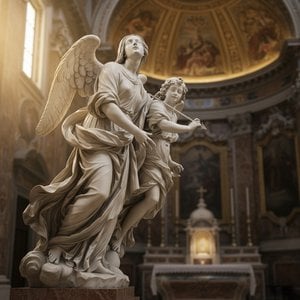
Denne imponerende bronze statue af Ceres, gudinden for høsten og frugtbarhed i den romerske mytologi, blev skabt omkring år 1650 af Michel Anguier. Statuen repræsenterer en nøglefigur inden for dansk kunsthistorie og udtrykker et særligt fokus på klassiske former og teknikker – præcis som Bernini havde gjort før ham. Ceres er gengivet i en kraftfuld pose, hvor hendes ene arm hæves mod himlen og holder en sheaf af høstkorn, mens den anden gestikulerer udad, hvilket understreger gudindens dominans over naturen og dens cykliske rytme. Statuen er præget af et dynamisk komposition, der bruger diagonale linjer til at skabe bevægelse og spænding – en teknik karakteristisk for den sene barokstil.Teknik og Stil: Lost-Wax Casting og Baroque’s Dramatik
Anguier anvendte den avancerede teknik kaldet lost-wax casting til fremstilling af Ceres. Denne metode sikrede ekstrem detaljegrad og præcision, hvilket er tydeligt i statuens komplekse modellering og udtryksfulde udtryk. Statuen er en perfekt eksempel på baroque kunstens stil – kendt for sin dramatiske pose, følelsesladede intensitet og fokus på realistisk detalje. Kunstneren søgte at indfange både fysisk præcision og psykologisk dybde, hvilket gjaldt særligt Ceres’ udtryksfulde gestus og hendes ansigtsudtryk. Statuen er udført i bronze, hvilket var et populært materiale blandt kunstnere på denne tid – ofte brugt til monumentale værker og religiøse skulpturer. Materialerne omfatter bronzelegering, voks og sand – komponenter der krævede stor færdighed og præcision for at kunne forme statuen korrekt.Symbolik og Historisk Kontext
Ceres’ statue er ikke blot et teknisk imponerende kunstværk; den rummer også betydningsfuld symbolsk værdi. Ceres repræsenterer forbindelsen mellem jordbrug og krig – temaer der var centrale i den danske kunstnerskole og europæiske kunstscene omkring midten af det 17. århundrede. Statuen fortæller historien om Ceres’ søgen efter sin bortførende datter Proserpina, hvilket symboliserer jordens cyklus af fødsel, vækst og død – samt den kontinuerlige kamp mellem orden og kaos. Statuens dramatiske udtryk og detaljerede modellering er et direkte resultat af Anguier’s omfattende studie af klassiske kunstformer og hans inspiration fra Bernini og Algardi. Ceres blev placeret i Victoria and Albert Museum, London hvor den fortsat fascinerer besøgende med sin elegance og kraftfulde fortælling om guddommelig kærlighed og sorg.Spørgsmål & svar
Hvilken farvemætning har "Keres" af Michel Anguier?
Farverne i "Keres" af Michel Anguier har en Dæmpet mætning. Mætning beskriver, hvor livlige eller dæmpede farverne er.
Hvilken følelse skaber farverne i "Keres" af Michel Anguier?
Den Neutrale nuancer farvepalet i "Keres" af Michel Anguier harmonerer med værkets Kraftfuld følelsesmæssige tone. Farven er en af de måder, et værk formidler følelser på.
Hvordan forbinder "Keres" af Michel Anguier Baroque Sculpture med kunstnerens hjemland?
"Keres" forbinder Baroque Sculpture-bevægelsen med France gennem skaberens fødested.
Lignende kunstværker


Om kunstneren
Michel Anguier: Sculptor of Light and Shadow
Michel Anguier (1612 – 1686) stands as a pivotal figure in the Baroque sculpture tradition of France, embodying both intellectual rigor and artistic virtuosity. Born in Eu, Normandy, he descended from a noble family steeped in humanist ideals—a lineage that profoundly shaped his worldview and fueled his lifelong pursuit of knowledge. Anguier’s formative years were spent studying under Alessandro Algardi in Rome, absorbing the grandeur and dynamism of Bernini's workshop and establishing connections with other leading sculptors of the era. This immersion in Roman artistic culture instilled within him a deep appreciation for classical forms and techniques, which would permeate his subsequent oeuvre.- Early Career & Patronage: Anguier’s initial commissions focused on funerary sculptures—particularly elaborate tombs for aristocratic families—demonstrating his mastery of marble carving and his ability to convey profound emotion through sculptural representation. His work quickly gained recognition, securing him patronage from influential figures within the French court.
- Roman Influence & Artistic Style: Anguier’s Roman training profoundly impacted his artistic style. He embraced Bernini's theatrical approach to sculpture, prioritizing movement and dramatic lighting—elements he skillfully incorporated into numerous monumental sculptures commissioned for churches and palaces throughout France.
- Notable Works: Among Anguier’s most celebrated achievements are the sculptures adorning San Michele al Pozzo Bianco in Bergamo, Italy—a breathtaking ensemble of frescoes depicting Mary's life—and Amphitrite, a magnificent marble statue commemorating the goddess of the sea. His meticulous attention to detail and his masterful manipulation of light and shadow elevated these works to unparalleled levels of artistic excellence.
- The Ceres Sculpture: Anguier’s sculpture “Ceres” exemplifies his dedication to capturing idealized beauty and conveying spiritual contemplation. Located in Paris, this artwork showcases the sculptor's profound understanding of anatomy and drapery—skills honed during his Roman studies—resulting in a timeless masterpiece.
Technique & Artistic Innovation
Anguier’s sculptural technique was characterized by an unwavering commitment to anatomical accuracy combined with expressive dynamism. He meticulously studied human musculature, striving to reproduce its contours with breathtaking realism—a hallmark of Baroque sculpture. Furthermore, Anguier pioneered innovative methods for achieving dramatic lighting effects—techniques he perfected during his time in Rome and subsequently applied to numerous monumental sculptures throughout France. His masterful manipulation of marble—particularly his ability to carve translucent surfaces—created illusions of depth and luminosity that captivated audiences.- Marble Carving Mastery: Anguier’s unparalleled skill in marble carving was evident in every piece he created, from intimate funerary sculptures to colossal monumental statues. He employed sophisticated tools and techniques—including chisels, hammers, rasps, and polishing abrasives—to transform raw stone into objects of exquisite beauty and artistic grandeur.
- Dramatic Lighting Effects: Anguier’s incorporation of dramatic lighting effects—inspired by Bernini’s theatrical style—transformed his sculptures into immersive experiences. He skillfully manipulated marble surfaces to create illusions of translucency and luminosity, enhancing the emotional impact of his works.
Legacy & Historical Significance
Michel Anguier's contribution to Baroque sculpture transcends mere stylistic innovation; he represents a cornerstone of French artistic heritage. His sculptures continue to inspire admiration for their technical brilliance and expressive power—testaments to the enduring legacy of humanist ideals and classical art principles. Anguier’s influence extended beyond his immediate contemporaries, shaping the aesthetic sensibilities of subsequent generations of sculptors and cementing his place among France's most revered artists.- Influence on Subsequent Sculptors: Anguier’s sculptural technique—characterized by anatomical accuracy and expressive dynamism—served as a model for countless sculptors who followed him, establishing a stylistic continuum that spanned centuries.
- Symbol of French Artistic Excellence: Anguier's sculptures embody the zenith of French artistic excellence during the Baroque period—a symbol of humanist ideals and classical art principles that continue to resonate with audiences today.
Further Exploration
For a deeper understanding of Michel Anguier’s life and work, consult scholarly articles published in journals specializing in Art History. Explore online resources—including museum websites and biographical databases—to access detailed information about his artistic achievements and historical context. Examining reproductions of his sculptures—particularly “Ceres” and Amphitrite—offers invaluable insight into the artist's stylistic innovations and expressive power.
Michel Anguier
1612 - 1686 , France
Hurtige fakta
- Full Name: Michel Anguier
- Nationality: French
- Date Of Birth: 1612
- Date Of Death: 1686
- Place Of Birth: Seine-Maritime, France
- Notable Artworks:
- Nativity
- Ceres
- Artistic Movement Or Style: Baroque
- Artists Who Influenced This Artist: Gianlorenzo Bernini
- Artists Or Movements Influenced By This Artist: Alessandro Algardi
Relaterede artikler

The Enduring Form: Exploring Themes & Techniques in Sculpture Across Historical Periods
Explore the rich history of sculpture from ancient masterpieces to contemporary innovations. Discover key techniques, influential artists & investment potential for discerning art collectors.

Bronzeskulpturers Mestre: 10 Værker der Ændrede Kunsthistorien | ArtsDot
Oplev de 10 mest legendariske bronzeskulpturer, der har formet kunsthistorien! Fra Rodin til Vigeland – lær historierne bag mesterværkerne og find inspiration til din indretning. Køb museumskvalitets reproduktioner på ArtsDot.com.

The Enduring Form: Sculpture Across History, Technique & Emotional Resonance
Explore the rich history of sculpture with ArtsDot. Discover key techniques, influential artists & investment potential for discerning collectors. Expert insights into valuing and collecting timeless masterpieces.

Top 10 Bronzemesterværker: Kunsthistorien Ændret for Evigt | ArtsDot.dk
Oplev de 10 mest legendariske bronzemesterværker, der har formet kunsthistorien! Fra Rodin til Degas – lær historierne bag ikoniske skulpturer og find inspiration til din indretning. Køb museumskvalitets reproduktioner på ArtsDot.com.
Gian Lorenzo Bernini: Sculpting Baroque Emotion & the Roman Imagination
Explore the life & revolutionary art of Gian Lorenzo Bernini, the master sculptor of the Baroque era. Discover his iconic works like David and Ecstasy of Saint Teresa – a journey into Roman artistic genius.