


 Se i rummet
 Send
Send Del
Del
 Detaljer
 Studieguide til kunstværker

 Download
 Lignende værker
 Røntgenundersøgelse
 Se diasshow
 Statistik
Fish fight


 Læs mere
Kunstværket vist på denne side er beskyttet af ophavsretsloven, hvilket betyder, at vi ikke lovligt kan skabe eller sælge en identisk reproduktion. Denne beskyttelse håndhæves i henhold til internationale aftaler som f.eks. den Bernerkonventionen og af nationale love, herunder de bestemmelser, der er fastlagt i Amerikansk ophavsretslov - Titel 17.
Denne metode overholder fuldt ud ophavsretsreglerne, da den ikke indebærer kopiering eller duplikering af det beskyttede kunstværk. I stedet er der tale om en kreativ nytolkning – et nyt maleri, som er inspireret af det oprindelige, men ikke identisk med det.
Giclée / Kunsttryk
Giclée- eller lærredstryk i museumskvalitet med hurtig produktion og fleksible muligheder for finish. ( Bestil håndmalet reproduktion Skift til digitalt billede)




P118B Dkr10

P118H Dkr10

P118W Dkr10

P438Z Dkr10

P508JH Dkr12

P508YH Dkr12

P805H Dkr10

P805Z Dkr10

P919BZ Dkr10

P919G Dkr10

P919XJ Dkr10

P959ZH Dkr10

P968JZ Dkr12

W106C Dkr8

W218G Dkr10

W218JH Dkr8

W218Y Dkr10

W307PJ Dkr10

W316G Dkr10

W316PJ Dkr8

W316Y Dkr10

W398PJ Dkr8

W4111J Dkr10

W500HY Dkr15

W500JH Dkr15

W692G Dkr12

W849H Dkr8

W940BG Dkr15

W953PJ Dkr8




Vælg mellem vores forudindstillede størrelser, der matcher kunstværkets originale proportioner.

Indtast den bredde og højde, du har brug for, så det passer til din ramme eller din væg. Et print kan kun beskæres, aldrig gøres større end billedet, så en størrelse med en anden form vil miste en del af motivet. Vi sender dig en digital mockup til godkendelse, før vi printer noget. Billedet vist på denne side viser ikke den faktiske beskæring — det er kun mockuppen, der gør.
Verdensomspændende levering () på 2 uger i stedet for de sædvanlige 4/5 uger. (22 oktober)

Gratis ekspresforsendelse til hele verden

Lærred af linned i høj kvalitet

Komplet transportforsikring

Garanti for refusion af told og importafgifter

Garanti for autentisk farvegengivelse

100 dages returret ved fabrikationsfejl

100% fuld returret

Mængderabat ved flere køb
 Glasmulighed er kun tilgængelig i størrelser under 110 cm

Fish fight
Giclée / Kunsttryk
Reproduktionsstørrelse
-


Samlet pris
Dkr 411
A Turbulent Vision: The Primal Energy of Max Ernst’s Fish Fight
In the swirling, cerulean depths of Max Ernst’s 1917 masterpiece, "Fish Fight," the boundaries between reality and the subconscious begin to dissolve. This striking work serves as a profound window into the early avant-garde spirit, capturing a moment where the structured world of Cubism meets the raw, uninhibited impulses of the Dada movement. At first glance, the viewer is met with a dynamic aquatic struggle; several fish are locked in a visceral combat amidst a turbulent blue expanse. Yet, beneath this surface tension lies a much deeper psychological current. The composition is subtly punctuated by the presence of an airplane, a jarring mechanical intrusion that introduces a sense of disorientation and reflects the growing anxieties regarding technological advancement and the fragmentation of modern life during the early 20th century.
Ernst’s technical mastery in this piece is nothing short of transformative. Utilizing the fragmented planes and multiple perspectives characteristic of Cubism, he deconstructs familiar biological forms into abstracted, geometric representations. The palette is a deliberate study in contrast; the dominant, cool blues of the water are pierced by aggressive strokes of bold reds and pinks, creating a visual friction that mirrors the physical struggle within the scene. Furthermore, the texture of the canvas itself whispers of Ernst’s experimental soul. Through his pioneering use of techniques like frottage—the process of transferring textures from found objects onto the surface—he imbues the painting with an organic, almost tactile quality. This method allows the artwork to breathe with a life of its own, as if the very skin of the fish and the turbulence of the sea were etched by chance and instinct.
Historical Echoes and Symbolic Depths
To understand "Fish Fight" is to understand the era of its birth. Created in the shadow of World War I, the painting vibrates with the pervasive disillusionment that gripped Europe. As a key figure in both Dada and Surrealism, Ernst used his canvas to reject rational thought and embrace the irrationality of the human psyche. The fish themselves act as potent symbols; they are not merely creatures of the sea, but avatars of aggression, primal instinct, and the eternal struggle for survival. In this sense, the painting transcends its subject matter to become a metaphor for the societal upheavals of the time—a world where old certainties were being torn apart by new, often violent, forces.
For the discerning collector or interior designer, "Fish Fight" offers more than just aesthetic beauty; it provides a profound emotional resonance. It is a piece that demands attention and invites contemplation, making it an extraordinary centerpiece for any space dedicated to intellectual depth and artistic passion. Whether displayed in a contemporary gallery setting or as a sophisticated focal point in a curated home collection, this reproduction captures the unsettling yet captivating logic of the dream world. It serves as a constant reminder of the beauty found within chaos and the enduring power of the human imagination to find meaning amidst the fragments of a fractured reality.
Spørgsmål & svar
Hvilket rum anbefales "Fish fight" af Max Ernst til?
Det anbefalede rum til "Fish fight" af Max Ernst er en Living Room. Forslaget kan naturligvis tilpasses din indretning.
I hvilket år blev "Fish fight" af Max Ernst skabt?
"Fish fight" af Max Ernst er skabt i 1917.
Hvilken fase i Max Ernsts karriere svarer datoen 1917 for "Fish fight" til?
"Fish fight", skabt i 1917, tilhører Surrealist Maturity af Max Ernst's karriere.
Lignende kunstværker


Om kunstneren
A Life Immersed in the Surreal
Max Ernst, født Maximilian Maria Ernst den 1. april 1891 i Brühl, Tyskland, var en rastløs ånd dømt til at blive en af de mest betydningsfulde figurer inden for det 20. århundredes kunst – ikke blot som maler, men også som skulptør, grafiker og digter. Hans rejse var ikke én af konventionel kunstnerisk uddannelse; snarere var det en selvbestemt udforskning drevet af filosofisk søgen efter sandhed, psykologisk fascination og en dyb skepsis over for etablerede normer. Hans far, en lærer af døve og en amatørmaler, gav ham både følsomhed for verden og en rebelsk ånd mod autoritetens krav. Denne tidlige dualitet ville blive en definerende karakteristik af hans kunstneriske vision.
Ernsts akademiske studier ved Bonn Universitetet – omfattende filosofi, kunsthistorie, litteratur, psykologi og psykiatri – var ikke blot distraktioner, men fundamentale elementer der dybt formede hans senere arbejde. Han var ikke bare interesseret i *hvordan* man malede; han kæmpede med *hvorfor*. Denne intellektuelle nysgerrighed førte ham til mødet med Pablo Picassos ikoniske værker, Vincent van Goghs kraftfulde farvepaletter og Paul Gauguins eksotiske landskaber ved Sonderbund udstillingen i Köln i 1912 – et øjeblik der irrevocabelt ændrede hans kunstneriske vej. Moderne kunstens frø var blevet sået.
Dada’s Disruption og Fødslen af Surrealist Visioner
Første Verdenskrig viste sig at være en vandrende sten for Ernst. Hans erfaring som soldats på Østfronten og Vestfronten efterlod ham dybt rystet, hvilket fremmede en dyb skepsis over for ordenens krav og længsel efter nye udtryksformer. Denne disillusionering fandt frugtbar grund i Dada bevægelsen, som han omfavnede entusiastisk efter hjemkomst til Köln i 1918. Sammen med Hans Arp – en livslang ven og samarbejdspartner – blev Ernst en central figur i Köln Dada gruppen, hvilket afviste konventionelle kunstneriske normer og omfavnede absurditet, chance og anti-rationalitet.
Men Dada var blot et skridt på vejen. I begyndelsen af 1920’erne emigrerede Ernst til Paris og blev medlem af Surrealist bevægelsen, ledet af André Breton. Dette markerede en forskydning mod udforskningen af drømmeverdenen, det ubevidste sind og den irrationelle kraft – hvilket førte ham direkte ind i kunstens mest revolutionerende årti. Påvirket af Sigmund Freuds psykoanalytiske teorier søgte Ernst at låse op menneskelig erfaringens skjulte dybder gennem sin kunst. Han var ikke interesseret i at gengive virkeligheden som den præsenterede sig; snarere ønskede han at afsløre de underliggende psykologiske kræfter, der formåde den.
Pionering Teknikker: Frottage, Grattage og Collage
Ernsts kunstneriske innovation udvidede sig ud over emnevalg; han var en hensynsløs eksperimentator med teknik. Han tog ikke blot eksisterende metoder – han opfandt nye. Hans mest kendte bidrag er frottage, hvor bly eller grafittegning rubses over teksturerede overflader for at skabe ovrekspektakulære og atmosfæriske billeder. Denne teknik, født af en øjeblikkelig beslutning om at observere træets årer, tillod Ernst at nå ud til det ubevidste og generere former der modsatte sig bevidst kontrol. Dette var ikke blot stilistiske valg; det var integreret i hans søgen efter det psykologiske og hans ønske om at udfordre konventionelle kunstneriske grænser.
Han udnyttede også collage mesterligt – ved at sammensætte forskellige elementer – billeder fra magasiner, videnskabelige illustrationer, fotografier – til surrealistiske kompositioner der udfordrede konventionelle repræsentationens ideer. Disse teknikker var ikke blot stilistiske valg; de var centrale for hans udforskning af det ubevidste og hans ønske om at udfordre kunstens konventionelle grænser.
- Bemærkelsesværdige værker: Afrendefuneralen, Kvinden i lyset, Skoven og Duved
- Påvirkninger: Pablo Picasso, Vincent van Gogh, Paul Gauguin, Sigmund Freud
- Bevægelse: Dada, Surrealisme
Udbruddet af Anden Verdenskrig tvang Ernst til at flygte Europa og fandt tilflugt i USA hvor han fortsatte med at male og eksperimentere med nye teknikker gennem hele eksilen før hans død den 1. april 1976 i Paris.

Max Ernst
1891 - 1976 , Tyskland
Hurtige fakta
- Artistic Movement Or Style: Dada og Surrealisme
- Artists Or Movements Influenced By This Artist:
- Surrealisme
- Dada
- Artists Who Influenced This Artist:
- Pablo Picasso
- Vincent van Gogh
- Paul Gauguin
- Date Of Birth: 1. april 1891
- Date Of Death: 1. april 1976
- Full Name: Max Ernst
- Nationality: Tysk-Amerikansk, Fransk
- Notable Artworks:
- Afrende funeraria
- The Equivocal Woman
- L'Ange du foyer
- Place Of Birth: Brühl, Tyskland
Relaterede artikler

Top 10 Berømte Malerier i Skønne Slate Blue Nuancer – Kunst til Dit Hjem
Oplev skønheden i 10 berømte malerier domineret af den elegante slate blue nuance. Fra Monet til Van Gogh – lær historierne bag ikoniske kunstværker og find inspiration til dit hjem. Køb museumskvalitets reproduktioner på ArtsDot.com

Surrealismens 10 Mesterværker: Kunst der udfordrer virkeligheden – Find din inspiration hos ArtsDot
Dyk ned i surrealismens fascinerende verden med 10 ikoniske malerier fra Dalí, Magritte og Miró. Lær historierne bag disse mesterværker og find inspiration til din boligindretning hos ArtsDot – køb museumskvalitets kunsttryk online.
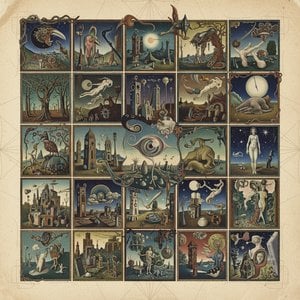
Max Ernsts 25 Mesterværker: Surrealismens Drømme & Psykologiske Dybder | ArtsDot
Oplev Max Ernsts 25 mest ikoniske værker! Dyk ned i surrealismens drømme, dadaismens oprør og psykologisk kunst. Find inspiration til din boligindretning & køb museumskvalitets reproduktioner på ArtsDot.com.
The Allure of Azure: Exploring the Symbolic & Aesthetic Depths of Blue in Art History
Explore the rich history of blue in art! Discover its symbolism, from ancient pigments to modern masterpieces by Kandinsky & Seurat. Uncover the psychological impact and cultural meanings behind this captivating hue.

Surrealismens 10 Mesterværker: Kunst der udfordrer virkeligheden – ArtsDot.dk
Dyk ned i surrealismens fascinerende verden med 10 ikoniske malerier fra Dalí, Magritte & Miró. Oplev historierne bag mesterværkerne og find inspiration til din boligindretning hos ArtsDot.dk – køb kunst online af højeste kvalitet.


