

 Se i fuld skala
 Del
Del Del
Del
 Detaljer

 Download
 Lignende værker
 Røntgenundersøgelse
 Diasshow
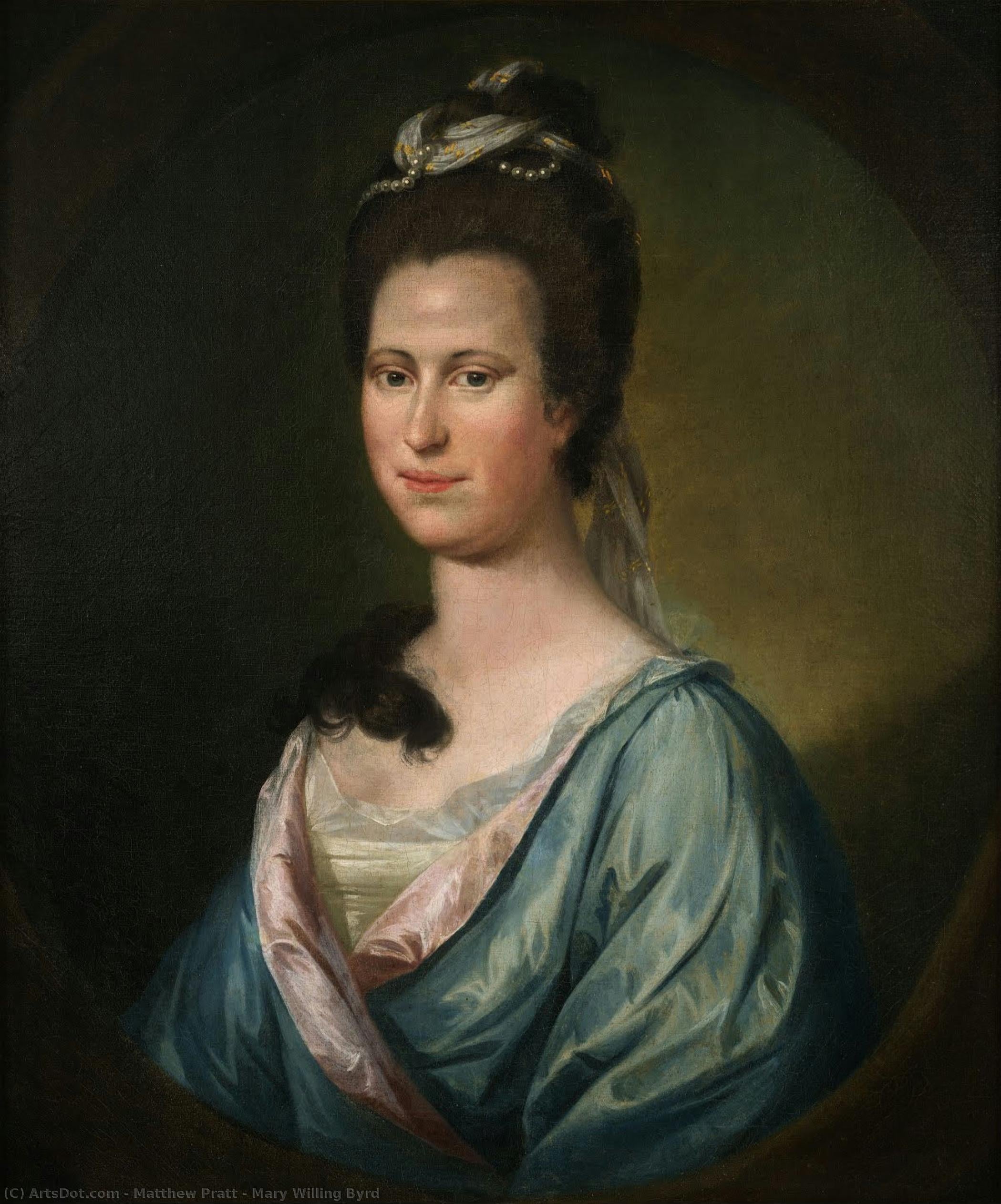
Mary Willing Byrd

 Se mere
Håndlavet oliereproduktion
Håndmalet olie på lærred i din valgte størrelse og ramme, udført efter bestilling af vores kunstnere. ( Køb print Køb billede)




































Vælg mellem vores forudindstillede størrelser, der matcher kunstværkets originale proportioner.

Du kan indtaste dine egne mål for at passe til en bestemt ramme eller plads. Hvis den valgte størrelse ikke stemmer overens med det originale billedes proportioner, vil vi enten beskære kunstværket eller udvide maleriet med yderligere håndmalede elementer. En digital skitse sendes til din godkendelse, før produktionen påbegyndes.
Bemærk venligst, at forhåndsvisningen på skærmen ikke afspejler den faktiske beskæring eller udvidelse. Kun skitsen vil nøjagtigt vise den endelige komposition.
Selvom specialmål er mulige, anbefaler vi at vælge en dimension fra den foruddefinerede liste for at bevare de originale proportioner.
Efter bestilling vil ArtsDot.com team sende en e-mail til kunden for at få instruktioner og levere et udkast til en skitse.
Levering i hele verden () på 3/4 uger i stedet for de standard 5 uger. (17 august). Ingen kompromiser med kvaliteten.

Gratis ekspresforsendelse til hele verden

Lærred af linned i høj kvalitet

Fuld transportforsikring

Garanti for refusion af told og importafgifter

Garanti for præcis farvegengivelse

60 dages returret (kun ved fabrikationsfejl)

100% Tilfredshedsgaranti

Mængderabat tilgængelig
 Glasmulighed er kun tilgængelig i størrelser under 110 cm

Mary Willing Byrd
Reproduktionsmetode
Størrelse på reproduktion
-


Samlet pris
$ 263
Lignende kunstværker


Kunstnerens biografi
Matthew Pratt (1734 – 1805): The Quiet Master of Philadelphia Portraiture
Matthew Pratt stands as a testament to the understated brilliance of the American Colonial Era, an artist whose legacy resides not in grand canvases or flamboyant exhibitions but in exquisitely rendered portraits that capture the essence of prominent figures and families shaping the burgeoning nation. Born September 23rd, 1734, in Philadelphia—a city pulsating with intellectual ferment and mercantile ambition—Pratt’s life unfolded against a backdrop of burgeoning republican ideals and artistic innovation.
His formative years were steeped in craftsmanship, apprenticed to his uncle, James Claypoole Sr., a limner renowned for his meticulous depictions of landscapes and architectural interiors. This early training instilled within Pratt a profound appreciation for detail and observation—qualities that would define his distinctive artistic style. Crucially, it also exposed him to the burgeoning influence of European artistic traditions, particularly those championed by Benjamin West and Joshua Reynolds.
The pivotal moment in Pratt’s career arrived in 1764 when he accompanied his cousin, Betsy Shewell, on her journey to England for marriage to Benjamin West. This transatlantic voyage wasn't merely a logistical undertaking; it represented an immersion into the European artistic landscape—a crucible where Pratt honed his skills and absorbed the stylistic nuances of the era’s leading artists. He spent two and a half years studying under West, collaborating closely on ambitious projects like “The American School,” which powerfully asserted the legitimacy of American art alongside its European counterparts.
Returning to Philadelphia in 1768, Pratt established himself as a respected portraitist, forging connections with fellow artists such as John Singleton Copley and Charles Willson Peale. These collaborations fostered intellectual exchange and propelled Pratt’s artistic development—he became particularly adept at capturing the psychological depth of his subjects, conveying not just physical likeness but also inner character.
Pratt married Elizabeth Moore in 1760, establishing a family rooted in Philadelphia's vibrant social fabric. He produced an impressive oeuvre encompassing portraits of statesmen, merchants, and prominent citizens—works that offer invaluable glimpses into the lives and aspirations of America’s elite during this formative period. His meticulous technique—characterized by subtle tonal gradations and masterful use of chiaroscuro—elevated his portraits beyond mere likenesses; they became embodiments of dignity, intellect, and familial devotion.
Matthew Pratt died January 9th, 1805, in Philadelphia’s Christ Church Burial Ground—a final resting place alongside many luminaries of the era. His enduring contribution to American art lies in his unwavering commitment to realism combined with an exquisite sensitivity to human emotion—a legacy that continues to inspire admiration and scholarly study.
- Notable Works: “The American School,” Portraits of John Dickinson, Mary Willing Byrd, Mrs. Peter De Lancey
- Style: Precise tonal gradations, masterful use of chiaroscuro, psychological depth.
- Influences: James Claypoole Sr., Benjamin West, Joshua Reynolds
- Historical Significance: Represents the burgeoning American artistic identity amidst European traditions; captures the spirit of Philadelphia’s intellectual and social milieu.
Further exploration into Pratt's artistry can be found at:The Metropolitan Museum of Art and Wikipedia.

matthew pratt
1734 - 1805
Kort om kunstneren
- Artistic Movement Or Style: Colonial Era Portraiture
- Artists Or Movements Influenced By This Artist: ['American School']
- Artists Who Influenced This Artist:
- James Claypoole
- Benjamin West
- Date Of Birth: September 23, 1734
- Date Of Death: January 9, 1805
- Full Name: Matthew Pratt
- Nationality: American
- Notable Artworks:
- The American School
- Mrs. Peter De Lancey
- Mary Willing Byrd
- Place Of Birth: Philadelphia, Pennsylvania

