


 Send
Send Del
Del
 Detaljer
 Studieguide til kunstværker

 Download
 Lignende værker
 Se diasshow
 Statistik
Trinity
 Fresco
- Decor
- Renaissance Realism
 1425
1425- Renaissance
 640.0 x 317.0 cm
 Santa Maria Novella
 Læs mere
Håndlavet oliereproduktion
Håndmalet olie på lærred i din valgte størrelse og ramme, udført efter bestilling af vores kunstnere. ( Skift til printversion Skift til digitalt billede)




































Vælg mellem vores forudindstillede størrelser, der matcher kunstværkets originale proportioner.

Du kan indtaste dine egne mål for at passe til en bestemt ramme eller plads. Hvis den valgte størrelse ikke stemmer overens med det originale billedes proportioner, vil vi enten beskære kunstværket eller udvide maleriet med yderligere håndmalede elementer. En digital skitse sendes til din godkendelse, før produktionen påbegyndes.
Bemærk venligst, at forhåndsvisningen på skærmen ikke afspejler den faktiske beskæring eller udvidelse. Kun skitsen vil nøjagtigt vise den endelige komposition.
Selvom specialmål er mulige, anbefaler vi at vælge en dimension fra den foruddefinerede liste for at bevare de originale proportioner.
Efter bestilling vil ArtsDot.com team sende en e-mail til kunden for at indhente instruktioner og fremsende et udkast til gennemgang.
Levering i hele verden () på 3-4 uger i stedet for de standard 5 uger. (5 oktober). Ingen kompromiser med kvaliteten.

Gratis ekspresforsendelse til hele verden

Lærred af linned i høj kvalitet

Komplet transportforsikring

Garanti for refusion af told og importafgifter

Garanti for autentisk farvegengivelse

100 dages returret ved fabrikationsfejl

100% fuld returret

Mængderabat ved flere køb
 Glasmulighed er kun tilgængelig i størrelser under 110 cm

Trinity
Reproduktionsmateriale
Reproduktionsstørrelse
-


Samlet pris
Dkr 1692
A Portal to the Divine: The Dawn of Renaissance Realism
To step before Masaccio’s Holy Trinity is to witness the exact moment when the flattened, symbolic world of the Middle Ages dissolved into the profound, breathing reality of the Renaissance. Painted between 1425 and 1427 within the hallowed walls of Santa Maria Novella in Florence, this fresco does not merely depict a religious scene; it carves a hole in the very wall of the chapel, inviting the viewer to step into a sacred, three-dimensional space. At its heart lies a revolutionary commitment to humanism—the belief that the divine can be understood through the lens of human experience and physical truth. Through his masterful command of light and form, Masaccio transformed a static icon into a living drama of salvation.
The composition is anchored by the central figure of Jesus Christ, depicted with a startling naturalism that was unprecedented for his era. He stands as the axis of the universe, flanked by the Virgin Mary and Saint John the Evangelist. Unlike the ethereal, weightless figures of the preceding Gothic period, Masaccio’s subjects possess a palpable sense of mass and gravity. Their robes fall with heavy, realistic folds, and their faces carry an emotional depth that speaks to the viewer across centuries. This is not art meant for distant adoration alone; it is art designed to resonate with the human soul, making the theological mysteries of the Trinity feel intimately present within our own physical realm.
The Architecture of Illusion: Mastery of Perspective
Perhaps the most enduring legacy of this masterpiece is Masaccio’s pioneering use of linear perspective. By employing a single vanishing point, he created an architectural illusion so convincing that contemporary viewers felt they were looking into a real, deep chapel rather than at a painted surface. The coffered barrel vault above the figures recedes with mathematical precision, guiding the eye upward and inward. This technical triumph was not merely a display of skill; it served a profound symbolic purpose. By placing the holy figures within a believable, structured environment, Masaccio bridged the gap between the earthly and the divine, suggesting that the sacred exists within the very geometry of our world.
This sense of depth is further enhanced by his sophisticated use of chiaroscuro. The subtle interplay of light and shadow—the way light seems to strike the figures from a consistent source—gives them a sculptural quality. This technique breathes life into the flesh, defining the musculature of Christ and the gentle contours of Mary’s face. For the modern collector or interior designer, this mastery of volume offers a sense of structural elegance and intellectual depth, making it a piece that commands attention through its quiet, commanding presence.
A Timeless Legacy for the Discerning Collector
Beyond the technical brilliance, the Holy Trinity remains an emotional powerhouse. It captures the tension between human mortality and eternal hope. At the base of the composition, the inclusion of the donors—the mortal figures who commissioned the work—serves as a poignant reminder of our own place in the grand tapestry of history. They stand at the threshold, looking up toward the divine, mirroring the journey of every viewer who encounters this fresco.
For those seeking to adorn a space with art that inspires contemplation and awe, a high-quality reproduction of this Masaccio masterpiece offers more than mere decoration. It brings into a home or gallery a piece of the very foundation of Western art. Whether placed in a study filled with books or as a focal point in a grand living space, the Holy Trinity provides an atmosphere of profound stability, historical richness, and enduring beauty. It is an invitation to pause, to look deeper, and to rediscover the breathtaking realism that first ignited the Renaissance.
Spørgsmål & svar
Hvornår blev "Trinity" af Masaccio skabt?
"Trinity" af Masaccio blev skabt i 1425.
Hvad forestiller "Trinity" af Masaccio, og hvilken stemning formidler det?
"Trinity" viser perspective, religion, humanism, classicalelements, florence, biblicalscene, renaissanceart, og den stemning, der er indfanget, er Calm.
Hvordan er "Trinity" placeret historisk set?
"Trinity" af Masaccio tilhører Renaissance Realism-bevægelsen inden for Renaissance-perioden. Sammen giver de værket dets plads i kunsthistorien.
Hvilken følelse formidler "Trinity" af Masaccio?
I "Trinity" ledsages en Calm stemning af en Reflective følelse.
Hvor gammel var Masaccio, da Trinity blev skabt i 1425?
Masaccio var 24 år gammel, da vedkommende skabte "Trinity" i 1425. Alderen er beregnet ud fra kunstnerens fødselsår, 1401.
Hvad er den anbefalede printstørrelse til "Trinity" af Masaccio?
"Trinity" anbefales i en trykstørrelse på Large. Andre størrelser er tilgængelige med de samme proportioner.
Hvem har skabt "Trinity"?
"Trinity" blev skabt af Masaccio. Informationen på denne side beskriver Masaccios originale værk.
Lignende kunstværker


Om kunstneren
Masaccio (1401-1428): Tommaso di Ser Giovanni di Simone – Pionjeren af Renæssancens Realisme
Tommaso di Ser Giovanni di Simone Guidi Cassai, bedre kendt som Masaccio (født 21. december 1401 i San Giovanni Valdarno nær Firenze og død efter sommeren 1428 i Rom), regnes sammen med Giotto blandt de vigtigste italienske malere i den tidlige renæssance. Sammen med Masolino malede Masaccio 1425-1428 freskerne i Santa Maria del Carmine i Firenze med motiver fra apostlen Peters liv. Masaccios karriere blev ikke lang – han døde 27 år gammel – men realismen og centralperspektivet fik stor indflydelse på kunsthistorien og satte nye standarder for hvordan menneskeligheden skulle repræsenteres i kunsten. Selvom hans korte liv var præget af tragedie, er Masaccio’s betydning som kunstner ubestridelig og hans værker fortsætter med at fascinere kunstnere og forskere verden over.Tidligt Liv og Uddannelse
Masaccio blev født i Castel San Giovanni di Valdarno, mellem Firenze og Arezzo, omkring 40 kilometer sydøst for Firenze. Hans far var Ser Giovanni di Mone Cassai, en notar, og hans mor, Monna Iacopa, var søn af en værtshusinde. Masaccio’s bror Giovanni var også kunstner; han blev kendt som Lo Scheggia (“den Splinter”), og selvom han kun signe
Masaccio
1401 - 1429 , Italien
Hurtige fakta
- Artistic Movement Or Style: Tidlig renæssance
- Artists Or Movements Influenced By This Artist: ['Senere renæssance kunstnere']
- Artists Who Influenced This Artist:
- Giotto
- Filippo Brunelleschi
- Date Of Birth: December 21, 1401
- Date Of Death: Summer 1428
- Full Name: Tommaso di Ser Giovanni di Simone Cassai
- Nationality: Italiensk
- Notable Artworks:
- The Trinity
- Brancacci Chapel fresker
- Holy Trinity
- Place Of Birth: San Giovanni Valdarno, Italien
Relaterede artikler

The Enduring Legacy of Fresco Painting: Techniques, History & Contemporary Relevance
Explore the rich history & enduring artistry of fresco painting – from Giotto to Michelangelo! Discover techniques, conservation efforts, & modern applications. Learn how ArtsDot brings this timeless art form to your home.
Freskoen som Familiens Arv: Bevar Din Historie på Væggene
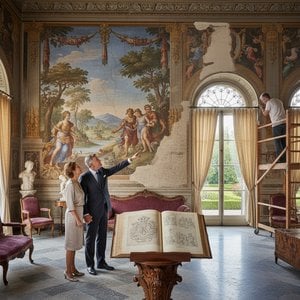
Bevar din families historie med smukke, håndmalede vægmalerier og freskoer. Få professionel rådgivning & skræddersyede kunstværker hos – kvalitet og ekspertise garanteret!

Kunsten at Bo Med Dig: Den Emotionelle Kraft i Et Skræddersyet Interiørfresko
Skab et unikt hjem med et håndmalet freskomaleri! Ekspertvejledning, skræddersyede designs & holdbare kvalitetsløsninger. Få inspiration og realiser din drømmevæg hos os.

Masaccio: Revolutionizing Renaissance Painting Through Innovation & Emotional Realism
Explore the revolutionary art of Masaccio, the first great Italian Renaissance painter. Discover his groundbreaking techniques in perspective, realism & emotional depth – a pivotal figure shaping Western art history.

The Enduring Legacy of Fresco: Technique, History & Artistic Expression Across Cultures
Explore the rich history & enduring legacy of fresco painting! Discover ancient techniques, Giotto's masterpieces, and modern applications. Expert insights for art lovers & professionals.


