


 Se i rummet
 Send
Send Del
Del
 Detaljer
 Studieguide til kunstværker

 Download
 Lignende værker
 Røntgenundersøgelse
 Se diasshow
 Statistik
A la manera de Delvaux


 Læs mere
Kunstværket vist på denne side er beskyttet af ophavsretsloven, hvilket betyder, at vi ikke lovligt kan skabe eller sælge en identisk reproduktion. Denne beskyttelse håndhæves i henhold til internationale aftaler som f.eks. den Bernerkonventionen og af nationale love, herunder de bestemmelser, der er fastlagt i Amerikansk ophavsretslov - Titel 17.
Denne metode overholder fuldt ud ophavsretsreglerne, da den ikke indebærer kopiering eller duplikering af det beskyttede kunstværk. I stedet er der tale om en kreativ nytolkning – et nyt maleri, som er inspireret af det oprindelige, men ikke identisk med det.
Giclée / Kunsttryk
Giclée- eller lærredstryk i museumskvalitet med hurtig produktion og fleksible muligheder for finish. ( Bestil håndmalet reproduktion Skift til digitalt billede)




P118B Dkr10

P118H Dkr10

P118W Dkr10

P438Z Dkr10

P508JH Dkr12

P508YH Dkr12

P805H Dkr10

P805Z Dkr10

P919BZ Dkr10

P919G Dkr10

P919XJ Dkr10

P959ZH Dkr10

P968JZ Dkr12

W106C Dkr8

W218G Dkr10

W218JH Dkr8

W218Y Dkr10

W307PJ Dkr10

W316G Dkr10

W316PJ Dkr8

W316Y Dkr10

W398PJ Dkr8

W4111J Dkr10

W500HY Dkr15

W500JH Dkr15

W692G Dkr12

W849H Dkr8

W940BG Dkr15

W953PJ Dkr8




Vælg mellem vores forudindstillede størrelser, der matcher kunstværkets originale proportioner.

Indtast den bredde og højde, du har brug for, så det passer til din ramme eller din væg. Et print kan kun beskæres, aldrig gøres større end billedet, så en størrelse med en anden form vil miste en del af motivet. Vi sender dig en digital mockup til godkendelse, før vi printer noget. Billedet vist på denne side viser ikke den faktiske beskæring — det er kun mockuppen, der gør.
Verdensomspændende levering () på 2 uger i stedet for de sædvanlige 4/5 uger. (22 oktober)

Gratis ekspresforsendelse til hele verden

Lærred af linned i høj kvalitet

Komplet transportforsikring

Garanti for refusion af told og importafgifter

Garanti for autentisk farvegengivelse

100 dages returret ved fabrikationsfejl

100% fuld returret

Mængderabat ved flere køb
 Glasmulighed er kun tilgængelig i størrelser under 110 cm

A la manera de Delvaux
Giclée / Kunsttryk
Reproduktionsstørrelse
-


Samlet pris
Dkr 413
A Whisper of Delvaux: Duchamp’s Enigmatic Reverie
Marcel Duchamp's *A la manera de Delvaux* (In the Manner of Delvaux) is not a painting in the traditional sense, but rather a meticulously constructed collage that operates as a fascinating echo of Surrealist painter Paul Delvaux. Created in 1942, this work exists as a subtle yet potent exploration of desire, memory, and the unsettling beauty found within the subconscious. It’s a piece born from exile and artistic questioning, reflecting Duchamp's evolving stance towards representation and the very definition of art itself.
The image centers around a poignant scene: a baby, seemingly nursing from a bottle held by a maternal figure. This intimate act is framed within a larger composition populated by shadowy figures, hinting at a narrative that remains tantalizingly out of reach. The sepia tone imbues the work with a nostalgic quality, evoking faded photographs and half-remembered dreams. Duchamp doesn’t attempt to replicate Delvaux's style directly; instead, he *interprets* it, distilling its essence into a fragmented visual poem. He achieves this through the skillful juxtaposition of found imagery – likely cut from magazines or other printed sources – creating a dreamlike atmosphere that is both alluring and disquieting.
The Shadow of Surrealism and Duchamp’s Conceptual Shift
To understand *A la manera de Delvaux*, one must consider the artistic climate of the time. Duchamp had already shaken the foundations of the art world with his “readymades” – ordinary manufactured objects elevated to the status of art through sheer force of conceptual intent, most famously exemplified by *Fountain* (1917). By 1942, he was living in New York, having fled Europe during World War II. He found himself amidst a burgeoning Surrealist movement, and while not fully embracing its tenets, he engaged with its ideas about the unconscious mind and the power of irrationality. Delvaux’s paintings, with their eerie depictions of classical architecture populated by nude figures and trains, provided a particularly resonant visual language for Duchamp to explore.
However, *A la manera de Delvaux* isn't merely an homage; it’s a subtle critique. Duchamp wasn’t interested in simply mimicking another artist’s style. He was probing the nature of representation itself. By creating a work “in the manner of” Delvaux, he highlights the act of imitation and questions originality. The collage format further emphasizes this deconstruction, breaking down images into their constituent parts and reassembling them to create something new – or rather, something that *comments* on what already exists. It’s a precursor to his later, more ambitious conceptual works, like *Étant donnés*, where the viewer is confronted with a hidden world revealed through a peephole.
Emotional Resonance and Interior Spaces
The emotional impact of *A la manera de Delvaux* is subtle but profound. The image evokes feelings of longing, vulnerability, and perhaps even a touch of melancholy. The nursing baby, a universal symbol of innocence and dependence, is rendered with a delicate ambiguity. Is it a scene of comfort or one of quiet desperation? The shadowy figures surrounding the central subject add to this sense of unease, suggesting hidden anxieties and unspoken desires.
For collectors and interior designers, a reproduction of *A la manera de Delvaux* offers a unique opportunity to introduce a touch of intellectual sophistication into any space. Its muted tones and enigmatic imagery lend themselves well to a variety of settings, from modern lofts to classic libraries. The work’s conceptual depth invites contemplation, making it a conversation starter and a testament to the power of art to challenge our perceptions. It is not simply a decorative piece; it's an invitation to delve into the complexities of the human psyche and the ever-evolving nature of artistic expression.
Spørgsmål & svar
Findes der et diasshow til "A la manera de Delvaux" af Marcel Duchamp?
"A la manera de Delvaux" af Marcel Duchamp kan ses som et diasshow på værkets Diaporama-side.
Hvilken teknik og stil kendetegner "A la manera de Delvaux" af Marcel Duchamp?
"A la manera de Delvaux" af Marcel Duchamp kombinerer Acrylic On Canvas-teknikken med Surrealist Collage-stilen. Teknik og stilart beskriver værkets fremstilling og æstetiske udtryk.
Hvem har skabt "A la manera de Delvaux", og hvilken stilart er det?
"A la manera de Delvaux" blev skabt af Marcel Duchamp i Surrealist Collage-stil. Kunstneren og stilen identificerer værkets tradition.
Lignende kunstværker


![Genre Allegory [george Washington] — Marcel Duchamp, Surrealism](/media/artworks/images-thumb/90/d9/90d9ce324280fe5002abd42626b6c52f.jpg)


Om kunstneren
Marcel Duchamp – En Revolutionær Ånd
Marcel Duchamp, født Henri-Robert-Marcel Duchamp i 1887 i Blainville-Crevon, Normandien, var mere end blot en kunstner; han var en filosofisk provokatør, der fundamentalt ændrede kunstens kursus og efterlod sig et varigt præg på moderne kunsthistorie. Hans tidlige liv afslørede allerede en ånd af ikonoklasme – opdraget inden for en familie, der værdsatte kunstnerisk udtryk både med hans brødre som succesfulde kunstnere – hvilket antydede den kommende udfordring til traditionelle kunstnormer. Duchamp begyndte sin kunstneriske uddannelse ved at mestre klassiske teknikker og eksperimentere med postimpressionistiske stilarter, men denne akademiske baggrund tjente ikke som en slutning i sig selv, snarere som et springbræt til spørgsmål om kunstens natur, dens formål og dets definition. Han var ikke tilfreds med blot at gengive verden; han søgte efter at udfordre vores perception af den og hvad der udgør kunstnerisk værdi. Denne rastløse intellektuelle nysgerrighed ville blive hans prægede karriere.Fra Kubisme til Dada – Afvisning af Konvention
Duchamp’s kunstneriske rejse var præget af konstant udvikling, en bevidst afstandtagen fra etablerede normer. Hans første engagement med kubismen, hvilket ses i værker som *Portræt af Skakspillere* (1911), viste interesse for fragmenterede former og flere perspektiver – et væsentligt brud med traditionel repræsentation. Alligevel bevægede han sig hurtigt ud over blot æstetiske bekymringer, erkendende at simpel omstrukturering af visuelle elementer ikke var nok til at adressere de dybere spørgsmål, der hvilede inden i ham. De horrors af Første Verdenskrig nærede denne utilfredshed og førte Duchamp til omfavnelse af dadaismen – en bevægelse født af disillusionment og afvisning af logik, grundighed og traditionelle kunstværdier. Det var inden for dadaistens rammer, at Duchamp virkelig begyndte at nedbryde konventionelle forståelser af kunst. Han var ikke interesseret i at skabe smukke objekter; han ønskede efterlade sig refleksion, udfordre antagelser og afsløre arbitræreheden af æstetisk vurdering. Denne periode så fødslen af hans mest radikale innovation: ‘readymaden’.Readymaden – Kunstens Omvendelse
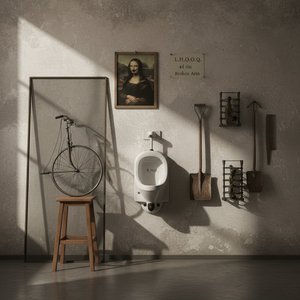
‘Readymaden’ var Duchamp’s mest betydningsfulde bidrag til det 20. århundrede og repræsenterede en fuldstændig omvendelse fra traditionel kunstproduktion. Disse var ikke blot fundne objekter; de var bevidste handlinger af kunstnerisk subversion. Ved at vælge et almindeligt fremstillet objekt – som et urinal (*Fountain*, 1917) – underskrive det “R. Mutt” og præsentere det på en kunstudstilling, udfordrede Duchamp selve kunstens definition og ophavsmandskab. Var det kunstnerens hånd, der skabte værket, eller var det kunstnerens idé? Dette spørgsmål blev centralt for hans praksis og lagde grundlaget for konceptuel kunst. Hans mest ikoniske værk *L.H.O.O.Q.* (1919), hvor Mona Lisas smil blev defaceret med en skjult moustache og goatee, var ikke blot et satirisk udfald mod kunsthistorie og kulturelle ikoner; det var et symbol på Dadaismen’s kamp mod traditionelle værdier og en udfordring til vores forståelse af skønhed. Disse værker var ikke beregnet til at blive beundret for deres æstetiske kvaliteter, men til at fremprovokere debat og tvinge publikum til at omdefinere deres prækoncepter om hvad kunst er.Eftervirkninger og Et Varigt Eftertryk
Marcel Duchamp’s indflydelse på efterfølgende generationer af kunstnere er enorm og hans arbejde fortsætter med at inspirere kunstnere i dag. Han ændrede fundamentalt vores forståelse af kunst og banede vejen for bevægelser som konceptuel kunst, minimalism og popkunst – blandt andre. Hans fokus på kunstnerens idé – konceptet bag værket – fremfor dets æstetiske kvaliteter fortsætter med at udfordre os og inspirere os til refleksion. Han blev en pioner inden for kubistisk skulptur og hans arbejde har efterladt sig et varigt præg på kunsthistorien, hvilket cementerede hans status som en af de mest betydningsfulde kunstnere i det 20. århundrede. Hans udfordring til traditionelle kunstnormer og hans fokus på konceptuel kunst vil fortsætte med at forme kunstens udvikling i fremtiden.
Marcel Duchamp
1887 - 1968 , Frankrig
Hurtige fakta
- Artistic Movement Or Style:
- Kubisme
- Dadaisme
- Konceptuel kunst
- Artists Or Movements Influenced By This Artist:
- Kubisme
- Pop kunst
- Minimalisme
- Date Of Birth: 28 juli 1887
- Date Of Death: 2 oktober 1968
- Full Name: Marcel Duchamp
- Nationality: Fransk-Amerikaner
- Notable Artworks:
- Fontæne
- L.H.O.O.Q.
- Det Store Glas
- Boîte-en-valise
- Place Of Birth: Blainville, Frankrig
Relaterede artikler

Dada: A Revolution of Anti-Art & the Rejection of Reason in Early 20th Century Aesthetics
Explore the revolutionary Dada art movement! Discover its origins, key artists like Duchamp & Arp, and lasting impact on modern art. A deep dive into anti-art & challenging conventions.

Dadaism: A Rebellion Against Reason – Exploring the Origins, Characteristics, and Enduring Legacy of an Anti-Art Movement
Explore the revolutionary Dada art movement! Discover its origins in WWI, key artists like Duchamp & Höch, core principles, and lasting impact on modern and contemporary art. A comprehensive guide for enthusiasts.

Echoes of Time: Nostalgia, Technique & Cultural Significance in Vintage Paintings
Explore the captivating world of vintage paintings! Discover key styles, cultural significance & collecting tips from art experts at ArtsDot. Find authentic reproductions and elevate your home décor.

The Enigmatic Realm of Paul Delvaux: Surrealism, Memory & the Poetics of Disquiet
Explore the haunting dreamscapes of Paul Delvaux, a master of Surrealism. Discover his iconic motifs, classical influences & enduring legacy with ArtsDot.com.
Marcel Duchamp: Challenging Conventions & Redefining Art in the 20th Century
Explore the revolutionary art of Marcel Duchamp! Discover how his Dadaist readymades challenged artistic conventions & redefined modern art. A deep dive into 'Fountain', conceptual shifts, and his lasting impact.


