

 Se i rummet
 Del som kort
 Del
Del
 Detaljer
 Guide
Guide

 Download
 Lignende værker
 Røntgenundersøgelse
 Diasshow
 Spørgsmål og svar
 Statistikker
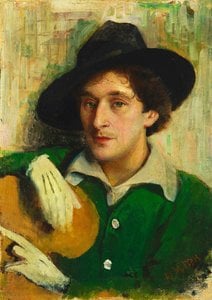
Self Portrait with Brushes

- 57.0 x 48.0 cm


 Vis mere
Få en printklar fil, der rækker langt ud over web-forhåndsvisningen. Hvert digitalt billede, vi sælger, stammer fra en højopløst master i vores database — typisk mellem 5.000 og 15.000 pixels i bredden — så du med selvtillid kan printe stort, beskære tæt eller gengive fine detaljer.
Ingen fil forlader vores studie uden at være blevet behandlet. En digital ekspert kontrollerer farverne i forhold til det originale maleri og korrigerer dem efter behov, hvorefter klarhed og detaljer forbedres med professionelle retoucheringsværktøjer — altid med fuld respekt for kunstnerens penselstrøg og stil. Resultatet er et billede, der ligner selve maleriet, og ikke blot et scannet billede med et filter.
Du godkender først, når du er tilfreds: Vores ekspert sender billedet til din gennemgang via e-mail inden for 72 timer. Ikke tilfreds? Bed om rettelser eller forbedringer, eller anmod om en refundering, hvis kvaliteten ikke lever op til forventningerne.
Dette er den kvalitet, som forlag, designstudier, gallerier og trykkerier stoler på.
Digitalt billede
Download en højopløselig fil til personlig fremvisning, print og kreative projekter. ( Skift til printsalg Køb håndmalet maleri)
Inkluderet i alle ordrer på digitale billeder
Ekspertise i digital levering, garanteret
Når du vælger ArtsDot.com, får du ikke blot et billede – du modtager et professionelt optimeret digitalt kunstværk, skabt med præcision og sikret med en tilfredshedsgaranti. Her er alt, hvad din ordre automatisk indeholder:

Hurtig levering via e-mail
Din højtopløselige digitale billedfil sendes til din e-mail inden for 72 timer efter bestilling – klar til øjeblikkelig brug.

AI-optimeret digital fil
Dit kunstværk optimeres professionelt ved hjælp af avancerede AI-værktøjer og manuel redigering, hvilket sikrer maksimal detaljegrad, klarhed og farvenøjagtighed.

Gratis livslang genlevering
Har du ved en fejl slettet eller mistet din fil? Ingen bekymring – vi sender den igen til enhver tid, helt gratis.

Ingen importgebyrer – nogensinde
Nyd dit kunstværk med det samme uden told, afgifter eller leveringsgebyrer – digitale downloads er altid skattefrie.

Garanteret farvenøjagtighed
Vi sikrer, at dit digitale billede gengiver de originale farver så præcist som muligt ved hjælp af professionelle værktøjer og farvestyring.

100 dages tilfredshedsgaranti
Hvis du ikke er tilfreds med dit digitale billede, vil vi revidere det eller refundere 100% inden for 100 dage – uden spørgsmål.

100% Pengene tilbage-garanti
Ik tilfreds? Få fuld refusion inden for 100 dage efter modtagelse af din digitale fil – uden spørgsmål.

Mængderabat ved storkøb
Køb 3 billeder, spar 10% - Køb 5, spar 15% - Køb 10+, spar 20%. Ideelt til kreative projekter, gallerier og bureauer.
A Glimpse into Artistic Becoming: Marc Chagall’s *Self Portrait with Brushes* (1909)
This captivating self-portrait offers a rare and intimate look at a young Marc Chagall as he navigates the burgeoning stages of his artistic career. Painted in 1909, this work isn't merely a depiction of physical likeness; it’s a visual statement about identity, aspiration, and the very act of creation. The painting, measuring 57 x 48 cm, reveals a pivotal moment for the artist, bridging his early influences with the unique style that would define his legacy.Style & Influences: Echoes of Expressionism and Early Modernity
- Expressionist Foundations: *Self Portrait with Brushes* is firmly rooted in the Expressionist movement, characterized by a subjective emotional experience conveyed through bold color and distorted forms. Chagall doesn’t aim for photographic realism; instead, he prioritizes conveying his inner state.
- Avant-Garde Currents: The painting demonstrates Chagall's engagement with the artistic ferment of his time, absorbing elements from Fauvism – evident in the vibrant, non-naturalistic color palette – and nascent Cubist principles in the simplification of forms. However, he doesn’t fully subscribe to either movement, forging a path towards his own distinctive visual language.
- Jewish Heritage: While not overtly present in this particular work, Chagall's upbringing within the vibrant Jewish culture of Belarus profoundly shaped his artistic sensibility and would become increasingly prominent in his later oeuvre. The seeds of this influence are subtly present in the painting’s emotional depth.
Composition & Symbolism: A World Within a Frame
- Centrality of the Artist: Chagall positions himself prominently at the center, commanding the viewer's attention. His gaze is direct and engaging, creating an immediate connection.
- Simplified Form & Naive Aesthetic: The artist’s face is rendered with a deliberate simplicity, almost bordering on naiveté. This isn’t a lack of skill but rather a conscious stylistic choice to emphasize emotional expression over precise representation.
- Domestic Harmony & Natural Elements: The potted plants flanking Chagall's head introduce a sense of balance and domesticity. These elements, along with the vase and bowl, suggest a personal space – perhaps his studio – imbued with life and growth.
- Birds as Symbols of Freedom & Creativity: The inclusion of three birds is particularly significant. Birds frequently appear in Chagall’s work, symbolizing freedom, aspiration, and the boundless realm of creativity. Their presence hints at the artist's dreams and ambitions.
Historical Context: A Young Artist Finding His Voice
Painted during a period of significant artistic experimentation, *Self Portrait with Brushes* reflects Chagall’s early explorations in Paris. He was absorbing new ideas while simultaneously grappling with his own identity as an artist and a Russian-Jewish émigré. This self-portrait is not just a record of appearance but also a testament to the formative years of a groundbreaking artistic career, preceding his more celebrated fantastical compositions. It's a crucial stepping stone in understanding the evolution of his unique style.Emotional Impact & Legacy
The painting evokes a sense of quiet contemplation and earnest self-assessment. There’s a vulnerability in Chagall’s gaze, suggesting both confidence and uncertainty as he embarks on his artistic journey. *Self Portrait with Brushes* is more than just an early work; it's a poignant expression of the artist’s inner world – a glimpse into the soul of a creative genius in the making. Chagall’s innovative use of color, symbolism, and emotional depth continues to inspire artists today, solidifying his place as one of the most important figures of 20th-century art. A high-quality reproduction of this piece would bring a touch of artistic introspection and vibrant energy to any space.Spørgsmål og svar
Hvilken stemning ville "Self Portrait with Brushes" bringe til et rum?
Den Dramatic atmosfære i "Self Portrait with Brushes" af Marc Chagall komplementerer det anbefalede rum: et Living Room.
Hvordan forbinder "Self Portrait with Brushes" af Marc Chagall Expressionism med kunstnerens hjemland?
"Self Portrait with Brushes" blev skabt af Marc Chagall, født i Hviderusland, inden for Expressionism-bevægelsen. Kunstnerens oprindelse forbinder værket med Expressionism, som det praktiseres af kunstnere fra Hviderusland.
Hvordan beskrives stemningen i "Self Portrait with Brushes" af Marc Chagall?
"Self Portrait with Brushes" har en Dramatic atmosfære.
Lignende kunstværker


Kunstnerens biografi
Tidlige år, familie og uddannelse
Marc Chagall træder ind i verden den 7. juli 1887 i Vitebsk i Det Russiske Imperium, født som Moishe Segal. Han er det første af ni børn i en beskedent stillelse jødisk familie. Livet er defineret af arbejdets rytmer og småskala handel. Hans far, Khatskel Segal, arbejder som sildepakker på et lager, mens hans mor, Feïga-Ita Tchernina, driver en lille købmandsbutik. Disse tidlige år er dybt forankret i en provinsbyens specifikke teksturer, hvor grænserne for hans verden formes af behovene i et stort hushold og lokalsamfundets traditioner.
Uddannelsen begynder inden for hederens mure, den traditionelle jødiske skole. Her er fokus rettet mod religiøs undervisning og de grundlæggende tekster fra hans opvækst. Ved treerttenårsalderen skifter omfanget af hans læring mod det verdslige. Han indtræder i Vitebsks officielle mellemskole for at modtage en russisk uddannelse, et skridt der markerer en afvigelse fra barndommens strengt religiøse sfære. Denne dobbelte eksistens – mellem hederens hellige traditioner og statsskolens verdslige krav – skaber en spænding, der kommer til at definere hans tidlige udvikling.
Den kunstneriske impuls finder sit første formelle udtryk i Vitebsk. Chagall modtager sin indledende træning på en lokal kunstskole drevet af Iouri Pen. Det er her, at det rå instinkt for visuelt udtryk begynder at samle sig til en disciplineret praksis. Han bevæger sig fra klasseværelsets strukturerede lektioner mod en dybere engagement i selve det at se, hvilket lægger grunden til et liv brugt på at oversætte minder til form.
De formative år i Sankt Petersborg
Overgangen fra den provinsielle stilhed i Vitebsk til det kejserlige storladne Sankt Petersborg er præget af kamp. Mellem 1907 og 1909 tilbyder hovedstaden meget lidt i form af komfort. Fattigdommen er en konstant ledsager; der findes øjeblikke med så svær sult, at fysisk sammenbrud bliver en realitet. For at overleve søger han ud i gaderne, hvor han tjener til livets ophold ved at tegne butiksskilte. Disse kommercielle opgaver skaffer de nødvendige rubler til at opretholde en tilværelse i byen, mens han navigerer i de komplekse vilkår som jødisk studerende i et enormt, omskifteligt imperium.
Den akademiske stræben er nådesløs. Han indskriver sig på flere akademier i søgen efter en formel struktur til sit spirende visuelle sprog. Hovedstadens atmosfære er tung af avantgardens indflydelse, en spænding der trækker ham væk fra den klassiske træning. Han finder sig selv i atelieret hos Léon Bakst, en designer for Ballets Russes, hvor scenografiens teatralske kvaliteter begynder at sive ind i hans opfattelse af rum og form. Denne periode er et sammenstød mellem nødvendighed og ambition, en tid med skitsering for overlevelsens skyld, mens han samtidig opsuger de radikale skift, der finder sted i den russiske kunstscene.
De parisiske år og avantgardens indflydelse
Paris ventede ham i 1910 eller 1911 som et pludseligt skift fra det russiske imperiums provinsielle begrænsninger. Byen bød på et sansemæssigt chok; i Montparnasses gader fandt han lys, farver og en følelse af absolut frihed. Dette var ikke længere sildemandens verden eller den traditionelle heder-skoles rammer, men et landskab af radikale muligheder. Han slog sig ned i La Ruche, den berømte kunstnerresidens, hvor luften var tyk af den nye avantgardes nærvær. Her delte han rum med Amedeo Modigliani og Fernand Léger, skikkelser der var i gang med at redefinere grænserne for moderne ekspression. Epokens indflydelse var uundgåelig, men Marc Chagall forblev en outsider, der opsugede fauvismens og kubismens opdagelser uden nogensinde at opgive sin egen indre logik.
Værkerne fra denne periode begynder at afspejle et brud med den bogstavelige repræsentation. Han bevæger sig mod en stil, der prioriterer emotionelle og poetiske associationer over de strenge regler for malerisk logik. Farverne lysner, næret af mødet med den parisiske scene, mens han navigerer i spændingsfeltet mellem fortidens formelle uddannelse og nutidens eksperimenterende frihed. Denne periode med intens kreativ friktion fortsætter, indtil krigens politiske omvæltninger trækker ham tilbage mod øst. Det er først i 1923, at han vender tilbage til Paris med sin familie og genetablerer sin tilstedeværelse i den by, der for første gang låste op for hans visuelle sprog.
- The Betrothed and Eiffel Tower (1913)
- Hommage à Apollinaire (1912-1913)
De russiske år og revolutionen
Revolutionen trækker Marc Chagall tilbage til Vitebsk. Han nøjes ikke blot med at observere de voldsomme omvæltninger; han forsøger aktivt at forme det kulturelle landskab. Han påtager sig rollen som Vitebsks kommissær for de skønne kunster og overtager ledelsen af en lokal kunstskole. Hans vision er funderet i fællesskab og uddannelse, men det politiske klima skifter konstant under hans fødder. Fremkomsten af suprematismen skaber en dyb splittelse. Skikkelser som Malevitsj og Lissitzkij presser på for en radikal, ikke-objektiv abstraktion, som står i skarp kontrast til Marc Chagalls mere lyriske og figurative tilgang. Spændingen bliver til sidst uholdbar. Han bliver tvunget ud af sine stillinger, da hans drøm om en lokal kunstnerisk renæssance støder sammen med det nye regimes rigide krav.
Omkring 1920 flyttes fokus mod Moskva. Her arbejder han med dekorationerne til det jødiske teater, et projekt der indfanger selve skæringspunktet mellem hans personlige identitet og den offentlige scene. Hans linjer er selvsikre, og hans farver fremstår både stærke og blege, selvom verden omkring ham er ved at gå i opløsning. Han navigerer gennem en periode præget af intens kreativ produktion og dyb materiel kamp, mens han bevæger sig mellem minderne fra shtetlens liv og den skiftende stats krav. Denne æra defineres netop af denne friktion: forsøget på at opbygge et kulturelt hjem, mens selve fundamentet for hans verden er ved at blive skrevet om.
- Over the Town (1914–1918)
- Apparition (omkring 1917-18)
Livet i USA
Udbruddet af Anden Verdenskrig tvang en pludselig geografisk forskydning igennem. I 1941 søgte Marc Chagall og hans familie tilflugt i USA for at flygte fra det urolige og besatte Frankrig. Han bosatte sig i og omkring New York City, en opholdstid der varede frem til 1948. Storbyen dannede en kulisse af dyb følelsesmæssig omvæltning, og midt i krigsårenes angst fangede hans pensel spændingen i en verden i konstant forandring. Hans værker fra denne tid reflekterer epokens usikkerhed og oversætter både personisk og global uro til et visuelt sprog præget af både lidelse og håb.
I løbet af disse syv år fandt kunstneren en måde at engagere sig i store institutionelle projekter på. Han påtog sig betydningsfulde opgaver til FN's hovedkvarter, hvor han oversatte sin poetiske vision til den arkitektoniske struktur i en global institution. Denne periode i Amerika markerer et væsentligt kapitel præget af både eksperimenteren og overlevelse, hvor han brobyggede mellem sine europæiske rødder og en ny, intens virkelighed. Han forblev en mand mellem verdener, med et hjerte der stadig trak ham mod Frankrig, selvom han navigerede gennem de komplekse omstændigheder i sit amerikanske eksil.
- White Crucifixion (1938)
Teknik og kunstnerisk stil
Logikken må vige for følelsen. Marc Chagall forkaster de rigide regler for malerisk logik og vælger i stedet at komponere sine billeder gennem poetiske associationer. Hans lærreder opererer efter drømmens mekanik; figurer svæver gennem luften og trodser tyngdekraften, mens farverne pulserer med en ikke-naturalistisk intensitet. Denne tilgang gør det muligt for ham at indfange selve essensen af en følelse frem for verdens bogstavelige fremtræden. Han bevæger sig langt ud over ren efterligning og bruger en dristig palet til at oversætte erindring til et visuelt sprog.
Hans æstetik er et sammenstød af indflydelser. Han absorberer kubismens fragmenterede strukturer og fauvismens intense farvebrug, men han filtrerer disse avantgarde-bevægelser gennem en dybt personlig linse. Resultatet er en stil, der bygger bro mellem ekspressionisme og abstraktion. Han væver det hellige sammen med det hverdagsagtige og befolker sine scener med symbolsk og surrealistisk billedsprog. Jiddiske folkeeventyr og de stille, levede detaljer fra livet i shtetlerne bliver byggestenene i en privat mytologi. Det velkendte bliver fantastisk.
Billedsproget centrerer sig ofte om tilbagevendende motiver: flyvende elskende, spillemænd og massive buketter. Disse elementer er ikke blot dekorationer, men symboler på et åndeligt og emotionelt landskab. I værker som De elskende (1929) skaber følelsen af vægtløshed og brugen af intense farver et rum, hvor verdens fysiske love ikke længere gælder. Hans arbejde forbliver en konstant forhandling mellem den håndgribelige virkelighed fra hans opvækst og fantasiens grænseløse muligheder.
- Jeg og landsbyen (1911)
- Den grønne violinist (1924)
- Den hvide korsfæstelse (1938)
Mæcener, værksted og bestillinger
Midten af 1920'erne finder Marc Chagall i Paris, hvor han navigerer i kunstmarkedets indflydelsesrige cirkler. Han træder ind i kredsen omkring Ambroise Vollard, en kunsthandler hvis indflydelse har formet banen for mange avantgarde-kunstnere. Vollard bestiller en række raderinger af Marc Chagall og pålægger ham opgaven med at illustrere Nikolaj Gogols værker, specifikt De døde sjæle. Denne periode markerer et skift mod grafikken præcision, en bevægelse væk fra de flydende og spontane udtryk, der kendetegnede hans tidligere lærreder.
I 1931 skifter fokus mod Mellemøsten. Borgmesteren i Tel Aviv rækker Marc Chagall en invitation til at rejse til Palæstina. Formålet er ambitiøst: grundlæggelsen af et jødisk kunstmuseum. Denne periode uddyber hans engagement i religiøs og kulturel symbolik, et tema der vil fortsætte gennem hans senere, monumentale arkitektoniske værker. Hans evne til at oversætte personlig og kollektiv hukommelse til fysisk rum bliver et definerende aspekt af hans professionelle virke.
I takt med at hans ry vokser, udvides skalaen af hans arbejde fra den intime side til det monumentale. Han bevæger sig ind i lysets og arkitekturens rige, hvor han designer glasmosaikvinduer til katedralen i Metz og FN-bygningen i New York. Disse værker kræver en mesterlig forståelse for, hvordan farven interagerer med sollyset. I 1964 når han et højdepunkt i offentlig anerkendelse med en bestilling til loftet i Pariseroperaen, en enorm opgave, der bringer hans drømmeagtige billedsprog ind i en af Europas mest betydningsfulde kulturelle institutioner.
Hvor man kan opleve værkerne i dag
Arven fra hans visionære blik er fortsat forankret i flere centrale institutioner verden over. I Nice, Frankrig, huser Musée National Marc Chagall en omfattende samling af hans værker, som bevarer selve kernen af hans kreative virke. Dette museum tilbyder et koncentreret indblik i det billedsprog, der definerede hans lange karriere. Samtidig opretholder Erhvervsmuseet for den russiske stat i Sankt Petersborg, Rusland, en betydelig repræsentation af hans kunst, med værker der trækker tråde tilbage til hans tidlige år og hans ophold i Det Russiske Imperium.
Hans værkers rækkevidde strækker sig over Atlanten til USA. Museum of Modern Art i New York City rummer værker, der afspejler hans komplekse forhold til byen under hans år i eksil. I det amerikanske Midtvest fremviser Art Institute of Chicago hans kunst, hvilket sikrer hans tilstedeværelse i store internationale samlinger. Disse lokationer udgør de primære fysiske mødepunkter for dem, der søger at opleve hans helt særlige brug af farve og form.
- I and the Village (1911)
- The Wedding (1944)
- White Crucifixion (1938)
- The Lovers (1929)
- The Circus (1964)
Marc Chagall
1887 - 1985 , Hviderusland
Kort fortalt
- Artistic Movement Or Style: Ekspressionisme, Kubisme, Fauvisme, Surrealisme
- Artists Or Movements Influenced By This Artist: ['Surrealister']
- Artists Who Influenced This Artist: ['Léon Bakst']
- Date Of Birth: 1887
- Date Of Death: 1985
- Full Name: Moishe Shagal
- Nationality: Russisk-fransk
- Notable Artworks:
- I and the Village
- The Birthday
- The Wedding
- White Crucifixion
- Over Vitebsk
- Place Of Birth: Liovana, Belarus