

- 205.0 x 295.0 cm


Billedet følger dine valg: , .
Beskrivelse af samlerobjektet
A dreamlike surrealist vision of biblical hope, Marc Chagall's 1966 Noah and the Rainbow uses vibrant colors and floating figures to create a masterpiece of mythic emotion that you can bring into your own collection.
 Vis mere
Kunstnerbiografi
Udforsk Marc Chagall (1887-1985)'s fantastiske verden af drømmebilleder og jiddisk folklore! Oplev hans ikoniske værker og den unikke kunstners præstation inden for moderne kunst.
Håndlavet oliereproduktion
Håndmalet olie på lærred i din valgte størrelse og ramme, udført efter bestilling af vores kunstnere. ( Skift til printsalg Skift til digitalt billede)
Dette kunstværk er ophavsretsbeskyttet
Kunstværket vist på denne side er beskyttet af ophavsretsloven, hvilket betyder, at vi ikke lovligt kan skabe eller sælge en identisk reproduktion. Denne beskyttelse håndhæves i henhold til internationale aftaler som f.eks. den Bernerkonventionen og af nationale love, herunder de bestemmelser, der er fastlagt i Amerikansk ophavsretslov - Titel 17.
Som et respektfuldt og lovligt alternativ tilbyder vi skræddersyede, håndmalede kunstværker inspireret af originalen. Vores dygtige og professionelle kunstnere studerer omhyggeligt originalens stil, stemning og kunstneriske essens for at skabe et nyt, unikt værk, der fremkalder den samme følelse – samtidig med at det forbliver en original skabelse i egen ret.
Denne metode overholder fuldt ud ophavsretsreglerne, da den ikke indebærer kopiering eller duplikering af det beskyttede kunstværk. I stedet er der tale om en kreativ nytolkning – et nyt maleri, som er inspireret af det oprindelige, men ikke identisk med det.
Læs mere om dette maleri
 Se i rummet
 Del som kort
 Del
Del
 Detaljer
 Guide
Guide

 Download
 Lignende værker
 Røntgenundersøgelse
 Diasshow
 Spørgsmål og svar
 Statistikker
Bestil dit maleri i fire enkle trin
Tag dig god tid. Du kan ændre alle svar; prisen i din indkøbskurv opdateres efter hvert valg.
1 Trin et af fire
Hvilken størrelse ønsker du?
Disse størrelser bevarer det originale maleris proportioner. Tegningen viser dit valg på en væg, over en to meter lang sofa.
Eller angiv dine egne mål
Vælg mellem vores forudindstillede størrelser, der matcher kunstværkets originale proportioner.

Indtast den bredde og højde, du har brug for, så det passer til din ramme eller din væg. Da dette er håndmalet, kan kunstneren ved en anden form på størrelsen male lidt mere rundt om billedet eller skære lidt væk — det er op til dig. Vi sender dig et digitalt mockup til godkendelse, før maleriet påbegyndes. Billedet, der vises på denne side, viser ikke det endelige resultat — det er kun mockuppet, der gør.
2 Trin to ud af fire
Hvordan skal det klargøres: rullet, udstrakt eller indrammet?
Priserne nedenfor gælder for den størrelse, du valgte i trin ét.
Vælg kanterne på det opspændte lærred
Vælg din ramme

Hvid kant Dkr1

Udvasket kant Dkr1

Fortsat motiv Dkr1

P118B Dkr10

P118H Dkr10

P118W Dkr10

P438Z Dkr10

P508JH Dkr12

P508YH Dkr12

P805H Dkr10

P805Z Dkr10

P919BZ Dkr10

P919G Dkr10

P919XJ Dkr10

P959ZH Dkr10

P968JZ Dkr12

W106C Dkr8

W218G Dkr10

W218JH Dkr8

W218Y Dkr10

W307PJ Dkr10

W316G Dkr10

W316PJ Dkr8

W316Y Dkr10

W398PJ Dkr8

W4111J Dkr10

W500HY Dkr15

W500JH Dkr15

W692G Dkr12

W849H Dkr8

W940BG Dkr15

W953PJ Dkr8

H24-GOLD Dkr30

H24-SILVER Dkr30

H36-GOLD Dkr45

H36-SILVER Dkr45
Indrammet
Profil: . Samlet størrelse med ramme: .
3 Trin tre ud af fire
Ønsker du at få ændret noget i maleriet?
De fleste svarer nej. Da hvert maleri er håndlavet, kan vores kunstner også tilpasse det til dig.
Efter bestilling vil ArtsDot.com-teamet sende en e-mail til kunden for at få instruktioner og levere et udkast til forhåndsvisning
4 Trin fire ud af fire
Et par forskellige efterbehandlingsmuligheder
Alle er valgfrie. De svar, der allerede er valgt, koster ikke ekstra.
Hvem har malet det?
Verdensomspændende levering () på 3-4 uger i stedet for de standard 5 uger. (10 november). Ingen kompromiser med kvaliteten.
En navneplade, ligesom på et museum?
Detaljer om indgraveret bronzeskilt
This elegant plaque features the artist's name and the title of the artwork, finely engraved for a timeless presentation.
It is made from bronze with a refined, elegant finish. The text is precisely laser-engraved for a sharp and permanent result. Measuring 9x2 cm, the plaque is compact yet easy to read. It's built to be durable and scratch-resistant, offering a professional, museum-quality look. Mounting is simple thanks to the included adhesive backing.
Detaljer om gennemsigtig akrylplade
The plaque includes essential engraved details such as the artist's name, the title of the artwork, the date it was created, the type of media used-like oil on canvas or watercolor-a brief description of the piece, and a QR code that links to the complete artwork information.
It is crafted from clear acrylic, offering a sleek, modern appearance. The text is UV-engraved in black to ensure strong visual contrast. With a size of 10x15 cm, it ensures optimal readability. It comes equipped with two metal hooks for secure wall mounting. The plaque is designed to be weather-resistant, making it suitable for various environments, and it includes interactive features that work seamlessly with smartphone scanning.
Detaljer om sort akrylplade
This elegant plaque includes engraved information such as the artist's name, the title of the artwork, the date it was created, the type of media used (like oil on canvas or watercolor), a short description of the artwork, and a QR code for quick access to more information.
The plaque itself is made from refined black acrylic with a premium finish. The text is laser-engraved in white for high contrast and readability. Its size is 10x15 cm, designed to be easy to read. It comes with two metal hooks for professional mounting. The design is sleek and fits any interior style. It is also weather-resistant and durable, with built-in digital integration for mobile compatibility.
En beskyttende lak?
Hvornår skal det leveres?
✓ Tjek og bestil
Dit maleri, præcis som du har bestilt det

Noah and the Rainbow
Reproduktionsmetode
Størrelse på reproduktion
-

Eksklusivt udvalgte senior-kunstnere
Mere detaljerigdom, finesse og ekstra produktionstid
-

Indramning af reproduktion
-
-
For kunstværker eller reproduktioner, der er større end 105 cm (ca. 41 tommer) på en hvilken som helst side, vil rammen blive leveret som et adskilt sæt. Denne metode sikrer sikker levering og forhindrer skader under transport.
Professionel montering er påkrævet – dette er ikke et gør-det-selv produkt.
Sættet skal samles, og lærredet skal opspændes af en erfaren professionel indrammer ved brug af trælim (ikke medfølger), en lærredsspænder og klemmer til at holde blindrammen vinkelret, mens limen tørrer. Forkert samling eller ujævn spænding af lærredet kan beskadige kunstværket permanent og er ikke dækket af vores garanti.
 For kunstværker eller reproduktioner, der er større end 105 cm (ca. 41 tommer) på en hvilken som helst side, vil rammen blive leveret som et adskilt sæt. Denne metode sikrer sikker levering og forhindrer skader under transport.
Alle massive trælister er inkluderet, præcist tilpasset i størrelsen.
Samles med de medfølgende skruer samt trælim til hjørneforbindelserne, som ikke medfølger og skal anskaffes af din indrammer.
Professionelt værktøj er påkrævet og medfølger ikke: en lærredsstrækker (spændetang) og klemmer til at holde blindrammen vinkelret, mens limen tørrer.
Vigtigt:
Hjørneforbindelserne kræver trælim, listerne skal holdes fast med skruetvinger, indtil limen er helt tør, og opspænding af lærredet på den samlede ramme kræver en lærredsspænder. Ingen af disse dele er inkluderet i sættet. Vi anbefaler, at du kontakter en erfaren professionel indrammer, før du bestiller denne størrelse.

Navneskilt
-
-

Beskyttende fernis
Blank lak (fremhæver farverne og beskytter mod lys og fugt)
-

Tilpas mit kunstværk
Eksempler på tilpasningsmuligheder: Udskift ansigt med kunde-foto; Tilføj kæledyr (f.eks. udskift kat med hund); Inkluder skjult besked i baggrunden; Ændr baggrundslandskab eller elementer.
-

Hurtig levering
Verdensomspændende levering () på 3-4 uger i stedet for de standard 5 uger. (10 november). Ingen kompromiser med kvaliteten.
-
Ekspreslevering
Verdensomspændende levering til inden for 5 uger. (17 november).
Inkluderet
Samlet pris
Dkr 1755
Glasmulighed er kun tilgængelig i størrelser under 110 cm
Inkluderet i hver ordre
- Gratis ekspresforsendelse til hele verden
- Lærred af linned i høj kvalitet
- Fuld transportforsikring
- Garanti for refusion af told og importafgifter
- Garanti for præcis farvegengivelse
- 100 dages returret ved fabrikationsfejl
- 100% fuld returret
- Mængderabat ved flere køb


A Symphony of Color and Myth: Exploring Marc Chagall’s “Noah and the Rainbow”
Marc Chagall's "Noah and the Rainbow," completed in 1966, stands as one of his most iconic depictions of biblical narrative—a testament to his unparalleled ability to translate myth into visceral emotion. Painted during a period marked by significant political upheaval and personal reflection, this monumental canvas transcends mere illustration; it’s an immersive experience for the viewer, inviting contemplation on themes of faith, resilience, and the enduring power of hope amidst devastation.The Surrealist Landscape: A Familiar Yet Distorted Vision
Chagall firmly established himself within the Surrealist movement spearheaded by André Breton, yet his artistic idiom remained stubbornly independent from prevailing stylistic trends. “Noah and the Rainbow” embodies this characteristic through its dreamlike landscape—a stylized depiction of Vitebsk bathed in an ethereal glow. The town is rendered not with photographic accuracy but with a deliberate distortion that prioritizes emotional resonance over representational fidelity. Buildings appear to float, perspectives shift unpredictably, and colors pulsate with vibrancy—techniques borrowed from Fauvist painting and informed by Chagall’s own recollections of his childhood. This stylistic choice immediately establishes the artwork's atmosphere as one of fantastical wonder mingled with underlying melancholy.Technique and Material: Layers of Acrylic Paint
The painting utilizes acrylic paint on canvas, a medium favored by Chagall for its durability and ability to achieve luminous effects. He applied numerous layers of pigment—often incorporating iridescent flakes—creating a textured surface that captures the interplay of light and shadow with remarkable precision. The artist’s meticulous brushwork contributes significantly to the artwork's expressive power, conveying movement and dynamism while simultaneously delineating intricate details. Notably, Chagall employed a technique known as “alla prima,” applying paint directly onto the canvas without preliminary sketches—a bold decision that ensured spontaneity and immediacy in the creative process.Biblical Symbolism: The Ark, Angels, and the Rainbow
“Noah and the Rainbow” is replete with symbolic references to the biblical story of the Great Flood. At its center stands a large ark—a vessel representing salvation and divine protection—populated by figures rendered in Chagall’s signature style: elongated forms, stylized faces, and vibrant hues. Above the ark soar angels—symbols of divine grace and guardianship—their wings outstretched in an embrace of compassion. Most prominently featured is the rainbow—the covenant between God and Noah after the floodwaters recede—a radiant arc embodying promise and renewal. Chagall’s interpretation transcends literal depiction; he imbues these symbols with spiritual significance, conveying a profound meditation on faith's capacity to endure even in the face of unimaginable suffering.Emotional Resonance: A Portrait of Inner Turmoil
Ultimately, “Noah and the Rainbow” speaks to Chagall’s own personal struggles—his exile from Soviet Russia following World War II and his enduring preoccupation with themes of displacement and loss. The painting's melancholic undertones are palpable in its muted palette and subtly expressive brushwork. Yet, despite this sense of sorrow, it radiates an unwavering optimism—a conviction that beauty and transcendence can emerge from darkness. Chagall’s masterpiece invites viewers to confront existential questions while simultaneously offering solace through its breathtaking visual splendor—a timeless reminder that art possesses the power to illuminate the human condition and inspire hope for generations to come.Spørgsmål og svar
Hvad forestiller "Noah and the Rainbow" af Marc Chagall?
Temaerne i "Noah and the Rainbow" af Marc Chagall omfatter biblical flood, rainbow symbolism, flying figures, jewish folklore, surreal landscape, bird imagery, religious narrative, som tilsammen udgør værkets motivverden.
Er "Noah and the Rainbow" af Marc Chagall et lyst eller et mørkt kunstværk?
"Noah and the Rainbow" har en overordnet lysstyrke på balanced, og dens luminans er Soft Shadow.
Hvem er kunstneren bag "Noah and the Rainbow"?
Kunstneren bag "Noah and the Rainbow" er Marc Chagall. Værket er katalogiseret under Marc Chagalls navn.
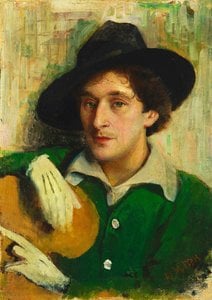
Marc Chagall
1887 - 1985, Hviderusland


