


 Se i rummet
 Send
Send Del
Del
 Detaljer
 Guide
Guide

 Download
 Lignende værker
 Røntgenundersøgelse
 Se diasshow
 Statistik
Sketchbook
 Acrylic On Canvas
- WallArt
- Ludwig van Beethoven
 1820
1820 24.0 x 16.0 cm
 Beethoven-Haus Bonn
 Læs mere
Håndlavet oliereproduktion
Håndmalet olie på lærred i din valgte størrelse og ramme, udført efter bestilling af vores kunstnere. ( Skift til printversion Skift til digitalt billede)




P118B $10

P118H $10

P118W $10

P438Z $10

P508JH $12

P508YH $12

P805H $10

P805Z $10

P919BZ $10

P919G $10

P919XJ $10

P959ZH $10

P968JZ $12

W106C $8

W218G $10

W218JH $8

W218Y $10

W307PJ $10

W316G $10

W316PJ $8

W316Y $10

W398PJ $8

W4111J $10

W500HY $15

W500JH $15

W692G $12

W849H $8

W940BG $15

W953PJ $8




Vælg mellem vores forudindstillede størrelser, der matcher kunstværkets originale proportioner.

Du kan indtaste dine egne mål for at passe til en bestemt ramme eller plads. Hvis den valgte størrelse ikke stemmer overens med det originale billedes proportioner, vil vi enten beskære kunstværket eller udvide maleriet med yderligere håndmalede elementer. En digital skitse sendes til din godkendelse, før produktionen påbegyndes.
Bemærk venligst, at forhåndsvisningen på skærmen ikke afspejler den faktiske beskæring eller udvidelse. Kun skitsen vil nøjagtigt vise den endelige komposition.
Selvom specialmål er mulige, anbefaler vi at vælge en dimension fra den foruddefinerede liste for at bevare de originale proportioner.
Efter bestilling vil ArtsDot.com team sende en e-mail til kunden for at indhente instruktioner og fremsende et udkast til gennemgang.
Levering i hele verden () på 3-4 uger i stedet for de standard 5 uger. (22 september). Ingen kompromiser med kvaliteten.

Gratis ekspresforsendelse til hele verden

Lærred af linned i høj kvalitet

Komplet transportforsikring

Garanti for refusion af told og importafgifter

Garanti for autentisk farvegengivelse

100 dages returret ved fabrikationsfejl

100% fuld returret

Mængderabat ved flere køb
 Glasmulighed er kun tilgængelig i størrelser under 110 cm

Sketchbook
Reproduktionsmateriale
Reproduktionsstørrelse
-


Samlet pris
$ 263
A Window Into Beethoven’s Soul: The Sketchbook of 1815-1816
The world of Ludwig van Beethoven is often presented through the grand pronouncements of his symphonies and sonatas – monumental works that reverberate with heroic struggle and transcendent beauty. Yet, nestled within the vastness of his output lies a quieter, more intimate realm: his sketchbooks. Specifically, the “Sketchbook of 1815-1816,” currently housed at the Princeton University Library, offers an unparalleled glimpse into the composer’s creative process during a pivotal period of his life – a time marked by increasing deafness and profound artistic transformation. This unassuming collection of roughly sixty loose sheets, bound together with simple twine, is not merely a record of musical ideas; it's a visual diary, revealing the meticulous thought and restless experimentation that fueled some of Beethoven’s most enduring compositions.
The sketchbook itself is remarkably modest in appearance. The paper is of a standard quality, bearing the marks of frequent use – creases, smudges, and faint pencil markings attest to its active role as a sounding board for the composer's evolving musical concepts. Unlike the polished manuscripts that often dominate our understanding of Beethoven’s work, these sketches are raw, immediate, and intensely personal. They represent the genesis of ideas, the tentative exploration of harmonies and melodies before they were refined into the finished forms we know so well. The pages aren’t filled with fully realized scores; instead, they contain fragmented musical phrases, harmonic progressions, rhythmic motifs, and even brief annotations – a chaotic yet compelling testament to the composer's internal dialogue.
The Language of Gesture: Technique and Style
Beethoven’s technique in these sketches is characterized by an extraordinary directness. He rarely employs elaborate notation or complex musical symbols; instead, he relies on shorthand—a system of dots, dashes, and abbreviations that quickly convey the essence of a musical idea. The drawings themselves are remarkably expressive, capturing not just the notes but also the *feeling* behind them. He frequently uses gestural markings – quick, sweeping lines that mimic the movement of his hand as he played the piano—to suggest dynamics, phrasing, and articulation. The sketches aren’t merely representations of music; they're attempts to translate the physical sensation of sound onto paper.
The style is remarkably varied, reflecting the diverse range of musical ideas that occupied Beethoven’s mind during this period. There are studies for his Piano Sonata No. 13 in Db Major (“Pathétique”), sketches for the “Moonlight” Sonata, and fragments related to the Missa Solemnis – a monumental choral work that consumed him for nearly two decades. The sketchbook also contains musical ideas relating to various vocal works, including songs and operatic excerpts. The sheer volume of material suggests a constant state of creative ferment, with Beethoven relentlessly exploring new possibilities.
Echoes of the Era: Historical Context
To understand the significance of this sketchbook, it’s crucial to consider the historical context in which it was created. Beethoven was living in Vienna during a period of immense social and political upheaval. The Napoleonic Wars had recently ended, leaving Europe reeling from the aftermath of conflict and revolution. Beethoven himself was grappling with his own personal struggles – the gradual loss of his hearing, coupled with a growing sense of isolation and disillusionment. These challenges profoundly shaped his artistic vision, leading him to explore themes of struggle, resilience, and ultimately, transcendence in his music.
The sketchbook provides invaluable insight into this turbulent era. The sketches themselves are imbued with a sense of urgency and intensity, reflecting the composer’s emotional state. Many scholars believe that the “Sketchbook of 1815-1816” was created during a period of intense introspection and self-doubt – a time when Beethoven was questioning his own abilities and searching for new ways to express himself musically. The sketches are not simply musical exercises; they’re also reflections on the human condition, capturing the anxieties and aspirations of a man confronting profound personal challenges.
A Window into the Heart: Symbolism and Emotional Impact
Beyond its technical and historical significance, the sketchbook holds a powerful emotional resonance. The fragmented nature of the sketches—the incomplete phrases, the tentative markings—evokes a sense of vulnerability and honesty. It’s as if we are granted access to Beethoven's inner thoughts, his struggles, and his hopes. The act of sketching itself becomes a symbolic gesture – an attempt to capture fleeting moments of inspiration before they vanish forever.
The sketchbook is not merely a document of musical creation; it’s a testament to the enduring power of human creativity in the face of adversity. It reminds us that even in the darkest of times, the impulse to create—to express oneself through art—can provide solace and meaning. Reproductions of these sketches offer a unique opportunity to connect with one of history's greatest composers on a deeply personal level, revealing the raw emotion and intellectual rigor behind his monumental works.
Lignende kunstværker


Om kunstneren
tidligt liv og musikalske begyndelser
Ludwig van Beethoven, en berømt tysk komponist og pianist, blev født i Bonn, Tyskland, i 1770. Ved at udvise sit musikalske talent allerede i en ung alder, begyndte han at studere musik under forskellige lærere, før han flyttende til Wien, hvor han skulle tilbringe størstedelen af sit liv.- sonate for klaver og violoncell (A-dur) op. 69, 1. sats (tilgængelig på ArtsDot.com)
- Beethovens manuskript af Missa Solemnis (kan ses på Wikipedia)
- tre opus 1 klaversonater, støttet af Karl Alois, fyrst Lichnowsky

Ludwig Van Beethoven
1770 - 1827 , Tyskland
Hurtige fakta
- Artistic Movement Or Style: Klassisk Romantik
- Artists Or Movements Influenced By This Artist:
- Johannes Brahms
- Robert Schumann
- Artists Who Influenced This Artist:
- Franz Joseph Haydn
- Christian Gottlob Schulze
- Date Of Birth: 1770 Bonn Tyskland
- Date Of Death: 1827 Wien Østrig
- Full Name: Ludwig van Beethoven
- Nationality: Tysk
- Notable Artworks:
- Måneskinssonaten
- Symfoni nr. 9
- Place Of Birth: Bonn Tyskland
Relaterede artikler

Kandinskys 25 Mesterværker: En Rejse Ind i Abstrakt Kunst | ArtsDot.com
Oplev Kandinskys 25 mest ikoniske værker! Dyk ned i abstrakt kunst, ekspressionisme og farvernes sprog. Find luksus reproduktioner af berømte malerier som 'Komposition VIII' på ArtsDot.com – inspiration til din vægkunst & indretning.
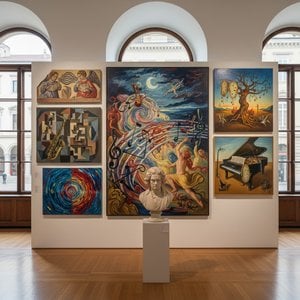
Harmonies on Canvas: Exploring the Visual Representation of Music in Art History
Explore the fascinating history of music's visual representation in art! From ancient symbolism to modern abstraction, discover how artists have captured sound and emotion on canvas. Expert insights & stunning examples.
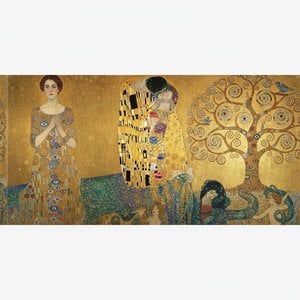
Gustav Klimts 25 Mesterværker: Kunst, Historie & Inspiration til Dit Hjem | ArtsDot
Oplev Gustav Klimts 25 mest ikoniske værker! Fordyb dig i symbolisme, jugendstil og den gyldne periodes skønhed. Find inspiration til din indretning & køb luksus kunst reproduktioner på ArtsDot.com.

The Eloquent Line: Exploring the Artistic Significance of Sketches Across Movements and Media
Explore the profound artistic significance of sketches throughout history. From Renaissance masters to modern innovators like Van Gogh & Guston, discover how these foundational works reveal technique, emotion, and vision. Learn more at ArtsDot.

The Eloquence of Arrangement: Compositional Strategies in Western Art from the Renaissance to Modernism
Explore the evolution of compositional strategies in Western art! Discover how masters like Raphael & Zurbaran used perspective, proportion, and dynamic arrangement to create timeless masterpieces. Enhance your art appreciation today!