


 Send
Send Del
Del
 Detaljer
 Guide
Guide

 Download
 Lignende værker
 Se diasshow
 Statistik
Suffrage banner, Home-Makers


 Læs mere
Håndlavet oliereproduktion
Håndmalet olie på lærred i din valgte størrelse og ramme, udført efter bestilling af vores kunstnere. ( Skift til printversion Skift til digitalt billede)




































Vælg mellem vores forudindstillede størrelser, der matcher kunstværkets originale proportioner.

Du kan indtaste dine egne mål for at passe til en bestemt ramme eller plads. Hvis den valgte størrelse ikke stemmer overens med det originale billedes proportioner, vil vi enten beskære kunstværket eller udvide maleriet med yderligere håndmalede elementer. En digital skitse sendes til din godkendelse, før produktionen påbegyndes.
Bemærk venligst, at forhåndsvisningen på skærmen ikke afspejler den faktiske beskæring eller udvidelse. Kun skitsen vil nøjagtigt vise den endelige komposition.
Selvom specialmål er mulige, anbefaler vi at vælge en dimension fra den foruddefinerede liste for at bevare de originale proportioner.
Efter bestilling vil ArtsDot.com team sende en e-mail til kunden for at indhente instruktioner og fremsende et udkast til gennemgang.
Levering i hele verden () på 3-4 uger i stedet for de standard 5 uger. (21 september). Ingen kompromiser med kvaliteten.

Gratis ekspresforsendelse til hele verden

Lærred af linned i høj kvalitet

Komplet transportforsikring

Garanti for refusion af told og importafgifter

Garanti for autentisk farvegengivelse

100 dages returret ved fabrikationsfejl

100% fuld returret

Mængderabat ved flere køb
 Glasmulighed er kun tilgængelig i størrelser under 110 cm

Suffrage banner, Home-Makers
Reproduktionsmateriale
Reproduktionsstørrelse
-


Samlet pris
$ 263
A Tapestry of Activism and Artistry
In the heart of the early twentieth century, amidst the fervent political shifts of the British suffrage movement, Mary Lowndes created a work that transcends mere decoration to become a profound historical document. "Suffrage Banner, Home-Makers," crafted in 1908, is far more than a piece of silk; it is a vibrant intersection of the Arts and Crafts movement’s devotion to craftsmanship and the urgent, rhythmic pulse of feminist activism. As a designer for the constitutional NUWSS procession, Lowndes utilized her mastery of color and form to weave a narrative that spoke directly to the hearts of women across all social strata—from the lady of the house to the parlormaid. To behold this work is to step into a moment where the domestic sphere and the political arena began an inseparable dance.
The composition is anchored by a rich, regal purple cloth, a color deeply evocative of the dignity and purpose inherent in the struggle for the vote. Within this velvety expanse, Lowndes meticulously arranged symbols that resonate with both warmth and weight. A bowl overflowing with fruit sits prominently, serving as a lush metaphor for abundance, nourishment, and the fruitful potential of a society granted equality. Beside it, the flickering glow of a hearth represents the sanctuary of domestic life, yet in the context of this banner, it serves to bridge the gap between the private home and the public stage. The presence of two birds—one perched in aspiration and another nestled in tranquility—adds a layer of poetic grace, suggesting that the ultimate goal of the movement was not merely conflict, but a lasting, peaceful integration of women's voices into the national identity.
Mastery of Light and Material
Lowndes’ approach to this piece was deeply influenced by her profound connection to the medium of stained glass. Having been captivated by the luminous east windows of English churches, she brought a glazier’s sensibility to the soft medium of silk. Her technique involved a masterful use of layering and glazing, applying translucent pigments to achieve a depth of color that seems to glow from within, much like light passing through cathedral glass. This painstaking process allowed her to create textures that feel tactile and alive, making the banner appear less like a flat object and perhaps more like a window into a brighter, more equitable future.
For the discerning collector or interior designer, a reproduction of this masterpiece offers an unparalleled opportunity to introduce a sense of historical gravity and artistic elegance into a space. The interplay of deep violets, warm hearth-tones, and organic motifs provides a sophisticated palette that complements both classical and contemporary settings. It is not merely an acquisition of art, but the preservation of a legacy—a piece that invites conversation about the power of beauty to drive social change and the enduring strength of the human spirit in the pursuit of justice.
Lignende kunstværker


Om kunstneren
Mary Lowndes: A Pioneer of Light and Voice
The stained glass artist Mary Lowndes (1857-1929) wasn’t merely a craftsman; she was a vital force in the late 19th and early 20th century British arts scene, a period defined by a fervent desire to reconnect with traditional craftsmanship and imbue everyday objects with beauty. Born into a family of modest means in Dorset, her early life offered little indication of the profound impact she would have on the world of art, particularly within the burgeoning Arts and Crafts movement. Her fascination with stained glass began not through formal training, but through an encounter with a magnificent east window installed in Sturminster Newton church – a piece that ignited a lifelong passion for capturing light and color within durable, enduring materials.
Lowndes’ journey into the world of stained glass was initially shaped by her apprenticeship at the renowned Britten and Gilson workshop in Southwark. This experience proved invaluable, exposing her to the intricate processes involved – from designing the initial sketches to meticulously cutting the individual pieces of colored glass, assembling them within a lead framework, and finally, firing the entire panel in a kiln. However, it was her partnership with Christopher Whall, a leading figure in the Arts and Crafts movement known for his innovative designs and masterful use of color, that truly propelled her artistic development. Whall recognized Lowndes’ talent and encouraged her to embrace the full spectrum of stained glass creation, fostering an environment where she could experiment, learn, and ultimately establish her own studio.
The Birth of Lowndes & Drury
In 1897, a pivotal moment arrived with the formation of Lowndes & Drury – a collaborative venture with Alfred J. Drury, a skilled glazier who brought invaluable expertise in construction and assembly to the partnership. This wasn’t simply a business arrangement; it was a deliberate act of empowerment for women within a traditionally male-dominated field. The studio, located at 35 Park Walk in Chelsea, became a hub for artistic innovation, attracting other talented artists and providing a space where they could collectively refine their skills and realize ambitious projects. Crucially, Lowndes & Drury established a dedicated workshop, allowing her to oversee every stage of the process – a rarity for female stained glass artists at the time.
The studio’s output was remarkably diverse, encompassing ecclesiastical windows for churches across the United Kingdom, as well as secular commissions for private residences and public buildings. Lowndes' designs were characterized by their elegant simplicity, rich color palettes, and a subtle integration of symbolic imagery – often reflecting themes of faith, nature, and social justice. Her work wasn’t merely decorative; it was imbued with a profound sense of purpose, reflecting her own commitment to the suffragette movement.
A Voice for Suffrage
Beyond her artistic creations, Mary Lowndes emerged as a passionate advocate for women's rights and social reform. Recognizing the power of visual communication, she skillfully harnessed her artistic talents to support the burgeoning suffrage movement. In 1899, she joined the International Congress of Women in Paris and subsequently established the Artists’ Suffrage League (ASL), a collective dedicated to raising awareness about women's political enfranchisement through striking posters, banners, and other visual materials. The ASL quickly became a prominent force within the movement, producing impactful imagery that resonated with audiences across Britain.
Perhaps most notably, Lowndes designed numerous suffrage banners – iconic symbols of the campaign for female voting rights. These weren’t simply decorative pieces; they were carefully crafted statements, employing bold colors and evocative imagery to convey a powerful message of equality and justice. Her banner for the 1908 NUWSS procession, featuring the colors purple, white, and green – adopted by the movement as its official palette – remains a testament to her artistic skill and unwavering commitment to social change. The banners she created were not just visual aids; they were potent symbols of resistance and hope, embodying the aspirations of countless women striving for political recognition.
Legacy and Enduring Influence
Mary Lowndes’ legacy extends far beyond her individual artworks. She shattered barriers within a male-dominated profession, paving the way for future generations of female stained glass artists to pursue their creative ambitions. Her establishment of Lowndes & Drury demonstrated that women could not only participate in the craft but also lead and innovate within it. Her work continues to be celebrated for its beauty, craftsmanship, and profound social significance.
Today, her windows can be found gracing churches and cathedrals throughout Britain, offering a tangible connection to a remarkable artist and a pivotal moment in British art history. The Museum of London houses several of her most significant works, including the suffrage banner and “Home-Makers,” providing invaluable insights into her artistic vision and her unwavering commitment to social justice. Her influence resonates not only within the stained glass community but also as an inspiring example of creativity, activism, and the transformative power of art.
For further information and a comprehensive exploration of Mary Lowndes’ life and work, please visit: ArtsDot.com and explore resources such as the Museum of London's collection and Wikipedia’s entry on Mary Lowndes.

lowndes, mary
1856 - 1929 , United Kingdom
Hurtige fakta
- Artistic Movement Or Style: Arts & Crafts, Stained Glass
- Artists Or Movements Influenced By This Artist: ['Lowndes & Drury']
- Artists Who Influenced This Artist: ['Christopher Whall']
- Date Of Birth: 1857 Dorset, England
- Date Of Death: 1929
- Full Name: Mary Lowndes
- Nationality: British
- Notable Artworks:
- Suffrage banner
- Home-Makers
- Suffrage banners
- Place Of Birth: Sturryford, United Kingdom
Relaterede artikler

Mary Vaux Walcott: Botanical Precision & Artistic Vision in American Conservation
Discover the exquisite botanical watercolors of Mary Vaux Walcott, celebrated as the 'Audubon of Botany.' Explore her life, art, and lasting impact on American conservation through detailed illustrations & Smithsonian contributions.

10 Iconic Masterpieces That Redefine the Virgin Mary
Journey through history with 10 iconic Madonna paintings. From Renaissance masters to sacred oil masterpieces, explore the stories behind these timeless religious artworks. Find museum-quality reproductions and decor inspiration. Discover all masterpieces on ArtsDot.com.

Jacob Henricus Maris: A Master of Dutch Atmospheric Realism & the Intimate Landscape
Explore the captivating world of Jacob Henricus Maris, a leading figure of the Dutch Hague School. Discover his atmospheric landscapes, signature brushstrokes & lasting influence on 19th-century art. Learn more at ArtsDot.

Mary Cassatt: Modernity, Motherhood & the Impressionist Gaze – A Timeless Legacy
Explore the life & art of Mary Cassatt, a pivotal American Impressionist renowned for intimate portrayals of women & children. Discover her unique style, legacy, and groundbreaking techniques at ArtsDot.
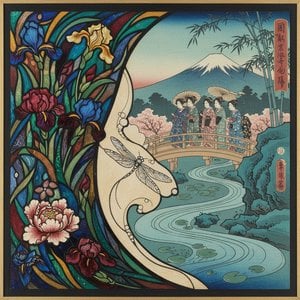
John La Farge: Pioneering American Colorism & Japonisme's Influence
Explore the groundbreaking work of John La Farge, a pioneer of American colorism and stained glass. Discover his captivating Japonisme-inspired murals & lasting legacy in 19th-century art. Expert insights for collectors.