

 Se i rummet
 Del som kort
 Del
Del
 Detaljer
 Guide
Guide

 Download
 Lignende værker
 Røntgenundersøgelse
 Diasshow
 Q&A
Q&A Statistikker
Untitled

- 87.0 x 68.0 cm


 Vis mere
Kunstværket vist på denne side er beskyttet af ophavsretsloven, hvilket betyder, at vi ikke lovligt kan skabe eller sælge en identisk reproduktion. Denne beskyttelse håndhæves i henhold til internationale aftaler som f.eks. den Bernerkonventionen og af nationale love, herunder de bestemmelser, der er fastlagt i Amerikansk ophavsretslov - Titel 17.
Denne metode overholder fuldt ud ophavsretsreglerne, da den ikke indebærer kopiering eller duplikering af det beskyttede kunstværk. I stedet er der tale om en kreativ nytolkning – et nyt maleri, som er inspireret af det oprindelige, men ikke identisk med det.
Giclée / Kunsttryk
Giclée- eller lærredstryk i museumskvalitet med hurtig produktion og fleksible muligheder for finish. ( Køb håndmalet maleri Skift til digitalt billede)




































Vælg mellem vores forudindstillede størrelser, der matcher kunstværkets originale proportioner.

Indtast den bredde og højde, du har brug for, så det passer til din ramme eller din væg. Et print kan kun beskæres, aldrig gøres større end selve billedet, så en størrelse med et andet format vil medføre, at dele af motivet går tabt. Vi sender dig en digital mockup til godkendelse, før vi printer noget. Billedet vist på denne side viser ikke den faktiske beskæring — det er kun mockuppen, der gør.
Verdensomspændende levering () på 2 uger i stedet for de sædvanlige 4/5 uger. (2 november)

Gratis ekspresforsendelse til hele verden

Lærred af linned i høj kvalitet

Fuld transportforsikring

Garanti for refusion af told og importafgifter

Garanti for præcis farvegengivelse

100 dages returret ved fabrikationsfejl

100% fuld returret

Mængderabat ved flere køb
 Glasmulighed er kun tilgængelig i størrelser under 110 cm

Untitled
Giclée / Kunsttryk
Størrelse på reproduktion
-


Samlet pris
Dkr 418
A Dance of Vulnerability and Shadow
In this evocative 1988 watercolor, Lisa Thomas-Laury invites the viewer into a visceral, dreamlike realm where the boundaries between the self and the stranger dissolve. The composition is anchored by a striking duality: a central nude male form that radiates an almost raw, exposed humanity, contrasted against a mysterious, masked figure lurking in the periphery. This encounter feels less like a static portrait and more like a captured moment of psychological tension. Through a masterful use of asymmetrical balance, the artist directs our gaze through a landscape of layered, abstract shapes, creating a sense of movement that is both rhythmic and unsettling. It is a piece that does not merely sit upon a wall; it breathes with an unrestrained, kinetic energy.
The technique employed by Thomas-Laury is nothing short of transformative, utilizing the fluid, unpredictable nature of the wet-on-wet watercolor method to mirror the emotional turbulence of the subject matter. Soft, bleeding edges merge into sharp, energetic splatters, suggesting a world in a constant state of flux. The texture of the paper becomes an active participant in the narrative, as layers of intensely saturated pigments build a sense of depth despite the flattened perspective characteristic of expressionist works. This deliberate lack of traditional depth cues forces the observer to confront the emotional intensity of the colors directly, rather than retreating into the comfort of a realistic landscape.
Symbolism and the Human Condition
Beyond its visual splendor, the artwork serves as a profound meditation on the themes of anonymity and exposure. The nude figure, stripped of all social markers, becomes a universal symbol of vulnerability—a soul laid bare before the world. In stark opposition, the masked figure introduces an element of the unknown, representing the hidden motives, the societal personas, or perhaps the looming threats that inhabit our subconscious. This confrontation between the seen and the unseen creates a powerful psychological resonance, making the piece deeply relatable to anyone who has navigated the complexities of identity and intimacy.
For the discerning collector or interior designer, this masterpiece offers more than just aesthetic appeal; it provides a focal point of profound intellectual and emotional depth. The vibrant, chaotic palette is sophisticated enough to anchor a contemporary gallery space, yet its raw, expressionistic spirit allows it to breathe life into a curated residential setting. As a high-quality reproduction, this work brings the transformative power of late 20th-century expressionism into the modern home, offering a window into a world where color and form serve as the ultimate language of the human spirit.
Spørgsmål og svar
Hvilken lysstyrke har "Untitled" af Lisa Thomas-Laury?
Farverne i "Untitled" har en Gentle Luminance luminans.
Er "Untitled" af Lisa Thomas-Laury et lyst eller et mørkt kunstværk?
Den oplevede lysstyrke i "Untitled" af Lisa Thomas-Laury er bright. Den kan tilpasses lyset i det tiltænkte rum.
Hvilken teknik blev brugt til "Untitled", og hvornår blev den skabt?
"Untitled" blev skabt i 1988 med Watercolor-teknikken. Materiale og dato beskriver, hvordan og hvornår originalen blev lavet.
Lignende kunstværker


Kunstnerbiografi
The Dual Identity of Lisa Thomas-Laury
While the name Lisa Thomas-Laury is etched into the cultural memory of Philadelphia as a distinguished and retired news presenter, her creative output offers a much more intimate, visceral dimension. Known to many for her decades of service at WPVI-TV—where she famously co-anchored the 5 p.m. newscast alongside Marc Howard—she also navigated a profound visual world characterized by an evocative blend of expressionism and psychological depth. Her artistic practice, often explored through works like Self Portrait and Untitled, captures raw human vulnerability, inviting viewers to look past the polished persona of a broadcast professional into a realm of intense self-reflection.
Her journey through the lens of the camera was marked by significant milestones in American broadcasting. After early career stints at WSAZ-TV in Huntington, West Virginia, KTVY in Oklahoma City, and WTVF in Nashville, she arrived in Philadelphia in 1978. Her ascent in the newsroom was notable, even famously beating out colleague Oprah Winfrey for a position. Throughout her tenure, she became one of the few African American women to anchor in the Philadelphia market, contributing to programs like Fast Forward and Visions. Yet, beneath this public-facing career lay an artist capable of exploring the most private corners of the human psyche.
A Visual Language of Vulnerability
The artistry of Lisa Thomas-Laury is defined by its ability to transform the mundane into the monumental. In her 1984 oil on canvas work, Self Portrait, she utilizes a startling directness to bridge the gap between the subject and the observer. By depicting herself engaged in the simple, everyday act of brushing her teeth, she transcends mere portraiture, turning a moment of domesticity into a meditation on identity and the willingness to expose one’s innermost self. Her technique in this piece demonstrates a confident application of paint, using layering and glazes to create a rich depth that mirrors the complexity of the subject matter.
This exploration of the human condition extends into her use of more fluid mediums, such as watercolor. In her 1988 work, Untitled, she invites the viewer into a dreamlike, visceral realm where boundaries dissolve. Through the masterful use of the wet-on-wet method, she creates a landscape of psychological tension, contrasting a central nude male form with a mysterious, masked figure. This piece serves as a profound meditation on themes of anonymity and exposure, utilizing asymmetrical balance and energetic splatters to suggest a world in constant flux. Her work often avoids rigid formality, opting instead for a spontaneous and emotionally resonant approach that echoes the explorations of subjective experience found in early 20th-century art.
Technical Mastery and Emotional Resonance
The technical evolution of her work reveals a deep engagement with texture and light. Whether working in the heavy, tactile impasto of oil on canvas or the bleeding edges of watercolor, Thomas-Laury employs color not merely as a decorative element, but as a tool for emotional shaping. In works such as Portrait of Artist’s Daughter, she utilizes a muted palette of earthy browns, grays, and blues to foster a sense of quiet contemplation, punctuated by strategic pops of color that guide the viewer's gaze.
Her artistic legacy is one of duality: the strength of a pioneering journalist paired with the sensitivity of an expressionist. Her ability to manipulate medium—using short, broken strokes to create movement or saturated pigments to build depth—allows her work to breathe with a kinetic energy. Ultimately, her visual contributions stand as a testament to the power of looking inward, using the canvas to navigate the delicate balance between observation and interpretation, and between the public face and the private soul.

Lisa Thomas-Laury
1941 - 1992 , Germany
Kort om kunstneren
- Artists Who Influenced This Artist: ['Robert Delaunay']
- Full Name: Lisa Thomas-Laury
- Notable Artworks:
- Self Portrait
- Untitled
- Portrait of Artist’s Daughter
- Place Of Birth: Berlin, Germany
- Date Of Birth: 1941
- Date Of Death: 1992
Relaterede artikler

Ephemeral Visions: Exploring the History & Emotional Resonance of Watercolor Painting
Explore the captivating history of watercolor painting, from ancient techniques to modern masters like Kandinsky & Blake. Discover essential artists, collecting tips & the emotional power of this luminous medium. Expert insights for art enthusiasts.

Akvarellens Tidløse Appel: Historie, Teknikker og Nutidig Praksis
Dyk ned i akvarellens verden! Lær om historien, teknikkerne og nutidens trends. Få inspiration og tips til at skabe smukke akvarelmalerier – fra begynder til øvet.

Ephemeral Visions: Exploring the Artistic Legacy & Contemporary Practice of Watercolor Painting
Explore the captivating world of watercolor painting! Discover its rich history, essential techniques, influential artists & collecting tips. A comprehensive guide for art enthusiasts from ArtsDot.
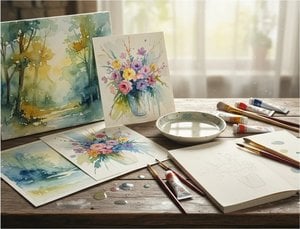
Ephemeral Visions: Exploring the Artistic Legacy & Nuances of Watercolor Painting
Explore the captivating world of watercolor painting! Discover its rich history, essential techniques, influential artists & collecting tips from art experts. A comprehensive guide for enthusiasts.

Top 10 Akvarelmesterværker: Kunst der Ændrede Historien | ArtsDot.dk
Oplev de 10 mest legendariske akvarelmesterværker, der har ændret kunsthistorien! Fra Turner til Monet – lær om teknikken og historierne bag ikoniske værker. Find museumskvalitets reproduktioner & inspiration til din indretning på ArtsDot.com.