


 Se i rummet
 Send
Send Del
Del
 Detaljer
 Studieguide til kunstværker

 Download
 Lignende værker
 Røntgenundersøgelse
 Se diasshow
 Statistik
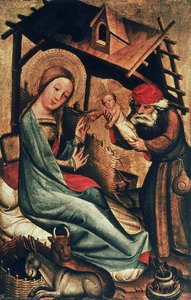
Nativity
 Læs mere
Håndlavet oliereproduktion
Håndmalet olie på lærred i din valgte størrelse og ramme, udført efter bestilling af vores kunstnere. ( Skift til printversion Skift til digitalt billede)




































Vælg mellem vores forudindstillede størrelser, der matcher kunstværkets originale proportioner.

Indtast den bredde og højde, du har brug for, så det passer til din ramme eller din væg. Da dette er håndmalet, kan kunstneren ved en anden form på størrelsen male lidt mere rundt om billedet eller skære lidt væk — det er op til dig. Vi sender dig et digitalt mockup til godkendelse, før maleriet påbegyndes. Billedet, der vises på denne side, viser ikke det endelige resultat — det er kun mockuppet, der gør.
Efter bestilling vil ArtsDot.com team sende en e-mail til kunden for at indhente instruktioner og fremsende et udkast til gennemgang.
Levering i hele verden () på 3-4 uger i stedet for de standard 5 uger. (16 oktober). Ingen kompromiser med kvaliteten.

Gratis ekspresforsendelse til hele verden

Lærred af linned i høj kvalitet

Komplet transportforsikring

Garanti for refusion af told og importafgifter

Garanti for autentisk farvegengivelse

100 dages returret ved fabrikationsfejl

100% fuld returret

Mængderabat ved flere køb
 Glasmulighed er kun tilgængelig i størrelser under 110 cm

Nativity
Reproduktionsmateriale
Reproduktionsstørrelse
-


Samlet pris
Dkr 1713
Lignende kunstværker


Om kunstneren
The Master of the Soft Style
In the vibrant heart of Westphalia, during the turn of the 15th century, Konrad von Soest emerged as a transformative figure in Northern European painting. As the most significant artist of his region, he acted as a vital conduit for the International Gothic movement, bringing the refined elegance of the courtly style to the prosperous Hanseatic city of Dortmund. His work is characterized by what art historians often call the "soft style," a delicate approach that favored graceful, flowing lines and a profound sense of lyrical beauty. Through his mastery of color and narrative, von Soest did more than merely decorate altarpieces; he breathed a new, sophisticated vitality into German religious art, influencing the trajectory of Northern European painting well into the late 15th century.
The artistic language of von Soest was deeply shaped by his exposure to broader European trends. His detailed command of intricate patterns and delicate techniques suggests a formative period spent as a journeyman in Paris, where he likely studied the exquisite details of French illuminated manuscripts. This connection to Parisian elegance, blended with the emerging influences of early Netherlandish painting, allowed him to create works that felt both cosmopolitain and deeply rooted in local devotion. His workshop became a thriving center of creativity, attracting the patronage of Dortmund’s wealthy patrician elite, a social circle that shared his taste for the refined and the magnificent.
A Legacy in Gold and Color
The enduring impact of Konrad von Soest is best witnessed through his surviving masterpieces, which continue to captivate with their luminous depth and emotional resonance. His most celebrated achievement, the Marienaltar located in the Marienkirche in Dortmund, stands as a monumental testament to his skill. This large triptych, completed toward the end of his life, showcases the pinnacle of the International Courtly Style through its masterful use of gilding and rich, vibrant pigments. The altarpiece weaves together narrative scenes from the life of the Virgin Mary with a level of detail that invites both spiritual contemplation and aesthetic wonder.
Beyond the grand scale of his altarpieces, von Soest’s ability to convey profound human emotion is evident in his more intimate works. In pieces such as The Crucifixion, he captures the spiritual anguish and sorrow of the Christian narrative with a meticulousness that transcends mere representation. His talent for layering colors to achieve a sense of light and luminosity is equally present in the Wildunger Altar, where scenes like the Nativity are rendered with a characteristic medieval vibrancy. Whether depicting the tender grace of the Holy Family or the heavy grief of the Passion, von Soest’s hand is unmistakable, marked by an ability to marry the decorative splendor of the Gothic tradition with a deeply moving, humanistic touch.

Konrad Von Soest
1370 - 1422 , Germany
Hurtige fakta
- Artistic Movement Or Style: International Gothic
- Artists Or Movements Influenced By This Artist: ['German and Northern European painting']
- Artists Who Influenced This Artist: ['Gentile da Fabriano']
- Full Name: Konrad von Soest
- Notable Artworks:
- Marienaltar
- Wildunger Altar
- The Crucifixion
- Place Of Birth: Dortmund, Germany
- Date Of Birth: 1370
- Date Of Death: 1422